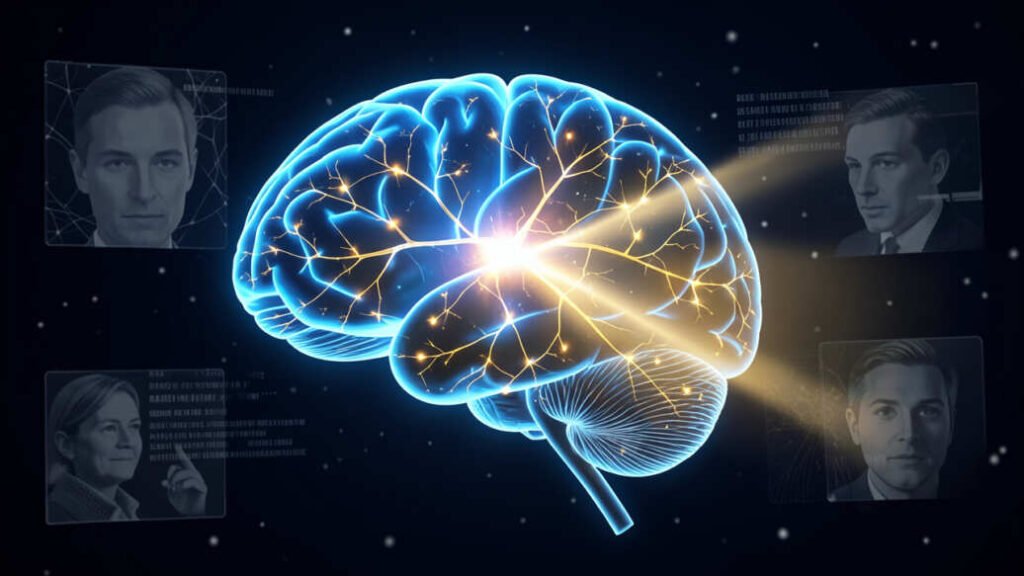
Attention in the human brain operates through a coordinated system of three major neural networks: the alerting, orienting, and executive control systems. These networks, with the prefrontal cortex as a central hub, are regulated by key neurotransmitters like dopamine and norepinephrine to filter sensory input and allocate mental resources. This process means attention is a limited capacity system, making focused attention on a single task more effective than multitasking for accuracy and efficiency.
How does attention work in the human brain is a fundamental question for scientists and students alike, because focus drives learning, memory, and everyday decision-making. This guide breaks down the key brain networks, chemical signals, and practical habits behind attention so you can see exactly what happens when you concentrate.
Simply put, attention is not a single brain area but a coordinated system of three major networks: the alerting, orienting, and executive control networks. These systems, powered by chemicals like dopamine and norepinephrine, filter the flood of sensory input and decide what deserves your mental energy at any given moment.
Key Takeaways
- How attention works depends on three coordinated brain networks, not a single focus center.
- The prefrontal cortex acts as the brain’s control tower for sustained attention and goal-directed behavior.
- Dopamine and norepinephrine regulate alertness, motivation, and how easily you get distracted.
- Attention is a limited resource, and multitasking splits your mental capacity while reducing accuracy.
- Your default mode network constantly competes with focused attention, which explains mind-wandering.
What Is Attention in the Human Brain?
Attention is the brain’s ability to select and prioritize certain information while filtering out the rest. In 1890, psychologist William James described it as “the taking possession by the mind, in clear and vivid form, of one out of what seem several simultaneously possible objects or trains of thought.” That definition still holds up today.
Your brain is bombarded with sensory data at every moment. According to research popularized by Mihaly Csikszentmihalyi, the brain processes about 11 million bits of information per second, but conscious attention can handle only roughly 50 bits per second. That gap explains why selection is essential for surviving a noisy world.
- Attention is selective: it chooses what to process and what to ignore.
- Attention is limited: the capacity for conscious focus is small and easily overwhelmed.
- Attention is flexible: you can shift it between senses, thoughts, and tasks.
- Attention is trainable: practice and daily habits can strengthen focus over time.
- Attention is state-dependent: sleep, stress, and mood directly affect its quality.
Scientists often divide the functions of attention into three core actions:
- Selection: picking relevant information from the environment.
- Maintenance: holding focus on a chosen target over time.
- Modulation: adjusting how much mental effort the current task receives.
These functions map onto specific brain systems that researchers study with imaging tools like fMRI. The big takeaway is that attention is not one skill but a collection of processes working together to shape your experience.
How Does Attention Work: The Three Major Brain Networks
Psychologist Michael Posner and his colleagues proposed one of the most influential models of attention. They identified three separate but connected networks: the alerting network, the orienting network, and the executive control network. Understanding how attention works means understanding the job of each network and how they cooperate.
The alerting network maintains vigilance and prepares your brain for incoming information. The orienting network points your attention toward specific locations or sensory input. The executive control network handles complex decisions, conflict resolution, and goal-directed planning.
| Network | Primary Job | Key Brain Regions |
|---|---|---|
| Alerting | Keeps you vigilant and ready | Locus coeruleus, frontal and parietal regions |
| Orienting | Selects sensory information | Parietal cortex, superior colliculus |
| Executive Control | Plans, resolves conflict, stays on task | Prefrontal cortex, anterior cingulate cortex |
Each network relies on distinct chemical messengers. Norepinephrine fuels the alerting network, while acetylcholine and dopamine support orienting and executive control.
- Alerting network: acts like an alarm system that raises readiness.
- Orienting network: acts like a spotlight that targets sensory input.
- Executive control network: acts like an air traffic controller that manages competing goals.
When these networks work in sync, focus feels effortless. When they clash, you feel scattered, forgetful, and prone to errors.
How Does Attention Work in Everyday Life? Types of Focus
Attention is not a single state. It changes based on what you are doing, how long you have been doing it, and what else is competing for your awareness. Researchers group attention into several types, and each one uses the same brain networks in different combinations.
- Sustained attention: keeping focus on one task for a long period.
- Selective attention: focusing on one source while ignoring others.
- Alternating attention: switching back and forth between two tasks.
- Divided attention: processing two tasks at the same time.
- Focused attention: responding to a specific stimulus like a sound or a flash of light.
| Type | Definition | Everyday Example |
|---|---|---|
| Sustained | Holding focus over time | Reading a book for an hour |
| Selective | Focusing on one input | Listening to a podcast in a noisy cafe |
| Alternating | Shifting focus between tasks | Taking notes while watching a lecture |
| Divided | Processing two tasks at once | Walking and talking on the phone |
Your environment shapes which type of attention you use. A quiet room supports sustained attention. A chatty office forces selective attention.
A smartphone in your pocket constantly invites divided and alternating attention.
A widely cited study from Microsoft found that average attention spans have shrunk to about eight seconds, largely due to constant media switching. Whether or not the exact number holds up, the trend is clear: attention works best when you protect it from unnecessary load.
What Happens in the Brain When You Focus?
When you decide to focus, your prefrontal cortex coordinates a cascade of activity. This region, located behind your forehead, helps you set goals, suppress distractions, and keep working memory online. It does not work alone.
It joins forces with the parietal cortex and the anterior cingulate cortex.
At the same time, your brain increases the release of dopamine and norepinephrine. Dopamine supports motivation and goal pursuit. Norepinephrine boosts arousal and sharpens sensory processing.
Together, they create the alert but calm state you associate with deep focus.
| Chemical | Role in Attention | Effect of Imbalance |
|---|---|---|
| Dopamine | Motivation and goal pursuit | Low motivation, procrastination |
| Norepinephrine | Alertness and vigilance | Fatigue, sluggish responding |
| Acetylcholine | Sensory selection and learning | Poor focus and weak memory encoding |
Important: Focused attention requires the brain to actively suppress the default mode network, the system that drives mind-wandering and self-referential thoughts. This suppression takes real metabolic energy, which is why deep work feels tiring.
The sequence of focus looks like this:
- A cue signals that a task matters, activating the alerting network.
- The orienting network directs sensory resources toward relevant information.
- The executive control network holds the goal in working memory.
- Dopamine and norepinephrine sustain motivation and alertness.
- The default mode network is suppressed to reduce mind-wandering.
According to the American Psychological Association, task-switching can consume up to 40 percent of your productive time. Each switch forces your prefrontal cortex to reload its goals, which explains why interruptions feel so costly.
Why Does Attention Fail? The Science of Distraction
Distraction is not a character flaw. It is a predictable outcome of brain design. Your brain is wired to notice novelty, threats, and rewards, and it will interrupt your focus whenever something more interesting appears.
Distractors fall into two broad categories: internal and external. Internal distractors include worries, hunger, fatigue, and spontaneous memories. External distractors include phone notifications, background noise, and people talking nearby.
| Category | Examples | Brain Driver |
|---|---|---|
| Internal | Anxiety, daydreaming, physical discomfort | Default mode network, stress hormones |
| External | Notifications, noise, social media | Orienting network, dopamine reward cues |
Mind-wandering deserves special attention. Brain imaging research shows that the default mode network becomes active when your mind drifts from the present task. That activity competes directly with executive control, and whichever network is stronger in the moment wins.
Warning: Chronic distraction trains your brain to expect frequent novelty. Over time, your attention span can shorten because your alerting network stays on high alert while your executive control network weakens from underuse.
- Sleep deprivation reduces activity in the prefrontal cortex and impairs sustained attention.
- Chronic stress floods the brain with cortisol, which disrupts working memory.
- Social media apps are designed to trigger intermittent dopamine rewards that pull focus away from tasks.
- Multitasking creates a bottleneck because only one conscious task can occupy working memory at a time.
- A cluttered environment adds visual noise that forces your orienting network to work overtime.
You can fight back by designing your environment. Silence notifications, tidy your workspace, and schedule short breaks before your brain makes its own unplanned ones.
How to Improve Attention and Focus in Daily Life
The good news is that attention is trainable. Research from neuroscientist Dr. Amishi Jha suggests that just 12 minutes of mindfulness practice per day can strengthen the brain’s attention networks.
Small, consistent habits outperform occasional heroic efforts.
Tip: Use the Pomodoro Technique: focus for 25 minutes, take a 5-minute break, and repeat. This schedule matches your brain’s natural attention cycles and prevents mental fatigue.
Try these evidence-based strategies to protect and improve your focus:
- Single-task instead of multitasking to reduce cognitive load.
- Create a distraction-free workspace with your phone out of reach.
- Get 7 to 9 hours of sleep so your prefrontal cortex functions properly.
- Exercise regularly because aerobic activity boosts blood flow to attention-related regions.
- Practice mindfulness to strengthen the executive control network.
- Schedule deep work during your personal peak energy window.
- Use app blockers or turn off nonessential notifications while working.
A simple daily routine can look like this:
- Pick one high-value task before you open any apps.
- Set a timer for 25 to 50 minutes of focused work.
- Put your phone in another room or switch it to airplane mode.
- Work until the timer ends, then take a true break.
- Review what you completed and set the next priority.
These habits matter because attention works best when it is protected from constant interruption. Small environmental changes often produce bigger gains than willpower alone.
Attention Disorders and When to Seek Professional Help
Some attention difficulties go beyond normal distractibility. Attention-deficit/hyperactivity disorder (ADHD) is a neurodevelopmental condition that affects attention regulation, impulse control, and executive function. According to the CDC, about 6 million children in the United States have been diagnosed with ADHD, and many adults live with it undiagnosed.
This table shows the difference between normal distractibility and signs that may warrant evaluation:
| Situation | Normal Distractibility | Possible ADHD Signs |
|---|---|---|
| Focus | Drifts after long periods | Drifts within minutes, especially in low-interest tasks |
| Organization | Messy sometimes | Chronic disorganization that disrupts work |
| Forgetfulness | Occasional lapses | Frequent loss of items, missed appointments |
| Impulsivity | Rare, low-impact | Regular interruptions, risky decisions |