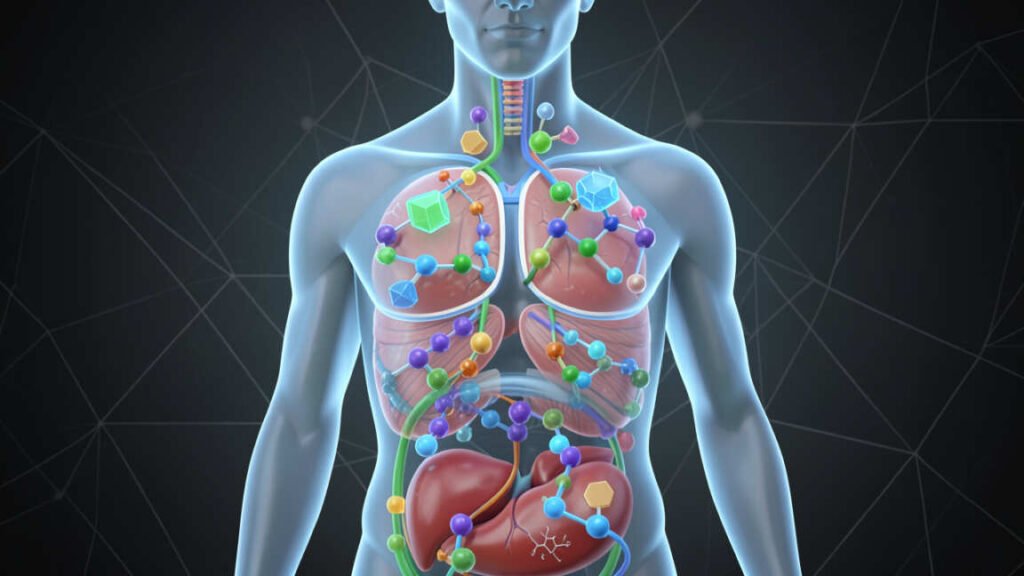
Amino acids are organic compounds that serve as the fundamental building blocks of proteins, which are essential for muscle growth, tissue repair, and the production of enzymes and hormones in the body. Of the 20 standard amino acids, nine are classified as essential because the body cannot synthesize them, making dietary sources like complete proteins necessary for optimal function. To support overall health and recovery, most adults require a minimum of 0.8 grams of protein per kilogram of body weight daily from foods that provide all essential amino acids.
Amino acids are the building blocks of protein, and they power nearly every process in your body. This post explains what amino acids are, how your body uses them, which foods provide them, and why getting enough is non-negotiable for health and performance.
Simply put, amino acids are organic compounds that combine to form proteins, which your body uses to build muscle, repair tissue, and produce enzymes and hormones. Of the 20 amino acids your body relies on, nine are essential and must come from food. Without them, your health and recovery suffer.
Key Takeaways
- Amino acids are the building blocks of protein, essential for muscle growth, repair, and overall health.
- Your body needs 20 amino acids, and nine of them are essential because your body can’t produce them on its own.
- Eating a variety of protein-rich foods ensures you get all nine essential amino acids in the right amounts.
- Most healthy adults need at least 0.8 grams of protein per kilogram of body weight every day.
- Amino acid supplements can help certain people, but whole foods should always come first.
What Are Amino Acids?
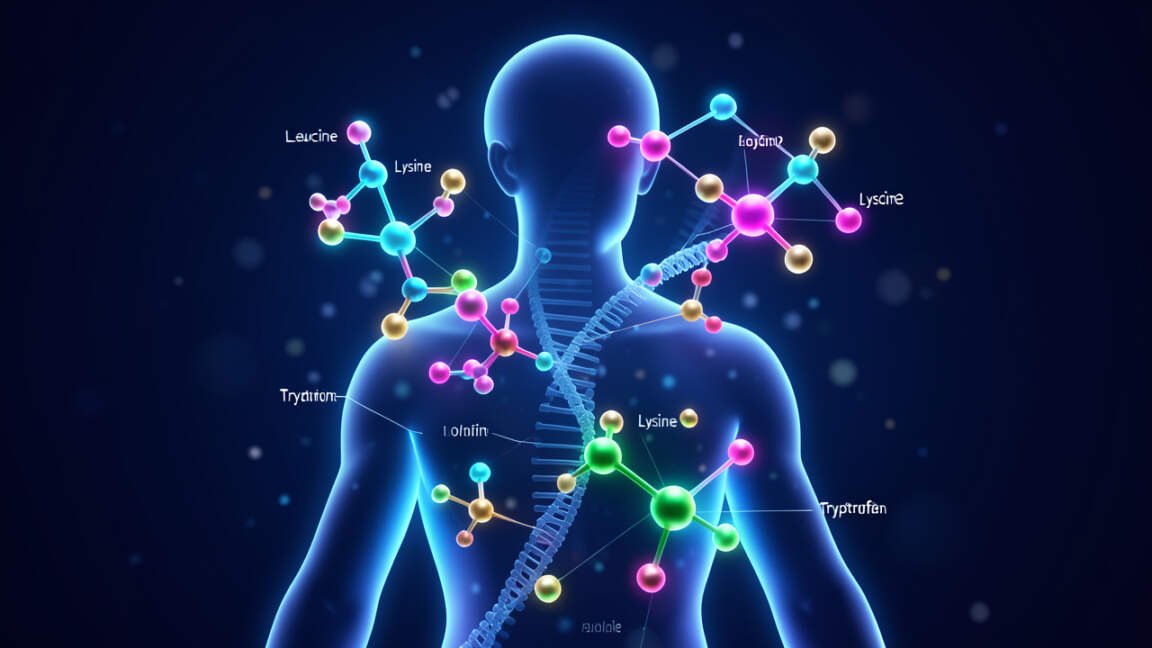
Amino acids are small organic molecules that link together in long chains to form proteins. Each one contains a central carbon atom bonded to an amino group, a carboxyl group, a hydrogen atom, and a unique side chain called an R-group. That side chain is what makes each of the 20 amino acids different.
Think of amino acids as letters and proteins as words. Just as letters combine to form countless words, these 20 amino acids arrange themselves in different sequences to build thousands of proteins. Your body uses those proteins for structure, like muscle and skin, and for function, like enzymes and hormones.
According to the National Institutes of Health, protein accounts for roughly 16 percent of an average adult’s total body weight. That’s about 10 to 12 kilograms of protein, and every single gram of it is assembled from amino acids.
The Three Groups of Amino Acids
- Essential amino acids (9): your body can’t make these, so you must get them from food.
- Non-essential amino acids (11): your body produces these on its own.
- Conditional amino acids: normally non-essential, but they become essential during illness, injury, or extreme stress.
- Build and repair muscle tissue
- Produce enzymes that drive digestion and metabolism
- Create hormones like insulin and growth hormone
- Support immune function and antibody production
- Form neurotransmitters that regulate mood and sleep
The 20 Standard Amino Acids at a Glance
| Type | Amino Acids |
|---|---|
| Essential (9) | Histidine, Isoleucine, Leucine, Lysine, Methionine, Phenylalanine, Threonine, Tryptophan, Valine |
| Non-essential (11) | Alanine, Arginine, Asparagine, Aspartic acid, Cysteine, Glutamic acid, Glutamine, Glycine, Proline, Serine, Tyrosine |
Every protein in your body, from hemoglobin in your blood to collagen in your skin, is built from this same set of 20 amino acids. Change a single amino acid in a protein like hemoglobin, and you get a condition like sickle cell disease. That’s how powerful these small molecules are.
How Do Amino Acids Work in the Body?
When you eat protein, your body doesn’t use that protein directly. It first breaks it down into individual amino acids, then reassembles them into the specific proteins your body needs at that moment. This process is called protein synthesis.
Digestion starts the moment you chew. Then a carefully coordinated sequence of enzymes goes to work.
- Stomach acid unwinds the protein structure and activates pepsin, which starts breaking it apart.
- Enzymes in the small intestine, like trypsin and chymotrypsin, finish the breakdown.
- Individual amino acids and small peptides are absorbed through the intestinal wall.
- The liver sorts them and releases them into your bloodstream.
- Cells throughout your body take up what they need and build new proteins based on your DNA blueprint.
Once amino acids reach your bloodstream, they enter what scientists call the amino acid pool. This pool acts like a reservoir that your cells draw from whenever they need to build new proteins.
- Repair muscle fibers after exercise
- Synthesize collagen for skin, tendons, and bones
- Produce antibodies that fight off infection
- Regulate blood sugar through hormone production
- Convert into neurotransmitters like serotonin and dopamine
- Carry nitrogen around the body to maintain nitrogen balance
Your body is constantly breaking down and rebuilding proteins. On any given day, you turn over about 250 to 300 grams of protein. That’s why a steady supply of amino acids matters so much.
Without it, your body starts breaking down its own muscle tissue to get the amino acids it needs elsewhere.
Why Does the Body Need All Nine Essential Amino Acids?
Your body can make 11 of the 20 amino acids from scratch. The other nine are called essential because your body can’t synthesize them at all, or can’t make enough to meet demand. So they must come from food.
Each essential amino acid has a specific job. Leucine alone triggers the mTOR pathway that signals your muscles to grow. Tryptophan converts into serotonin and melatonin, which regulate mood and sleep.
Lysine is needed to make collagen and absorb calcium.
The Nine Essential Amino Acids and Their Roles
| Amino Acid | Primary Role | Food Source |
|---|---|---|
| Leucine | Stimulates muscle protein synthesis | Chicken, eggs, soy, dairy |
| Isoleucine | Supports energy regulation | Fish, chicken, almonds |
| Valine | Helps muscle recovery | Beef, mushrooms, peanuts |
| Lysine | Collagen production, calcium absorption | Turkey, fish, lentils |
| Methionine | Metabolism, detoxification | Eggs, chicken, sunflower seeds |
| Phenylalanine | Precursor to dopamine and thyroid hormones | Dairy, beef, tofu |
| Threonine | Skin and connective tissue health | Pork, oats, quinoa |
| Tryptophan | Serotonin and melatonin production | Turkey, eggs, bananas |
| Histidine | Immune response, histamine production | Pork, chicken, chia seeds |
When even one essential amino acid is missing or too low, protein synthesis slows down. Your body then breaks down its own muscle tissue to get the missing pieces. The World Health Organization recognizes all nine essential amino acids as required in the human diet, and sustained deficiency can lead to serious health problems.
- Muscle wasting and weakness
- Weakened immune function
- Fatigue and poor concentration
- Slow wound healing
- Hair loss and brittle nails
- Mood disturbances
People most at risk of deficiency include those on very low-calorie diets, older adults with poor appetite, and people following poorly planned vegan diets.
Complete vs. Incomplete Proteins: What Is the Difference?
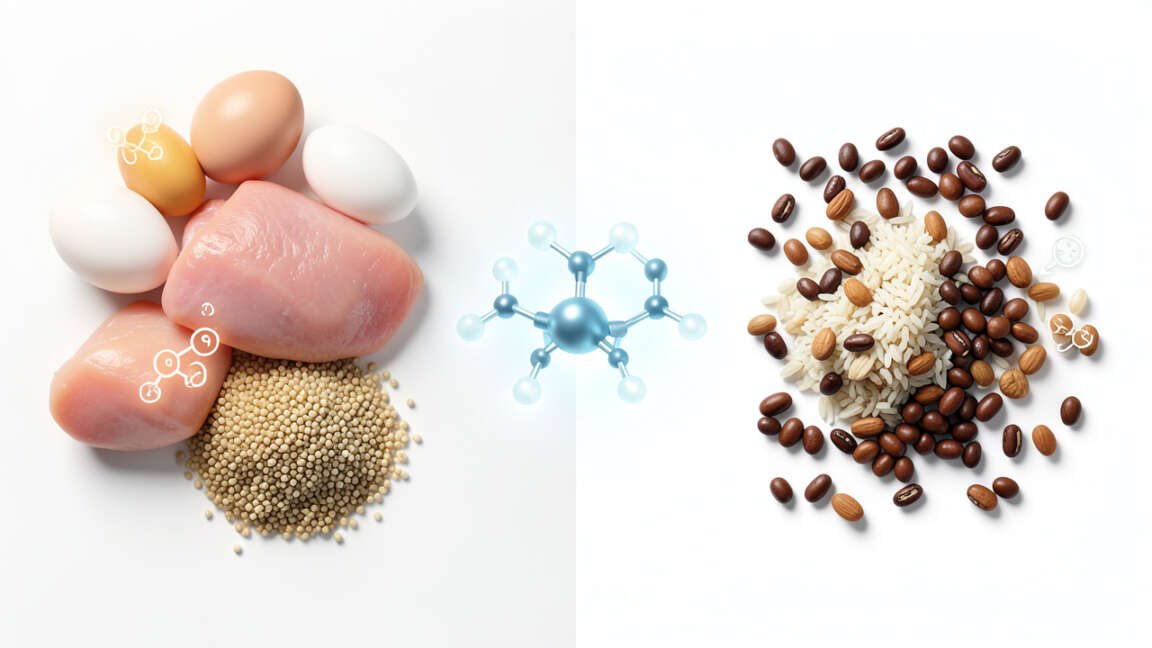
A complete protein contains all nine essential amino acids in adequate amounts. Most animal proteins are complete. Plant proteins often are not; they miss or contain too little of one or more essential amino acids.
The good news is that plant foods complement each other. Rice is low in lysine but high in methionine. Beans are the opposite.
Eat them together, and you get a complete amino acid profile in one meal.
Complete vs. Incomplete Protein Sources
| Feature | Complete Proteins | Incomplete Proteins |
|---|---|---|
| Examples | Meat, poultry, fish, eggs, dairy, soy, quinoa | Beans, lentils, rice, nuts, seeds, whole grains, corn |
| Amino acid profile | Contains all 9 essential amino acids | Low in one or more essential amino acids |
| Bioavailability | High, easily absorbed | Lower or variable |
If you eat a varied diet, you don’t need to obsess over pairing proteins at every single meal. Your body pools amino acids from everything you eat throughout the day, so eating complementary proteins even hours apart still works.
Classic Plant-Based Protein Combinations
- Rice and beans
- Peanut butter on whole wheat bread
- Hummus with pita bread
- Oats with milk or soy milk
- Lentil soup with barley
Tip: Quinoa, soy, and buckwheat are rare plant foods that are complete proteins on their own. Add them to your rotation if you’re vegetarian or vegan.
How Much Protein Do You Need Each Day?
The standard Recommended Dietary Allowance for protein is 0.8 grams per kilogram of body weight. For a 70 kilogram person, that’s about 56 grams per day. But that number is the minimum needed to prevent deficiency, not the amount needed for optimal muscle growth, recovery, or healthy aging.
The International Society of Sports Nutrition reports that physically active people need 1.4 to 2.0 grams of protein per kilogram of body weight to support muscle maintenance and growth. Older adults also benefit from higher intakes to slow age-related muscle loss, known as sarcopenia.
Protein Needs by Population
| Population | Grams per kg Body Weight | Example: 70 kg Person |
|---|---|---|
| Sedentary adult | 0.8 g | 56 g per day |
| Recreational athlete | 1.2 to 1.4 g | 84 to 98 g per day |
| Strength athlete | 1.6 to 2.0 g | 112 to 140 g per day |
| Older adult (60+) | 1.2 to 1.5 g | 84 to 105 g per day |
How you spread protein matters as much as how much you eat. Research suggests that eating 20 to 40 grams of protein per meal stimulates muscle protein synthesis better than eating one massive protein-packed dinner.
Tip: Aim for leucine-rich meals. Consuming about 2.5 to 3 grams of leucine per meal gives your body a strong signal to build muscle. That’s roughly 25 to 30 grams of quality protein.
Best Food Sources of Amino Acids
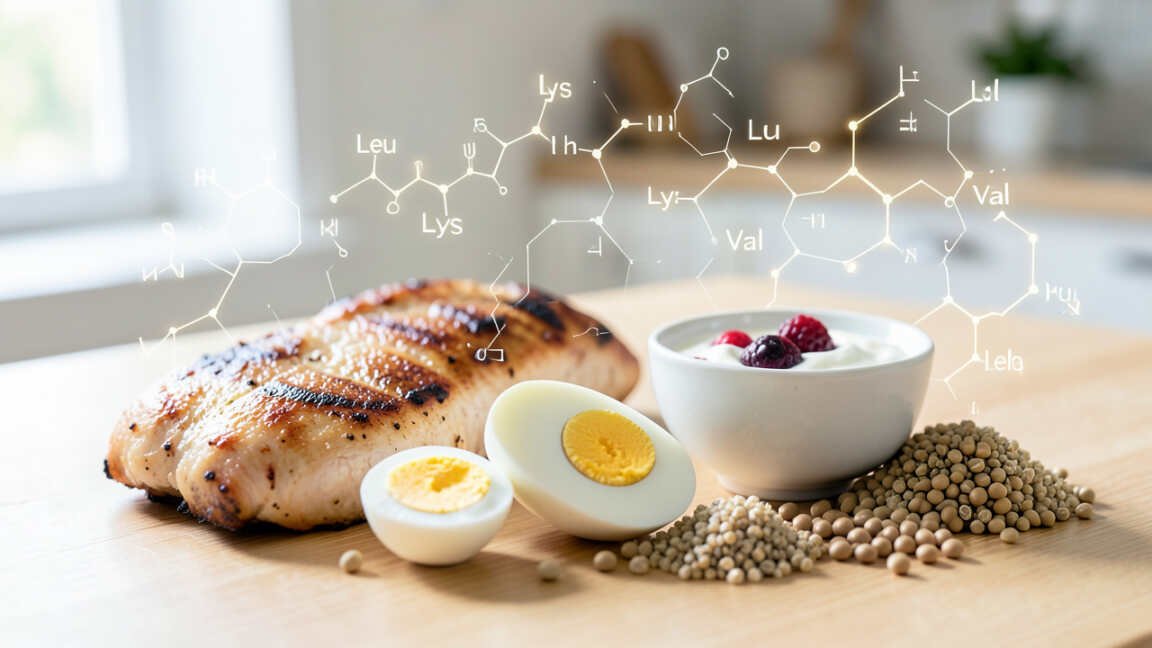
Animal foods give you the most complete amino acid profile per bite. But plant foods can cover all your bases too, as long as you eat a variety throughout the day. Here’s how common foods compare.
Amino Acid Content of Common Foods
| Food | Protein per Serving | Profile |
|---|---|---|
| Chicken breast (100 g) | 31 g | Complete |
| Salmon (100 g) | 25 g | Complete |
| Eggs (2 large) | 13 g | Complete |
| Greek yogurt (170 g) | 17 g | Complete |
| Tofu (100 g) | 8 g | Complete |
| Quinoa, cooked (185 g) | 8 g | Complete |
| Lentils, cooked (200 g) | 18 g | Incomplete |
| Pumpkin seeds (28 g) | 8 g | Incomplete |
- Top animal sources: chicken, turkey, beef, eggs, fish, Greek yogurt, cottage cheese, milk
- Top plant sources: quinoa, soy, buckwheat, lentils, chickpeas, beans, hemp seeds, chia seeds
- Complete plant proteins: soy products, quinoa, buckwheat, amaranth, hemp seeds
Important: Vegetarians and vegans can meet all amino acid needs with a varied plant-based diet. Just include a source of protein at each meal, mixing grains with legumes or nuts regularly.
Are Amino Acid Supplements Worth It?
The supplement market is full of amino acid products. Branched-chain amino acids (BCAAs), essential amino acids (EAAs), whey powder, casein, soy protein, and pea protein all claim to boost muscle and recovery. Some of those claims hold up, and some don’t.
Research on BCAAs alone is mixed. They do stimulate muscle protein synthesis, but a complete protein like whey works better because it supplies all nine essential amino acids at once. In other words, BCAAs are a partial solution to a problem that whole proteins solve completely.
Pros and Cons of Amino Acid Supplements
| Pros | Cons |
|---|---|
| Convenient for on-the-go nutrition | Usually more expensive than food per gram of protein |
| Fast absorption around workouts | BCAAs alone lack other essential amino acids |
| Helpful for older adults with low appetite | Lacks vitamins, minerals, and other nutrients in food |
| Easy to digest | High doses can cause digestive upset |
Amino acid supplements make sense for specific groups:
- Athletes training fasted or multiple times per day
- Older adults struggling to eat enough protein
- Vegans with limited whole-food options
- People recovering from surgery or illness
Warning: Very high doses of individual amino acids can cause nausea, diarrhea, or nutrient imbalances. If you have kidney or liver disease, talk to your doctor before using amino acid supplements.
Common Mistakes to Avoid With Protein Intake
Even people who eat plenty of protein make avoidable mistakes. Here are the most common ones, and how to fix them.
- Eating most of your protein at dinner. Your body can only use so much protein at once. Spreading it across 3 to 4 meals supports muscle protein synthesis all day.
- Aiming too low. Many people think 50 to 60 grams of protein is plenty. Active adults often need double that amount.
- Relying on a single protein source. Eating only chicken breast or only whey shakes limits your variety of amino acids and nutrients. Mix animal and plant sources.
- Forgetting protein after training. A meal or shake with 20 to 40 grams of quality protein within a few hours of exercise helps recovery.
- Ignoring total calories. You can’t build muscle on protein alone. Your body needs enough overall energy to use that protein effectively.
Adopting better habits is straightforward once you know what to target.
- Start your day with 25 to 35 grams of protein at breakfast
- Choose whole foods over powders whenever possible
- Include plant proteins regularly for variety
- Track your intake for a few days to see where you actually land
- Adjust portion sizes based on your body weight and activity level
Tip: A simple rule of thumb for most people: aim for a palm-sized portion of protein at each meal. That usually works out to roughly 20 to 30 grams per meal.
Frequently Asked Questions
What are amino acids?
Amino acids are organic compounds that combine to form proteins. Your body uses 20 standard amino acids to build muscle, skin, hair, enzymes, and hormones. Nine of these are essential, which means your body can’t produce them and you must get them from food.
How many amino acids does the body need?
Your body needs 20 amino acids to create proteins. Nine are essential, 11 are non-essential, and a few like glutamine and arginine become conditionally essential during illness or intense stress. All 20 work together, so a balanced intake matters.
Can amino acids help with muscle growth?
Yes, especially leucine. Amino acids activate muscle protein synthesis, the process that builds new muscle tissue. Whole protein sources like eggs, meat, or whey work better than BCAAs alone because they provide all nine essential amino acids.
What happens if you don’t get enough essential amino acids?
Protein deficiency leads to muscle loss, weakened immunity, fatigue, slow wound healing, and poor skin health. In severe cases, it can cause kwashiorkor, a dangerous form of malnutrition. Your body doesn’t store essential amino acids, so you need them every day.
Are amino acid supplements safe?
For most healthy people, standard doses are safe. Very high doses can cause digestive discomfort or interact with certain medications, especially in people with kidney or liver conditions. Whole foods remain the superior source of amino acids for most people.
Final Thoughts
Amino acids are the foundation of your body’s structure and every metabolic process you depend on. Getting all nine essential amino acids daily supports muscle, immunity, energy, and recovery, and a varied protein-rich diet handles this easily for most people. Focus on whole foods first, spread your protein across meals, and treat supplements as a backup, not a base.
Your body will respond with stronger muscles, better energy, and faster recovery.