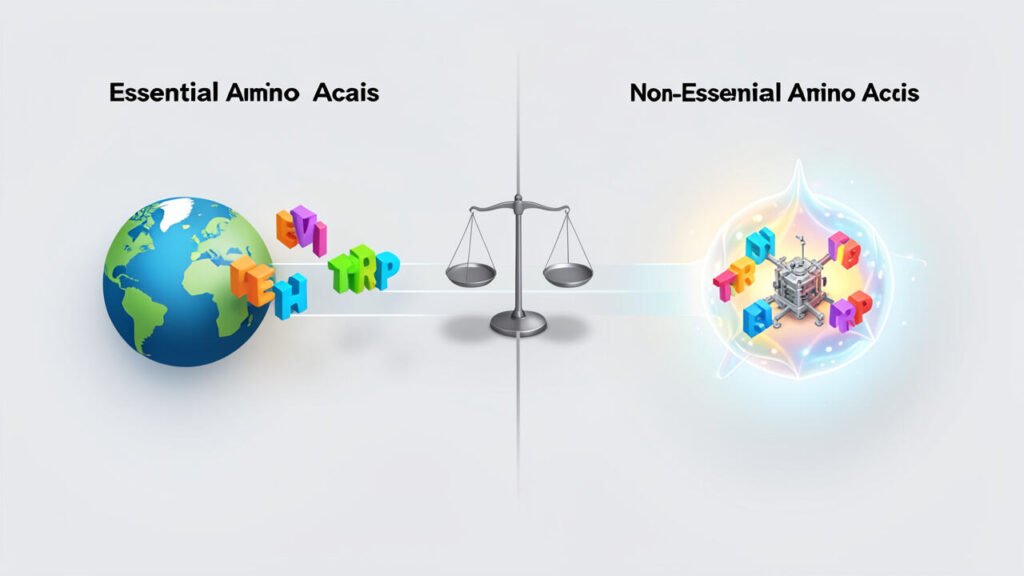
The primary difference between essential and non-essential amino acids is that your body cannot synthesize the nine essential ones, so they must be obtained from your diet. Both types are critical for building protein, muscle repair, and overall health, but essential amino acids are the limiting factor in this process. Ensuring sufficient intake of essential amino acids through complete protein sources is fundamental for supporting muscle growth, immune function, and cellular metabolism.
Essential vs non-essential amino acids is one of the most important distinctions in sports nutrition and overall health. This post breaks down the differences between the two groups, explains why your body treats them differently, and shows you how to cover both through real food.
Simply put, essential amino acids are the nine your body cannot make, so your diet must supply them. Non-essential amino acids are the eleven your body produces on its own. Both types are vital, but essential amino acids deserve the most attention in your daily meals.
Key Takeaways
- Essential vs non-essential amino acids comes down to production: nine are essential, eleven are non-essential.
- Essential amino acids must come from protein-rich foods, and animal proteins are complete sources.
- Non-essential amino acids still play major roles in muscle repair, immunity, and brain health.
- Conditional amino acids become essential during illness, injury, or intense training.
- Eating a varied protein diet covers both categories without needing expensive supplements.
Essential vs Non-Essential Amino Acids: A Quick Comparison Table
Amino acids are the building blocks of protein. Your body uses roughly 20 of them to construct enzymes, hormones, muscle tissue, and immune cells. These 20 split into two clear categories based on one simple question: can your body make them?
Essential amino acids cannot be synthesized internally, so food must provide them. Non-essential amino acids are produced inside your body, mainly by the liver. This single difference drives everything else, from meal planning to supplement choices.
| Feature | Essential Amino Acids | Non-Essential Amino Acids |
|---|---|---|
| Definition | Cannot be made by the body | Can be made by the body |
| Number of amino acids | 9 | 11 |
| Main source | Food and supplements | Made in the liver; also from diet |
| Deficiency risk | High if diet is poor | Low under normal conditions |
| Examples | Leucine, lysine, tryptophan | Alanine, glutamine, glycine |
| Muscle role | Triggers muscle protein synthesis | Supports repair and recovery |
As the table shows, the essential group demands more planning. That said, non-essential amino acids still perform critical jobs. Both types must be present for protein synthesis to occur, but the essential ones are the ones you can actually run short on.
What Are Essential Amino Acids? The Nine Your Body Cannot Make
Essential amino acids are the nine amino acids your body cannot synthesize on its own. You must obtain them from dietary protein. The nine are histidine, isoleucine, leucine, lysine, methionine, phenylalanine, threonine, tryptophan, and valine.
Each one performs a unique function. Leucine acts as the main trigger for muscle protein synthesis, while tryptophan supports serotonin production. Without regular intake of these nine, your body cannot repair tissue or maintain normal function.
- Leucine – the primary trigger for muscle protein synthesis
- Isoleucine – supports energy regulation and muscle recovery
- Valine – helps with muscle endurance and tissue repair
- Lysine – needed for collagen, calcium absorption, and immunity
- Methionine – important for detoxification and hair and skin health
- Phenylalanine – precursor to tyrosine, dopamine, and norepinephrine
- Threonine – involved in fat metabolism and immune function
- Tryptophan – used to make serotonin and melatonin
- Histidine – supports histamine production and nerve signaling
You can cover all nine with a simple strategy. Try these three habits:
- Eat at least one complete protein source each day, like eggs, chicken, or fish
- Combine plant foods such as rice and beans to fill missing amino acids
- Spread protein evenly across 3 to 4 meals to keep amino acid levels steady
| Essential Amino Acid | Best Food Sources |
|---|---|
| Leucine | Chicken, beef, fish, eggs, soy |
| Isoleucine | Turkey, fish, dairy, lentils |
| Valine | Beef, chicken, mushrooms, peanuts |
| Lysine | Fish, chicken, eggs, quinoa |
| Threonine | Cottage cheese, tofu, pork |
| Methionine | Eggs, salmon, Brazil nuts |
| Phenylalanine | Beef, fish, chicken, dairy |
| Tryptophan | Turkey, milk, oats, bananas |
| Histidine | Pork, chicken, fish, rice |
Tip: Aim for a minimum of 0.8 grams of protein per kilogram of body weight daily. Active people often need 1.6 to 2.2 grams per kilogram to fully support recovery and muscle growth.
What Are Non-Essential Amino Acids? The Eleven Your Body Builds
Non-essential amino acids are the eleven your body can produce by itself, mainly in the liver. They are also called dispensable amino acids, but that label only means your diet does not have to supply them. It does not mean they are unimportant.
The eleven non-essential amino acids are alanine, arginine, asparagine, aspartic acid, cysteine, glutamic acid, glutamine, glycine, proline, serine, and tyrosine. Your liver builds them from glucose and other amino acids as needed.
- Glutamine – fuels gut health and immune cells
- Glycine – supports collagen structure and the nervous system
- Tyrosine – boosts dopamine and thyroid hormone production
- Cysteine – defends against oxidative stress through glutathione
- Proline – builds skin, joint, and connective tissue
- Arginine – improves blood flow through nitric oxide production
- Serine – supports cell membranes and nerve function
- Alanine – assists glucose metabolism and energy production
The real difference comes down to origin. Essential aminos are dietary requirements, while non-essential aminos are metabolic products. Both must be present in your cells for protein synthesis to progress normally.
Important: Non-essential does not mean unnecessary. Glutamine is the most abundant amino acid in muscle tissue, and glycine makes up about one-third of collagen. Your body makes them, but they are absolutely essential to survival.
Even though your body produces these amino acids, dietary protein still contributes to their levels. Eating protein supplies raw materials like nitrogen and carbon skeletons that the liver uses for production. A low-protein diet can indirectly reduce non-essential amino acid availability.
What Are Conditional Amino Acids?
Conditional amino acids sit right between the essential and non-essential groups. They are usually non-essential, but your body cannot make enough of them during specific stressful periods. In those situations, they effectively become essential.
These amino acids include glutamine, arginine, cysteine, glycine, proline, serine, and tyrosine. Under normal health, your body produces adequate amounts. Under intense physical or metabolic stress, demand can outpace production.
- Severe illness or sepsis
- Major surgery or burn injury
- Extreme endurance or heavy resistance training
- Premature infancy
- Chronic stress or persistent infection
| Condition | Amino Acids That Become Essential | Why It Matters |
|---|---|---|
| Long ICU stay | Glutamine | Helps preserve gut lining |
| Burn recovery | Arginine, glutamine | Supports immune defense |
| Overtraining | Glutamine, glycine | Shortens recovery time |
| Newborn infants | Arginine, histidine | Required for rapid growth |
If you train hard, your glutamine and glycine needs can exceed what your liver produces. Heavily training athletes sometimes show lower blood glutamine levels during intense blocks. Eating enough total protein usually resolves this without supplements.
Warning: Don’t self-diagnose a glutamine deficiency. Fatigue and soreness have many causes. Instead of buying single amino acid products, fix your total protein and calorie intake first.
How Does Your Body Use Both Types of Amino Acids?
Your body uses amino acids for far more than muscle. It uses them to build enzymes, hormones, neurotransmitters, and antibodies. The entire process starts the moment you chew and swallow protein-rich food.
Both essential and non-essential types are needed at the same time. Protein synthesis works like building with bricks: every brick type must be present, or the structure stops. Missing even one essential amino acid slows down the whole process.
- Digestion breaks dietary protein into individual amino acids
- Absorption carries them into the bloodstream
- Cells take up amino acids through insulin and exercise signals
- Ribosomes link the amino acids into new proteins
- Damaged proteins are broken down and recycled for future use
According to the National Institutes of Health (NIH), sedentary adults need about 0.8 grams of protein per kilogram of body weight daily. Research published in the Journal of the International Society of Sports Nutrition reports that active individuals perform better with 1.6 to 2.2 grams per kilogram. Protein makes up roughly 15% of total human body weight.
- Muscle tissue repair and growth
- Enzyme and hormone production
- Antibody creation for immune defense
- Neurotransmitter synthesis for mood and focus
- pH balance and fluid regulation
- Transport of nutrients and oxygen through the blood
The balance between the two groups matters because muscle protein synthesis demands all 20 amino acids simultaneously. When one essential amino acid is missing, synthesis stalls. This concept is called the limiting amino acid effect, and it is why variety in protein sources matters so much.
Which Amino Acids Matter More: Essential or Non-Essential?
Sports nutrition brands push essential amino acids heavily, especially the branched-chain amino acids leucine, isoleucine, and valine. The hype is partly justified. For muscle growth, the essential group clearly leads the way.
Leucine is the single strongest trigger for muscle protein synthesis. It activates the mTOR pathway, which tells your cells to build new muscle tissue. Non-essential amino acids do not directly activate this pathway the same way.
| Category | Pros | Cons |
|---|---|---|
| Essential amino acids | Trigger muscle protein synthesis; prevent deficiency; support immunity | Require dietary planning; animal-heavy options can be costly |
| Non-essential amino acids | Made by the body; support recovery and gut health; no dietary worry | Can become depleted during stress; depend on healthy liver function |
The direct answer: essential amino acids deserve more attention, but non-essential ones still do real work. Glutamine is the most abundant amino acid in muscle tissue, and glycine is essential for collagen. The smart approach is to prioritize protein quality and total intake rather than obsessing over individual aminos.
Warning: Expensive EAA supplements rarely beat real food. Whole protein sources always provide both groups together, plus micronutrients. Use supplements for convenience during travel or fasted training, not as a daily replacement for meals.
How to Balance Essential vs Non-Essential Amino Acids in Your Diet
Balancing essential vs non-essential amino acids comes down to one habit: eating enough varied, high-quality protein. Animal proteins like eggs, chicken, fish, and dairy are complete, meaning they contain all nine essential amino acids in good amounts.
Plant proteins often lack one or two essential amino acids. For example, legumes are low in methionine, while grains are low in lysine. The fix is simple: eat a variety of plant foods over the course of the day.
- Eggs – often called the gold standard protein
- Chicken breast – dense in leucine and lysine
- Salmon – provides essential amino acids plus omega-3s
- Greek yogurt – high in threonine and valine
- Quinoa – a rare complete plant protein
- Soy and tofu – complete, versatile, and affordable
- Beans with rice – the classic complementary pairing
- Nuts and seeds – fill gaps in lysine and methionine
| Food | Protein per Serving | Complete Protein? |
|---|---|---|
| Egg (1 large) | 6 g | Yes |
| Chicken breast (100 g) | 31 g | Yes |
| Greek yogurt (200 g) | 20 g | Yes |
| Quinoa (1 cup cooked) | 8 g | Yes |
| Lentils (1 cup cooked) | 18 g | No (low in methionine) |
| Rice + beans (1 cup each) | 12 g | Yes when combined |
Plant eaters do not need to stress about combining proteins at every single meal. Your body pools amino acids from foods eaten across the whole day. Eating legumes, grains, nuts, and vegetables in regular rotation covers all nine essential amino acids.
Tip: Pair oats with milk or soy milk at breakfast, add pumpkin seeds to salads, and use peanut butter on whole grain bread. These small combos keep both amino acid groups covered without overthinking.
Common Myths About Essential and Non-Essential Amino Acids
Misinformation about amino acids spreads fast on social media. Some myths push expensive supplements, while others make healthy eating feel harder than it is. Here are the most common myths you should ignore.
| Myth | Truth |
|---|---|
| You must combine plant proteins at every meal | Your body pools amino acids over 24 hours |
| Non-essential means your body does not need it | It means your body can produce it internally |
| More EAA supplements equal more muscle | Extra aminos are burned for energy or stored |
| Red meat is the only real protein source | Poultry, fish, dairy, soy, and quinoa are complete |
| Your body stores amino acids like fat | Only a small free pool exists with no large storage site |
Following these myths leads to overpriced supplements and unnecessary worry. The truth is simpler: a balanced diet with a variety of protein sources supports both groups. No single superfood or powder is required.
If you focus only on essential aminos, you overlook the supporting cast. If you obsess over non-essential aminos, you miss the real dietary gaps. Treat protein like a team sport and your body will handle the rest.
Frequently Asked Questions
How many essential amino acids are there?
There are nine essential amino acids: histidine, isoleucine, leucine, lysine, methionine, phenylalanine, threonine, tryptophan, and valine. Your body cannot produce them, so food must supply them daily.
Can you get all essential amino acids from plants?
Yes. Most plant proteins lack one or two essential amino acids, but a varied plant-based diet with legumes, grains, nuts, and seeds covers all nine. Soy and quinoa are complete plant proteins on their own.
What happens if you do not eat enough essential amino acids?
You can lose muscle mass, weaken your immune system, and feel constantly fatigued. Severe long-term deficiency leads to protein-energy malnutrition, which can cause swelling, skin changes, and poor recovery from illness.
Are essential amino acid supplements necessary?
Not for most people. A diet with adequate protein from varied sources already provides all nine essential amino acids. Supplements help athletes training fasted, vegans with limited variety, or older adults with poor appetite.
Are non-essential amino acids actually important?
Yes. Non-essential amino acids support muscle repair, neurotransmitter production, detoxification, and gut health. Your body makes them internally, but their functions are absolutely critical to survival and performance.
Final Thoughts
Understanding essential vs non-essential amino acids makes it easier to design a protein-rich diet that supports muscle growth and everyday health. Focus on eating a variety of complete and complementary protein sources rather than chasing individual aminos. Your body knows how to use both types, so give it the raw materials and let it do the work.