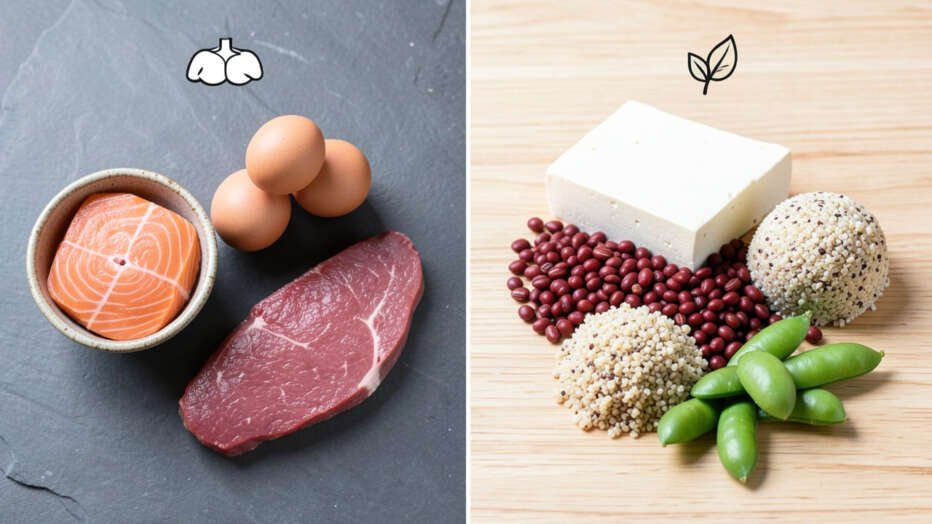
Animal versus plant protein primarily differ in amino acid completeness and digestibility, not overall protein content. Animal proteins like eggs and meat typically provide complete essential amino acids and higher bioavailability, while plant proteins offer fiber, antioxidants, and less saturated fat. Both can support muscle growth and overall health when dietary planning ensures adequate intake of all essential amino acids.
Animal vs plant protein is a nutrition debate that affects everything from muscle growth to long-term health. Your choice of protein source shapes your amino acid intake, digestion, and even your risk of chronic disease.
This guide compares both options across protein quality, digestibility, and real-world outcomes so you can pick the right approach for your body and goals.
Simply put, animal proteins deliver complete amino acid profiles and superior bioavailability, while plant proteins bring fiber, antioxidants, and lower saturated fat to the table. Both can support muscle and build health when planned well. Combining the two often gives you the best of both worlds, but neither option is wrong for most people.
Key Takeaways
- Animal vs plant protein differ mainly in amino acid completeness and digestibility, not total protein content.
- Animal sources like chicken, eggs, and dairy are complete proteins, while most plant sources lack one or more essential amino acids.
- Soy, quinoa, and hemp are plant proteins that match or rival animal proteins in quality.
- Animal vs plant protein research shows both support muscle gain when total daily intake is adequate.
What Is the Difference Between Animal vs Plant Protein?
Protein is built from 20 amino acids, and your body needs all of them to function properly. Nine of these are essential, meaning you must get them from food. The core difference between these two protein families comes down to how many of those nine essentials each source provides.
Animal proteins are complete because they contain all nine essential amino acids in the right proportions. Most plant proteins are incomplete, meaning they run low in at least one essential amino acid. That single fact drives most of the nutritional differences you will see in this guide.
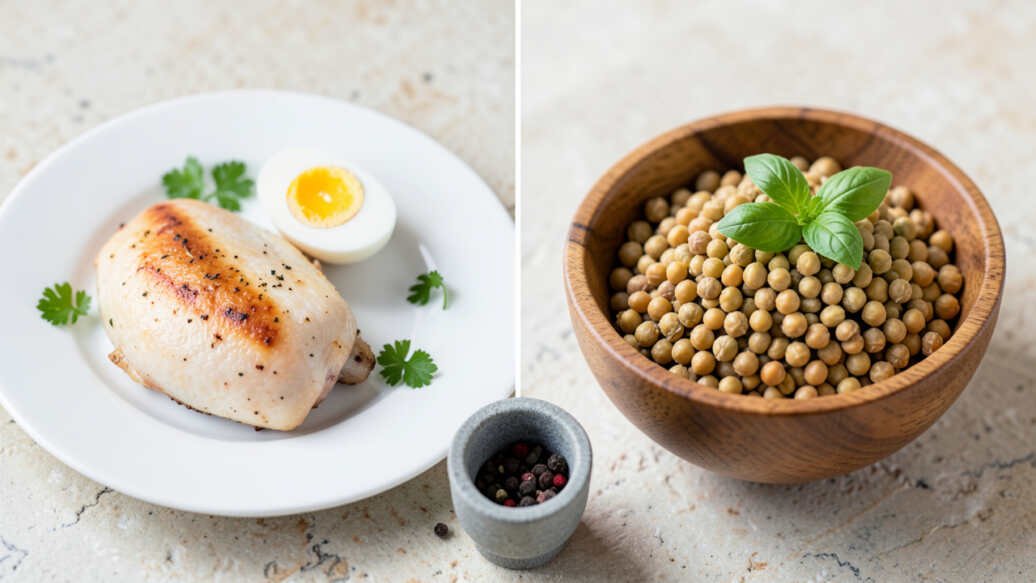
- Animal sources include meat, poultry, fish, eggs, and dairy.
- Plant sources include legumes, beans, lentils, peas, nuts, seeds, soy, and whole grains.
- Complete plant proteins include soy, quinoa, amaranth, buckwheat, and hemp seeds.
- Incomplete plant proteins can be paired to fill gaps, like rice and beans.
- Animal proteins contain more leucine, the key amino acid for muscle building.
- Plant proteins come packaged with fiber, phytochemicals, and unsaturated fats.
- Animal proteins often bring saturated fat and cholesterol along for the ride.
The practical difference matters most when your diet is repetitive. If you eat a varied diet, the incomplete nature of most plant proteins rarely becomes a problem because different plants cover each other’s gaps automatically.
According to the USDA FoodData Central, 100 grams of cooked chicken breast provides about 31 grams of protein, while the same amount of cooked lentils offers roughly 9 grams plus a heavy load of fiber. Both are excellent, but they serve different metabolic purposes.
How Complete Are Animal and Plant Protein Sources?
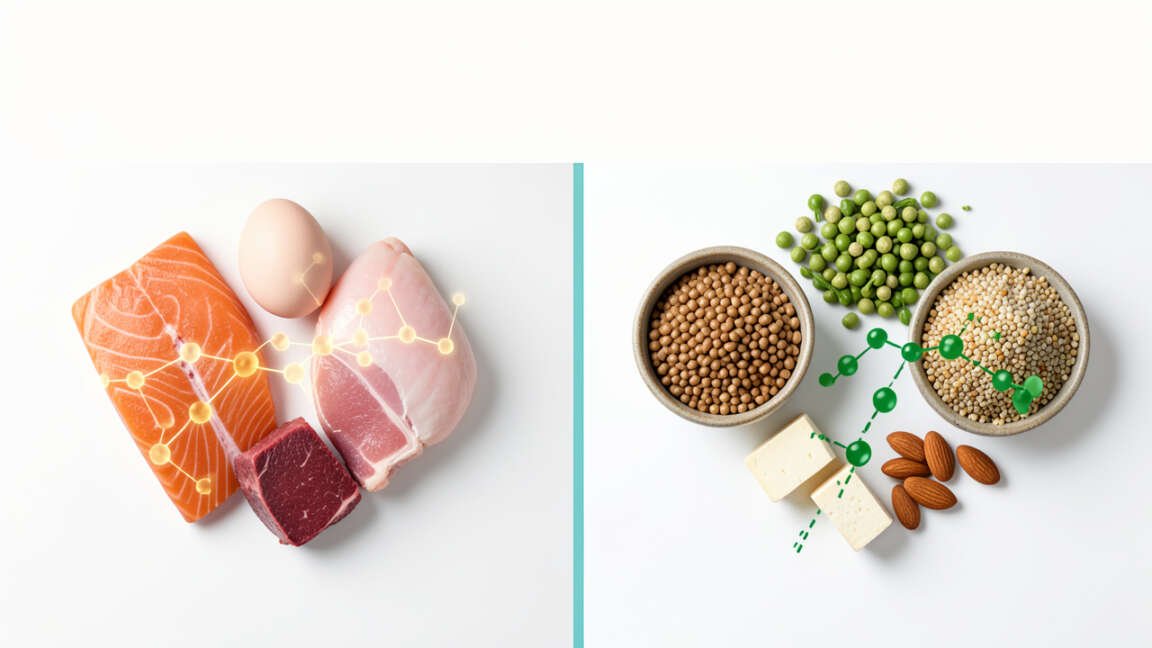
A complete protein supplies all nine essential amino acids in amounts your body can actually use. Most animal proteins pass this test easily. Whey, casein, egg, and chicken all rank at or near the top for amino acid balance.
Plant proteins vary widely. Soy and quinoa are complete, but most beans, grains, nuts, and seeds fall short in one or more amino acids. Lysine, methionine, and tryptophan are the most common limiting amino acids in plant foods.
The table below shows where common sources land.
| Food Source | Amino Acid Status | Notes |
|---|---|---|
| Chicken breast | Complete | High in leucine; excellent for muscle support |
| Soy (tofu, tempeh) | Complete | Matches animal protein in PDCAAS quality scores |
| Quinoa | Complete | Also high in fiber and magnesium |
| Lentils | Incomplete | Low in methionine; pair with rice |
| Chickpeas | Incomplete | Low in methionine; pair with wheat |
| Peanuts | Incomplete | Low in lysine; pair with grains |
Pairing complementary plant proteins is simpler than most people think. Rice and beans, hummus with pita, or peanut butter on whole wheat each cover the amino acid gaps automatically without any precise planning at the table.
The Academy of Nutrition and Dietetics confirms that a varied plant-based diet meets all amino acid needs without complicated food combining. The USDA reports that 100 grams of firm tofu provides about 17 grams of protein, making soy the closest plant rival to animal sources gram for gram.
How Does Digestion Affect Animal vs Plant Protein Absorption?
Digestibility determines how much of the protein you eat actually reaches your bloodstream. The true quality of animal vs plant protein depends on two things: the amino acid profile and how well your gut can break the food down.
Animal proteins are highly digestible. Your body absorbs 90 to 95 percent of the protein found in eggs, dairy, and meat. According to the American Journal of Clinical Nutrition, true ileal digestibility for well-cooked animal products sits at the top of that range.
Plant proteins score lower, typically 60 to 80 percent, because plant cell walls and antinutrients like phytates and lectins interfere with absorption.
- Cooking inactivates most antinutrients like trypsin inhibitors found in raw beans.
- Soaking and sprouting beans improves their protein digestibility.
- Fermentation boosts amino acid availability in soy products like tempeh and miso.
- Grinding nuts and seeds releases more of their nutrients for absorption.
- Processed plant proteins like isolates digest almost as well as animal proteins.
- Dairy offers the best digestibility of any animal source.
- Combining plant foods raises the overall digestibility of a meal.
Important: If you rely on plant protein, aim for roughly 20 to 30 percent more total protein to offset lower digestibility rates. A target of 2.0 to 2.2 grams per kilogram of body weight works well for plant-based athletes.
Preparation matters more than most people realize. A raw grain can lose a large share of its protein value, while the same grain cooked, fermented, or ground into flour becomes far more available to your digestive system.
Animal vs Plant Protein: Protein Quality Scores Compared
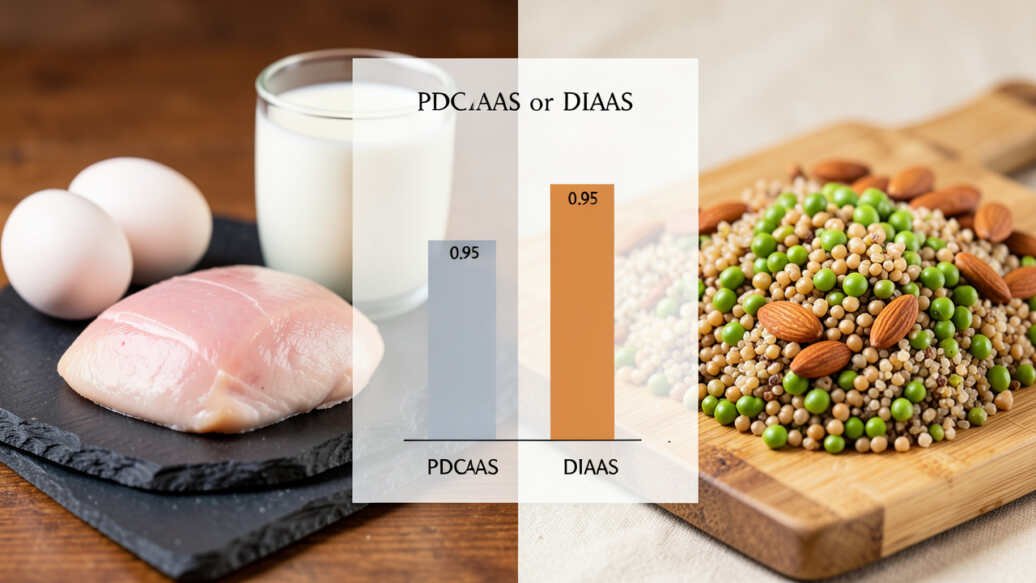
Scientists use two main scoring systems to measure protein quality: PDCAAS and DIAAS. Both consider amino acid composition alongside digestibility. These scores let nutrition experts compare animal vs plant protein objectively instead of relying on guesswork.
The PDCAAS uses a scale from 0 to 1.0. The newer DIAAS system is more accurate because it measures digestibility at the end of the small intestine and can even score above 1.0 for high-quality proteins like whey.
| Protein Source | PDCAAS Score | Protein per 100g | Note |
|---|---|---|---|
| Whey protein | 1.0 | ~80g | Gold standard for muscle recovery |
| Egg white | 1.0 | ~11g | Reference protein for research |
| Soy protein isolate | 1.0 | ~88g | Best scoring plant option |
| Pea protein concentrate | 0.73 | ~74g | Common in plant protein powders |
| Chickpeas | 0.78 | ~9g | Limiting amino acid is methionine |
| Whole wheat | 0.42 | ~13g | Limiting amino acid is lysine |
The Food and Agriculture Organization reports that soy protein isolate scores a perfect 1.0 on the PDCAAS scale, identical to dairy protein. These numbers confirm that the quality gap shrinks dramatically when plant proteins are processed or paired correctly.
How these scores are calculated follows a set order: first measure the amino acid profile, then compare it to a reference protein, adjust for digestibility, and finally assign a final score. Whole grains sit near the bottom of the list, but they rarely make up the bulk of anyone’s daily protein intake.
What Does the Research Say About Muscle Growth?
Muscle protein synthesis is the process that rebuilds muscle after training. Leucine acts as the trigger, and animal proteins contain more of it per serving than most plant proteins. That gives animal sources a small but meaningful advantage in the hours after a workout.
A meta-analysis in the Journal of Nutrition found that animal protein promoted greater muscle protein synthesis per meal in older adults. However, the same research noted that when total daily protein intake was adequate, the source mattered far less. Consistency beats perfection.
- Eat 20 to 40 grams of protein at each main meal.
- Include 2 to 3 grams of leucine per meal for maximal muscle response.
- Spread protein across three to four meals instead of one large dose.
- Choose higher-protein plant foods like soy and pea when following a plant-based diet.
- Add resistance training so the protein you eat gets converted into actual muscle.
The International Society of Sports Nutrition recommends 1.4 to 2.0 grams of protein per kilogram of body weight daily for most active people. That target applies regardless of whether your protein comes from animals, plants, or a mix of both.
Tip: Plant eaters can close the leucine gap by choosing a soy protein isolate or a pea-rice protein blend around workouts. These powders digest quickly and deliver a comparable amino acid punch to whey.
Many people worry plant protein cannot build muscle. Controlled trials show the opposite: when total intake and leucine levels are sufficient, muscle gains from plant protein are nearly identical to animal protein over a training block.
Which One Should You Choose? Matching Protein to Your Goals
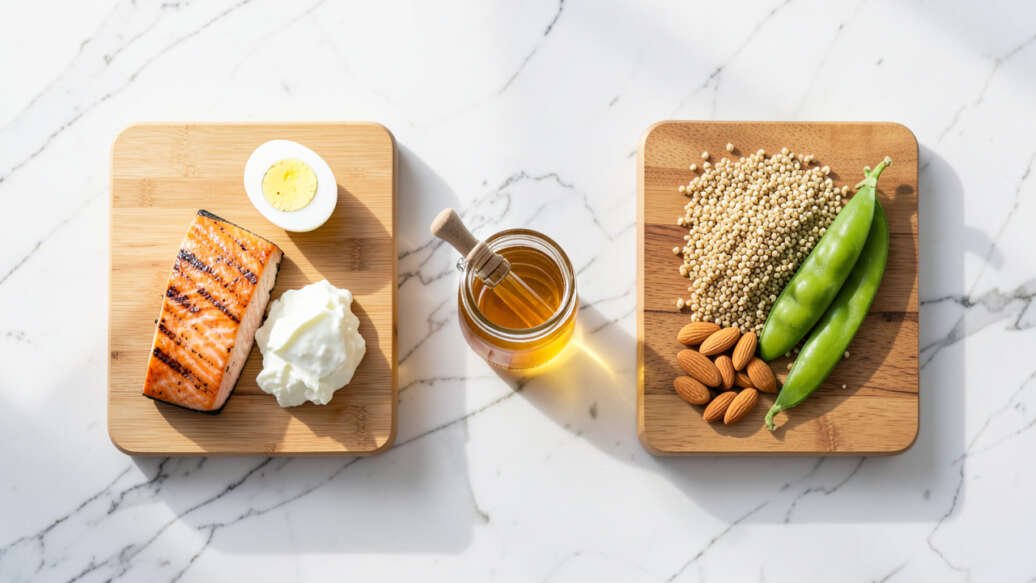
There is no universal winner in the animal vs plant protein debate. Your best source depends on your budget, ethics, health profile, food preferences, and training demands. The decision is personal, but the nutrition science gives you a clear framework.
If you want the most absorbable protein in the fewest calories, animal sources win. If you want fiber, antioxidants, and sustained fullness, plant sources stand out. The table below breaks down how each option stacks up on the factors that matter most.
| Factor | Animal Protein | Plant Protein |
|---|---|---|
| Amino acid profile | Complete; high in leucine | Mostly incomplete; soy and quinoa are complete |
| Digestibility |