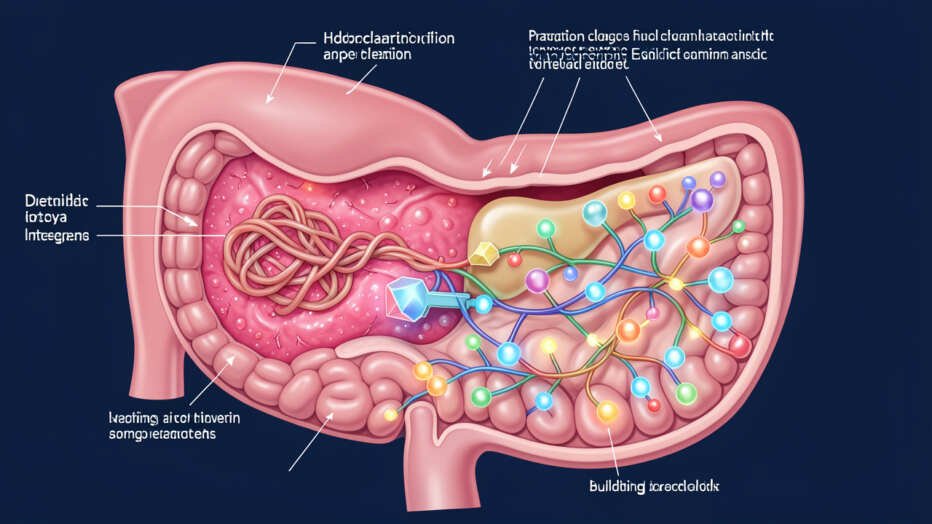
The body breaks down dietary protein into individual amino acids through digestion in the stomach and small intestine, which is necessary for absorption and use. Key enzymes like pepsin and trypsin facilitate this process, with about 95 percent of digestion and absorption occurring in the small intestine. The resulting amino acids then travel through the bloodstream to rebuild muscle, create enzymes and hormones, and support overall cellular repair and energy.
Ever wonder how the body breaks down and uses dietary protein? The answer shapes how you build muscle, recover from workouts, and stay healthy. This post walks through the entire process, from your first bite to the amino acids powering every cell in your body.
Simply put, your body breaks down dietary protein into individual amino acids using stomach acid and digestive enzymes, then absorbs them in the small intestine. Those amino acids travel through your bloodstream to rebuild muscle, enzymes, hormones, and immune cells. Eating protein throughout the day helps your body use every gram efficiently.
Key Takeaways
- Dietary protein must be broken into amino acids before your body can use it for growth, repair, and energy.
- Your stomach and small intestine work together with specialized enzymes like pepsin and trypsin to complete the breakdown process.
- About 95 percent of protein digestion and absorption happens in the small intestine, according to standard physiology references.
- Complete proteins from animal sources, soy, and quinoa contain all nine essential amino acids your body cannot make on its own.
- Spreading protein across 3 to 4 meals supports better muscle protein synthesis than eating one giant serving.
What Is Dietary Protein and Why Does Your Body Need It?
Dietary protein consists of long chains of amino acids held together by peptide bonds. When you eat protein-rich foods, your body does not use them in their whole form. It first cuts those chains into single amino acids, then reassembles them into the specific proteins your tissues need.
Scientists call amino acids the building blocks of life, and for good reason. Every cell in your body contains protein, and about 20 different amino acids combine in countless arrangements to form everything from muscle fibers to digestive enzymes and immune antibodies.
Here is what your body does with the amino acids from dietary protein:
- Builds and repairs muscle tissue after exercise and injury
- Produces enzymes that speed up chemical reactions throughout the body
- Creates hormones that regulate growth, metabolism, and appetite
- Forms antibodies that fight off infections and support immunity
- Maintains healthy skin, hair, nails, bones, and connective tissue
- Supplies energy when carbohydrate and fat stores run low
Nine of those amino acids are called essential because your body cannot produce them. You must get them from dietary protein every day.
| Essential Amino Acid | Primary Role in the Body |
|---|---|
| Leucine | Triggers muscle protein synthesis |
| Lysine | Supports collagen formation and calcium absorption |
| Methionine | Helps produce creatine and protect cells from damage |
| Tryptophan | Precursor for serotonin and melatonin |
| Threonine | Needed for skin, connective tissue, and immune function |
The remaining four essential amino acids, histidine, isoleucine, phenylalanine, and valine, also play critical roles in growth, energy, and oxygen transport. A diet rich in varied protein sources ensures you get all of them.
How Does the Body Break Down Dietary Protein?
Digestion starts the moment food enters your mouth. Chewing shreds meat, eggs, beans, and dairy into smaller pieces so enzymes can work faster. But the real chemical breakdown happens in your stomach and small intestine, where strong acid and specialized enzymes take over.
Your stomach lining produces hydrochloric acid that denatures protein. That means it unfolds the complex three-dimensional structure of the protein strands, exposing the peptide bonds so enzymes can slice them apart.
The complete breakdown of dietary protein follows this order:
- Chewing tears protein into smaller fragments and mixes it with saliva.
- Stomach acid denatures the protein and activates pepsinogen into pepsin.
- Pepsin cuts protein into shorter chains called peptides.
- The pancreas releases trypsin and chymotrypsin into the small intestine.
- Brush border enzymes on the intestinal lining break peptides into single amino acids.
- Absorptive cells called enterocytes take up amino acids and send them into the bloodstream.
Each enzyme targets different bonds, acting like a team of scissors that gradually reduce a long protein chain into individual pieces. This layered approach makes digestion fast and efficient.
| Enzyme | Location | Function |
|---|---|---|
| Pepsin | Stomach | Splits protein into peptides |
| Trypsin | Small intestine | Cuts peptides at specific amino acids |
| Chymotrypsin | Small intestine | Breaks down aromatic amino acid bonds |
| Aminopeptidase | Intestinal brush border | Removes single amino acids from peptide ends |
Tip: Chew your food thoroughly. The more surface area you create in your mouth, the easier it is for stomach acid and enzymes to finish the job.
Step-by-Step: From a Protein Shake to Your Muscles
To see the whole system in action, imagine drinking a whey protein shake after a workout. That single serving travels through your digestive tract like a package moving through a processing center, changing form at every stop.
Liquid proteins like shakes digest faster than solid foods because they require less mechanical breakdown. Still, the chemical process follows the same route, and most of the amino acids from that shake enter your bloodstream within 2 to 3 hours.
| Stage | Typical Time | What Happens |
|---|---|---|
| Mouth | 1-2 minutes | Chewing breaks food into a soft bolus |
| Stomach | 30 minutes to 2 hours | Acid denatures protein, pepsin creates peptides |
| Small intestine | 2-4 hours | Enzymes finish breakdown, absorption occurs |
| Liver and bloodstream | Within 4-5 hours | Amino acids enter portal blood and reach tissues |
Delayed gastric emptying is normal. Fats, fiber, and large meals slow things down, which is why a steak takes longer to digest than a protein shake. Your body adapts the speed to the meal composition.
Warning: Eating a massive protein meal all at once does not build more muscle. Research suggests the body uses roughly 25-40 grams per meal most efficiently. The excess gets oxidized for energy or stored as fat.
How Does the Body Use Dietary Protein After Absorption?
Once amino acids reach your bloodstream, your liver acts as the main dispatcher. It decides which amino acids go to muscles, organs, and tissues based on your current needs, whether that is repairing a workout, healing a cut, or producing hormones.
Muscle protein synthesis is the star of the show. Resistance training increases the rate at which your muscles pull amino acids out of circulation. The amino acid leucine plays a special role as a molecular trigger that switches on this building process.
Here is what your body does with the amino acids from dietary protein:
- Builds new contractile proteins in muscle fibers after training
- Repairs damaged cells in skin, gut, and liver tissue
- Produces enzymes that digest food and support metabolism
- Creates hormones like insulin and growth hormone
- Forms antibodies and immune signaling molecules
- Generates glucose when fasted or during endurance exercise
The body also recycles amino acids from old, damaged proteins. According to the University of Waterloo physiology research, your body turns over roughly 250 grams of protein daily, far more than you eat, which is why dietary intake matters so much.
| Body System | Protein Use |
|---|---|
| Muscles | Repair and growth after exercise |
| Liver | Plasma proteins, detoxification enzymes |
| Immune system | Antibodies and white blood cell proteins |
| Bones | Collagen matrix and mineral binding |
| Skin and hair | Keratin, collagen, and elastin |
Important: Research led by Dr. Stuart Phillips at McMaster University shows that consuming 2-3 grams of leucine per meal maximally stimulates muscle protein synthesis. Animal proteins and soy deliver this easily.
What Are the Main Types of Protein in Food?
Not all protein is created equal. Protein quality depends on two factors: the amino acid profile and how easily your body digests and absorbs it. Complete proteins contain all nine essential amino acids in sufficient amounts.
Incomplete proteins lack one or more.
Most animal foods qualify as complete proteins. For plant eaters, soy, quinoa, and buckwheat stand out as complete options. Combining different plant proteins, like rice and beans, also fills the gaps.
| Type | Examples | Amino Acid Status |
|---|---|---|
| Animal protein | Chicken, beef, fish, eggs, milk, Greek yogurt | Complete |
| Soy | Tofu, tempeh, edamame | Complete |
| Quinoa and buckwheat | Cooked grains | Complete |
| Legumes | Lentils, chickpeas, black beans | Incomplete, low in methionine |
| Nuts and seeds | Almonds, walnuts, chia, hemp | Incomplete, low in lysine |
According to the Harvard T.H. Chan School of Public Health, eating a variety of protein sources across the day prevents any amino acid shortfall. You do not need to combine proteins at every single meal.
- Pair grains with legumes to complete the amino acid profile
- Include dairy or eggs if you are vegetarian
- Use soy products regularly as a complete plant option
- Add nuts and seeds to salads, oats, and smoothies
- Choose legumes at least 3 times per week for fiber and protein
Tip: If you follow a plant-based diet, aim for a protein source at every meal. A mix of legumes, grains, nuts, and soy easily covers all nine essential amino acids by the end of the day.
How Much Dietary Protein Do You Actually Need?
The Recommended Dietary Allowance for protein is 0.8 grams per kilogram of body weight per day for average adults. According to the National Academies of Sciences, Engineering, and Medicine, that equals about 56 grams per day for a 70 kg person.
But the RDA is the minimum to prevent deficiency, not the optimal amount for muscle growth, recovery, or healthy aging. The International Society of Sports Nutrition recommends 1.4 to 2.0 grams per kilogram for active individuals. The Dietary Guidelines for Americans suggest protein should make up 10 to 35 percent of daily calories.
| Population | Grams per kg | Example for 70 kg Person |
|---|---|---|
| Sedentary adult | 0.8 g | 56 g per day |
| Recreational exerciser | 1.2-1.4 g | 84-98 g per day |
| Strength athlete | 1.6-2.0 g | 112-140 g per day |
| Older adult | 1.2-1.5 g | 84-105 g per day |
Use your body weight, not your age or gender alone, to set your target. A 70 kg lifter aiming for 1.8 g per kg needs roughly 126 grams of protein spread across meals.
- Weakness and slow recovery after workouts
- Hair thinning and brittle nails
- Frequent infections due to weaker immunity
- Fluid retention and slow wound healing
- Cravings for protein-rich foods like meat and dairy
Warning: Extremely high protein intakes above 3 grams per kilogram are unnecessary and may strain kidneys in people with existing kidney disease. Always check with a healthcare professional before major changes.
Common Mistakes People Make With Protein Intake
Even people who eat plenty of protein make avoidable errors that reduce results. Timing, food quality, and digestion all influence how much of that protein your body actually puts to work.
The most common problem is front-loading calories. A breakfast with 5 grams of protein, lunch with 60 grams, and dinner with another 10 grams is a recipe for uneven muscle support. Your body handles large boluses less efficiently than steady supply.
Here are the top mistakes to fix:
- Eating most of your daily protein in one giant dinner. Aim for 25-40 grams per meal instead.
- Choosing processed meat products like sausages and deli slices over whole food sources.
- Relying solely on shakes and bars while ignoring whole foods that provide fiber and micronutrients.
- Skipping protein after training and expecting the next day to make up for it.
- Ignoring gut symptoms like bloating, which may signal poor digestion of specific protein foods.
- Assuming more protein always equals more muscle. Excess calories still store as fat.
Tip: Split your target into four roughly equal portions. If you need 120 grams daily, aim for about 30 grams at breakfast, lunch, dinner, and one snack or shake.
Digestion quality also matters. Some people cannot tolerate large amounts of whey or dairy and experience bloating. Swapping to egg whites, chicken, or plant protein sources often solves the issue without sacrificing total intake.
Important: The body absorbs amino acids best from foods with high digestibility, like eggs, chicken, and soy. Plant proteins from whole grains and legumes have slightly lower digestibility scores.
Why Do Older Adults Need More Protein?
Age-related muscle loss, known as sarcopenia, begins as early as age 30 and accelerates after 60. Studies from the American Society for Nutrition report that adults can lose 1 to 2 percent of muscle mass per year after age 50. That decline increases frailty, falls, and metabolic issues.
Older adults also face anabolic resistance. Their muscles require more amino acids to trigger the same level of protein synthesis as younger people. This means eating the RDA of 0.8 g per kg is often not enough to preserve muscle.
The PROT-AGE Study Group, an international panel of nutrition experts, recommends healthy older adults consume 1.2 grams per kilogram per day. For a 70 kg older adult, that is about 84 grams of protein daily, roughly 50 percent more than the standard RDA.
These groups also have higher protein needs:
- Strength and endurance athletes who train daily
- Pregnant and breastfeeding women supporting fetal and infant growth
- People recovering from surgery, burns, or serious illness
- Vegans and vegetarians who need careful amino acid planning
- Anyone on a calorie-restricted diet losing weight
During weight loss, higher protein intake protects lean mass. The Journal of the Academy of Nutrition and Dietetics highlights that a calorie deficit plus protein at 1.6 to 2.0 g per kilogram helps people lose fat while preserving muscle. Combining that intake with resistance training gives the best outcome.
Tip: Older adults should pair each meal with a protein source and engage in strength training twice weekly. The combination strongly supports muscle retention and independent living.
Frequently Asked Questions
How long does it take to digest protein?
Most protein foods take 3 to 4 hours to fully digest and absorb. Liquid proteins like whey shakes digest faster, around 1 to 2 hours, while slow-digesting casein from dairy can release amino acids for up to 4 to 5 hours.
Can your body absorb more than 30 grams of protein at one meal?
Yes. The small intestine can absorb far more than 30 grams in a sitting. However, research indicates that roughly 25 to 40 grams per meal maximizes muscle protein synthesis.
The remaining amino acids get used for energy, immune function, or other metabolic processes.
Does cooking damage protein?
No. Cooking denatures protein, unfolding its structure, which actually makes it easier to digest. Only extreme, prolonged heat, like burning, can damage amino acids.
Gentle cooking methods like boiling, steaming, and baking preserve protein quality.
What happens if you eat too much protein?
Your liver removes the nitrogen from excess amino acids and converts it to urea, which your kidneys excrete. That process is safe for healthy people. However, those with pre-existing kidney disease should monitor protein intake under medical guidance.
Do you need protein at every meal?
Spreading protein across 3 to 4 meals is more effective for muscle building than eating it all at dinner. Each meal with 20 to 40 grams gives your body a fresh supply of amino acids and keeps muscle protein synthesis elevated throughout the day.
Final Thoughts
Your body breaks down dietary protein into amino acids through a precise chain of mechanical, chemical, and enzymatic steps in the stomach and small intestine. Those amino acids then support muscle growth, immunity, hormones, and every structural tissue you rely on. To get the most out of your protein, spread it across the day, choose high-quality complete sources, and match your intake to your activity level.
Small adjustments to your eating pattern can produce lasting improvements in strength, recovery, and overall health.