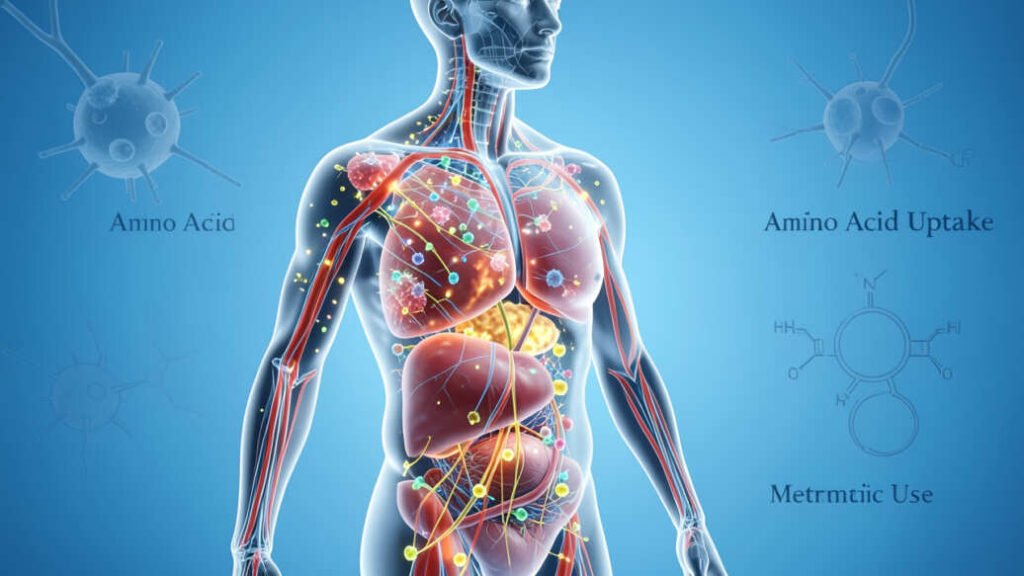
The human body cannot store protein for later use in the same way it stores carbohydrates or fat. It maintains a small amino acid pool that acts as a temporary buffer, but any excess dietary amino acids are converted into glucose or fat for energy or storage, not back into protein. Therefore, consuming a consistent amount of protein throughout the day is the most effective strategy to support muscle repair and overall metabolism.
Can the human body store protein for later use? It is a surprisingly common question for people who track macros, lift weights, or follow high-protein diets. This post explains the science behind protein metabolism, what really happens to excess amino acids, and the smartest way to time your protein intake. You will also learn why your body never built a protein warehouse, and what to do about it.
Simply put, the human body cannot store protein the way it stores carbs and fat. It does keep a small amino acid pool that acts as a short-term buffer between meals. Any excess amino acids get converted into glucose or fat, never back into protein. Eating consistent amounts throughout the day works best.
Key Takeaways
- Protein cannot be stored for later use like glycogen or body fat.
- Your body keeps a tiny amino acid pool that buffers the gaps between meals.
- Excess amino acids are converted to glucose or fat through deamination.
- Consistent daily protein intake supports muscle repair better than one giant meal.
- Spreading protein across 3-5 meals maximizes muscle protein synthesis.
Can the Human Body Store Protein for Later Use?
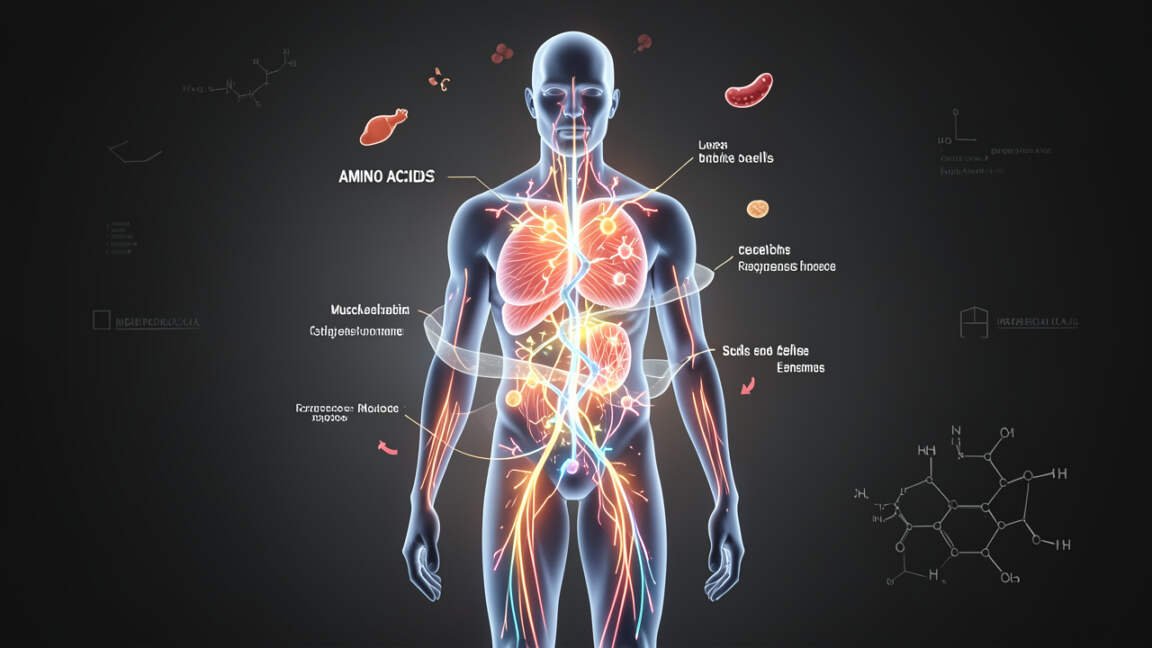
The short answer is no. Unlike carbohydrates, which your liver and muscles store as glycogen, or dietary fat, which your body stores in adipose tissue, protein has no dedicated long-term storage form. Your body breaks dietary protein into amino acids, and those amino acids enter a small circulating pool inside your blood and cells.
This amino acid pool acts more like a holding area than a warehouse. It holds enough amino acids to support essential cell functions for a few hours. After that window, leftover amino acids are converted into other compounds, mostly glucose or fatty acids.
- Muscle tissue is the closest thing to a protein reserve, but tapping into it means breaking down functional tissue.
- Liver glycogen holds roughly 100g of carbohydrates for quick energy.
- Body fat is a nearly unlimited long-term fuel depot.
- The amino acid pool turns over quickly, usually within 3-6 hours.
- No physiological mechanism exists to “park” extra protein in tissue for later use.
| Storage Form | Duration | Storage Capacity |
|---|---|---|
| Muscle protein | Long-term | Functional tissue only |
| Liver glycogen | 12-24 hours | About 100g |
| Body fat | Weeks to months | Practically unlimited |
| Amino acid pool | Hours | Small, around 100-200g |
Since protein cannot be stored for the long haul, meal timing matters more than most people think. If you go 12-16 hours without protein, your body starts pulling amino acids from muscle and other tissues to keep essential functions running.
What Is the Amino Acid Pool and How Does It Work?
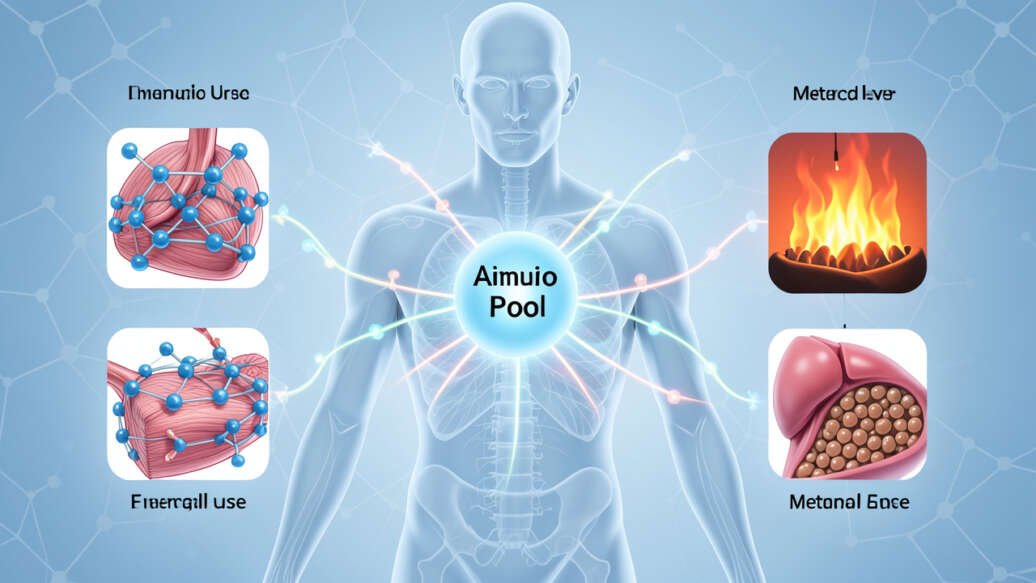
The amino acid pool is the total supply of free amino acids available in your blood and cells at any given moment. Think of it as a buffer between the protein you eat and the protein your body builds, including muscle, enzymes, hormones, and immune cells.
When you eat a protein-rich meal, your digestive system floods this pool. Your body then draws from it to drive muscle protein synthesis and countless other metabolic tasks. Here is the step-by-step process:
- You eat a protein-containing meal or snack.
- Stomach acid and digestive enzymes break protein down into amino acids and small peptides.
- Those amino acids enter the bloodstream through the small intestine.
- Cells throughout your body take up amino acids from the pool as needed.
- Surplus amino acids get deaminated, meaning the nitrogen group is stripped off.
- The remaining carbon skeletons go toward energy production or fat storage.
Several factors determine how large and how active your amino acid pool is at any time:
- Total daily protein intake
- Meal frequency and portion sizes
- Training status and total muscle mass
- Hormones like insulin, growth hormone, and cortisol
- Liver and kidney health, since they handle nitrogen disposal
Tip: Your amino acid pool refills continuously, not just after big meals. Small protein-containing snacks every 3-4 hours keep it topped up without overloading the system.
What Does the Body Do When It Can’t Store Protein?
Your body can only process so much dietary protein at once. According to research published in the American Journal of Clinical Nutrition, protein absorption and utilization rates hover around 8-10 grams per hour. Eat a giant ribeye in one sitting, and a large share of that protein will not become muscle.
Instead, the liver strips nitrogen from excess amino acids through a process called deamination. The nitrogen becomes urea, which your kidneys filter and excrete through urine. The leftover carbon skeletons then take one of several paths:
- Converted into glucose through gluconeogenesis when carb intake is low
- Converted into fatty acids and stored as body fat when total energy intake is high
- Burned directly for energy if you are in a calorie deficit
- Used to replenish glycogen stores after intense exercise
- Lost through sweat and other metabolic processes in small amounts
| Metabolic Fate | Condition | Outcome |
|---|---|---|
| Gluconeogenesis | Low carb intake | New glucose production |
| Fat synthesis | Calorie surplus | Fatty acid storage |
| Oxidation | Calorie deficit | Direct energy |
| Urea excretion | Always | Nitrogen waste removal |
Warning: Very high single-meal protein loads, especially above 0.6g per kg of body weight per sitting, produce minimal extra benefit for muscle protein synthesis. The surplus simply gets oxidized or stored as fat.
This does not mean high-protein diets harm healthy kidneys. But it does mean dumping 80g of protein into one meal is inefficient if your goal is muscle growth.
Why Does the Body Avoid Storing Protein as Protein?
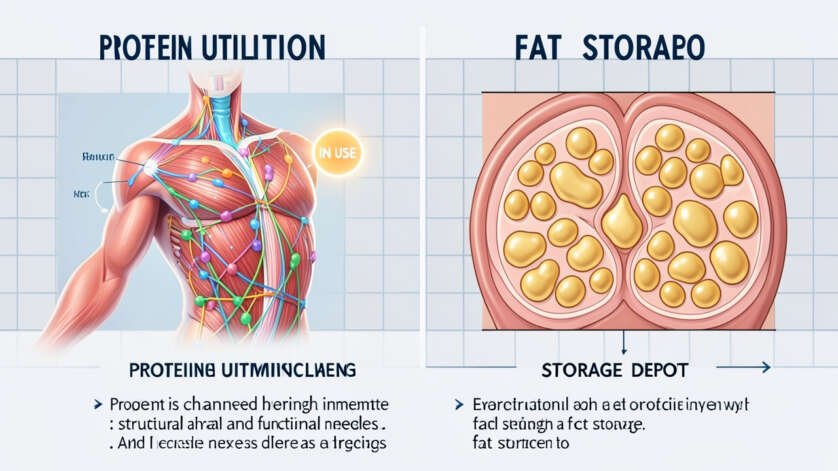
Evolution explains why your body never developed a protein warehouse. Storing protein as protein is metabolically expensive and structurally impractical compared to fat and glycogen.
Fat is lightweight and energy-dense. Glycogen is bulky but usable. Protein stores, by contrast, would require three to four grams of water for every gram of protein, making them heavy and inefficient.
Plus, protein carries nitrogen, and storing it long-term would create a constant toxic waste problem.
- Stored protein would demand continuous active maintenance.
- Every gram of protein stored as tissue represents lost energy potential.
- Breaking down stored protein for fuel would risk damaging functional tissue.
- Carbs and fat are easier to mobilize for energy on short notice.
- Nitrogen disposal adds a metabolic cost that fat and carbs do not have.
Instead of storing protein, your body constantly recycles it. Existing proteins are broken down and rebuilt daily. Studies in Medicine & Science in Sports & Exercise show that muscle protein synthesis rates can stay elevated for up to 24 hours after resistance training, which is exactly why consistent intake matters.
According to the World Health Organization, the body turns over roughly 250-300g of protein daily, even in sedentary people. That continuous turnover depends entirely on your daily diet. Missing your protein target for a day means your body pulls from its own tissue to cover the gap.
Important: Your muscle mass acts as a functional protein reserve, but you should not treat it as one. Using muscle protein for energy only happens during starvation, severe calorie deficits, or extreme training without enough food.
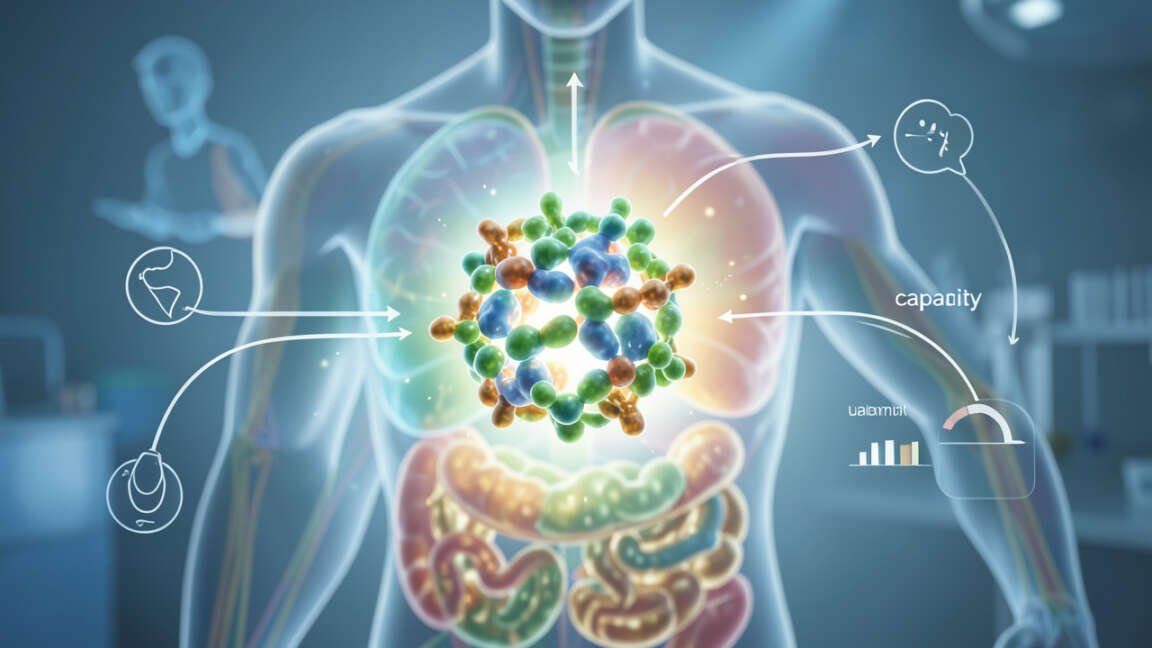
How Much Protein Can You Use Per Meal?
Research from the Journal of the International Society of Sports Nutrition suggests that roughly 0.4g of protein per kg of body weight per meal is enough to maximize muscle protein synthesis. For a 75kg person, that is about 30g per meal. This number changes depending on your weight, age, and training level.
This is not a hard ceiling. Your body can digest far more protein than that. But the extra amino acids mostly go toward oxidation and other pathways rather than additional muscle building.
| Body Weight | Protein Per Meal | Example Serving |
|---|---|---|
| 60kg (132 lbs) | 24g | 1 cup Greek yogurt plus egg |
| 75kg (165 lbs) | 30g | 120g chicken breast |
| 90kg (198 lbs) | 36g | 150g lean steak |
| 110kg (242 lbs) | 44g | 2 scoops whey plus milk |
- Hit the leucine threshold of roughly 2-3g per meal to trigger muscle protein synthesis.
- Eat protein every 3-4 hours for steady amino acid delivery.
- Total daily intake still drives most of your long-term results.
- Fast-digesting proteins like whey spike muscle protein synthesis faster than casein.
- Pairing protein with carbs after training improves overall uptake.
How to Maximize Protein Availability for Muscle Growth
Since your body cannot store protein for later use, consistent intake is your best strategy. Trying to cram your full daily target into one meal simply does not work. Here is a practical daily plan that keeps the amino acid pool topped up:
- Eat 25-40g of protein at breakfast.
- Include a solid protein source at lunch.
- Add a 20-30g protein snack between meals if your daily target is high.
- Eat another substantial protein portion at dinner.
- Consider a slow-digesting protein before bed if you train in the evening.
Tip: Aim for 1.6-2.2g of protein per kg of body weight per day if you train regularly. That range is supported by the Academy of Nutrition and Dietetics and major sports nutrition research.
- Distribute protein evenly across 3-5 meals rather than loading up at dinner.
- Use whole foods first and protein supplements second.
- Recalculate your protein target whenever your body weight changes.
- Increase intake during calorie deficits to preserve lean muscle mass.
- Prioritize sleep, since muscle protein synthesis drops when sleep is poor.
The takeaway is simple: your body has no protein reserve, so you create one through routine. Each meal is an opportunity to refill the amino acid pool and support tissue repair.
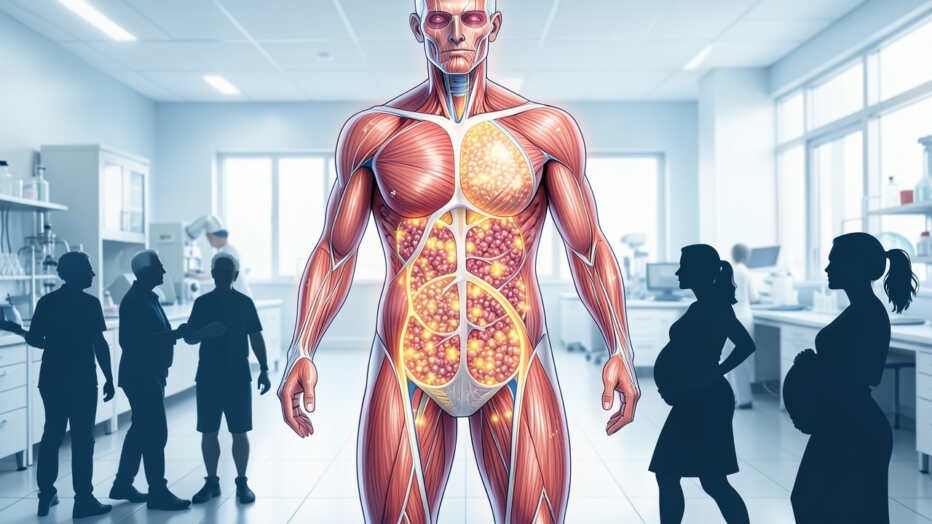
Who Needs to Pay Closest Attention to Protein Intake Patterns?
Some groups are more affected by the body’s inability to store protein than others. If you fall into any of these categories, meal timing and protein distribution matter even more:
- Athletes and bodybuilders in heavy training phases
- Adults over 60 who face age-related muscle loss or sarcopenia
- Vegans and vegetarians relying on less bioavailable plant proteins
- People in calorie deficits trying to preserve lean mass
- Patients recovering from surgery, injury, or serious illness
Older adults, in particular, show something called anabolic resistance. Research in the American Journal of Clinical Nutrition reports that older adults need more protein per meal to trigger the same muscle protein synthesis response as younger people. That means skipping meals or eating low-protein dinners has a bigger negative impact over time.
For these groups, every meal counts. There is no safety net of stored protein waiting in the wings. Missing a protein meal just leaves the amino acid pool running empty, and the body starts breaking down its own tissue to compensate.
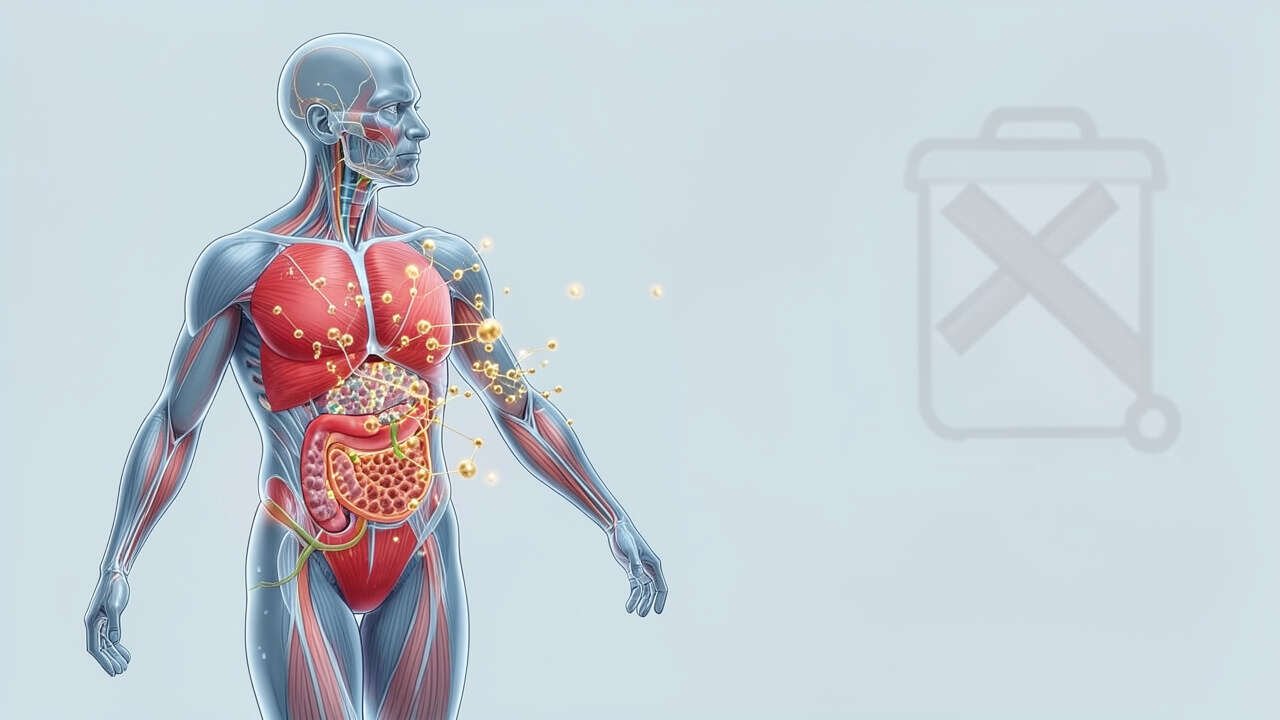
Common Misconceptions About Protein Storage
Plenty of myths float around gyms and nutrition forums about how the body handles protein. Here are the most common ones, and why they are wrong.
Myth 1: “Your body stores protein like it stores carbs.” Wrong. Carbohydrates convert into glycogen and store in the liver and muscles. Protein has no equivalent storage form beyond the tiny amino acid pool.
Myth 2: “Extra protein automatically becomes muscle.” Wrong. Extra protein only supports muscle growth when combined with resistance training and a calorie surplus. Otherwise, it gets oxidized or stored as fat.
Myth 3: “One giant protein meal covers your daily needs.” Wrong. A single massive meal spikes the amino acid pool temporarily, but most of the surplus gets converted or burned. Spreading intake across the day beats cramming it into one sitting.
Important: Protein tolerance per meal is not a strict limit. It reflects how efficiently your body uses amino acids for tissue building before shunting the rest into energy pathways. Eating more than the ideal amount is not harmful, but it is also not useful.
- Protein timing matters less than total daily intake for most people.
- Excess protein is not stored as protein, period.
- High-protein diets do not damage healthy kidneys in normal populations.
- Your muscle mass is a functional protein reserve, but you should not break it down on purpose.
Frequently Asked Questions
Can the body store excess protein as muscle?
Not directly. Your body adds muscle protein over time when you combine adequate protein intake with resistance training. But excess protein from a single meal does not automatically become muscle.
It requires the right training stimulus and overall calorie balance.
How long does protein stay in your system?
Protein digestion starts within minutes, and amino acids usually peak in the bloodstream 1-2 hours after eating. The amino acid pool stays elevated for roughly 3-6 hours, depending on the protein source. Slow-digesting proteins like casein release amino acids for up to 7-8 hours.
Does eating protein before bed help with overnight recovery?
Yes. A slow-digesting protein like casein before sleep provides a steady amino acid release through the night. This supports overnight muscle repair, especially for athletes who train in the evening or go long stretches without food.
Can too much protein turn into fat?
Yes, but only after your other energy needs are met. Surplus amino acids convert to glucose through gluconeogenesis, and when total calorie intake stays high, those carbon skeletons end up stored as body fat. Protein is less fattening gram for gram than carbs or fat, but excess is still excess.
What happens to protein you do not need?
Your liver deaminates the amino acids, removing the nitrogen. The nitrogen becomes urea and leaves through urine. The remaining carbon skeletons are oxidized for energy or converted into glucose and fatty acids for storage.
Final Thoughts
Your body cannot store protein for later use, but it gives you a small amino acid pool as a buffer. That means consistent daily intake, spread across meals, matters far more than one protein feast. Focus on hitting your daily protein target, train with intent, and let your body’s recycling system handle the rest.