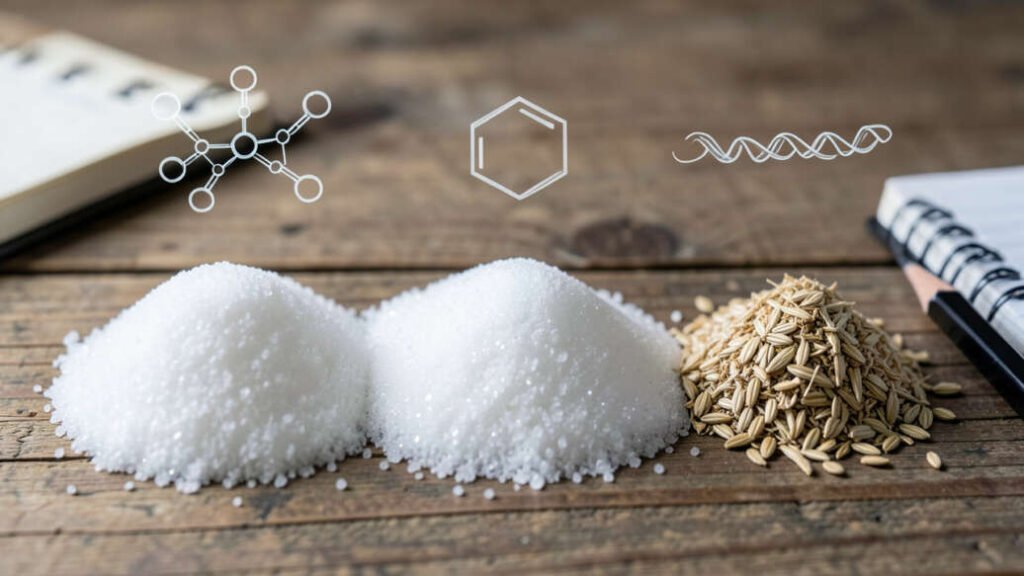
Sugar, starch, and fibre are the three main types of carbohydrates, each with a distinct chemical structure and impact on the body. Sugar is rapidly digested, causing quick spikes in blood glucose, while starch provides slower-releasing energy, and fibre passes through the digestive system largely undigested to support gut health. Understanding these differences is key to choosing foods that promote steady energy and overall metabolic well-being.
Starch, sugar and fibre are three types of carbohydrates that affect your body in very different ways. Knowing how they differ can help you choose foods that keep your energy steady, your digestion healthy, and your weight on track.
Simply put, sugar, starch and fibre are all carbohydrates, but they differ in structure, digestion speed, and health effects. Sugar raises blood glucose quickly, starch provides slower, steadier energy, and fibre passes through undigested to support gut health. Your body needs all three, but in very different amounts.
Key Takeaways
- Carbohydrates come in three main forms: sugar, starch and fibre, each with a unique structure and digestion path.
- Sugar spikes blood glucose fast, starch supplies steady energy, and fibre never gets digested at all.
- Most people eat too much free sugar and too little fibre, which raises the risk of metabolic and digestive problems.
- The right mix of these carbohydrates matters much more than cutting carbs entirely.

What Are Carbohydrates? The Three Main Types
Carbohydrates are one of the three macronutrients, alongside protein and fat. They are your body’s preferred fuel source, supplying about 4 calories per gram. Chemically, they are built from carbon, hydrogen and oxygen.
Every carbohydrate you eat falls into one of three categories: sugar, starch, or fibre. The key difference is molecular structure. That structure determines how quickly your body digests the food and what happens to your blood glucose levels.
- Sugar is made of one or two simple molecules that your body absorbs almost instantly.
- Starch is a long chain of glucose molecules that your body must break down over time.
- Fibre is a complex carbohydrate that your digestive enzymes cannot break apart.
- Whole plant foods like beans, oats, fruit and vegetables often contain a mix of these three types.
- Refined foods such as white bread and sugary drinks are usually heavy on sugar and starch, with very little fibre.
According to the Dietary Guidelines for Americans, carbohydrates should provide between 45 and 65 percent of your total daily calories. Yet the National Health Service (NHS) and the World Health Organization (WHO) both stress that the quality of those carbohydrates matters more than the quantity. Choosing whole, fibre-rich sources over refined ones has a direct impact on your energy, appetite and long-term disease risk.
Think of carbohydrates as a spectrum. At one end, sugar sits ready for instant use. At the other end, fibre supports your gut without ever becoming fuel.
Starch sits in the middle, releasing energy over hours. This spectrum explains why replacing refined, low-fibre carbohydrates with whole-food versions is one of the highest-impact changes you can make to your diet.

What Is Sugar? The Simplest Carbohydrate
Sugar is the smallest and simplest type of carbohydrate. It comes in two forms: monosaccharides, which are single sugar molecules, and disaccharides, which are two molecules joined together. Glucose, fructose, sucrose and lactose are the most common examples in food.
Sugar molecules are so small that your body absorbs them directly through the intestinal wall and into the bloodstream. This is why eating sugary foods causes a rapid rise in blood glucose. Your pancreas then releases insulin to move that glucose into your cells, which often leads to a sharp energy crash soon after.
The World Health Organization recommends keeping free sugars to less than 10 percent of your daily energy intake, and notes that cutting it to 5 percent brings additional health benefits. For most adults, that means limiting added sugar to roughly 25 to 30 grams per day, which is about six teaspoons.
- Glucose: found in fruits, honey and many vegetables; your body’s main energy currency.
- Fructose: naturally present in fruit, but heavily used in sugary drinks and processed foods.
- Sucrose: table sugar, made of one glucose and one fructose molecule.
- Lactose: the natural sugar found in milk and dairy products.