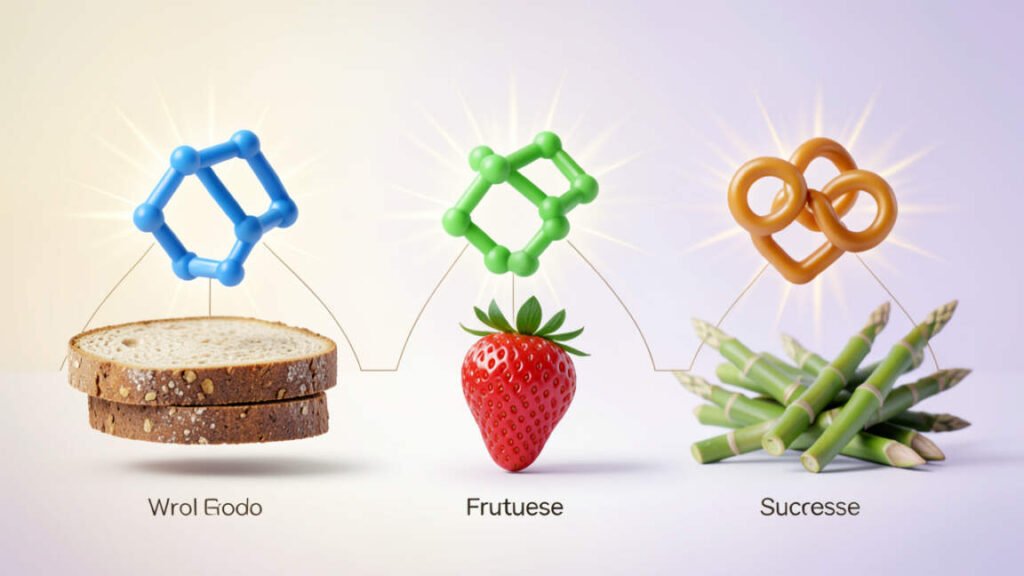
Glucose, fructose, and sucrose are distinct sugars differing in chemical structure and how the body metabolizes each one. Glucose serves as the body's primary energy source, fructose is metabolized almost exclusively by the liver, and sucrose is a disaccharide that breaks down into equal parts glucose and fructose upon digestion. Consequently, while small amounts are normal, excessive intake of fructose and sucrose is the principal driver of health issues associated with added sugars.
Glucose, fructose and sucrose appear in nearly everything we eat, yet each one travels a completely different path through your body. This post explains how they differ, how your body processes them, and what that means for your everyday food choices.
Simply put, glucose is your body’s preferred fuel, fructose is a sweeter sugar processed almost entirely by the liver, and sucrose is a 50/50 blend of the two. All three are fine in small amounts, but excess fructose and sucrose drive most of the health problems linked to added sugar.
Key Takeaways
- Glucose, fructose and sucrose have distinct chemical structures and metabolic pathways.
- Glucose raises blood sugar and triggers insulin;