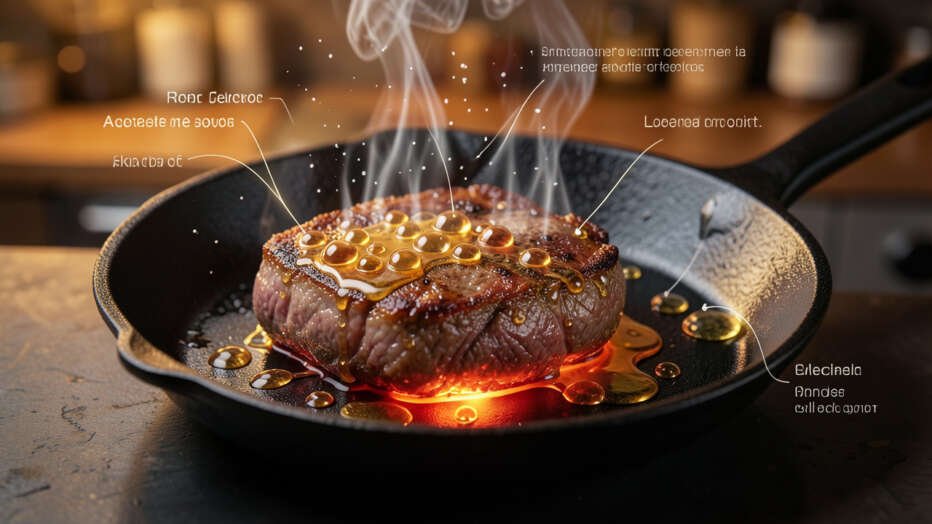
When fat is heated, it undergoes a sequence of physical and chemical changes, beginning with melting and potentially progressing through hydrolysis, oxidation, and thermal decomposition as the temperature increases. The critical threshold is the fat's specific smoke point, which, when exceeded, generates harmful compounds, destroys nutrients, and impairs flavor. These transformations depend on the fat type, temperature, and duration of heating, directly impacting cooking outcomes and food safety.
What happens to fat when food is heated is a question that matters to every home cook, professional chef, and health-conscious eater. Understanding how fats behave under heat can change the way you prepare meals, store leftovers, and even choose cooking oils.
When fat meets heat, a series of physical and chemical transformations occur. Some are harmless, while others can affect taste, nutrition, and safety. This post breaks down every stage of what happens to fat during heating, so you can cook smarter and eat better.
Simply put, when fat is heated it melts, releases glycerol, breaks down into fatty acids, and may eventually reach its smoke point where harmful compounds form. The degree of change depends on the type of fat, the temperature, and the duration of heating.
Key Takeaways
- What happens to fat when food is heated starts with melting, then moves through hydrolysis, oxidation, and potential decomposition depending on temperature.
- Different fats have different smoke points – reaching that threshold creates toxic fumes and destroys nutrients.
- Saturated fats are more heat-stable than polyunsaturated fats, which break down faster at high temperatures.
- Reheating oil multiple times accelerates harmful chemical reactions and degrades food quality.
- Choosing the right fat for the right cooking method protects both flavor and health.
What Is Fat and Why Does It React to Heat?
Fat is a macronutrient made up of molecules called triglycerides. Each triglyceride consists of three fatty acid chains attached to a glycerol backbone. This structure is what determines how a fat behaves when exposed to heat.
Fats exist in three main physical states at room temperature – solid, semi-solid, and liquid. Butter and lard are solid, coconut oil is semi-solid, and olive oil is liquid. These differences come down to the saturation level of their fatty acid chains.
- Saturated fats – no double bonds between carbon atoms in the fatty acid chains, making them straight and tightly packed
- Monounsaturated fats – one double bond creates a slight kink in the chain, reducing packing efficiency
- Polyunsaturated fats – multiple double bonds create significant kinks, preventing tight packing
- Trans fats – artificially straightened chains that behave like saturated fats despite being modified unsaturated fats
Heat energy causes these molecules to vibrate faster. The weaker intermolecular bonds holding solid fats together break first, causing melting. Beyond melting, the chemical bonds within the molecules themselves can break at higher temperatures.
| Fat Type | Melting Point | Smoke Point | Heat Stability |
|---|---|---|---|
| Butter | 90-95°F | 250-300°F | Low |
| Olive Oil | Below 40°F | 375-470°F | Moderate |
| Coconut Oil | 76°F | 350-385°F | Moderate |
| Avocado Oil | Below 40°F | 480-520°F | High |
| Ghee (Clarified Butter) | 90-95°F | 450-485°F | High |
The melting point and smoke point of a fat directly influence what happens during cooking. Understanding these thresholds helps you pick the right oil for every dish.
How Does Heat Affect Fat at Each Temperature Stage?
Fat does not transform in a single instant. It passes through distinct stages as temperature rises. Knowing these stages helps you recognize what is happening in your pan.
Stage 1: Melting (85-100°F)
The first change is physical, not chemical. Solid fats like butter and lard turn liquid as their molecules gain enough kinetic energy to overcome the intermolecular forces holding them in a solid structure. The triglyceride molecules remain intact during this stage.
This stage is completely safe and reversible. If you cool the fat back down, it will re-solidify. The nutritional content stays the same.
Melting is simply a change of state – like ice becoming water.
Stage 2: Thermal Oxidation Begins (250-350°F)
Once temperatures climb past 250°F, oxygen in the air starts reacting with the fatty acid chains. This is where chemistry takes over from physics. The double bonds in unsaturated fats are particularly vulnerable to this oxidation process.
- Hydroperoxides form as initial oxidation products
- Aldehydes and ketones develop, creating off-flavors and odors
- Volatile compounds begin evaporating from the oil surface
- The oil may start to foam slightly as gases are released
- Nutritional value begins to decrease as beneficial compounds break down
Stage 3: Hydrolysis (300-400°F)
When food containing water is added to hot fat, hydrolysis occurs. Water molecules attack the ester bonds in triglycerides, splitting them apart. This releases free fatty acids and glycerol into the oil.
Glycerol further breaks down into acrolein – a toxic, sharp-smelling compound that gives overcooked food its bitter, unpleasant taste. Acrolein is also an irritant to the eyes and respiratory system. This is why deep-frying at too high a temperature creates painful fumes.
Stage 4: Smoke Point Reached
The smoke point is the temperature at which oil visibly produces a continuous stream of bluish-white smoke. This is a clear signal that the fat is decomposing. At this stage:
- The oil releases acrolein and other harmful volatile compounds
- Free radical formation accelerates dramatically
- The oil develops a strong, acrid odor
- Nutritional value is severely compromised
- Food cooked in overheated oil absorbs toxic residues
According to the American Heart Association, repeatedly heating oil past its smoke point creates compounds linked to cellular damage and inflammation in the body.
Stage 5: Thermal Decomposition (400°F+)
Beyond the smoke point, fat enters full thermal decomposition. The molecular structure breaks down completely. You will see dark smoke, the oil may catch fire, and the residue left behind is a sticky, polymerized varnish.
This stage is dangerous. A grease fire can spread rapidly and is extremely difficult to extinguish with water. Always keep a lid or fire extinguisher nearby when cooking with oil at high temperatures.
What Happens to Fat During Different Cooking Methods?
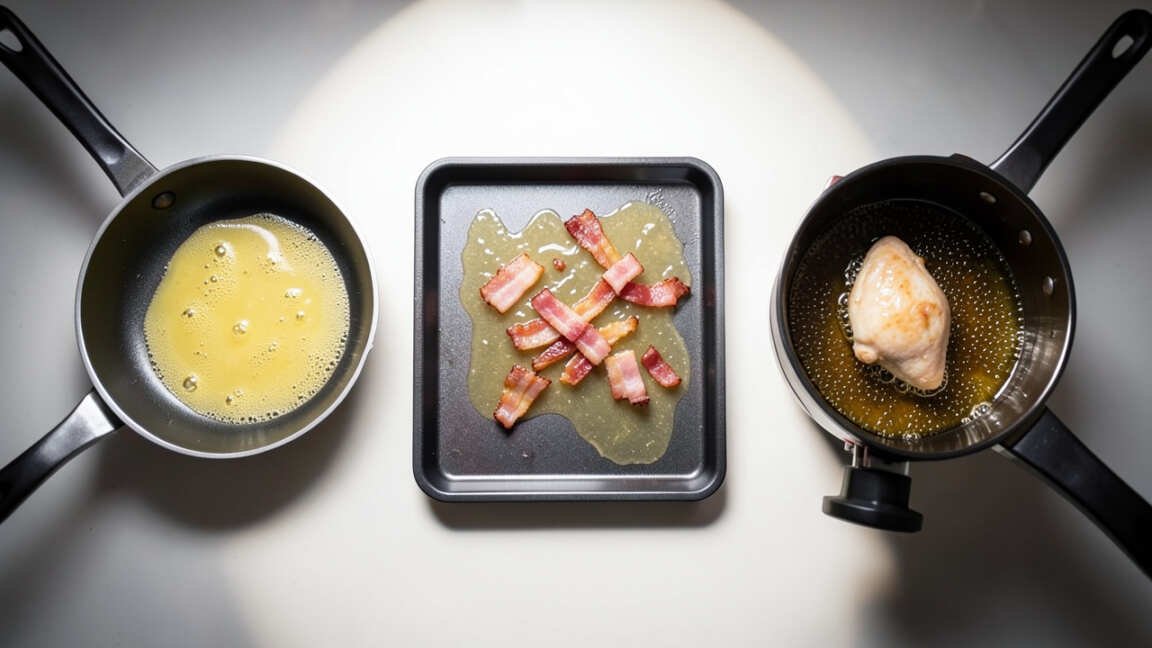
The way you apply heat to fat changes the outcome significantly. Each cooking method creates a unique environment that affects fat differently. Here is a detailed breakdown.
Sautéing and Pan-Frying (300-375°F)
When you sauté, a thin layer of fat coats the bottom of the pan at moderate temperatures. The fat melts, coats the food, and facilitates even heat transfer. Because water from the food is constantly evaporating, temperatures usually stay below the smoke point.
This is one of the safer cooking methods for fat integrity. The key is keeping the heat moderate and not letting the oil smoke.
- Fat stays mostly liquid and functional
- Some oxidation occurs but remains manageable
- Flavor compounds from the food infuse into the fat
- The Maillard reaction in the food creates browning without destroying the oil
- Nutrient loss is minimal at controlled temperatures
Deep-Frying (325-400°F)
Deep-frying submerges food completely in hot fat. The water in the food rapidly converts to steam, creating the crispy exterior we love. However, this method subjects the oil to repeated stress.
A 2019 study published in the Journal of Food Science found that vegetable oil used for deep-frying loses up to 40% of its vitamin E content after just a few uses. The oxidation products also increase significantly with each cycle.
| Cooking Method | Typical Temp | Fat Change | Risk Level |
|---|---|---|---|
| Sautéing | 300-375°F | Minor oxidation | Low |
| Deep-Frying | 325-400°F | Significant oxidation | Moderate |
| Roasting | 375-450°F | Surface-level breakdown | Low-Moderate |
| Grilling | 400-550°F+ | Rapid oxidation, dripping | High |
| Baking | 300-400°F | Gradual, even heating | Low |
Notice that grilling produces the highest temperatures. When fat drips onto hot coals or a burner, it creates flare-ups and releases polycyclic aromatic hydrocarbons (PAHs) – compounds the World Health Organization classifies as possibly carcinogenic.
Boiling and Poaching (200-212°F)
When food is cooked in water-based liquids, fat behaves differently. Animal fats in meat gradually render out into the cooking liquid. Because water cannot exceed 212°F at standard pressure, the fat never reaches dangerous decomposition temperatures.
This is why boiling and poaching are considered among the healthiest cooking methods. The fat remains chemically stable, and any rendered fat can be skimmed off the surface.
Why Do Some Fats Smoke and Others Do Not?
The smoke point of a fat is not random. It depends on several chemical factors that determine how much heat a fat can endure before breaking down. Understanding these factors helps you choose the right fat for any cooking application.
The most important factor is the degree of unsaturation. Fats with more double bonds in their fatty acid chains oxidize more easily because those double bonds are chemically reactive sites. This is why polyunsaturated oils like flaxseed and sunflower oil have lower smoke points than saturated fats like ghee and coconut oil.
- Free fatty acid content – oils with more free fatty acids (like unrefined versions) have lower smoke points
- Refining process – refined oils have impurities removed, raising their smoke points significantly
- Antioxidant levels – natural antioxidants like vitamin E slow oxidation and can slightly raise effective heat tolerance
- Moisture content – any water mixed into the oil lowers the effective smoke point
- Chain length of fatty acids – longer carbon chains generally mean higher melting and smoke points
How Does Reheating Fat Damage It Further?
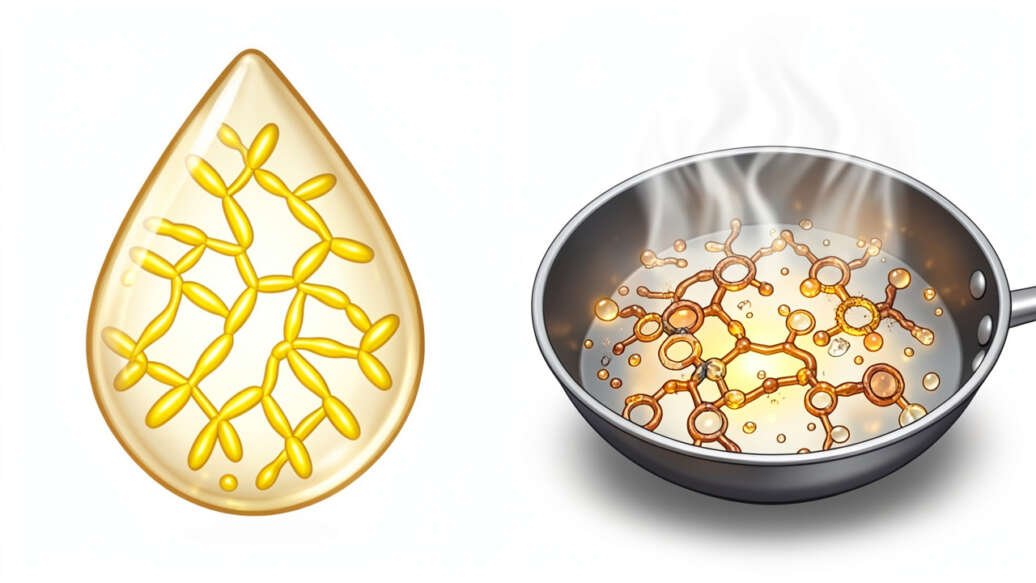
Every time you heat cooking oil, you move it further along the decomposition path. Repeated heating creates a cumulative effect that makes the oil increasingly harmful and unpleasant. The changes are not linear – they accelerate with each cycle.
A study from the University of Illinois found that reused frying oil showed dramatically increased levels of polar compounds, conjugated linoleic acid, and oxidation byproducts after just three heating cycles. These compounds are linked to oxidative stress in the body.
The Cumulative Damage Cycle
When you reuse oil, you are working with a degraded product from the start. The existing oxidation products act as catalysts that speed up further breakdown. Think of it like a snowball rolling downhill – each pass makes the next one worse.
- First use – minimal oxidation, mostly intact triglycerides
- Second use – noticeable increase in free fatty acids and peroxides
- Third use – visible darkening, smoke point drops 10-20 degrees
- Fourth use and beyond – significant toxic compound buildup, strong off-flavors
Restaurant deep fryers filter oil between uses and test it regularly with a fryer oil quality meter. Home cooks rarely do this, which means reused household oil can become a hidden health hazard.
Warning: Never reuse oil that has been heated to its smoke point. Even if it looks clear, the chemical composition has changed. Discard oil that smells off, looks dark, or foams excessively when heated.
What Happens to the Nutritional Value of Fat When Heated?
Heating does not just change the physical properties of fat – it actively destroys certain nutrients. Essential fatty acids, fat-soluble vitamins, and beneficial phytochemicals are all vulnerable to heat damage.
Nutrients Lost During Heating
The degree of nutrient loss depends on temperature, duration, and oxygen exposure. Higher temperatures and longer cooking times cause greater destruction. Here are the key nutrients affected:
- Omega-3 fatty acids – highly sensitive to heat and oxidation; significant loss occurs above 300°F
- Vitamin E (tocopherols) – acts as a natural antioxidant in oils but gets consumed during the oxidation process
- Vitamin A – heat-sensitive fat-soluble vitamin found in butter and cod liver oil
- Vitamin D – gradually degrades when exposed to sustained heat above 350°F
- Polyphenols – antioxidant compounds in extra virgin olive oil that diminish with heating
According to researchers at the University of Barcelona, heating extra virgin olive oil above 350°F reduces its polyphenol content by up to 40%. These polyphenols are one of the main reasons olive oil is considered a cornerstone of the Mediterranean diet.
What Stays Intact?
Not everything is destroyed. Saturated fats remain relatively stable because they lack the double bonds that make unsaturated fats vulnerable. Monounsaturated fats like oleic acid (the primary fat in olive oil) hold up reasonably well under moderate heat.
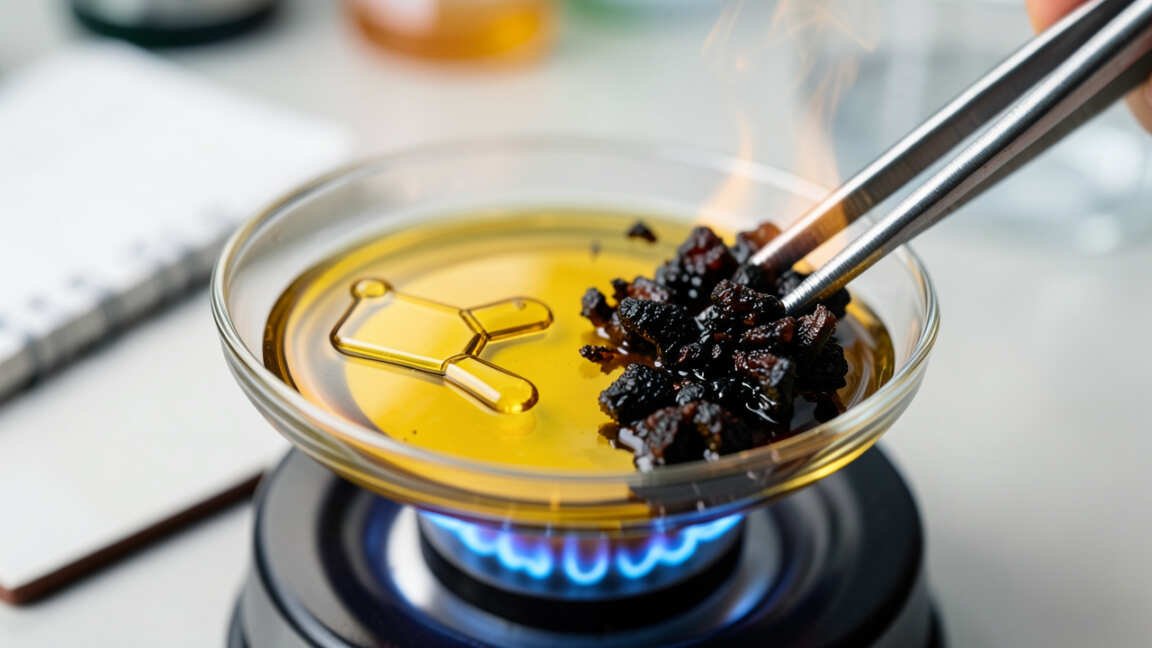
Cholesterol in animal fats can oxidize when heated, producing oxysterols. These oxidized cholesterol compounds have been linked to arterial plaque formation in research published by the National Institutes of Health. This is one reason why repeatedly reheating animal fats is discouraged.
What Are the Health Risks of Consuming Degraded Fat?
Eating fat that has been heated beyond its stable range is not just unpleasant – it carries real health consequences. The compounds formed during fat degradation are biologically active and can affect your body in several ways.
Acute Effects
Immediately after consuming food cooked in degraded oil, some people experience digestive discomfort. The free fatty acids and decomposition products can irritate the gastrointestinal lining. Workers in restaurants with poor ventilation regularly report respiratory irritation from inhaling degraded oil fumes.
- Stomach discomfort and nausea
- Throat and eye irritation from cooking fumes
- Headaches from inhaling volatile compounds
- Skin irritation from contact with degraded oil
Long-Term Health Concerns
The more significant risks come from repeated exposure over months and years. Chronic consumption of oxidized fats contributes to systemic oxidative stress – an imbalance between free radicals and the body’s ability to neutralize them.
- Cardiovascular impact – oxidized fats raise LDL cholesterol oxidation levels, a key step in atherosclerosis development
- Inflammation – degradation products trigger inflammatory pathways throughout the body
- Cellular damage – free radicals from degraded fats can damage DNA and cell membranes
- Metabolic disruption – some oxidation products interfere with normal insulin signaling
- Weight management – overheated fats in fried foods are more calorie-dense as food absorbs more oil at higher temperatures
How to Protect Fat Integrity While Cooking
You do not have to stop cooking with fat to stay healthy. Simple adjustments to your technique can preserve most of the nutritional value and prevent harmful compound formation. These practical steps make a measurable difference.
Temperature Control Strategies
The single most important thing you can do is keep temperatures below the smoke point of your chosen fat. This requires attention and the right tools.
- Use a clip-on deep-fry thermometer when deep-frying to monitor oil temperature accurately
- Start with medium heat rather than high – you can always increase later
- Test oil readiness with a small piece of bread or a drop of water rather than letting it heat for a long time unattended
- Remove the pan from heat briefly if oil begins to shimmer aggressively or produce wisps of smoke
- Choose cooking methods with lower fat exposure – steaming, poaching, and baking at moderate temperatures
Oil Selection Best Practices
Matching the oil to the cooking method is crucial. Using a delicate, unrefined oil for high-heat searing wastes money and creates harmful compounds. Here is a practical guide:
- High-heat searing and stir-frying – avocado oil, refined safflower oil, or ghee
- Medium-heat sautéing – light olive oil, refined peanut oil, or butter (with careful monitoring)
- Low-heat baking and roasting – extra virgin olive oil, coconut oil, or sesame oil
- No-heat applications – unrefined flaxseed oil, cold-pressed walnut oil, or specialty finishing oils
Storage and Reuse Guidelines
Proper storage extends the usable life of cooking oils and slows degradation between uses.
- Store all oils in dark, cool places away from the stove and sunlight
- Keep bottles sealed tightly to minimize oxygen exposure
- Filter used oil through a fine mesh strainer or cheesecloth to remove food particles
- Discard any oil that has darkened significantly, smells rancid, or foams when heated
- Label bottles with the date you opened them – most oils are best within 6 months of opening
- Never mix different types of used oil, as they have different degradation rates
What Role Does Fat Play in the Maillard Reaction?
The Maillard reaction is the browning process that gives cooked food its appealing color, aroma, and flavor. While the reaction primarily involves amino acids and reducing sugars, fat plays a critical supporting role that directly relates to what happens when food is heated.
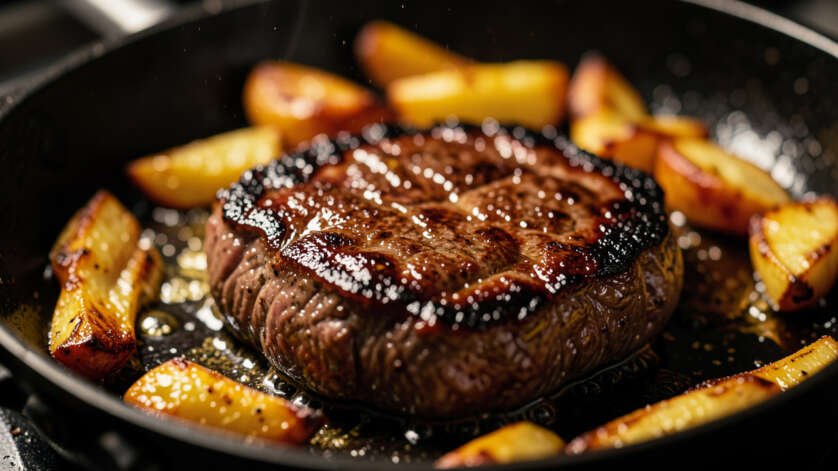
Fat acts as a heat transfer medium in the Maillard reaction. It surrounds food particles, distributing heat evenly across the surface. This uniform heat delivery is what creates that perfect golden-brown crust on a seared steak or roasted vegetable.
Without fat, the Maillard reaction still occurs but produces less consistent results. Water-based cooking methods can brown food, but the reaction happens more slowly and unevenly. Fat accelerates it by raising the surface temperature of the food above 280°F – the point where the Maillard reaction really kicks into gear.
- Fat carries flavor molecules that are fat-soluble, spreading them across the food surface
- The glycerol released from heated triglycerides can participate in browning reactions
- Fat prevents food from sticking to cooking surfaces, allowing uninterrupted browning
- Browned bits (called fond in culinary terms) are flavorful compounds dissolved in the cooking fat
The key takeaway is that fat and heat work together in cooking. Understanding this partnership helps you control results more precisely and avoid the negative consequences of overheating.
What Does Science Say About Fat and Heat?
Modern food science has produced extensive research on fat degradation during cooking. These findings provide evidence-based guidance for safer, healthier cooking practices.
Researchers at the University of Porto published findings showing that cooking with extra virgin olive oil produces fewer harmful compounds than cooking with seed oils at the same temperatures. The natural antioxidants in high-quality olive oil provided significant protection against oxidation.
Other key research findings include:
- A 2020 review in Nutrients journal found that air frying reduces fat degradation by 40-60% compared to traditional deep-frying because less oil is used and temperatures are more controlled
- The American Chemical Society has documented that frying with coconut oil produces 20% fewer polar compounds than frying with sunflower oil
- Research from the University of Basel demonstrated that adding fresh oil to used frying oil can partially restore its oxidative stability
- Clinical studies show that people who cook primarily with extra virgin olive oil have lower markers of systemic inflammation compared to those who use repeatedly heated seed oils
Who Should Pay the Most Attention to Fat and Heat?
While everyone benefits from understanding what happens to fat when food is heated, certain groups face elevated risks and should be especially mindful of their cooking practices.
- People with cardiovascular conditions – oxidized fats contribute directly to arterial plaque formation
- Those managing diabetes – degraded fats can worsen insulin resistance
- Professional kitchen workers – chronic inhalation of cooking fumes is an occupational hazard
- Parents preparing children’s meals – children are more susceptible to the effects of oxidative compounds
- Athletes focused on performance – nutrient-dense fats support recovery, but degraded fats undermine it
- Anyone with inflammatory conditions – oxidized fats amplify systemic inflammation
Restaurant workers face a unique challenge. A study in the journal Occupational and Environmental Medicine found that kitchen workers exposed to cooking oil fumes daily had higher rates of respiratory issues. Using proper ventilation systems and choosing oils with higher smoke points are important workplace safety measures.
For home cooks, the main concern is habit. Most people do not think about oil degradation until they notice the taste of food changing. Building awareness of the visual and olfactory signs of degraded oil puts you in control of your cooking quality and health outcomes.
Frequently Asked Questions
Does heating coconut oil destroy its health benefits?
Coconut oil is relatively heat-stable due to its high saturated fat content. Moderate heating preserves most of its medium-chain triglycerides (MCTs), which are the primary beneficial compounds. However, heating above its smoke point of 350-385°F will still cause oxidation and reduce its nutritional value.
Use refined coconut oil for higher temperatures and unrefined for low-heat cooking.
Is it safe to use the same frying oil multiple times?
You can reuse frying oil a limited number of times if you strain it, store it properly, and keep it below its smoke point. Most food scientists recommend no more than 2-3 uses for home cooking. Discard the oil immediately if it darkens, foams excessively, develops a strong odor, or if the smoke point drops noticeably.
What is the healthiest cooking oil for high-heat methods?
Refined avocado oil is widely considered the best option for high-heat cooking due to its smoke point of 480-520°F and high monounsaturated fat content. Ghee (clarified butter) is another excellent choice, with a smoke point around 450-485°F. Both are more stable than polyunsaturated oils like sunflower or soybean oil.
Can you tell if cooking oil has gone bad just by looking at it?
Yes, there are several visual and sensory cues. Fresh oil is typically clear and has a mild or neutral smell. Degraded oil becomes darker in color, may appear cloudy, foams when heated, and develops a sharp or rancid odor.
If your oil exhibits any of these signs, discard it and start with fresh oil.
Does cooking meat in oil add more fat than grilling without oil?
Yes, cooking meat in oil increases its total fat content because the meat absorbs some of the oil during cooking. Grilling without added oil allows some of the meat’s natural fat to render out and drip away. However, the difference is often modest – typically 5-10 grams of additional fat per serving depending on the method and cut of meat.
Final Thoughts
What happens to fat when food is heated is a chain of physical and chemical changes that range from simple melting to complex molecular decomposition. The type of fat, the temperature, and the duration of heating all determine how healthy your cooking results will be.
Choosing stable fats for high-heat cooking, monitoring your oil temperature, and limiting how many times you reuse cooking oil are the three most impactful changes you can make. These small adjustments protect both the flavor of your food and the long-term health of your body.
Cooking with fat does not have to be risky. With the right knowledge and a few simple habits, you can enjoy delicious, well-browned food without compromising on nutrition or safety.