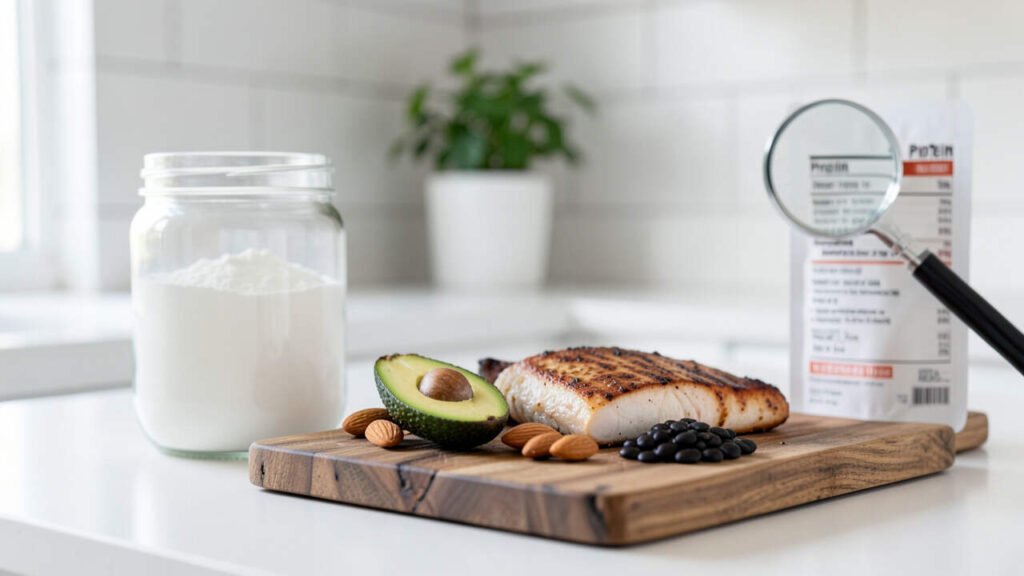
The FDA defines "high protein" as a nutrient content claim meaning a food product provides at least 20% of the Daily Value (DV) for protein per reference amount. For a standard 2,000-calorie diet where the DV for protein is 50 grams, this legally requires a serving to contain a minimum of 10 grams of protein. However, this is a relative measure based on calories and serving size, not an absolute indicator of a food's overall nutritional quality.
What does “high protein” on a food label actually mean for your health and diet? You see the claim everywhere, from protein bars to pasta and even water. But without understanding the official definition, you might be misled by marketing hype.
This guide breaks down the FDA regulations, teaches you how to calculate protein density, and helps you make genuinely informed choices.
Simply put, “high protein” on a food label is a regulated nutrient content claim defined by the FDA. It means the product provides at least 20% of the Daily Value (DV) for protein per reference amount, which is about 10 grams for a standard 2,000-calorie diet. However, this is a relative measure based on calorie content, not an absolute guarantee of a protein-packed meal.
Key Takeaways
- High protein is an FDA-defined claim requiring a food to have 20% or more of the Daily Value (DV) for protein per serving.
- The Daily Value for protein is 50 grams, based on a 2,000-calorie diet. A “high protein” serving must provide at least 10 grams.
- This claim is a percentage based on calories, so a food can be “high protein” while still being relatively low in total grams if it is very low in calories.
- Always compare the grams of protein to the serving size and total calories to understand the true protein density of a product.
- Whole foods like chicken breast, Greek yogurt, and lentils are naturally high in protein without needing a label claim.
What Is the FDA Definition of High Protein?
The U.S. Food and Drug Administration (FDA) establishes specific criteria for nutrient content claims like “high,” “good source,” and “low.” These rules prevent manufacturers from making vague or misleading health statements. For protein, the definitions are straightforward and based on the Daily Value.
The FDA’s Code of Federal Regulations states that for a product to bear the “high protein” claim, it must contain 20% or more of the Daily Value for protein per reference amount. The reference amount is the typical serving size the FDA assigns to a category of food (e.g., a cup for soup, 55 grams for a snack bar).
| Protein Claim | % Daily Value of Protein Required | Grams of Protein (per 50g DV) |
|---|---|---|
| Good Source | 10% – 19% | 5g – 9.5g |
| High / Excellent Source | 20% or more | 10g or more |
This system creates a simple benchmark. If a single serving of a protein bar contains 15 grams of protein, it meets the 20% threshold (15g is 30% of 50g) and can be legally marketed as “high protein.” However, this says nothing about the food’s overall nutritional profile. A sugary cereal fortified with protein isolate could also qualify.
Important: The FDA sets the Daily Value for protein at 50 grams. This number is based on general dietary needs, not a specific recommendation for athletes or individuals with higher protein requirements.
How to Calculate Protein Density Yourself
Understanding the percentage behind the claim helps you see past marketing. You don’t need a degree in nutrition to do this. Just grab the nutrition label and follow these simple steps to determine the protein density of any food.
Here is a step-by-step guide to calculating protein density:
- Find the Protein and Calories: Locate “Protein” in grams and “Calories” per serving on the Nutrition Facts panel.
- Calculate Calories from Protein: Multiply the grams of protein by 4. Protein provides 4 calories per gram. (Example: 20g protein x 4 = 80 calories from protein).
- Determine Protein Density Percentage: Divide the protein calories by the total calories and multiply by 100. (Example: 80 protein calories / 250 total calories = 0.32. 0.32 x 100 = 32%).
Compare this result to common benchmarks:
- High Protein Density (30%+): Think chicken breast, Greek yogurt, cottage cheese, eggs, and whey protein powder. These foods are protein-rich per calorie.
- Moderate Protein Density (15-29%): Includes many legumes, quinoa, tofu, and some fish. Solid sources, but you may need larger portions.
- Low Protein Density (Below 15%): Covers most grains, fruits, vegetables, and processed snacks. They offer some protein, but calories from other sources dominate.
Tip: Use this density calculation when comparing two “high protein” products. A 250-calorie bar with 20g protein (32% density) is likely a better choice than a 300-calorie bar with the same 20g protein (26.7% density) if your goal is to maximize protein per calorie.
Why High Protein Claims Can Be Misleading
The “high protein” label is a helpful starting point, but it can obscure important details about a food’s overall quality. Manufacturers are skilled at formulating products to meet claim thresholds, sometimes by adding isolated proteins to otherwise nutrient-poor foods.
A common tactic is adding soy protein isolate or whey protein to a sugary snack or cereal. This boosts the protein content enough to qualify for the claim, but the food may still be high in added sugars and low in fiber and micronutrients. The protein is often less beneficial when consumed in a matrix of refined carbohydrates.
| Product Type | “High Protein” Benefit | Potential Drawback to Check |
|---|---|---|
| Protein-Fortified Cereal | Quick, convenient protein boost | Often very high in added sugar and refined carbs. |
| “Protein” Bread | Increases protein content of sandwiches | Check sodium levels and type of protein added (e.g., vital wheat gluten). |
| Sweetened Protein Yogurt | Creamy, tasty source of protein | Sugar content can rival that of a candy bar. |
Another factor is the protein source. The digestibility and amino acid profile vary between proteins. Proteins from animal sources (whey, casein, egg) and soy are “complete,” containing all nine essential amino acids.
Many plant-based protein additions (like pea or rice protein) are also formulated to be complete, but it’s worth checking the ingredients.
How Does Protein Content Affect Satiety and Health?
Protein is the most satiating macronutrient, meaning it helps you feel fuller for longer. High-protein foods can reduce hunger hormones and increase feelings of fullness, which may help with weight management by reducing overall calorie intake. This is a key reason the “high protein” claim appeals to many consumers.
Beyond satiety, adequate protein intake is crucial for:
- Muscle Repair and Growth: Essential after exercise and for maintaining muscle mass as you age.
- Enzyme and Hormone Production: Proteins are the building blocks for thousands of bodily compounds.
- Immune Function: Antibodies are proteins that help fight infections.
- Structural Support: From skin and hair to connective tissues, protein provides structure.
However, not all high-protein foods are equal in these benefits. A high-protein candy bar may provide satiety from the protein but also deliver a blood sugar spike from its sugar content. A whole-food source like a chicken breast or a cup of lentils provides protein along with other nutrients like iron, zinc, and fiber that work synergistically for overall health.
Who Needs to Pay Attention to High Protein Claims?
While protein is essential for everyone, certain groups benefit most from actively seeking out high-protein foods. Athletes and fitness enthusiasts often have elevated protein needs to support muscle recovery and growth. For them, convenient high-protein snacks and supplements can be a practical tool.
Older adults face a condition called sarcopenia, which is age-related muscle loss. Increasing protein intake, especially from high-quality sources, can help slow this process and maintain functional strength. Adults trying to lose weight may find that high-protein foods help control appetite and preserve lean mass during calorie restriction.
Even children and teenagers, who are in constant growth and development, require sufficient protein. However, they generally don’t need fortified “high protein” processed foods. A balanced diet rich in dairy, lean meats, eggs, beans, and nuts typically provides all the protein they need.
Warning: If you have pre-existing kidney disease, consult your doctor or a registered dietitian before significantly increasing your protein intake. The kidneys play a role in filtering nitrogen from protein metabolism.
What Are Better Ways to Assess a Food’s Value?
To look beyond the “high protein” claim, develop the habit of reading the entire Nutrition Facts label. This gives you a complete picture of what you’re eating. Start by checking the serving size at the top, as all numbers below it are based on that amount.
Next, look at the list of ingredients. Ingredients are listed by weight, so the first few items make up most of the product. If sugar, corn syrup, or refined flour appear before a protein source like whey or soy, the product is primarily a sugary or refined carbohydrate food with some protein added.
Consider the overall nutritional context:
- Fiber Content: High fiber promotes fullness and gut health. A “high protein” snack with zero fiber is less balanced.
- Saturated Fat and Sodium: Some high-protein foods (like certain processed meats or cheeses) can be high in unhealthy fats and salt.
- Vitamins and Minerals: Whole-food protein sources naturally contain micronutrients that fortified processed foods lack.
Use the “% Daily Value” column as a quick guide. 5% DV or less is considered low, while 20% DV or more is high. Applying this to protein, fiber, vitamins, and sodium helps you quickly see if a food is a good source of beneficial nutrients or if it’s high in things you might want to limit.
Frequently Asked Questions
Is high protein the same as high quality protein?
No, they are different. “High protein” only refers to the quantity of protein per serving. “High quality” refers to the protein’s amino acid profile and digestibility.
Complete proteins from animal sources and soy are considered high quality. A food can be high in protein but made from a lower-quality or less digestible source.
Can a fruit or vegetable ever be labeled high protein?
It is extremely unlikely. Fruits and vegetables are naturally low in protein relative to their carbohydrate and water content. For an apple or broccoli to qualify, it would need to be fortified with a significant amount of protein isolate, which is not a common practice.
Does cooking affect the protein claim on a label?
The claim applies to the product as sold and measured in the reference amount. Cooking does not significantly change the total protein content of a food. However, cooking methods can affect the digestibility of protein to a minor degree.
How much protein do I actually need each day?
The Daily Value of 50 grams is a baseline for the average adult. Needs vary based on activity level, age, and health goals. A common recommendation for active individuals is 1.6 to 2.2 grams of protein per kilogram of body weight.
Consulting a dietitian can help determine your personal needs.
Are plant-based “high protein” foods as effective as animal-based ones?
Yes, they can be. Many plant foods (like soy, quinoa, and buckwheat) are complete proteins. For those relying on incomplete plant proteins (beans, lentils, grains), eating a variety throughout the day ensures you get all essential amino acids.
Digestibility can vary, but overall, a well-planned plant-based diet provides ample high-quality protein.
Final Thoughts
The “high protein” label is a regulated tool that indicates a food provides at least 20% of the Daily Value for protein per serving. It is most useful when you understand it as a percentage-based claim and take the time to calculate protein density or examine the full ingredient list. Whole, unprocessed foods naturally rich in protein remain the gold standard for meeting your dietary needs.