Neurotransmitters are endogenous chemical messengers that transmit signals across synapses between neurons and other cells to coordinate brain and body functions. Each type, such as dopamine for reward or GABA for calm, serves a specific regulatory role in processes like mood, memory, and movement. Imbalances in their levels are directly linked to neurological and mental health conditions like depression and Parkinson's disease, which can often be addressed through targeted treatments and daily lifestyle choices.
What are neurotransmitters? They are the brain’s chemical messengers, carrying signals between neurons and other cells across tiny gaps called synapses.
This post explains how they work, what the main types are, and why keeping them balanced matters for your mood, focus, and overall health.
Simply put, neurotransmitters are chemicals that carry messages between brain cells. They control mood, movement, memory, sleep, and focus. Healthy neurotransmitter levels keep your brain running smoothly, while imbalances are linked to depression, anxiety, Parkinson’s disease, and Alzheimer’s disease. You can support these systems through lifestyle choices and, when needed, medical treatment.
Key Takeaways
- Neurotransmitters are chemical messengers that relay signals across synapses between neurons.
- Each neurotransmitter plays a specific role: dopamine drives reward, serotonin stabilizes mood, and GABA calms the nervous system.
- Imbalances in neurotransmitter levels connect directly to conditions like depression, anxiety, and Parkinson’s disease.
- Daily habits such as exercise, sleep, and nutrition can support balanced neurotransmitter production.
- Medications like SSRIs and benzodiazepines treat mental health conditions by adjusting neurotransmitter activity.
What Are Neurotransmitters?
Neurotransmitters are endogenous chemical messengers that relay, amplify, and modulate signals between a neuron and another cell. Your brain contains roughly 86 billion neurons, according to a landmark study by neuroscientist Suzana Herculano-Houzel. Each neuron can connect to thousands of others, forming trillions of synapses.
These chemicals sit at the core of everything your brain does. They shape your thoughts, regulate your sleep, control muscle contractions, and even influence how you interpret emotions.
- Produced inside neurons from amino acid precursors
- Stored in small sacs called synaptic vesicles
- Released when an electrical signal reaches the nerve ending
- Cross the synaptic cleft to bind with specific receptors
- Removed from the cleft by reuptake or enzymes after signaling
More than 100 distinct neurotransmitters have been identified, and new ones continue to be discovered. Otto Loewi, a Nobel Prize-winning physiologist, identified the first one more than a century ago, opening the door to modern neuroscience.
You can think of neurotransmitters as the vocabulary your neurons use to talk to each other. Without them, your brain would be a collection of silent cells with no way to coordinate thought, movement, or survival. Learning the basics of neurotransmitter function gives you a clearer picture of how medications work, why brain injuries cause symptoms, and how everyday choices affect your mental state.
How Do Neurotransmitters Work?
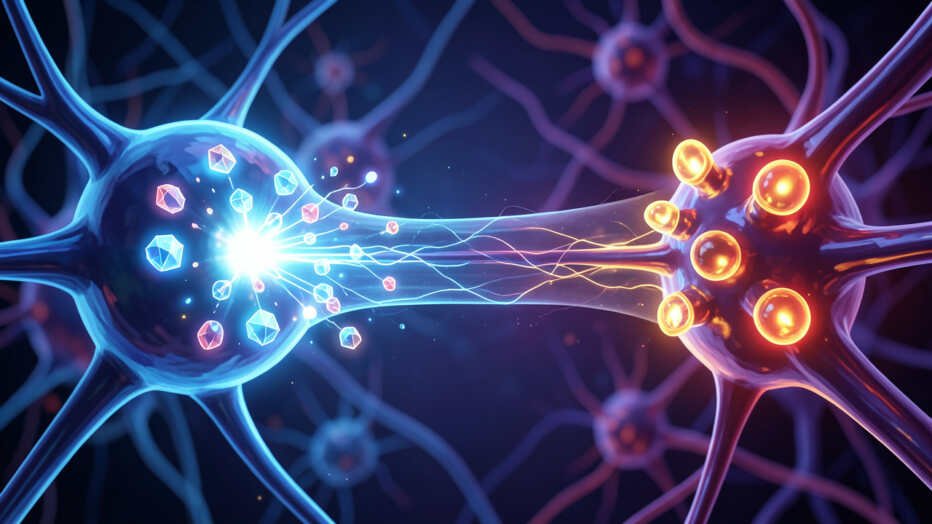
Neurotransmission happens in a lightning-fast sequence of events at the synapse, the tiny gap between neurons. The whole cycle takes milliseconds, yet each step is tightly controlled.
Here is the step-by-step process of how a neurotransmitter travels from one neuron to the next.
- Synthesis: The neuron builds neurotransmitter molecules from raw materials, usually amino acids obtained from your diet.
- Storage: The freshly made chemicals are packed into synaptic vesicles at the axon terminal.
- Release: An action potential fires down the axon, causing calcium channels to open and vesicles to fuse with the cell membrane, spilling their contents into the cleft.
- Binding: Neurotransmitters drift across the cleft and lock onto receptor proteins on the receiving neuron, like a key in a lock.
- Signal termination: The signal stops when enzymes break down the neurotransmitter or the sending neuron recycles it through reuptake.
| Step | Location | Main Event |
|---|---|---|
| Synthesis | Cell body or axon terminal | Building block molecules are converted into neurotransmitters |
| Storage | Synaptic vesicles | Chemicals are packed and held ready |
| Release | Presynaptic membrane | Calcium triggers vesicle fusion and chemical release |
| Binding | Synaptic cleft and receptors | Neurotransmitters activate or inhibit the next neuron |
| Termination | Presynaptic terminal or enzymes | Reuptake or breakdown ends the signal |
Receptors determine whether the receiving neuron gets excited or inhibited. An excitatory signal makes the neuron more likely to fire. An inhibitory signal makes it less likely.
The balance between these two forces shapes all neural activity.
Important: Each neurotransmitter has a specific shape that matches only certain receptors. This lock-and-key design is why drugs can target one system without affecting the whole brain.
What Are the Main Types of Neurotransmitters?
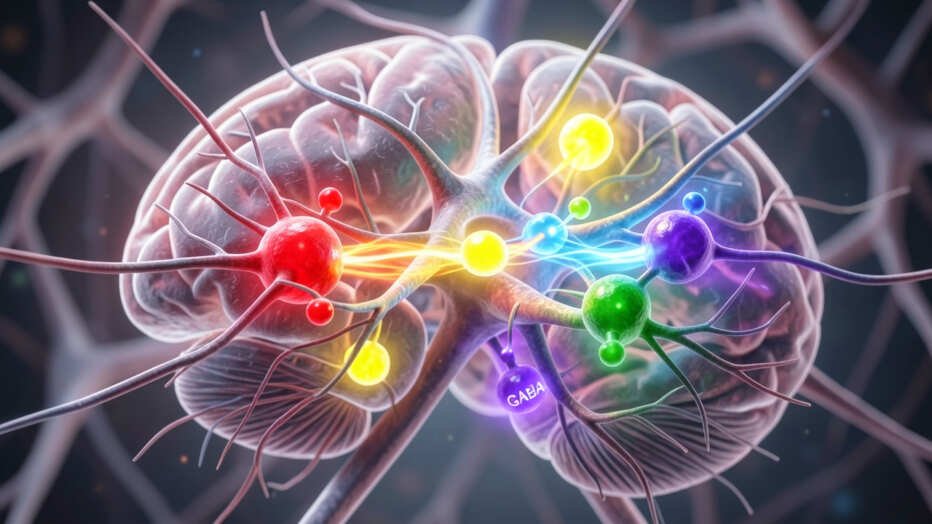
Scientists group neurotransmitters by their chemical structure and by the effects they produce. The major classes include amino acids, monoamines, peptides, and even gases like nitric oxide.
Here are the most important neurotransmitters you will encounter when reading about brain function.
| Neurotransmitter | Main Role | Associated Condition When Dysregulated |
|---|---|---|
| Dopamine | Reward, motivation, movement control | Parkinson’s disease, addiction, schizophrenia |
| Serotonin | Mood, appetite, sleep, pain perception | Depression, anxiety, migraines |