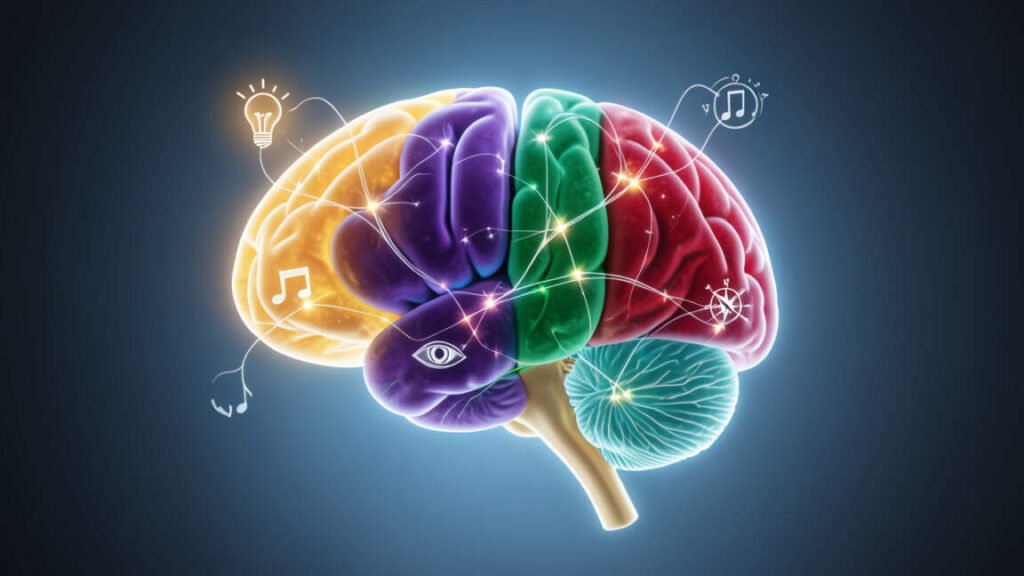
The human brain's distinct regions—the cerebrum for thinking and sensation, the cerebellum for movement, and the brainstem for vital functions—specialize in different tasks but operate as a single, coordinated system. This division of labor allows for incredible efficiency, where the cerebrum alone handles 85% of the brain's weight and all conscious activity. Understanding this interconnected architecture reveals how seamless processes like memory, motion, and heartbeat regulation emerge from collaborative neural firing.
Parts of the human brain control everything you think, feel, say, and do, from a single heartbeat to a career-changing decision. This guide walks through each major region in plain language so you can finally understand what every lobe and structure actually does.
Simply put, the human brain has three main divisions: the cerebrum, the cerebellum, and the brainstem. The cerebrum manages thinking, memory, and sensation. The cerebellum coordinates movement and balance. The brainstem controls automatic survival functions like breathing and heart rate. All three work together as one interconnected system.
Key Takeaways
- Parts of the human brain never work in isolation; every action depends on multiple regions firing together.
- The cerebrum accounts for about 85% of the brain’s total weight and handles most conscious activity.
- The cerebellum contains more neurons than the entire rest of the brain and fine-tunes every movement you make.
- The brainstem keeps you alive by regulating breathing, heartbeat, and sleep cycles without your awareness.
- Different brain regions specialize in vision, language, emotion, and memory, yet they constantly exchange information.
What Are the Main Parts of the Human Brain?
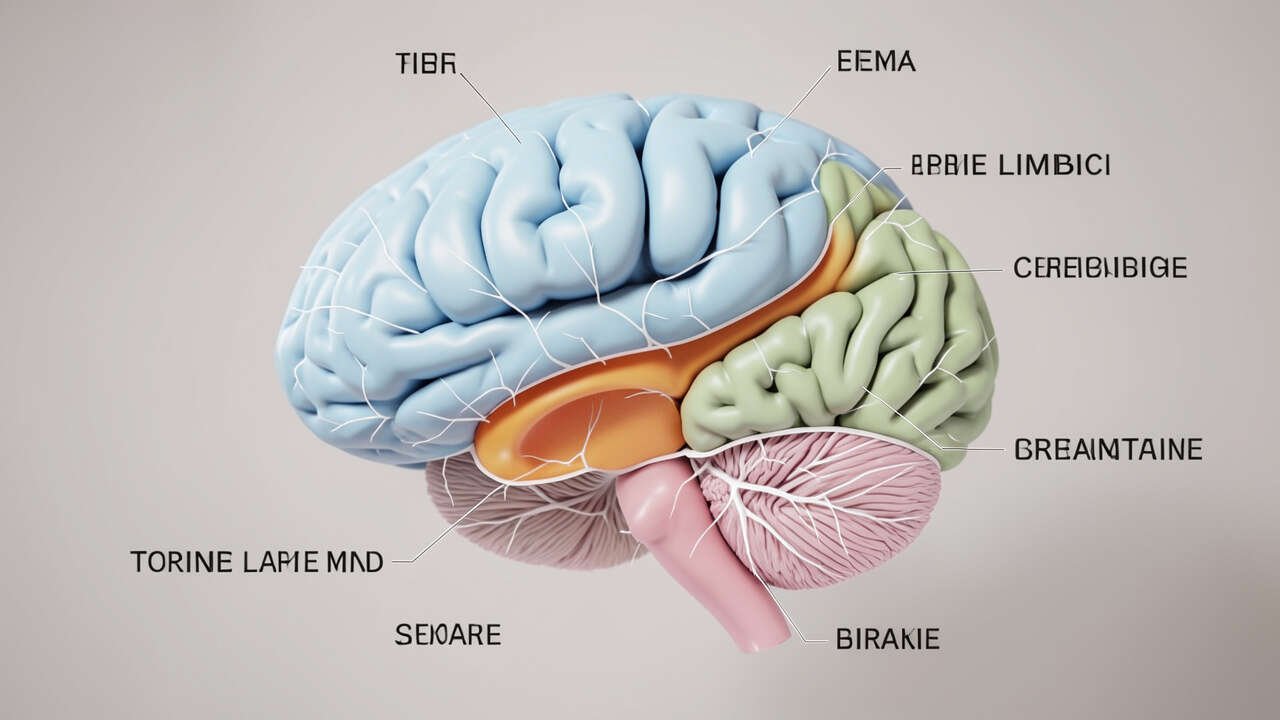
The human brain is the most complex organ in your body, and it runs every system you rely on to survive. Three main divisions do the heavy lifting: the cerebrum, the cerebellum, and the brainstem. Each of these parts of the human brain contains smaller specialized areas that handle specific jobs.
Think of the brain like a company. The cerebrum is the CEO, handling strategy, language, and planning. The cerebellum is the operations manager, smoothing out movements.
The brainstem is the life-support team that keeps the lights on.
| Brain Part | Location | Primary Job |
|---|---|---|
| Cerebrum | Top portion, largest part | Thinking, senses, voluntary movement |
| Cerebellum | Back of the head, below cerebrum | Balance, coordination, motor learning |
| Brainstem | Base of the brain, connects to spinal cord | Breathing, heart rate, sleep, reflexes |
The table above summarizes the star players, but the real brain adds layers of complexity. The cerebral cortex folds into ridges and grooves, the limbic system sits deep beneath it, and the ventricles circulate fluid that cushions the whole structure.
- The average adult brain weighs about 1.4 kilograms (3 pounds).
- It contains roughly 86 billion neurons, according to research led by neuroscientist Suzana Herculano-Houzel.
- Glial cells outnumber neurons and provide support, insulation, and cleanup.
- Harvard’s Mahoney Neuroscience Institute estimates the brain can store about 2.5 petabytes of information.
- According to the National Institutes of Health (NIH), the brain uses roughly 20% of the body’s total energy while making up only 2% of body weight.
- Blood flow delivers about 15% of your cardiac output to keep brain tissue fueled.
These core regions developed over millions of years of evolution. The brainstem and cerebellum are ancient structures shared with reptiles and fish. The cerebrum expanded dramatically in mammals, giving rise to the higher cognition that defines our species.
How Does the Cerebrum Handle Your Highest Functions?
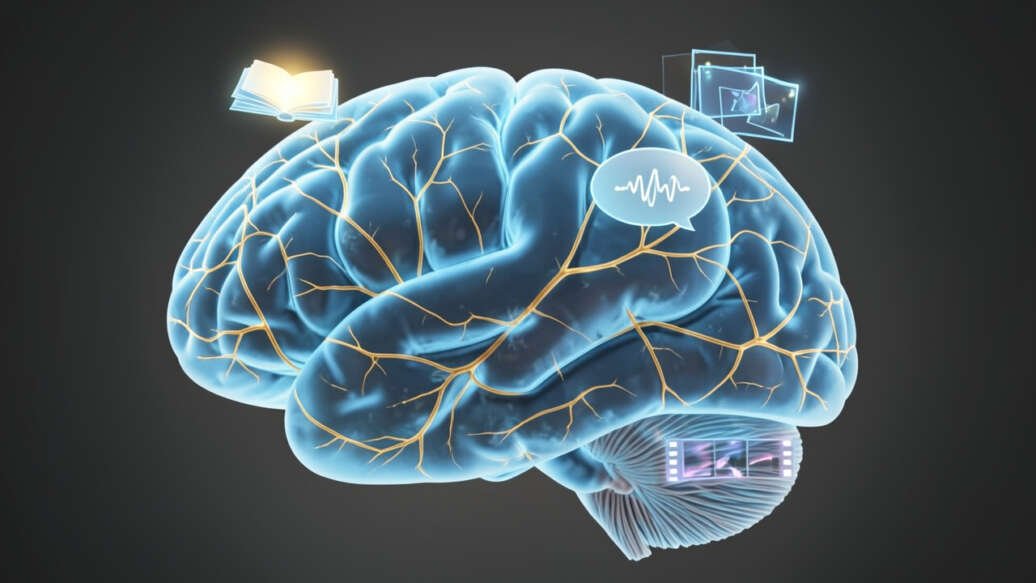
The cerebrum is the largest part of the human brain and the seat of conscious thought. It splits into two hemispheres that communicate through a thick bundle of nerve fibers called the corpus callosum. Each hemisphere then divides into four lobes, and each lobe has its own specialty.
The outer layer, the cerebral cortex, is only about 2 to 3 millimeters thick. Yet that thin sheet holds most of the neuron cell bodies in the brain. The Allen Institute for Brain Science notes that unfolding the human cortex would reveal roughly 2,500 square centimeters of surface area.
- Frontal lobe: planning, decision-making, personality, and voluntary movement
- Parietal lobe: touch, pressure, temperature, and spatial awareness
- Temporal lobe: hearing, language comprehension, and object recognition
- Occipital lobe: vision and visual processing
Each hemisphere also has a division of labor. The left side typically handles language and logic, and the right side manages spatial attention and emotional nuance. This asymmetry is less strict than older textbooks claim, but it remains a useful map.
| Hemisphere | Key Strengths |
|---|---|
| Left hemisphere | Language production, comprehension, logic, math, sequencing, control of the right body side |
| Right hemisphere | Spatial awareness, face recognition, emotional tone, creativity, control of the left body side |
Signals flow through the cerebrum in predictable waves:
- Receptors in your eyes, ears, or skin detect a stimulus.
- The signal travels to a relay station called the thalamus.
- The thalamus routes the signal to the appropriate cortical area.
- The cortex interprets the information and decides on a response.
- Motor areas send commands down the spinal cord to your muscles.
This entire loop happens in fractions of a second, often before you consciously notice anything. The cerebrum also adapts through neuroplasticity. When one area is damaged, nearby regions can take over its tasks.
This rewiring is most powerful in childhood but continues throughout life, which is why rehabilitation after stroke or injury often succeeds.
What Does the Frontal Lobe Do in the Human Brain?
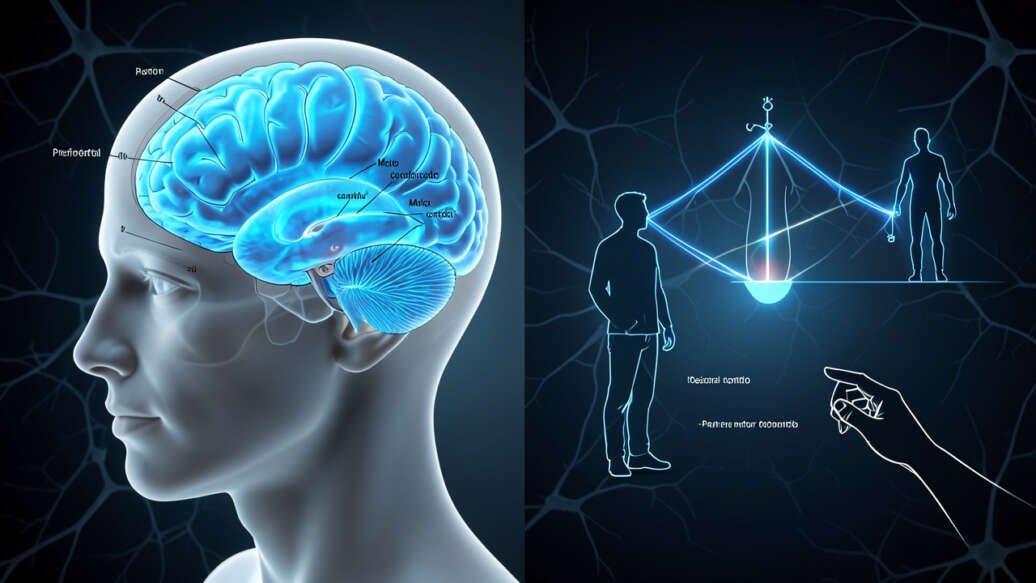
The frontal lobe sits behind your forehead and acts as the brain’s command center. It governs executive functions: planning, problem-solving, impulse control, and social behavior. It also hosts the primary motor cortex, which sends the commands that make your muscles move.
One of the most famous cases in neuroscience proves how central the frontal lobe is. A railroad worker named Phineas Gage survived an iron rod piercing his frontal lobe. His memory and intelligence stayed intact, but his personality shifted dramatically.
Friends described him as impulsive and crude after the accident, which showed how much of our character depends on this region.
- Executive functions like focus, organization, and flexible thinking
- Working memory for holding information in real time
- Emotion regulation, including controlling anger and fear responses
- Language production through Broca’s area on the left side
- Fine motor control of fingers, hands, and facial muscles
Damage to the frontal lobe can produce very different symptoms depending on the exact spot. Injury to the dorsolateral prefrontal cortex harms decision-making. Damage to the orbitofrontal cortex changes personality and social judgment.
Tip: You can train your frontal lobe with practice. Regular exercise, sufficient sleep, and mindfulness all improve executive function over time.
The frontal lobe also matures last. Brain imaging shows that its prefrontal region does not fully develop until the mid-20s. That explains why teenagers often take more risks and struggle with long-term planning compared with adults.
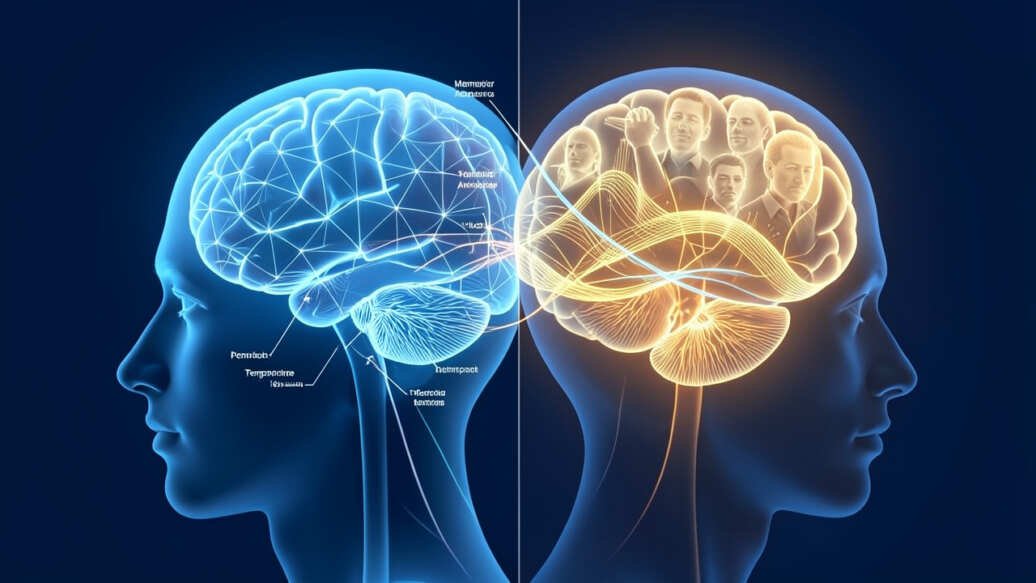
How Do the Parietal and Temporal Lobes Process the World?
The parietal lobe processes everything you feel with your body. The somatosensory cortex maps touch, pressure, pain, and temperature across your skin. That map is laid out like a distorted human shape, known as the sensory homunculus, with huge areas for hands and lips.
The parietal lobe also handles spatial awareness. It helps you judge distances, catch a ball, and navigate crowded rooms. The right parietal lobe, in particular, drives your sense of where your body sits in space.
Damage here can cause a strange condition called neglect, where people ignore an entire side of their world.
- Touch and temperature sensation
- Proprioception, knowing where your limbs are without looking
- Visuospatial skills like depth perception and mental rotation
- Arithmetic and number processing
- Attention shifting between objects and locations
The temporal lobe sits along the sides of your brain, roughly behind your ears. It