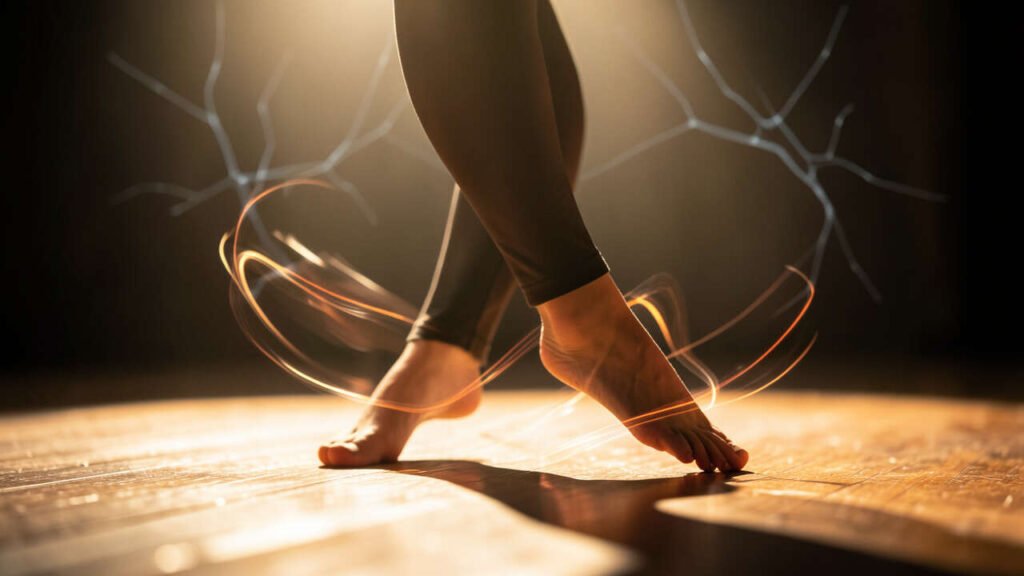
Practice makes movements faster and more automatic because each repetition physically strengthens neural pathways and adds myelin, reducing the brain's processing load for that skill. This process of motor learning shifts actions from slow, conscious effort to fast, effortless automation, commonly known as muscle memory. Deliberate practice with feedback across the cognitive, associative, and autonomous stages is the most effective way to accelerate this automation and free up attention for higher-level tasks.
Practice makes movements faster and more automatic because your brain physically rewires itself each time you repeat a skill. This post explains the science of motor learning and shares practical ways to speed up that process.
Simply put, practice makes movements faster and more automatic by strengthening neural pathways and adding myelin around the nerves that control movement. Repetition reduces the brain’s processing load, so skills shift from slow, conscious effort to fast, effortless automation. That is what most people call muscle memory.
Key Takeaways
- Practice makes movements faster and more automatic by building myelin and strengthening neural connections.
- Motor skills progress through three stages: cognitive, associative, and autonomous.
- Deliberate practice with feedback beats mindless repetition every time.
- Spaced practice sessions produce faster automation than long, crammed sessions.
- Once a movement becomes automatic, your brain frees up attention for higher-level tasks.

What Is Motor Learning?
Motor learning is the process by which your brain acquires, refines, and permanently stores the ability to perform coordinated movements. It covers everything from learning to walk as a toddler to mastering a complex piano concerto as an adult.
Every time you practice a movement, your nervous system creates and strengthens a specific neural pathway. With enough repetition, that pathway becomes the brain’s preferred route. This is exactly why practice makes movements faster and more automatic in every sport, instrument, and daily skill.
Important: Motor learning is a permanent change in movement capacity, not just a temporary boost in performance. If you stop practicing for a while, the skill may fade slightly, but the underlying neural structure remains intact. That is why skills come back quickly after a break.
Motor learning involves several key concepts that explain how skills develop:
- Neuroplasticity: the brain’s ability to reorganize itself based on experience and repetition.
- Neural pathways: the routes signals travel from brain to muscle; repeated use makes them faster.
- Myelin: the fatty insulation around nerve fibers that speeds up signal conduction.
- Automaticity: the point at which a movement requires little or no conscious attention.
- Transfer: the ability to apply a learned movement to new, similar situations.
- Retention: the long-term storage of a motor skill after practice stops.
- Feedback: the sensory information that guides corrections during practice.
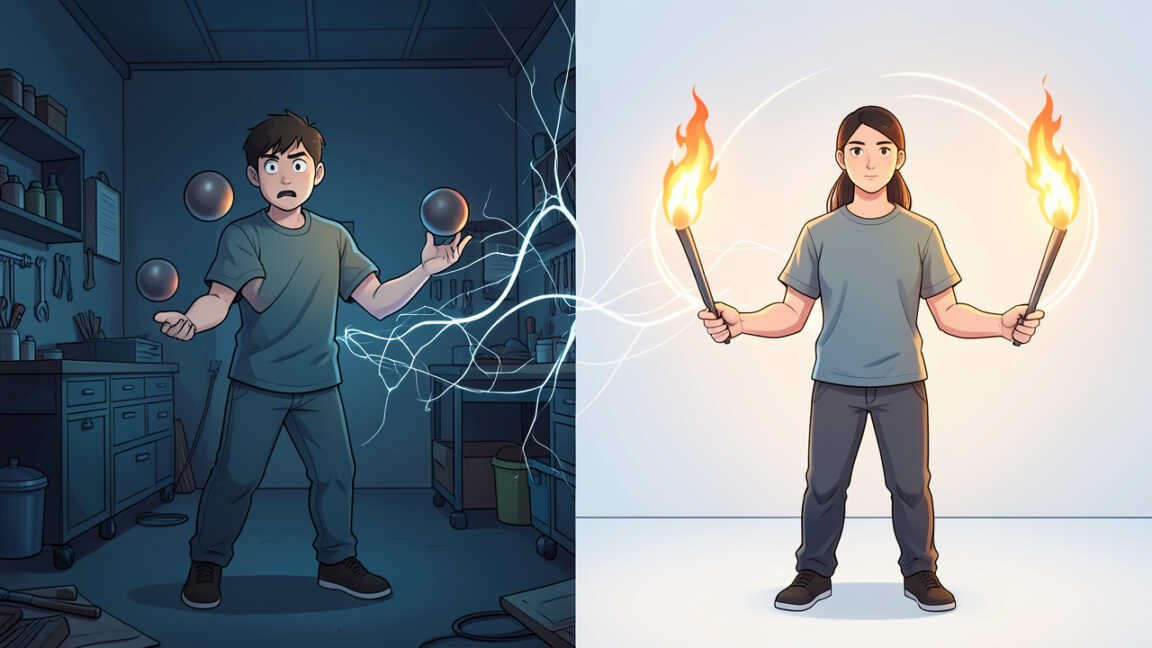
How Does Practice Make Movements Faster and More Automatic?
The short answer is myelin. Each time you repeat a movement, your brain sends electrical signals along the same nerve fibers. Your body responds by adding more myelin around those fibers, just like wrapping electrical tape around a wire.
More myelin means faster signal transmission. Faster signals mean quicker reaction times, smoother coordination, and less effort. According to UCLA researchers who studied myelin plasticity, this insulation process is central to skill acquisition and explains why practice makes movements faster in measurable ways.
The difference between a novice and an expert shows up in nearly every movement metric:
| Movement Factor | Novice | Expert |
|---|---|---|
| Reaction time | 300 to 400 milliseconds | 150 to 200 milliseconds |
| Conscious attention needed | High | Very low |
| Error rate | Frequent | Rare |
| Movement variability |