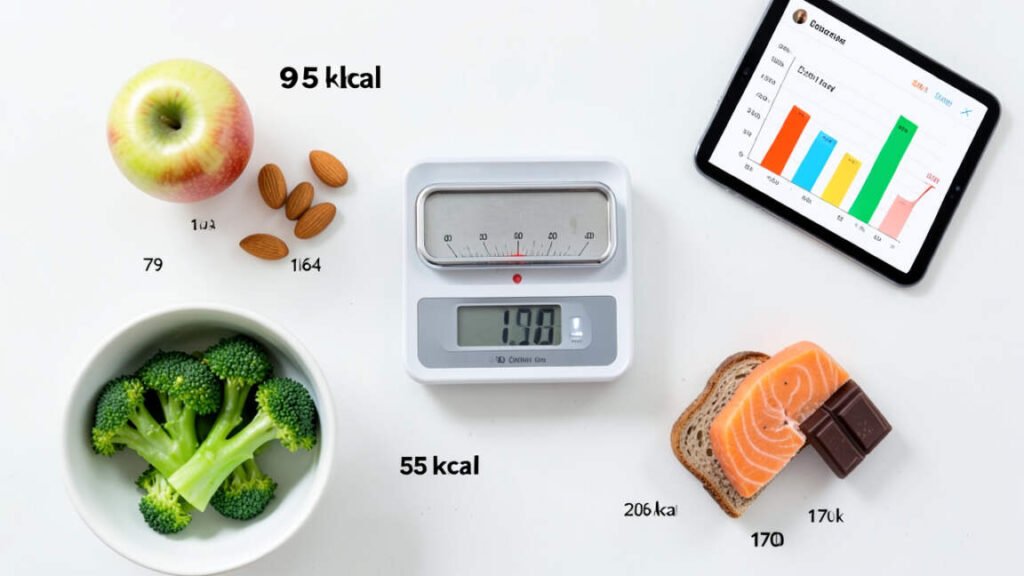
Different foods have varying calorie counts primarily because of their unique macronutrient composition, with fat providing nine calories per gram while protein and carbohydrates each provide four. The calories listed on labels are estimates, as the FDA allows a 20 percent margin of error and your body may absorb fewer calories from fiber-rich foods like nuts and seeds. Understanding this explains why water-rich fruits and vegetables are naturally lower in calories, making them effective for managing energy intake.
Different foods contain different numbers of calories because each food has a unique chemical structure that determines how much energy your body can extract from it. This post breaks down the science of calories, explains why calorie counts vary so widely between foods, and shows you how to use that knowledge to eat smarter.
Simply put, different foods contain different numbers of calories because of their varied mix of fat, protein, carbohydrates, fiber, water, and alcohol. Fat packs 9 calories per gram, carbs and protein provide 4, and fiber adds very few. Water dilutes calories, while processing and cooking often increase how many your body absorbs.
Key Takeaways
- Different foods contain different numbers of calories mainly because of their macronutrient composition. Fat supplies 9 calories per gram, while protein and carbohydrates each supply 4.
- Calorie counts on food labels are estimates, not exact values. The FDA allows a margin of error of up to 20 percent on packaged foods.
- The calories you actually absorb can be lower than the label suggests, especially for nuts, seeds, and foods high in fiber or resistant starch.
- Water and fiber dilute calories, which is why water-rich foods like vegetables and fruits are naturally low in calories.
- Cooking and processing change calorie availability, usually by making starches and proteins easier to digest.
What Are Calories and How Do They Work?
A calorie is a unit of energy. In scientific terms, one calorie is the amount of heat needed to raise the temperature of one gram of water by one degree Celsius. In nutrition, the calories you see on labels are actually kilocalories, so one food calorie equals 1,000 scientific calories.
Your body uses calories to power every process, from breathing and pumping blood to walking and exercising. When you eat, your digestive system breaks down food into glucose, amino acids, and fatty acids. These molecules enter your bloodstream and are either burned for immediate energy or stored for later use.
Why do foods with the same weight have such different calorie counts? Because energy density matters. Energy density is the number of calories per gram of food.
Foods with high energy density, like oils and butter, pack many calories into a small weight. Low energy-density foods, like lettuce and broth, contain mostly water, so they deliver very few calories.
- Calories are a measure of energy, not a nutrient.
- Basal metabolic rate, digestion, and physical activity burn your daily calories.
- Energy density explains why 100 grams of oil has over 800 calories while 100 grams of cucumber has about 15.
- Water, fiber, and air reduce calorie density without removing nutrients.
- Processing often removes water and fiber, which concentrates calories.
According to the National Institutes of Health, weight management ultimately comes down to energy balance: calories consumed versus calories expended. But the quality and source of those calories matter for hunger, digestion, and long-term health.
Why Do Different Foods Have Different Calorie Counts?
The simplest answer is chemistry. Foods are made of different combinations of carbohydrates, proteins, fats, water, fiber, and alcohol. Each of these components releases a different amount of energy when your body digests it.
Fat is the most calorie-dense nutrient with 9 calories per gram. Carbohydrates and protein each provide 4 calories per gram. Alcohol provides 7 calories per gram.
Fiber, depending on its type, provides around 2 calories per gram or even zero. So a food that is mostly fat, like butter or olive oil, will always carry far more calories than a food that is mostly water and carbohydrates, like watermelon or zucchini.
Here is a quick look at how calorie counts change across common foods (per 100 grams):
| Food | Calories per 100g | Main Reason |
|---|---|---|
| Raw cucumber | 15 | About 96% water |
| Cooked white rice | 130 | Mainly starch plus water |
| Chicken breast | 165 | Lean protein |
| Whole eggs | 155 | Mix of fat and protein |
| Butter | 717 | Mostly fat |
| Olive oil | 884 | Nearly pure fat |
Notice the pattern. The more water and fiber a food contains, the lower its calorie count. The more fat and dry matter it contains, the higher its calorie count.
Other factors also influence calorie differences:
- Water content: dilutes calories without contributing energy.
- Fiber content: passes through the body mostly undigested.
- Macronutrient ratios: fats, carbs, and proteins have different energy yields.
- Food structure: whole kernels and seeds are harder to digest than flours.
- Processing: grinding, puffing, and extruding make calories more accessible.
According to the USDA, the Atwater system is the standard method used to assign calorie values to foods, and it relies on the 4-4-9 rule for protein, carbs, and fat.
The Three Macronutrients and Their Caloric Values
Macronutrients are the nutrients your body needs in large amounts: carbohydrates, protein, and fat. Each one has a specific caloric value per gram. Alcohol is not a nutrient, but it still contributes calories.
The numbers that most people know come from the Atwater system, developed over a century ago by American chemist Wilbur Olin Atwater. Atwater measured the energy released from different foods and created factors that are still used today by food manufacturers and nutrition researchers.
| Nutrient | Calories per Gram | Role in the Body |
|---|---|---|
| Carbohydrates | 4 | Primary fuel for the brain and muscles |
| Protein | 4 | Builds and repairs tissues, enzymes, hormones |
| Fat | 9 | Energy storage, cell membranes, hormones |
| Alcohol | 7 | No nutritional value, metabolized by the liver |
| Fiber | 2 | Supports digestion, feeds gut bacteria |
Fat molecules are highly reduced structures that pack more carbon-hydrogen bonds. Those bonds release a large amount of energy when broken down in your cells. That is why fat has more than double the calories of carbs and protein per gram.
Protein is interesting. Although protein has 4 calories per gram, your body often spends about 20 to 30 percent of those calories just digesting and processing it. This is called the thermic effect of food.
Carbohydrates have a thermic effect of about 5 to 10 percent, and fat has only 0 to 3 percent.
- Fat: 9 kcal/g, the most energy-dense macronutrient.
- Carbohydrates: 4 kcal/g, the body’s preferred energy source.
- Protein: 4 kcal/g, highest satiety and thermic effect.
- Alcohol: 7 kcal/g, empty calories that add up quickly.
- Fiber: 2 kcal/g, minimal energy but important for gut health.
This is the core reason why foods like nuts, oils, and fatty meats are calorie-dense while vegetables, legumes, and lean proteins are not.
How Are Calories Measured in Food?
Food companies and researchers use two main methods to determine calorie counts: bomb calorimetry and the Atwater system.
Bomb calorimetry is the most direct method. A food sample is dried, placed in a sealed chamber filled with oxygen, and burned. The heat released raises the temperature of surrounding water, and scientists calculate exactly how much energy the food contains.
This gives the gross energy of the food.
However, your body does not burn food in a furnace. It digests food partially. That is why scientists use the Atwater system to adjust the numbers to what your body can actually use.
- Measure the grams of protein, fat, carbohydrates, and alcohol in the food.
- Multiply protein by 4, carbohydrates by 4, fat by 9, and alcohol by 7.
- Subtract fiber, since most of it passes through undigested.
- Apply food-specific adjustments for digestibility. Some plant proteins are less digestible than animal proteins.
- Round to the nearest calorie for the label.
The USDA maintains a comprehensive food database using this method, and it is the source of most calorie information you see online.