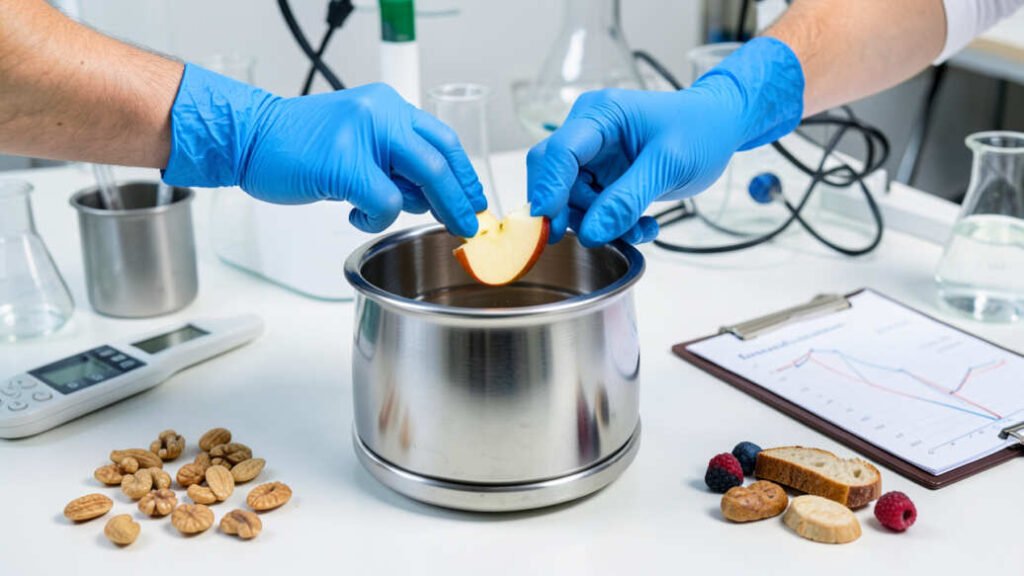
Scientists measure the energy in food primarily using a bomb calorimeter that burns samples to measure heat output or by applying the Atwater system, which assigns standard calorie values to carbohydrates, protein, and fat. The Atwater system is the practical method used for food labeling because it is consistent, inexpensive, and based on metabolizable energy rather than total heat. Food labels show energy values as estimates, with a typical margin of error up to twenty percent under regulatory guidelines.
Scientists measure the energy in food using two main approaches: burning samples in a bomb calorimeter or applying standard calorie factors from the Atwater system. This post explains how both methods work, why food labels use certain numbers, and what those numbers really mean for your diet.
Simply put, food energy is measured with a bomb calorimeter that burns a sample to release heat, or with the Atwater system that applies fixed calorie factors to carbs, protein, and fat. Government agencies and food manufacturers rely mostly on the Atwater system because it is practical, consistent, and inexpensive for routine labeling.
Key Takeaways
- Scientists measure the energy in food directly with bomb calorimeters, which burn samples and calculate the heat released.
- The Atwater system assigns 4 calories per gram to carbohydrates and protein, 9 to fat, and 7 to alcohol.
- Food labels carry up to a 20% margin of error under FDA rules, so calorie counts are estimates, not exact measurements.
- Your body absorbs fewer calories from fiber and some processed foods than a calorimeter would suggest.
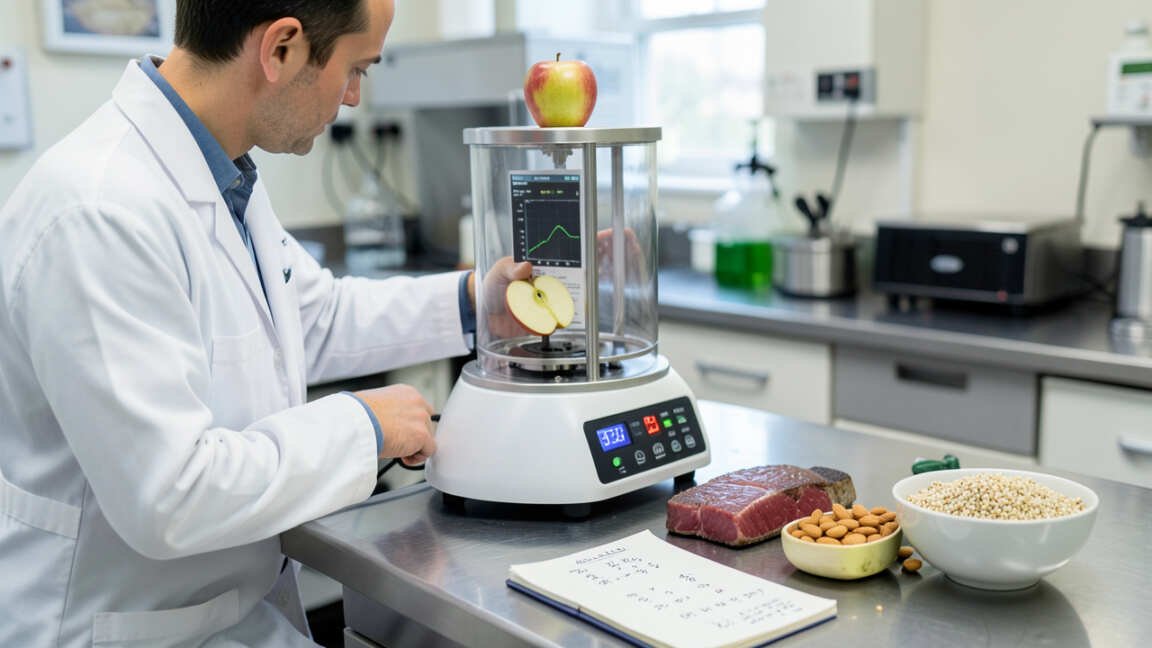
What Is Food Energy and How Is It Defined?
Food energy is the chemical energy stored in macronutrients that your body releases during digestion and metabolism. Your cells convert that energy into ATP, the fuel that powers everything from breathing to running a marathon.
Scientists use two main units to express this energy. The calorie is the traditional unit, while the joule is the metric standard. Food labels in the United States use Calories with a capital C, which actually means kilocalories.
| Unit | Definition | Equivalent |
|---|---|---|
| calorie (cal) | Energy needed to raise 1 gram of water by 1 degree Celsius | 4.184 joules |
| kilocalorie (kcal) | 1,000 calories | 4.184 kilojoules |
| Calorie (Cal) | Food label “calorie” equals 1 kcal | 4.184 kilojoules |
| kilojoule (kJ) | Metric unit for food energy | 0.239 kcal |
Most of the world uses kilojoules on packaging, while the United States sticks with Calories. Both units describe the same physical energy, and the conversion is simple: multiply kilocalories by 4.184 to get kilojoules.
Understanding this distinction matters because nutrition discussions get confusing when people say “calories” but mean “kilocalories.” A single potato chip that has 10 Calories actually contains 10,000 small calories.
How Does a Bomb Calorimeter Measure the Energy in Food?
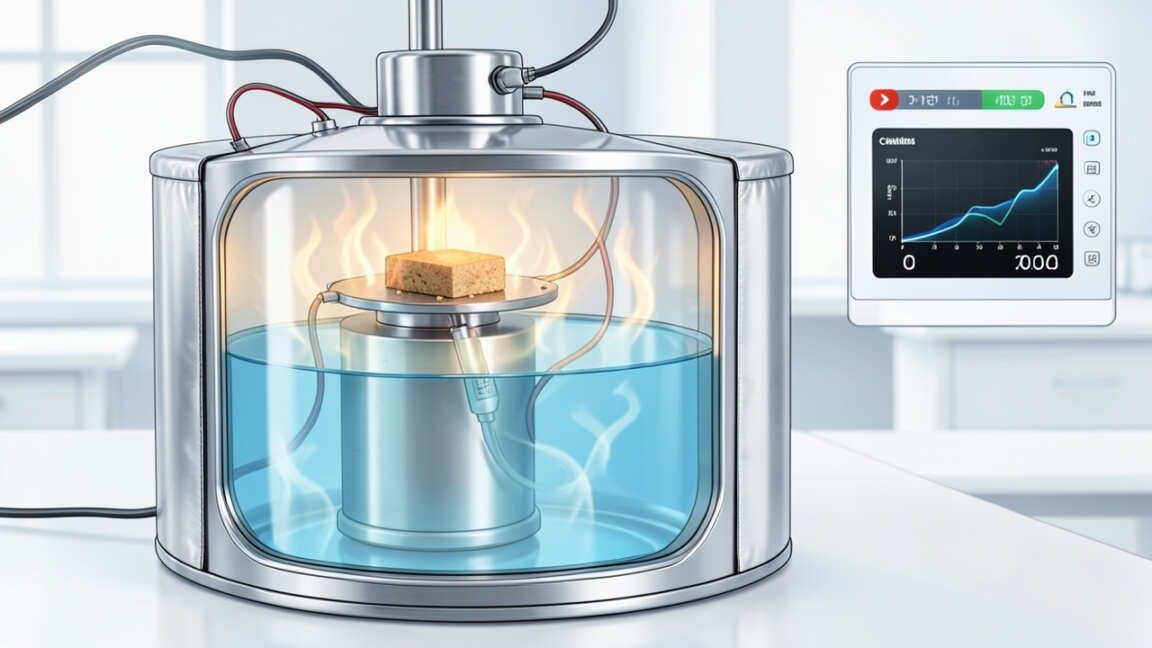
A bomb calorimeter is the gold standard for direct measurement of food energy. It works on a simple principle: burn the food completely, capture all the released heat, and convert that heat into calories.
Here is the step-by-step process that scientists follow:
- Dry and weigh a small food sample, usually a few grams.
- Seal the sample inside a steel bomb chamber.
- Flood the chamber with pure oxygen under high pressure.
- Submerge the bomb in a precisely measured volume of water.
- Ignite the sample with an electric wire.
- Record the temperature rise of the surrounding water.
- Calculate energy using the formula: energy = heat capacity of the system x temperature change.
Because the sample burns completely, the bomb calorimeter captures gross energy, the maximum possible energy in the food. The result is highly accurate and reproducible, which is why labs use this method to validate other measurement systems.
- Measures total energy regardless of how the body digests food
- Requires specialized equipment and trained technicians
- Destroys the food sample during testing
- Provides results in minutes per sample
- Forms the reference standard for all other calorie methods
Nevertheless, gross energy is not the same as what your body actually uses. Humans do not absorb every last joule from food. That limitation led to the development of the Atwater system, which accounts for digestibility.
Tip: A bomb calorimeter tells you the total energy in food, but your metabolism never gets 100% of that number. Fiber and resistant starch pass through without being fully digested.

What Is the Atwater System for Measuring Food Energy?
The Atwater system, named after American nutrition scientist Wilbur Olin Atwater, estimates metabolizable energy using average values for each macronutrient. Atwater conducted digestion experiments in the late 1800s and found that carbs, protein, and fat yield predictable amounts of usable energy.
Those fixed factors are the backbone of nearly every nutrition label on the planet.
| Nutrient | Energy Value | Notes |
|---|---|---|
| Carbohydrates | 4 kcal per gram | Includes sugars and starches |
| Protein | 4 kcal per gram | Animal protein often has higher digestibility |
| Fat | 9 kcal per gram | Most energy-dense macronutrient |
| Alcohol | 7 kcal per gram | Not a nutrient but still supplies energy |
| Dietary fiber | 2 kcal per gram | Some countries count it as 0 |
According to the USDA FoodData Central, these general Atwater factors remain the standard for packaged foods in the United States. To calculate label calories, manufacturers follow a simple process:
- Measure the grams of protein, carbohydrates, fat, and alcohol per serving.
- Multiply each gram amount by its Atwater factor.
- Add the results together.
- Apply rounding rules based on serving size.
This system works well because it is fast, cheap, and grounded in real human digestion studies. The Food and Agriculture Organization (FAO) of the United Nations also uses Atwater-based factors to build international food composition databases.
Important: The Atwater factors of 4-4-9 are averages. Individual foods can vary slightly, but the system is accurate enough for public health guidance and weight management.
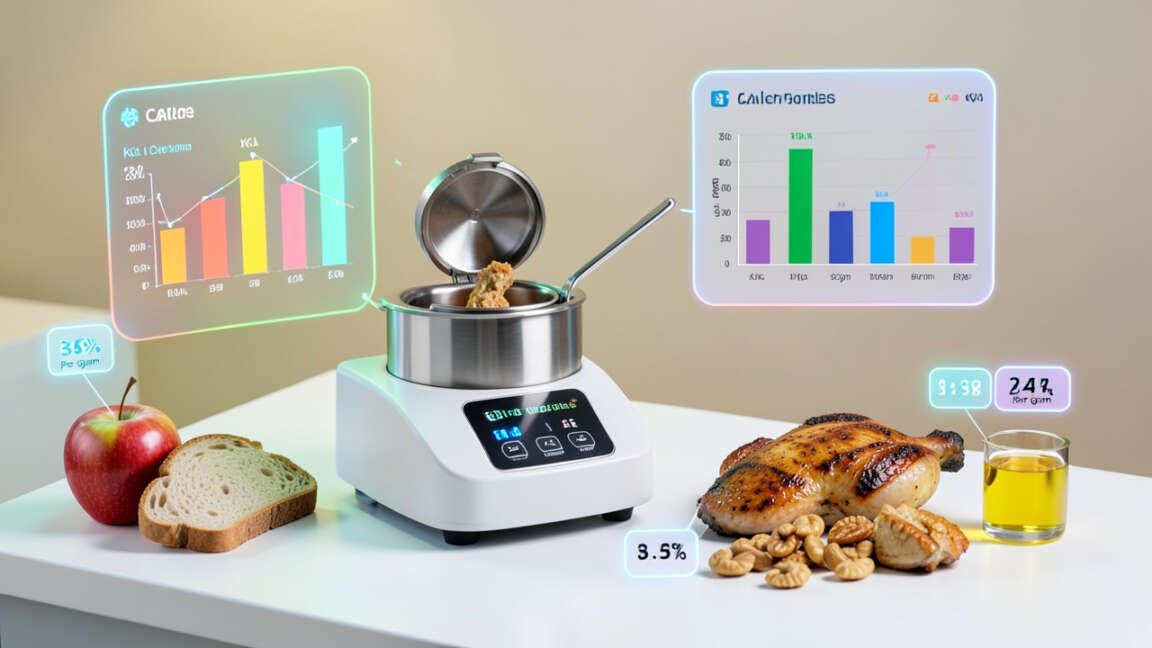
Why Do Food Labels Show Different Energy Values?
You might notice that a food label calorie count rarely matches a bomb calorimeter result. That gap exists because labels use the Atwater system, not direct burning, and because regulations allow for rounding and error.
The Food and Drug Administration (FDA) permits a generous margin of error: packaged food calories can differ from the labeled value by up to 20% and still be legal. That means a snack bar labeled 200 calories could actually contain anywhere from 160 to 240 calories.
| Reason | How It Affects Labels |
|---|---|
| Rounding rules | Calories round to nearest 5 below 50 kcal and nearest 10 above 50 kcal |
| Fiber counting | US counts fiber fully at 4 kcal/g; some other countries count it at 2 or 0 |
| Cooking effects | Labels may reflect raw ingredients, not cooked weight or digestibility |
| FDA margin | Up to 20% legal deviation from stated calories |
Processing also changes energy availability. Foods like ground nuts, cooked starches, or refined grains release more energy than their whole, raw counterparts because the food matrix is broken down. A whole almond and almond butter can have different usable calories even if the label suggests otherwise.
Manufacturers can also use individual lab tests, database values, or modified Atwater factors that account for specific ingredients, which explains why similar products from different brands sometimes show different numbers.
Warning: If you track calories for weight loss, treat label numbers as estimates. Weigh your portions and monitor your progress over weeks, not single days, to account for label error.
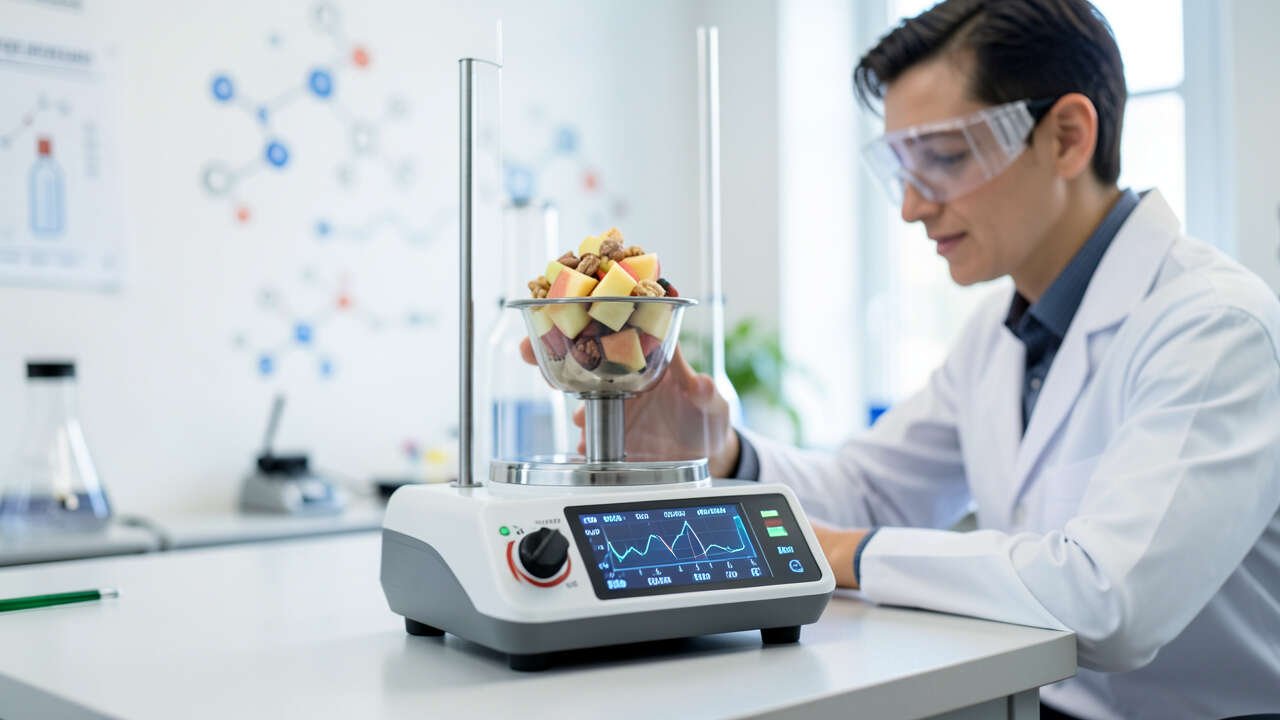
How Do Scientists Measure Energy in Food for Different Nutrients?
Each macronutrient requires a different laboratory approach before its energy value can be determined. Scientists do not simply burn everything and call it done; they first measure the nutrient composition and then apply appropriate energy factors.
Here is how each component gets measured:
- Protein: Measured through nitrogen content using the Kjeldahl method, then multiplied by 6.25 to estimate protein grams and valued at 4 kcal per gram.
- Carbohydrates: Calculated by difference, meaning total weight minus protein, fat, water, ash, and fiber, then valued at 4 kcal per gram.
- Fat: Extracted with solvents, weighed, and valued at 9 kcal per gram.
- Fiber: Separated into soluble and insoluble fractions. According to research in the American Journal of Clinical Nutrition, fiber contributes about 2 kcal per gram rather than the full 4 assigned to carbohydrates.
- Sugar alcohols: Valued at 2 to 3 kcal per gram depending on the specific type, since they are only partially absorbed.
- Organic acids: Valued at 3 kcal per gram, with common forms including citric acid and malic acid.
Plant proteins deserve special attention. The digestibility of protein from beans, lentils, and grains is lower than from eggs, milk, or meat. The FAO uses a corrected score called PDCAAS (Protein Digestibility Corrected Amino Acid Score) to adjust protein quality, and some regulatory systems apply lower energy values to plant proteins.
These measurement details matter because food composition databases like USDA FoodData Central rely on accurate nutrient analysis to generate the calorie values that appear on thousands of packaged products.
Tip: Check the fiber and sugar alcohol content on labels. If a product is high in either one, your body likely absorbs fewer calories than the printed number suggests.

What Factors Affect the Accuracy of Food Energy Measurements?
Even the best measurement system cannot predict exactly how many calories a specific person will absorb. The energy you get from food depends on your digestive system, the food’s structure, and how the food was prepared.
These are the biggest factors that cause measured values and real-world results to diverge:
- Cooking and processing: Heat gelatinizes starch and softens cell walls, making energy easier to absorb.
- Food matrix: Whole nuts and seeds trap fat inside rigid plant cells, reducing absorbable calories by as much as 20% compared to ground versions.
- Gut microbiome: Your gut bacteria ferment some undigested fiber into short-chain fatty acids, which yield a small amount of usable energy.
- Individual digestion: Digestive enzyme output, gut transit time, and prior gut health all influence absorption.
- Protein source: Animal proteins digest at roughly 95% efficiency, while many plant proteins digest at 80% or less.
- Label averaging: One label represents a factory batch, and contents vary from that average in both directions.
Researchers at the USDA and the National Institutes of Health are still refining energy values using human feeding studies. These controlled trials measure actual energy absorbed by participants, providing data that improves future food composition tables.
For most people, the practical gap between label calories and absorbed calories is small enough to ignore for health purposes. But for athletes, researchers, and people with metabolic conditions, the difference can be meaningful.
Important: When comparing diets or counting intake, be consistent. Always use the same food database or label source so that relative comparisons stay valid even if absolute numbers are off.
Frequently Asked Questions
What is a calorie in scientific terms?
A calorie is the amount of energy required to raise the temperature of 1 gram of water by 1 degree Celsius. Food labels use Calories with a capital C, which equals 1,000 small calories, also known as a kilocalorie.
How many calories are in one gram of carbs, protein, fat, and alcohol?
Carbohydrates and protein each provide about 4 calories per gram, fat provides 9 calories per gram, and alcohol provides 7 calories per gram. These are the standard Atwater factors used on most food labels around the world.
Why do food labels use Atwater factors instead of bomb calorimeters?
The Atwater system is faster, cheaper, and reflects real human digestibility better than burning food in a calorimeter. Bomb calorimeters measure total energy, but that number is always higher than what the body actually absorbs.
Can food labels legally be inaccurate?
The FDA allows packaged food calories to deviate from the labeled value by up to 20%, and rounding rules add further variation. This means label numbers are estimates, not laboratory-precise measurements.
Why do some countries count fiber calories differently?
Countries use different regulatory definitions for fiber. The United States counts fiber as part of carbohydrates at 4 kcal per gram, while many European countries count it at 2 kcal per gram, and some countries count insoluble fiber at zero because it passes through undigested.
Final Thoughts
Understanding how scientists measure the energy in food helps you read nutrition labels with a more critical eye. The bomb calorimeter provides the raw total, while the Atwater system translates that into usable estimates for real bodies.
Remember that labels are approximations, and your personal digestion adds another layer of variation. Use calorie data as a helpful guide rather than an exact science, and focus on whole foods and consistent eating patterns for long-term success.