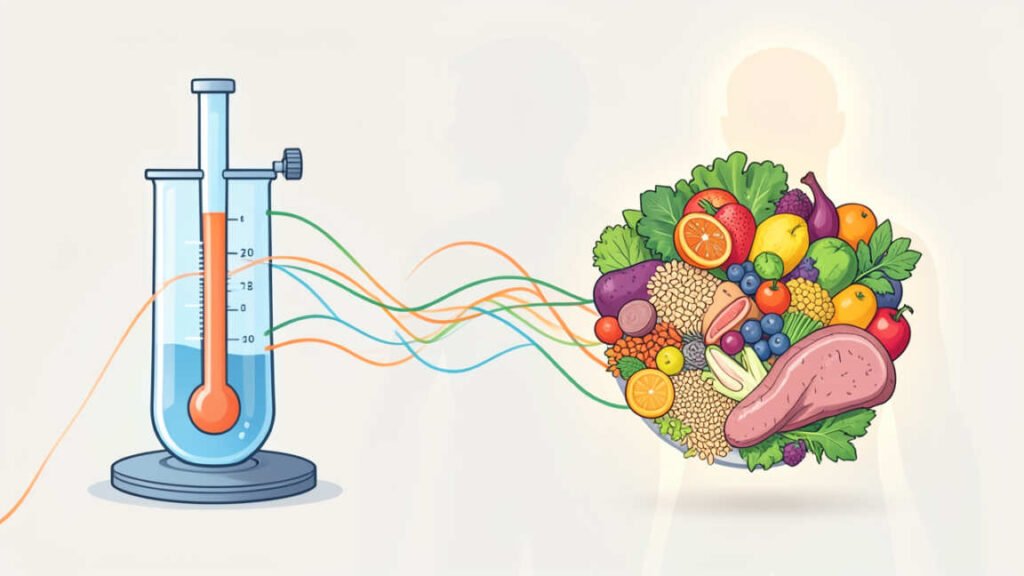
A calorie is a unit of energy that measures the amount of energy your body obtains from food and beverages. Your body uses these calories to fuel vital functions like breathing and circulation, as well as physical activity. Effectively managing weight involves balancing calorie intake with expenditure, but the nutritional quality of those calories is just as crucial as their quantity for overall health.
Calories are everywhere on food labels, fitness apps, and diet plans, yet most people struggle to explain what they actually measure. This post breaks down the science of calories, how your body uses them, and why the number alone doesn’t tell the full story.
Simply put, a calorie measures the amount of energy your body gets from food and beverages. Your body burns calories constantly, even while you sleep, just to stay alive. Managing your weight comes down to balancing energy in with energy out, but the quality of those calories matters just as much as the quantity.
Key Takeaways
- Calories measure energy, not weight, volume, or nutritional value.
- Carbohydrates and protein each supply 4 calories per gram, while fat supplies 9 and alcohol supplies 7.
- Your body burns a large share of calories at rest through basic functions like breathing, circulation, and cell repair.
- Two foods with the same calorie count can affect your body completely differently.
- Labeled calorie counts are estimates, not exact measurements, because digestion and food processing change how much energy you absorb.
What Are Calories? A Simple Definition
A calorie is a defined unit of energy. In nutrition, the calorie you see on food labels is technically a kilocalorie, which represents the energy needed to raise the temperature of one kilogram of water by one degree Celsius. That engineering definition matters less than what it means for your body: calories are fuel.
When you eat, your digestive system breaks food down into nutrients that your cells can use. These nutrients release energy that powers everything from blinking to lifting weights. Without calories, your body simply stops working.
- Calories are energy: they fuel physical activity, organ function, and cell repair.
- Calories are a measurement: they quantify the energy potential in food, like miles quantify distance.
- Calories are not nutrients: vitamins, minerals, and antioxidants are separate components of food.
- Calories are not weight: two foods of equal weight can have wildly different calorie counts.
- Calories are not the enemy: they are essential for survival; the real issue is balance and food quality.
The scientific term used on food packaging is kilocalorie, but everyday language shortens it to calorie. When a label says 200 calories, it actually means 200 kilocalories. Knowing this simple fact helps you read any nutrition label with confidence.
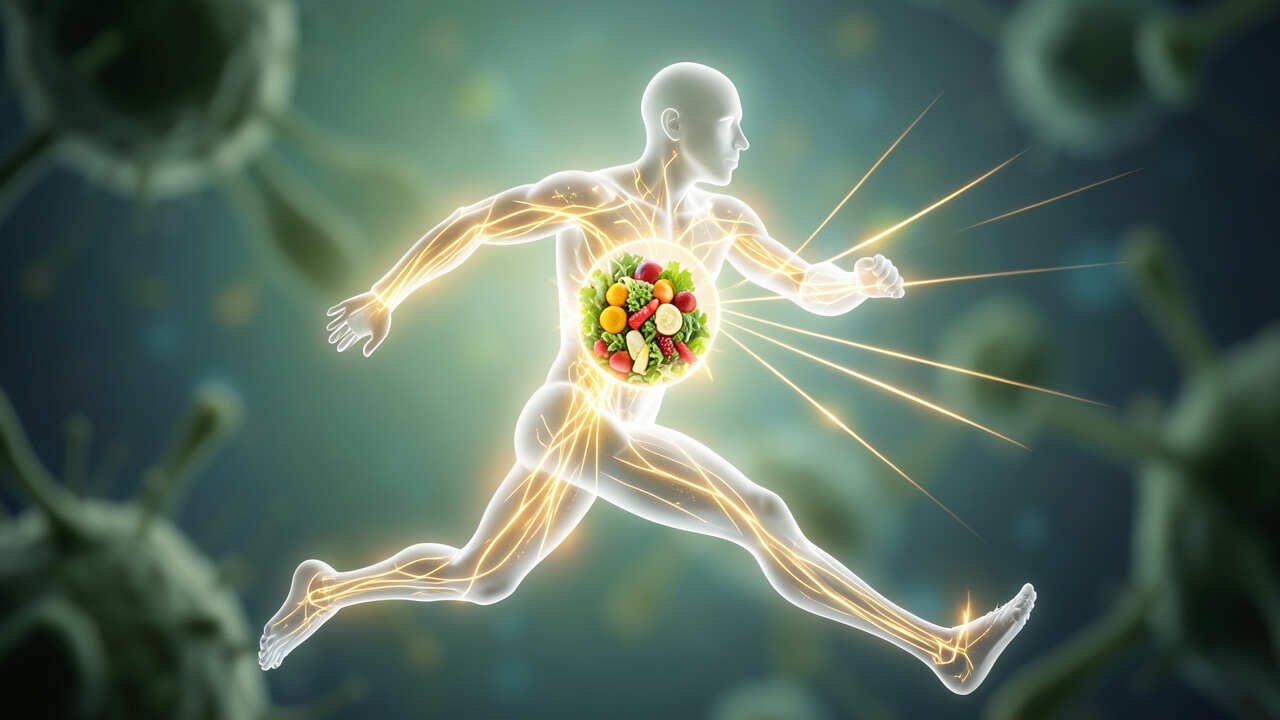
How Does the Body Use Calories?
Your body uses calories around the clock, even when you are completely still. The largest portion goes to your basal metabolic rate (BMR), which covers breathing, heartbeat, brain function, and cell repair. The National Health Service (NHS) reports that these basic functions account for roughly 60 to 75 percent of the calories you burn each day.
Physical activity adds to your total, but most people overestimate this number. A 30-minute walk burns about 150 calories, while a vigorous run can burn 300 to 400. That is why diet plays a bigger role in weight loss than exercise alone.
- Basal metabolism: fuels involuntary functions like organ activity, hormone production, and temperature regulation.
- Digestion: the thermic effect of food burns around 10 percent of the calories you eat just to break them down.
- Everyday movement: walking, standing, typing, and housework add hundreds of calories per day.
- Exercise: deliberate activity like running, cycling, and strength training increases calorie burn further.
- Growth and repair: building muscle, healing tissue, and recovering from workouts demand additional energy.
Tip: Don’t trust fitness trackers as gospel. Most devices overestimate calorie burn by 20 to 40 percent. Use them as a rough guide, not a precise measurement.
Types of Calories and Energy Sources
Not all foods deliver energy the same way. The three macronutrients that provide calories are carbohydrates, protein, and fat, with alcohol as a fourth energy source. Each one yields a different number of calories per gram, thanks to the Atwater system used by food scientists worldwide.
| Macronutrient | Calories per Gram | Common Sources |
|---|---|---|
| Carbohydrates | 4 | Rice, bread, fruit, vegetables |
| Protein | 4 | Chicken, eggs, beans, fish |
| Fat | 9 | Oil, butter, nuts, cheese |
| Alcohol | 7 | Beer, wine, spirits |
Fat is the most calorie-dense nutrient, which explains why fatty foods pack more energy per bite. Protein and carbs are equal on a per-gram basis, but protein signals fullness more strongly and costs more energy to digest. Alcohol sits between carbs and fat, which is why drinks add up quickly.
- Fiber is a carbohydrate that provides fewer usable calories because humans can’t fully digest it.
- Sugary drinks deliver calories with no fiber, protein, or lasting fullness.
- Whole foods tend to be less calorie-dense than processed foods, meaning more volume for fewer calories.
- Protein and fat digest slowly, keeping you satisfied between meals.
- Highly processed foods often combine sugar, refined carbs, and fat in ways that encourage overeating.
What Do Calories Actually Measure in Food?
Food calories are measured using a device called a bomb calorimeter. Scientists place a food sample in a sealed container filled with oxygen, ignite it in water, and measure the temperature rise. This reveals the total energy released when the food burns completely.
But your body is not a bomb calorimeter. You don’t burn food instantly; you digest it slowly and miss some energy along the way. That is why the U.S.
Food and Drug Administration (FDA) allows a 20 percent tolerance on Nutrition Facts labels, meaning the listed calories can be lower or higher than the actual energy content.
- The Atwater system assigns fixed energy values (4-4-9) to each macronutrient rather than burning each food individually.
- Fiber is counted as providing 2 calories per gram in practice, even though it yields almost none for humans.
- Cooking changes calorie availability: cooked foods are often easier to digest, so you absorb more energy.
- Label accuracy varies by brand and batch; whole foods like fruit aren’t labeled at all.
- Your individual digestion, gut bacteria, and enzyme levels make your personal calorie yield slightly different.
Important: A calorie number is a useful estimate, not a precise truth. Use labels as a starting point for portion awareness rather than obsessing over single digits.
For whole foods without labels, nutrition databases estimate values based on average samples. A banana labeled 105 calories today might be slightly larger or smaller than the average. This variance is normal and rarely matters for long-term health.

How Many Calories Do You Really Need?
Your daily calorie needs depend on several personal factors: age, sex, height, weight, muscle mass, and activity level. The NHS estimates that the average woman needs around 2,000 calories per day, while the average man needs around 2,500 calories. These are starting points, not prescriptions.
| Factor | Effect on Calorie Needs |
|---|---|
| Muscle mass | More muscle raises your resting burn |
| Age | Needs gradually decline after young adulthood |
| Activity level | Active people burn several hundred more daily |
| Body size | Larger bodies require more energy |
| Genetics | Basal metabolic rate can vary by up to 10 percent |
Instead of guessing from a generic chart, use a TDEE (total daily energy expenditure) calculator that factors in your specifics. The simplest method is tracking your weight over a few weeks. If your weight stays stable, you are eating at maintenance.
If it goes up, you are eating in a surplus.
- Your energy stays stable through the day without extreme crashes.
- Your weight stays relatively consistent over months.
- You feel satisfied after meals rather than starving or stuffed.
- Your workouts feel strong and recovery is smooth.
- You sleep well and wake up rested.
Tip: Aim for a small, sustainable deficit of 300 to 500 calories per day when you want to lose weight. Crash diets that cut a thousand or more calories usually backfire because they reduce muscle mass and slow your metabolism.
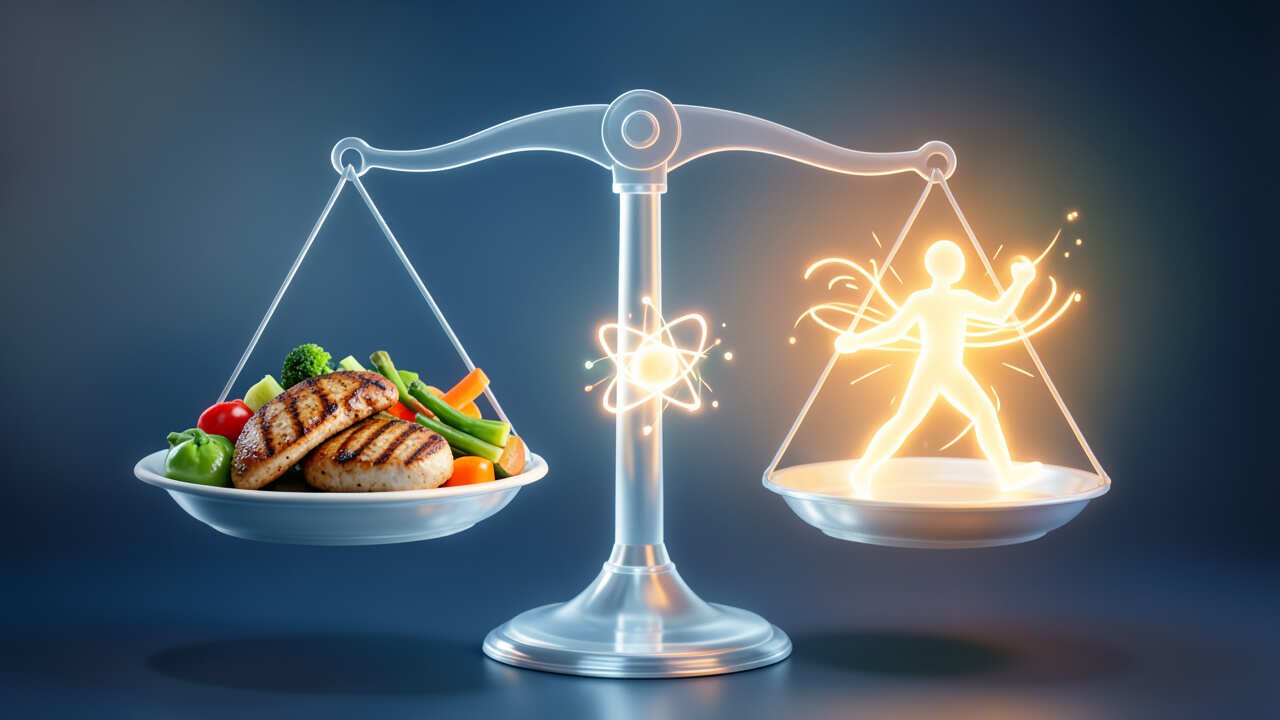
Calories In vs. Calories Out: Does It Matter?
At its core, weight management is energy balance: eat more calories than you burn, and your body stores the extra as fat; eat fewer, and your body pulls from fat stores. The World Health Organization (WHO) and major health bodies agree on this basic law of thermodynamics.
But “calories in, calories out” is a simplification. Your body adapts. Cut calories aggressively and your metabolism slows, hunger hormones rise, and your body burns fewer calories during the same activity.
That is why two people on identical calorie intakes can lose weight at very different rates.
- Food quality changes absorption: whole foods deliver fewer usable calories than processed foods with the same label.
- Protein has a higher thermic effect than carbs or fat, so you net fewer calories from protein-rich meals.
- Sleep deprivation raises ghrelin, the hunger hormone, making you eat more.
- Chronic stress and elevated cortisol encourage fat storage around the abdomen.
- Gut bacteria composition influences how many calories you extract from food.
Warning: Ignoring food quality in favor of calorie counting alone can lead to nutrient deficiencies. A 1,500-calorie diet of soda and chips is far worse for your body than a 1,500-calorie diet of vegetables, lean protein, and whole grains.
- Estimate your maintenance calories using a TDEE calculator.
- Set a modest goal: 10 to 20 percent below maintenance for weight loss.
- Prioritize protein and fiber to stay full and preserve muscle mass.
- Track portions loosely for a few weeks to learn typical serving sizes.
- Adjust based on weight trends and energy levels rather than daily scale noise.
Common Calorie Myths Debunked
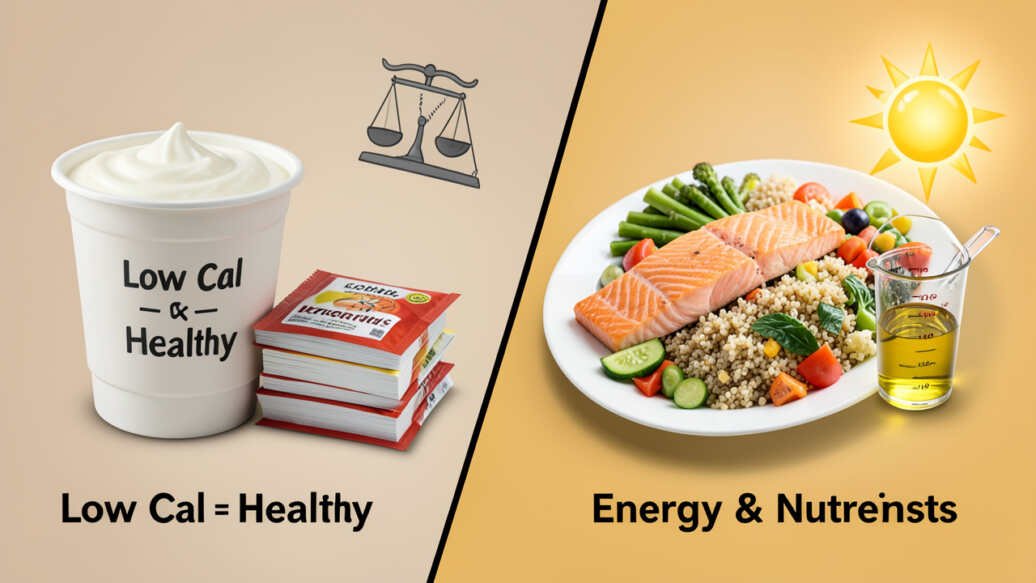
Calorie misinformation spreads fast online. Some myths sound logical but fall apart under scrutiny. Here are the most common misconceptions and the facts that counter them.
| Myth | Fact |
|---|---|
| Negative-calorie foods exist | Celery and cucumber are very low calorie, but you still absorb net energy from them |
| All calories are equal | The number matters, but protein, fiber, and food structure change how your body responds |
| Eating at night causes weight gain | Total daily calories matter more than the clock; late snacks only matter when they push you into surplus |
| Zero-calorie drinks are harmless | They save calories, but some research links artificial sweeteners to cravings and gut changes |
| Carbs cause weight gain directly | Excess calories from any source cause gain; carbs only matter when you consistently overeat |
The American Heart Association (AHA) agrees that carbohydrate quality matters more than quantity. Whole grains and fruit provide fiber and nutrients, while added sugars drive up calorie intake without providing fullness.
- Use calories as information, not judgment.
- Focus on food quality first, calorie counts second.
- Watch portion sizes, especially for calorie-dense foods like nuts, oil, and cheese.
- Build meals around protein, vegetables, and high-fiber carbs.
- Stay physically active to increase your caloric allowance.
- Be patient: healthy changes show up over weeks and months, not days.
Frequently Asked Questions
What is the difference between a calorie and a kilocalorie (kcal)?
On food labels, the word “calorie” actually refers to a kilocalorie, which is 1,000 small calories. In nutrition science, one kilocalorie is the energy needed to raise the temperature of one kilogram of water by one degree Celsius. When someone says you burned 300 calories, they mean 300 kilocalories.
How many calories do I need to eat each day?
The NHS estimates that average women need about 2,000 calories a day and average men need about 2,500. Your personal needs depend on age, body size, muscle mass, and activity level. Track your weight over a few weeks to find your maintenance number.
Can you burn calories without exercising?
Yes. Your body burns calories constantly through basal metabolism, which powers breathing, heartbeat, and cell repair. Everyday movement like walking, cleaning, and standing also adds up.
Exercise is valuable, but it makes up a smaller share of total daily burn than your resting metabolism.
Are calories from alcohol more fattening than calories from food?
Alcohol provides 7 calories per gram, and your body prioritizes metabolizing it before fat or carbs. That means drinking can pause fat burning and add empty calories quickly. The bigger issue is that alcohol lowers inhibitions, which often leads to extra food consumption.
Why do zero-calorie drinks still list calories on some labels?
Many diet sodas genuinely contain less than 5 calories per serving, which the FDA allows companies to round down to zero. Sweeteners like aspartame and sucralose provide almost no energy. However, research suggests these sweeteners may still affect appetite and gut bacteria.
Final Thoughts
Calories are simply units of energy, and understanding that core idea changes how you read food labels and approach your diet. Focus on eating mostly whole, nutrient-dense foods, keep portions reasonable, and let calorie awareness guide you rather than rule you. Balance the number with food quality, and you will build a healthier relationship with eating.