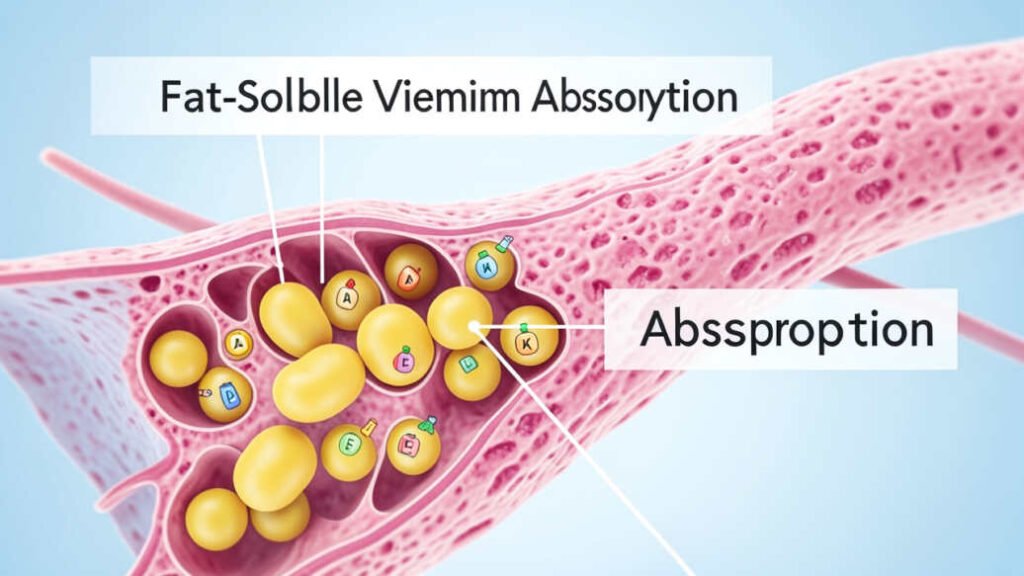
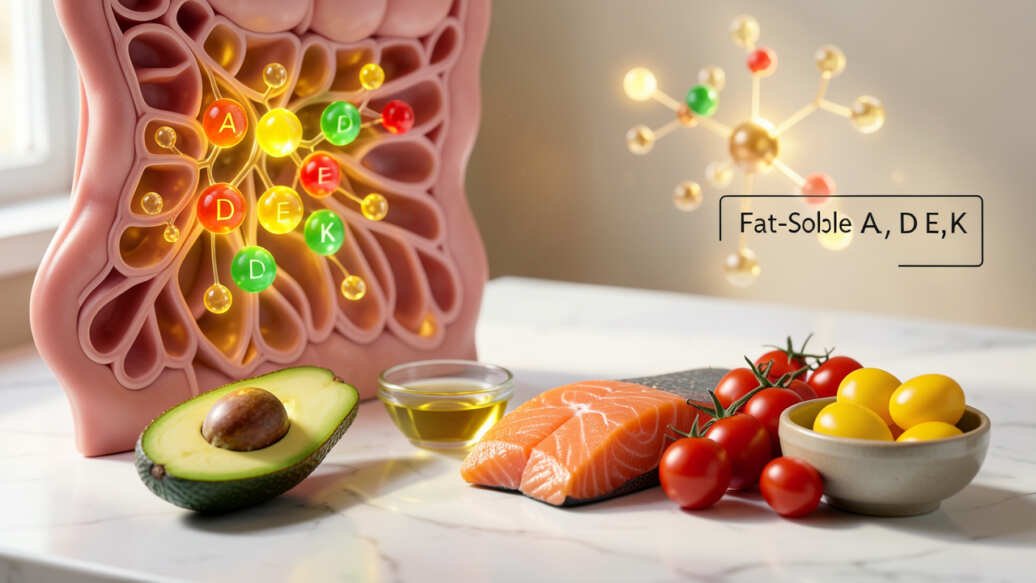
Some vitamins need fat to be absorbed because they are fat-soluble, specifically vitamins A, D, E, andK, which dissolve in lipids rather than water. Dietary fat triggers the release of bile and the formation of micelles, which package these vitamins for transport across the intestinal wall into the lymphatic system. Consuming as little as 5 to 10 grams of fat with a meal can significantly boost this absorption, while very low-fat diets can lead to deficiencies even if you eat vitamin-rich foods.
Some vitamins need fat to be absorbed because they are fat-soluble, which means they dissolve in fat rather than water. This guide explains why fat is essential for these vitamins, how your body processes them, and what can go wrong if you avoid dietary fat.
Simply put, vitamins A, D, E, and K need dietary fat to be absorbed. Without fat, your intestines cannot package these vitamins into chylomicrons for transport. Even healthy foods like carrots and spinach will deliver far fewer vitamins if you serve them with no fat.
Key Takeaways
- Some vitamins need fat to be absorbed, specifically vitamins A, D, E, and K.
- Fat triggers bile release and micelle formation, which helps move fat-soluble vitamins across the intestinal wall.
- As little as 5 to 10 grams of fat per meal can significantly boost vitamin absorption.
- Low-fat, fat-free, and very restrictive diets increase the risk of fat-soluble vitamin deficiency.
What Are Fat-Soluble Vitamins?
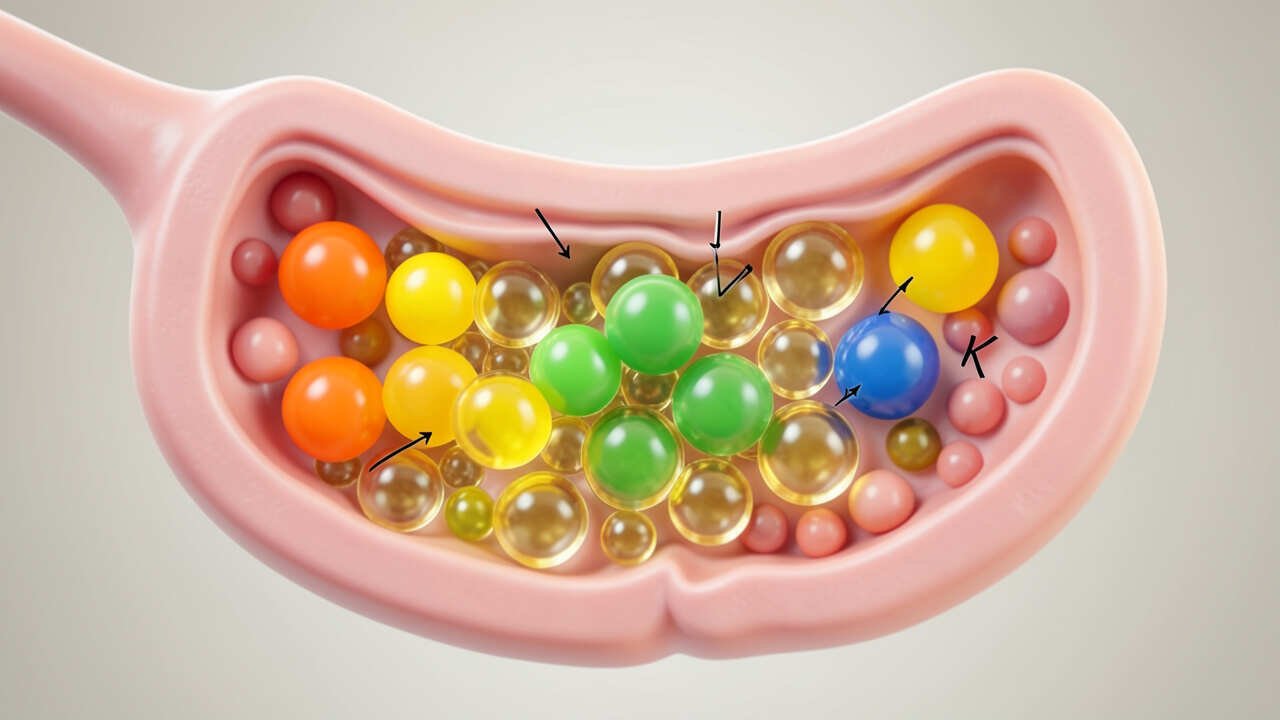
Fat-soluble vitamins are nutrients that dissolve in lipids and are stored in your body’s fatty tissues and liver. This makes them different from water-soluble vitamins, which your body uses quickly and excretes in urine.
The four fat-soluble vitamins are A, D, E, and K. Each one has a unique set of roles, but they all depend on dietary fat for proper absorption.
| Type | Vitamins | Storage | Excretion |
|---|---|---|---|
| Fat-soluble | A, D, E, K | Liver and adipose tissue | Slow, stored |
| Water-soluble | B, C | Limited storage | Fast, via urine |
Because fat-soluble vitamins hang around longer, deficiency can take months to appear. But excess amounts can build up, so taking high doses without medical supervision isn’t safe.
- Vitamin A keeps your vision, skin, and immune system working normally.
- Vitamin D regulates calcium and phosphorus, which keeps bones strong.
- Vitamin E acts as an antioxidant that protects cells from oxidative damage.
- Vitamin K helps your blood clot and supports bone metabolism.
Why Do Some Vitamins Need Fat to Be Absorbed?
The short answer is because their chemical structure is non-polar. Water is too polar to dissolve these vitamins, so they can’t float freely in your bloodstream. Fat acts as the carrier and solvent.
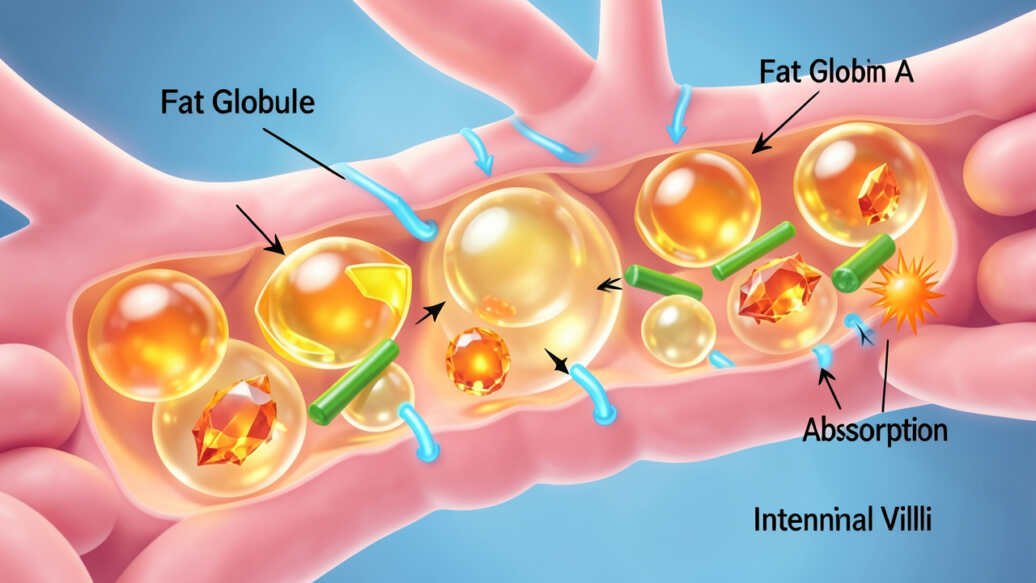
When you digest a meal, your stomach and pancreas work to break down fats into droplets. Bile, made by the liver and stored in the gallbladder, then emulsifies these fats. Once that happens, fat-soluble vitamins can hitch a ride inside structures called micelles.
- Chewing and stomach acid release vitamins from food.
- Dietary fat triggers your gallbladder to release bile.
- Bile breaks fat into tiny droplets for easier digestion.
- Pancreatic enzymes called lipases split the fat into fatty acids.
- Vitamins and fatty acids combine into micelles.
- The micelles cross the intestinal lining and enter the lymphatic system.
Without each of these steps, absorption drops sharply. A study in the American Journal of Clinical Nutrition found that adding avocado to salad increased carotenoid absorption up to 15 times compared with fat-free salad.
Tip: Add a few slices of avocado or a tablespoon of olive oil to your vegetable-heavy meals. This gives your body the fat it needs to unlock fat-soluble vitamins.
How Does Your Body Absorb Fat-Soluble Vitamins?
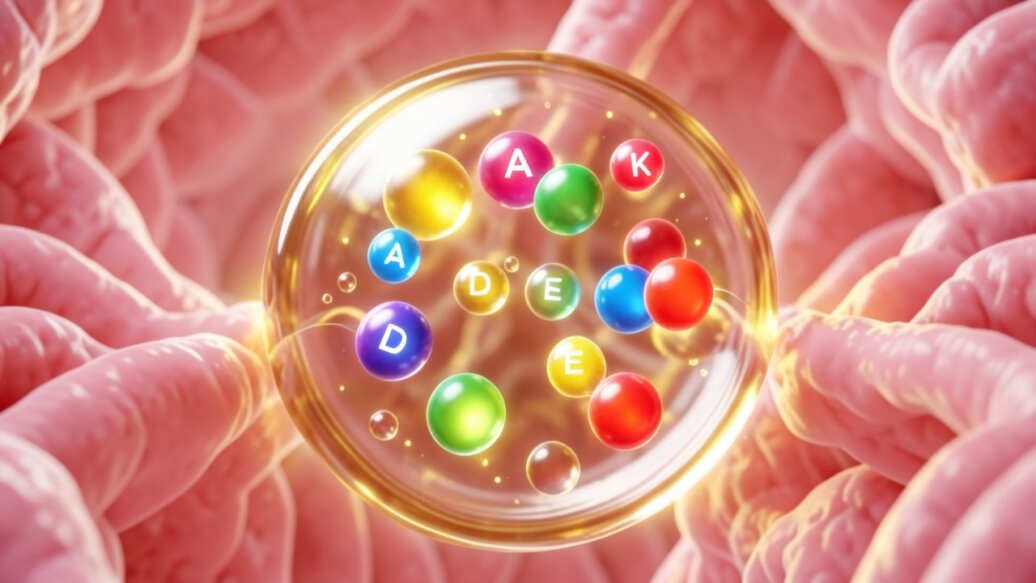
Your digestive system treats fat-soluble vitamins like tiny bits of dietary fat. They follow the same route as the fats you eat, which is why the process is connected to bile, pancreatic enzymes, and the lymphatic system.
Here’s a quick breakdown of which body parts do what during absorption.
| Organ | Role in Absorption |
|---|---|
| Liver | Produces bile to emulsify fat |
| Gallbladder | Stores and releases bile into the small intestine |
| Pancreas | Secretes lipase to break down dietary fat |
| Small intestine | Absorbs micelles into enterocytes |
| Lymphatic system | Carries absorbed fats and vitamins to the bloodstream |
Notice that these vitamins skip directly into the lymph fluid before reaching blood. That explains why taking a fat-soluble supplement on an empty stomach leads to low uptake.
- The amount of fat in the meal
- Bile production and flow
- Pancreatic enzyme output
- Intestinal health
- Presence of fat malabsorption conditions
What Happens If Some Vitamins Need Fat to Be Absorbed and You Skip the Fat?
If you consistently eat fat-free meals, your body absorbs fat-soluble vitamins very poorly. In other words, some vitamins need fat to be absorbed efficiently. You might still absorb a small fraction, but nowhere near enough to meet your needs over time.
Consider a salad with fat-free dressing. A study found that people absorbed almost none of the beta-carotene in vegetables when they used fat-free dressing, but absorption jumped when full-fat dressing was used.
Warning: Sustained fat-free diets can lead to silent deficiency. Symptoms may take months to appear because your body draws on stored reserves, then the supply runs out.
- Vitamin A deficiency: night blindness, dry eyes, slow wound healing.
- Vitamin D deficiency: bone pain, muscle weakness, depression, higher infection risk.
- Vitamin E deficiency: nerve damage, tingling, poor immune response.
- Vitamin K deficiency: easy bruising, heavy bleeding, abnormal blood clotting.
| Vitamin | Key Deficiency Risk |
|---|---|
| A | Night blindness and weakened immunity |
| D | Rickets in children, osteomalacia in adults |
| E | Peripheral nerve damage |
| K | Excessive bleeding and poor clotting |
The World Health Organization estimates that 250 million preschool children have vitamin A deficiency, much of it linked to diets low in both vitamin A and fat. In developed countries, vitamin D deficiency is more common, with one widely cited study in JAMA reporting that about 42 percent of U.S. adults are deficient.
How Much Fat Do You Need for Some Vitamins to Be Absorbed?
You don’t need a bowl of butter. Research shows that a surprisingly small amount of fat is enough. Consuming about 5 to 10 grams of fat per meal can dramatically improve the absorption of fat-soluble vitamins and plant carotenoids.
- 1 tablespoon olive oil: 14 grams
- 1 large egg: 5 grams
- 1 ounce cheddar cheese: 9 grams
- Half an avocado: 10 grams
- 3 ounces salmon: 7 grams
- Dress salads with 1 tablespoon of olive oil.
- Add a slice of cheese to a sandwich.
- Cook spinach in a small amount of butter.
- Snack on a handful of nuts with lunch.
- Include a boiled egg with your leafy greens.
Important: The quality of fat matters too. Monounsaturated fats from olive oil, avocados, and nuts are great choices. Trans fats and heavily processed oils don’t support your health the same way.
Best Food Pairings for Fat-Soluble Vitamins
Pairing is about being strategic. The goal is to combine a vitamin-rich food with a source of fat in the same meal.
| Vitamin | Food Source | Fat Pairing |
|---|---|---|
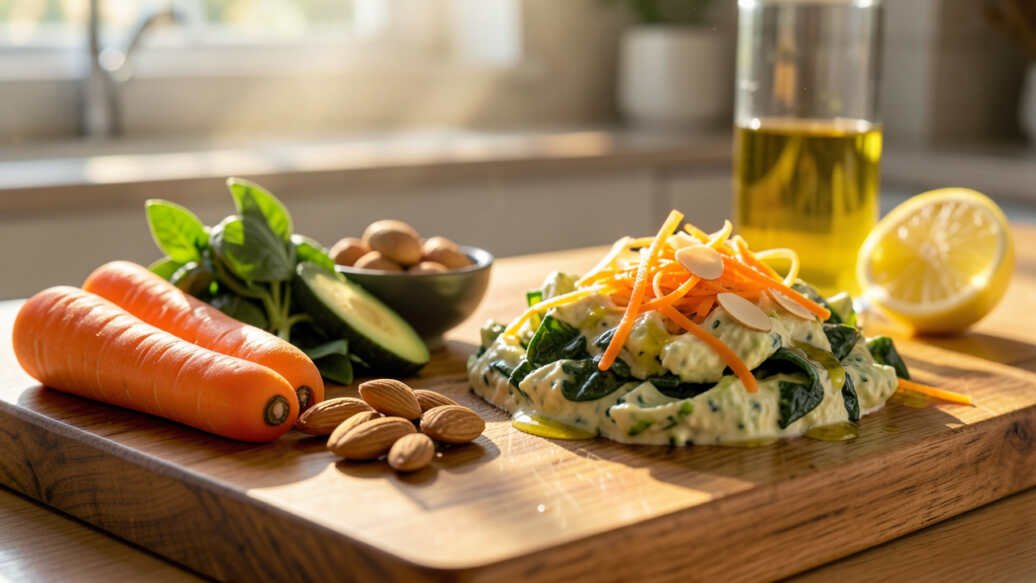
| A | Carrots, sweet potato, kale | Olive oil, butter, avocado |
| D | Salmon, sardines, egg yolks | Grill with oil, pair with cheese |
| E | Almonds, sunflower seeds, spinach | Trail mix, seeds in a salad with dressing |
| K | Broccoli, Brussels sprouts, greens | Roast with olive oil, add sesame seeds |
Use these pairings as a template. You don’t need complex recipes, just small adjustments that put fat next to vitamins.
- Use olive oil instead of water when roasting vegetables.
- Add nuts or seeds to your morning oatmeal.
- Eat a hard-boiled egg with your salsa and vegetables.
- Choose whole milk yogurt instead of fat-free.
- Pair a handful of walnuts with your leafy bowl.
Common Mistakes That Block Vitamin Absorption
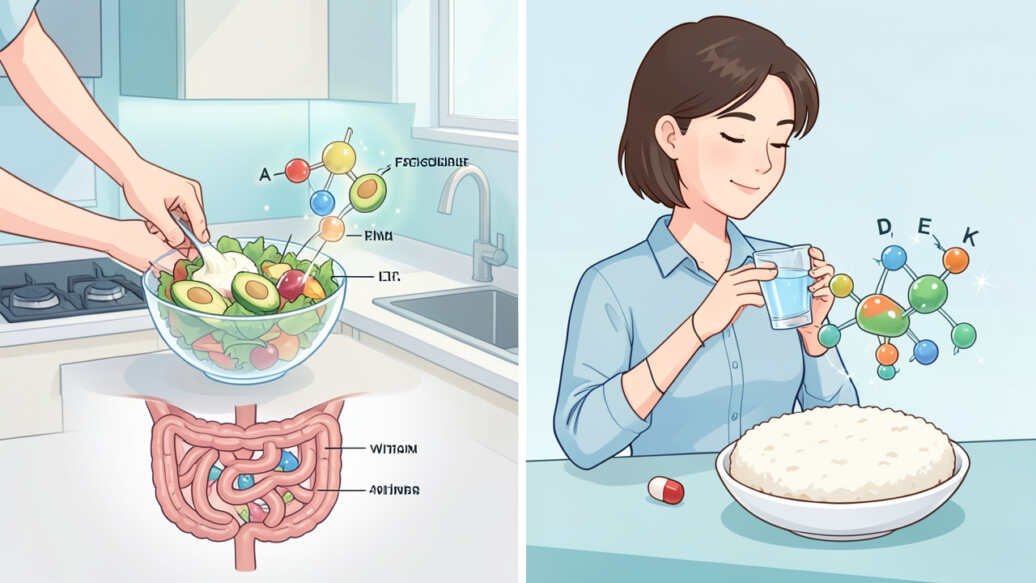
Eating enough fat isn’t the only part. Some habits actively reduce how well your body absorbs fat-soluble vitamins.
- Overusing fat-free dressings and low-fat condiments.
- Taking fat-soluble vitamins with non-fat meals.
- Using mineral oil or laxatives regularly.
- Taking bile acid binding drugs for cholesterol management without adjusting your diet.
- Ignoring digestive conditions like celiac disease.
- Eating raw greens without any fat on a regular basis.
- Add at least one fat source to every meal.
- Include fermented vegetables and foods that support bile flow.
- Cook soft greens rather than always eating them raw.
- Consult a doctor if you take digestive medications.
- Have a fat-containing snack alongside your supplements.
Warning: Some weight-loss drugs and fiber supplements can reduce fat absorption. If you’re on orlistat or similar medications, talk to your healthcare provider about scheduling your supplement doses.
Who Is at Risk of Fat-Soluble Vitamin Deficiency?
Certain conditions directly impair fat absorption, which means even a normal diet won’t help.
- People with Crohn’s disease, ulcerative colitis, or celiac disease.
- Those who have undergone bariatric surgery.
- Older adults who produce less bile and stomach acid.
- Individuals taking orlistat or similar weight-loss drugs.
- People on extremely low-fat diets for an extended time.
| At-Risk Group | Why Absorption Fails |
|---|---|
| Celiac disease | Damaged intestinal villi reduce uptake |
| Bariatric surgery |