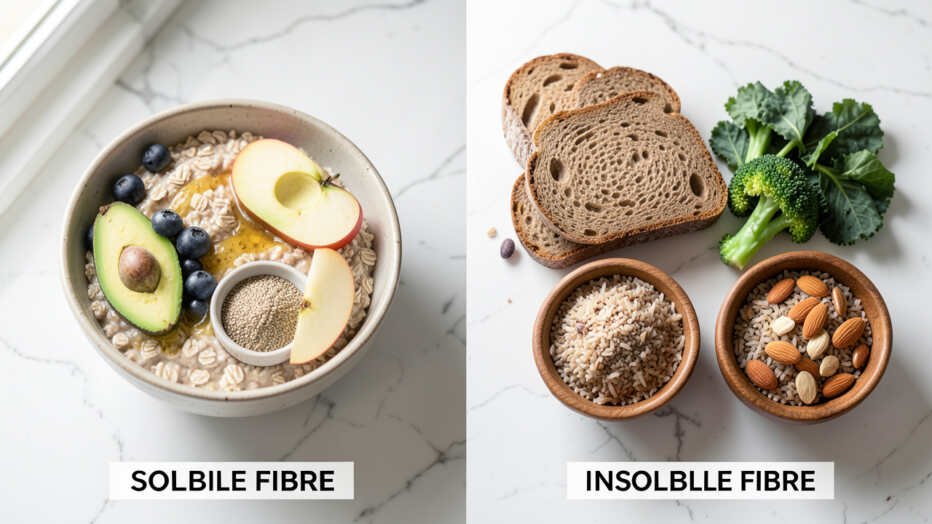
Soluble fibre dissolves in water to form a gel, slowing digestion to support blood sugar and cholesterol control, while insoluble fibre remains intact to add bulk to stool and promote regular bowel movements. Both types are essential for complete digestive health, with soluble fibre feeding beneficial gut bacteria and insoluble fibre preventing constipation. The most reliable way to obtain both is by eating a daily variety of whole plant foods such as fruits, vegetables, legumes, nuts, and whole grains.
Soluble vs insoluble fibre are the two main types of dietary fibre, and they play very different roles in your body. Most people get far too little of both, which leads to poor digestion, sluggish energy, and long-term health risks.
This guide breaks down exactly what each type does, which foods contain them, and how to combine them for a healthier gut.
Simply put, soluble fibre dissolves in water and forms a gel that slows digestion, lowers cholesterol, and stabilises blood sugar. Insoluble fibre does not dissolve, so it adds bulk to stool and keeps your bowels moving. You need both every day, and most whole plant foods provide a natural mix of the two.
Key Takeaways
- Soluble fibre dissolves in water, feeds beneficial gut bacteria, and supports heart health and blood sugar control.
- Insoluble fibre stays intact through digestion, adds bulk to stool, and prevents constipation.
- Your body needs both fibre types for complete digestive health, and neither one is better than the other.
- Eating a variety of whole plant foods is the simplest way to get a balanced mix of soluble vs insoluble fibre.
- Most adults need 25 to 38 grams of total fibre per day, yet average intake sits far below that.
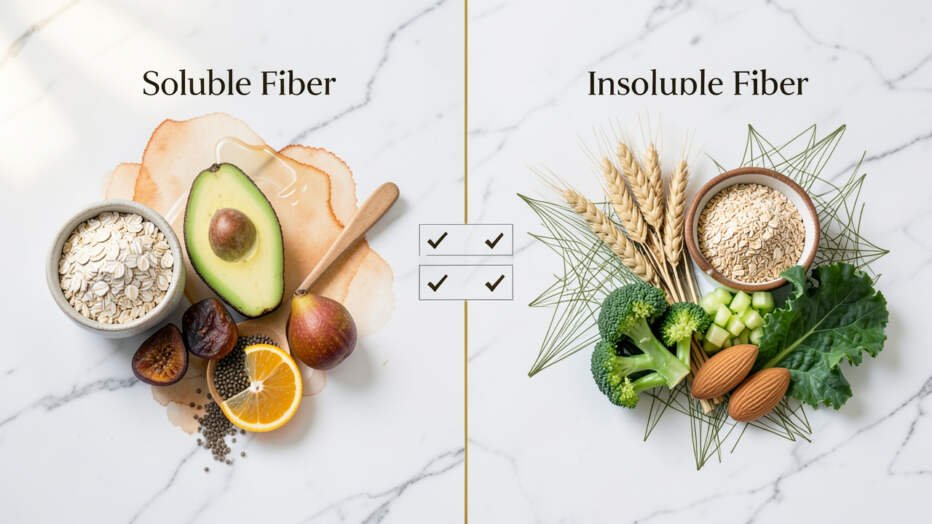
Quick Comparison Table: Soluble vs Insoluble Fibre
Before diving into the details, here is a fast reference to clarify what makes these two fibres different.
| Feature | Soluble Fibre | Insoluble Fibre |
|---|---|---|
| Dissolves in water | Yes | No |
| Texture during digestion | Gel-like and sticky | Rough and coarse |
| Effect on digestion | Slows it down | Speeds it up |
| Key health benefit | Lowers cholesterol and stabilises blood sugar | Prevents constipation and keeps you regular |
| Effect on gut bacteria | Fermented and feeds beneficial bacteria | Minimally fermented, adds bulk only |
| Common foods | Oats, beans, apples, citrus, barley | Wheat bran, celery, nuts, whole grains |
Both types work together rather than compete. Soluble fibre feeds your gut microbiome and controls nutrient absorption, while insoluble fibre sweeps waste through your intestines.
According to the Academy of Nutrition and Dietetics, women need roughly 25 grams of total fibre per day, while men need about 38 grams. Most adults only manage around 15 grams.
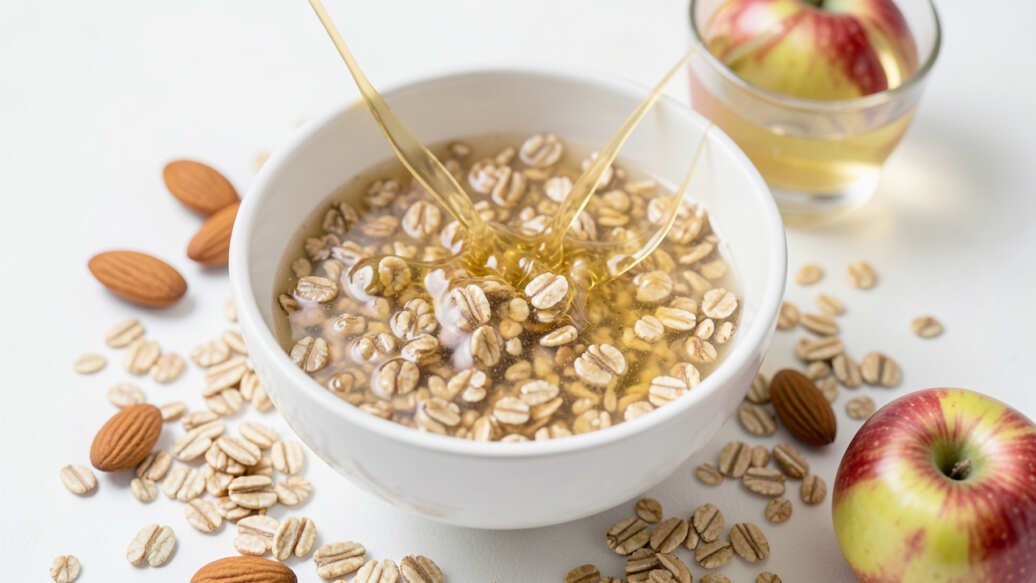
What Is Soluble Fibre?
Soluble fibre is a plant carbohydrate that absorbs water and turns into a thick gel during digestion. Think of it like porridge in your stomach: it swells, slows down, and creates a feeling of fullness that lasts for hours.
Because of its gel-forming nature, soluble fibre delays how quickly food empties from your stomach. That makes it a powerful tool for managing blood sugar, appetite, and cholesterol levels.
Key characteristics of soluble fibre:
- Forms a gel when mixed with liquid
- Slows the absorption of sugar into your bloodstream
- Binds to cholesterol in the digestive tract and helps remove it
- Acts as a prebiotic, feeding good bacteria in your colon
- Ferments in the large intestine, producing short-chain fatty acids
- Found in oats, barley, psyllium, apples, carrots, beans, and citrus fruits
- Helps soften stool because it holds onto water
Here is how soluble fibre works step by step:
- You eat a food like oats or beans that contains soluble fibre.
- Water in your stomach mixes with the fibre and creates a viscous gel.
- Gastric emptying slows down, so you feel full for longer.
- The gel traps sugars and cholesterol, limiting how much your body absorbs.
- Undigested fibre reaches the colon, where bacteria ferment it into beneficial compounds.
Important: A meta-analysis published in The Lancet found that people eating 25 to 29 grams of total fibre daily had a 15 to 30 percent lower risk of cardiovascular disease, type 2 diabetes, and colorectal cancer compared with low-fibre eaters.
What Is Insoluble Fibre?
Insoluble fibre does not dissolve in water. It passes through your digestive system mostly unchanged, acting like nature’s broom. This rough texture adds bulk to your stool and triggers the muscular contractions that push waste out of your body.
If you have ever dealt with slow digestion or hard, difficult-to-pass stools, adding more insoluble fibre is often the fastest fix.
Key characteristics of insoluble fibre:
- Does not dissolve or form a gel in water
- Adds physical bulk and weight to stool
- Speeds up the passage of food through the gut
- Helps prevent and relieve constipation
- Reduces pressure inside the colon, lowering the risk of haemorrhoids
- Found in wheat bran, whole grains, nuts, seeds, celery, and dark leafy greens
- Plays a major role in maintaining bowel regularity
Tip: Insoluble fibre works best when you drink enough water. Without adequate hydration, the extra bulk can actually make constipation worse. Aim for at least 2 litres of water daily as you raise your fibre intake.
The Mayo Clinic points out that insoluble fibre is particularly helpful for people who suffer from chronic constipation or irregular bowel movements. It also reduces your risk of developing diverticular disease by keeping waste moving steadily through the colon.

Soluble vs Insoluble Fibre: How They Work in Your Gut
The real magic happens when both types work together. Soluble fibre feeds your gut bacteria and smooths out blood sugar spikes. Insoluble fibre keeps your bowel movements regular and prevents waste from lingering too long.
The American Gut Project, a large citizen-science study, reports that people who eat a wider variety of plant fibres have a significantly more diverse gut microbiome. Diversity in gut bacteria is linked to better immunity, mood, and metabolic health.
How each fibre type affects digestion:
- Soluble fibre slows gastric emptying, which keeps you fuller after meals.
- Insoluble fibre reduces transit time, meaning food spends less time sitting in your colon.
- Soluble fibre feeds beneficial bacteria that produce butyrate, a compound that fuels colon cells.
- Insoluble fibre increases stool weight, making bowel movements easier and more predictable.
- Together they create a balanced environment: steady nutrient absorption plus efficient waste removal.
If you only eat one type, you miss out. Too much insoluble fibre without enough soluble fibre can irritate the gut. Too much soluble fibre without insoluble fibre can leave you feeling bloated and backed up.
Warning: If you have irritable bowel syndrome or a diagnosed digestive disorder, adding large amounts of insoluble fibre too quickly can worsen cramping and bloating. Increase fibre gradually and track how your body responds.

Best Food Sources for Each Fibre Type
You do not need a supplement to balance soluble vs insoluble fibre. Whole foods deliver both naturally, along with vitamins, minerals, and antioxidants that fibre supplements simply do not offer.
| Food | Fibre Type | Approx. Fibre per Serving |
|---|---|---|
| Oats (1 cup cooked) | Soluble | 4 g |
| Black beans (1 cup cooked) | Soluble | 15 g |
| Apple with skin (1 medium) | Soluble | 4.4 g |
| Carrots (1 cup raw) | Soluble | 3.6 g |
| Wheat bran (1/4 cup) | Insoluble | 6 g |
| Whole grain bread (2 slices) | Insoluble | 6 g |
| Almonds (1 ounce) | Insoluble | 3.5 g |
| Celery (1 cup chopped) | Insoluble | 1.6 g |
Notice that many foods contain both types. An apple has soluble pectin in its flesh and insoluble fibre in its skin. That is why nutrition experts at Harvard T.H.
Chan School of Public Health recommend eating whole fruits and vegetables instead of juicing them.
Other excellent sources to rotate through your weekly meals:
- Chia seeds and flaxseeds for a mix of both fibre types
- Barley and quinoa as soluble-rich grains
- Broccoli and Brussels sprouts for insoluble fibre and plant compounds
- Psyllium husk as a concentrated soluble fibre supplement
- Peas, lentils, and chickpeas for protein plus fibre
Soluble vs Insoluble Fibre: Which One Do You Need More Of?
The honest answer is that almost everyone needs more of both. But if you have a specific health concern, one type may deserve more attention at certain times.
| Health Goal | Focus On | Why |
|---|---|---|
| Lowering cholesterol | Soluble fibre | The gel binds to cholesterol and removes it via stool |
| Managing blood sugar | Soluble fibre | Slows sugar absorption and reduces insulin spikes |
| Relieving constipation | Insoluble fibre | Adds bulk and speeds up bowel transit |
| Losing weight | Soluble fibre | Increases fullness and reduces total calorie intake |
| Feeding gut bacteria | Soluble fibre | Ferments in the colon and produces beneficial fatty acids |
| Overall regularity | Both | They complement each other for complete gut health |
The World Health Organization recommends eating at least 400 grams of fruits and vegetables daily, partly because this naturally delivers both fibre types along with essential micronutrients.
If your diet currently consists of processed foods, white bread, and minimal produce, do not stress about hitting a perfect ratio. Simply replace refined grains with whole grains, add a serving of beans or lentils to a few meals a week, and include fruit with breakfast. That single shift moves you closer to the recommended 25 to 38 grams per day.

How to Add More Fibre Without Bloating
Adding fibre too fast is the number one reason people give up. Gas, cramping, and bloating happen when gut bacteria suddenly receive a flood of fermentable material they are not used to. The solution is a gradual ramp-up.
Follow this simple plan to increase your intake comfortably:
- Add 3 to 5 grams per week. Start with one extra serving of fruit or vegetables per day, then build up slowly.
- Drink plenty of water. Fibre needs fluid to move through your system, so pair every fibre increase with more hydration.
- Sprinkle seeds into meals. Ground flaxseed or chia seeds mix easily into yoghurt, smoothies, and porridge.
- Swap refined for whole grains. Choose brown rice, whole wheat pasta, or oats over their white counterparts.
- Add legumes gradually. Start with a quarter cup of beans and increase portions over several weeks.
- Chew thoroughly. Digestion starts in the mouth, and well-chewed fibre is easier on your stomach.
- Use a food tracker. Tracking your intake for a few days shows exactly where you stand.
Tip: If bloating persists, try soaking beans overnight before cooking. This reduces the oligosaccharides responsible for gas and makes the fibre easier to tolerate.
The National Institutes of Health notes that rapid increases in fibre can also interfere with mineral absorption in people with existing deficiencies. Spreading fibre across all meals, rather than loading up at dinner, gives your digestive system a steady and manageable workload.

Common Fibre Mistakes That Ruin Your Progress
Many people think they are eating enough fibre when they are not. Others make simple errors that cause discomfort and force them to quit. Here are the most common mistakes and how to avoid them.
- Ignoring labels. A product labelled “multigrain” can still be low in fibre. Check the nutrition panel for at least 3 grams per serving.
- Peeling fruits and vegetables. The skin holds most of the insoluble fibre, so wash produce and eat it whole whenever possible.
- Drinking juice instead of eating fruit. Juicing removes the pulp and skin, leaving behind mostly sugar and water.
- Ramping up too quickly. Jumping from 15 to 40 grams overnight guarantees bloating and cramps.
- Forgetting to hydrate. Without enough water, insoluble fibre can harden and worsen constipation.
- Relying on supplements only. Supplements help, but they lack the vitamins, antioxidants, and variety found in whole foods.
- Ignoring individual tolerance. Some people handle beans easily, while others do better with oats and berries. Listen to your body.
Warning: If you have severe abdominal pain, unexplained weight loss, or blood in your stool, stop guessing and see a doctor. These symptoms can signal conditions that require professional diagnosis, and they should not be treated with a diet change alone.
One more mistake worth noting: cutting fibre entirely when you feel bloated. The right response is usually to slow down and hydrate, not to eliminate the foods your gut needs to thrive. Gradual consistency beats short-term perfection.
Frequently Asked Questions
What is the difference between soluble and insoluble fibre?
Soluble fibre dissolves in water and forms a gel that slows digestion, lowers cholesterol, and stabilises blood sugar. Insoluble fibre does not dissolve, so it adds bulk to stool and speeds up the passage of waste through your colon.
How much soluble fibre should I eat per day?
Nutrition guidelines recommend about 25 grams of total fibre per day for women and 38 grams for men. Roughly one quarter to one third of that should come from soluble fibre sources like oats, beans, and apples.
Can you eat too much insoluble fibre?
Yes. Large amounts of insoluble fibre without enough water can cause bloating, cramping, and even intestinal blockage in severe cases. Increase your intake gradually and always drink plenty of fluids.
Are soluble or insoluble fibre better for constipation?
Insoluble fibre is the primary remedy for constipation because it adds bulk and hastens bowel transit. Soluble fibre also helps by softening stool, so the best approach is to include both types together with plenty of water.
Which foods are high in both soluble and insoluble fibre?
Legumes, oats, apples, carrots, and chia seeds contain a meaningful mix of both fibre types. Eating the whole plant, including skins and seeds, is the most reliable way to get both in one serving.
Final Thoughts
Choosing between soluble vs insoluble fibre is not about picking a winner. Your gut needs both to function at its best, and whole plant foods deliver them in perfect balance.
Focus on adding oats, beans, fruits, vegetables, nuts, and whole grains to your daily routine, and increase your intake gradually so your digestive system can adapt. Hydrate well, listen to your body, and remember that consistency beats perfection.
Small changes made today will pay off in better digestion, steadier energy, and long-term protection against chronic disease.