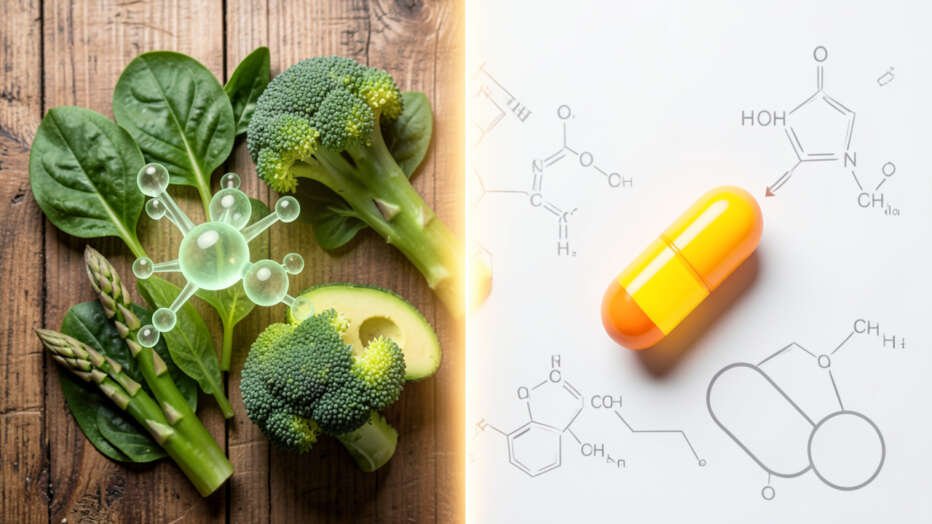
Folate is the natural form of vitamin B9 found in foods, essential for DNA synthesis, cell growth, and preventing birth defects. Folic acid is a synthetic, more stable form added to fortified foods and supplements, which requires conversion by the body before it can be used. Choosing the correct form, such as methylfolate for some individuals, can significantly impact nutrient absorption and utilization for optimal health.
Understanding what folate does is crucial for your cellular health, DNA repair, and preventing serious birth defects. Many people use the terms folate and folic acid interchangeably, but they are not the same compound, and this distinction matters for your health.
This post breaks down the biological roles of folate, clarifies its critical difference from the synthetic folic acid, and provides practical guidance on dietary sources and supplementation. You’ll learn exactly how this essential nutrient works and how to ensure you’re getting the right form for your body.
Simply put, folate is the natural form of vitamin B9 found in foods, essential for DNA synthesis and cell growth. Folic acid is the synthetic, more stable form added to fortified foods and supplements, which your body must convert before use. Choosing the right form can impact how effectively your body utilizes this vital nutrient.
Key Takeaways
- Folate’s primary role is to support DNA synthesis, repair, and methylation, which are fundamental processes for cell division and growth.
- During pregnancy, adequate folate intake dramatically reduces the risk of neural tube defects like spina bifida.
- Folic acid is not naturally occurring; it is a synthetic oxidized form that requires multiple conversion steps in the liver to become active.
- The difference between folate and folic acid is significant for individuals with MTHFR gene variations, which affect conversion efficiency.
- Dark leafy greens, legumes, and liver are among the richest natural dietary sources of food-based folate.
What Is Folate and What Does It Do in Your Body?
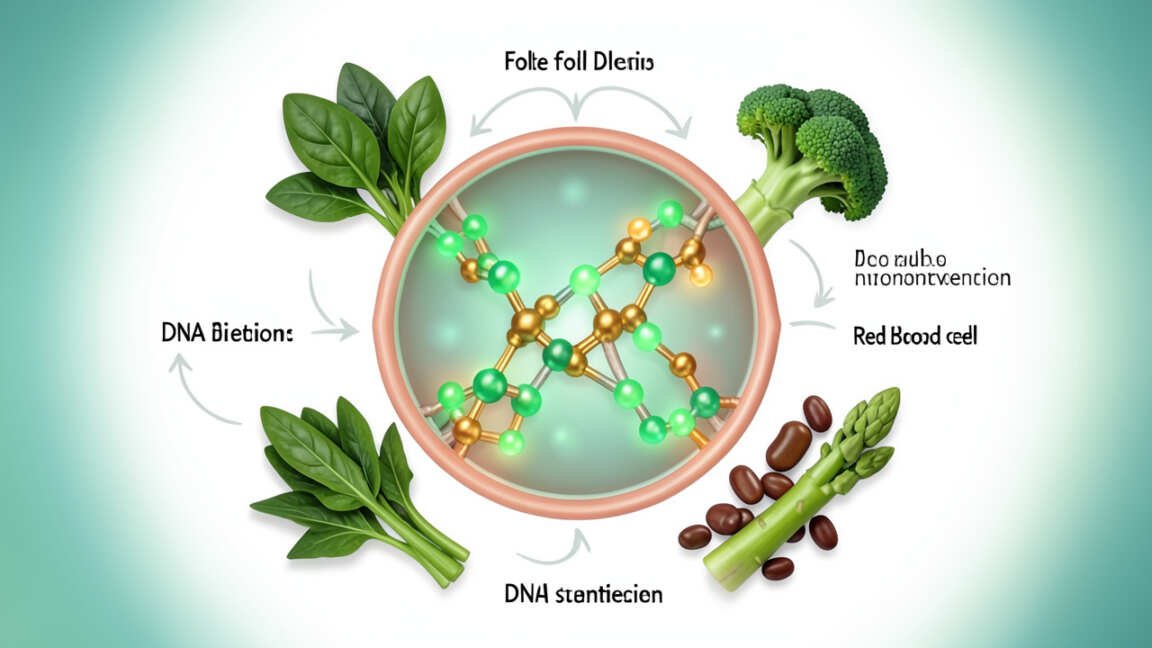
Folate, also known as vitamin B9, is a water-soluble vitamin that your body cannot produce on its own. You must obtain it from your diet or supplements. Its biologically active forms in the body are tetrahydrofolate (THF) and its derivatives.
Think of folate as a master builder for your cells. Without it, your body cannot properly build or repair DNA, which is the blueprint for every cell in your body. This makes it absolutely vital during periods of rapid growth, such as pregnancy, infancy, and adolescence.
The core functions of folate are centered around one-carbon metabolism. This process is fundamental for:
- DNA Synthesis and Repair: Folate provides the carbon units needed to build nucleotides, the building blocks of DNA. This ensures cells can divide correctly.
- Amino Acid Metabolism: It helps convert homocysteine, an amino acid, into methionine. High levels of homocysteine are linked to increased cardiovascular risk.
- Red Blood Cell Formation: Along with vitamin B12, folate is necessary for producing healthy red blood cells. A deficiency can lead to megaloblastic anemia, where red blood cells are large and immature.
- Neural Tube Development: In early pregnancy, folate is critical for the proper closure of the neural tube in a developing fetus, which becomes the brain and spinal cord.
How Is Folic Acid Different From Folate?
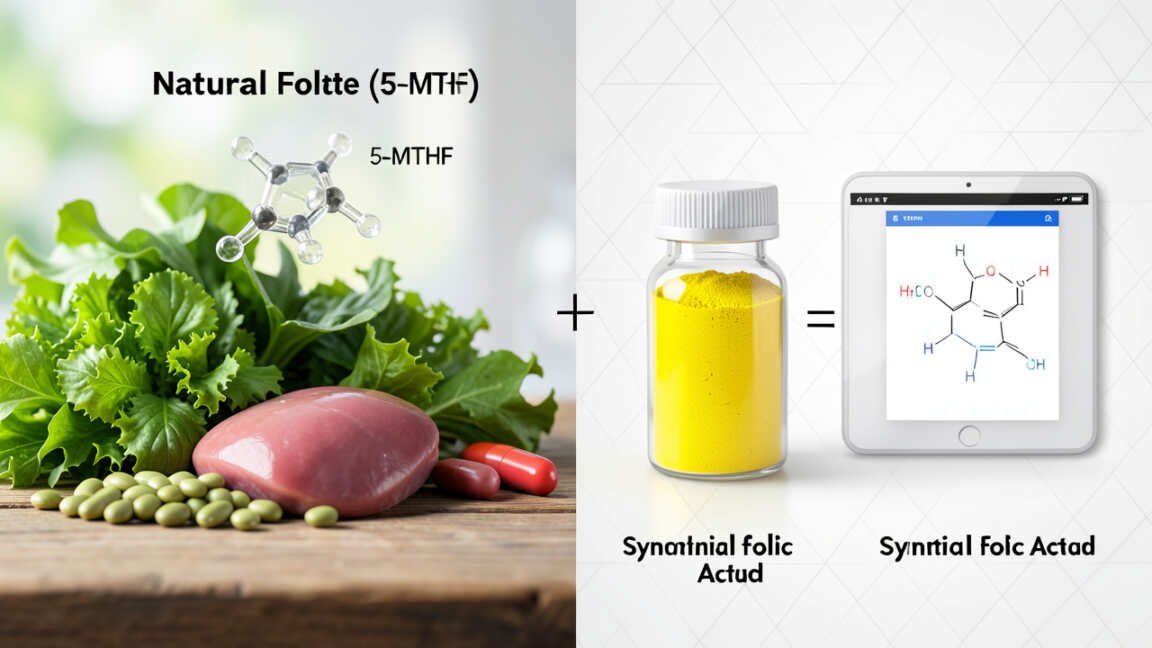
The key difference lies in their chemical structure and origin. Folic acid is a synthetic, oxidized compound. It is the form most commonly used in dietary supplements and fortified foods like cereals, bread, and flour because it is stable and cost-effective.
In contrast, folate (or food folate) refers to the various tetrahydrofolate derivatives naturally present in foods. It is less stable and more susceptible to degradation from heat and light during cooking.
The most important distinction is how your body processes each form. This process occurs primarily in the liver.
- For Folic Acid: It must first be reduced and converted by the enzyme dihydrofolate reductase (DHFR) into dihydrofolate (DHF). This is a slow, saturable process that can be impaired by genetics or certain medications.
- For Food Folate: It is already in a partially reduced form. It can be more directly converted into the active tetrahydrofolate (THF) by your cells, often requiring fewer enzymatic steps.
This difference becomes a major health consideration for people with MTHFR gene polymorphisms, particularly the C677T variant. This common genetic trait significantly reduces the efficiency of converting both folic acid and homocysteine. For these individuals, the synthetic folic acid may not convert well, leading to a buildup of unmetabolized folic acid in the blood and potentially insufficient active folate.
Important: If you have an MTHFR variant, your doctor may recommend a methylated folate supplement (like L-methylfolate) instead of folic acid for more efficient utilization.

Why Is Folate (Not Just Folic Acid) Important for Pregnancy?
For decades, public health recommendations have emphasized folic acid to prevent neural tube defects (NTDs). This is because folic acid supplements and fortified foods are reliable ways to increase status during the critical preconception and early pregnancy period.
However, emerging research highlights the importance of total folate status from all sources. A diet rich in natural food folate provides a package of nutrients, including other B vitamins and phytonutrients, that may offer synergistic benefits.
The ideal approach for pregnancy planning combines both sources:
- A High-Quality Prenatal Vitamin: This ensures a guaranteed, consistent intake of folic acid (often 400-800 mcg), which is proven to prevent most NTDs.
- A Folate-Rich Diet: Regularly consuming foods like spinach, asparagus, avocado, and beans helps maintain optimal folate levels through natural food sources.
According to the CDC, women of childbearing age need 400 micrograms (mcg) of folic acid daily to help prevent NTDs. For those with a prior NTD-affected pregnancy, the recommendation is higher, often 4,000 mcg under medical supervision.
What Are the Best Dietary Sources of Natural Folate?
Incorporating folate-rich foods into your diet is a delicious way to support your B9 levels. Remember that cooking can reduce folate content, so incorporating raw or lightly cooked vegetables is beneficial.
| Food Source | Serving Size | Approximate Folate (mcg DFE) |
|---|---|---|
| Beef Liver | 3 ounces (cooked) | ~215 mcg |
| Lentils | 1/2 cup (cooked) | ~358 mcg |
| Spinach | 1 cup (raw) | ~58 mcg |
| Asparagus | 4 spears (cooked) | ~89 mcg |
| Avocado | 1 medium | ~122 mcg |
| Black Beans | 1/2 cup (cooked) | ~128 mcg |
| Broccoli | 1/2 cup (chopped, cooked) | ~84 mcg |
DFE stands for Dietary Folate Equivalents, a measure that accounts for the different bioavailability of food folate and folic acid. This list shows that a balanced diet can contribute significantly to your daily needs.
How Does Your Body Absorb and Use Folate vs. Folic Acid?
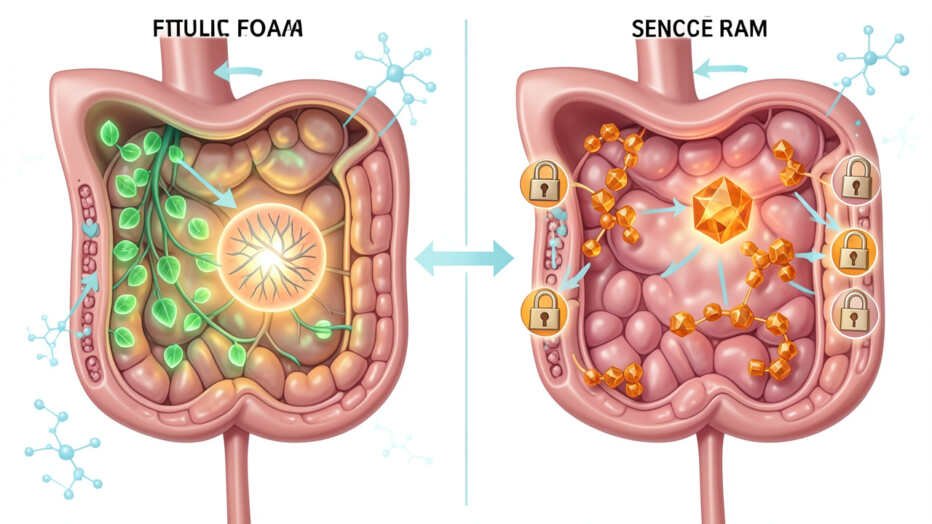
Absorption is another key area of difference. Folic acid from supplements or fortified foods has a higher bioavailability than naturally occurring food folate. The absorption rate for folic acid is approximately 85%, compared to about 50% for food folate.
After absorption in the small intestine, both forms travel to the liver. Here, the conversion process becomes critical:
- Folic Acid Conversion: The liver enzyme DHFR processes folic acid. This process can be overwhelmed by high doses, leading to the circulation of unmetabolized folic acid (UMFA). Some studies suggest UMFA may have potential adverse effects, though research is ongoing.
- Food Folate Conversion: The polyglutamated forms of food folate are broken down in the gut and absorbed as monoglutamates, which are more directly converted to active tetrahydrofolate (THF).
For most people, the standard recommended intake of folic acid from supplements is safe and effective. However, those with specific genetic limitations may not convert it efficiently, potentially leading to a functional deficiency even with adequate intake.
What Are the Signs of Folate Deficiency?
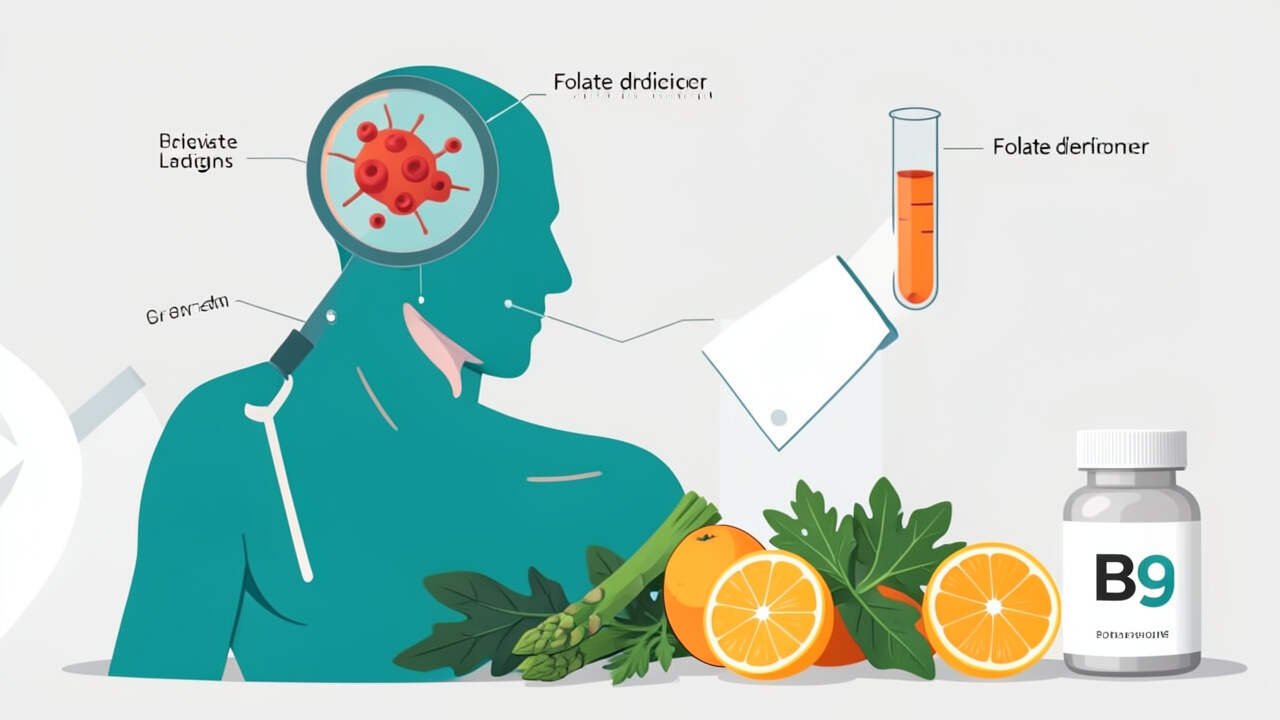
A deficiency in this essential nutrient can lead to several health issues, primarily related to impaired cell division and DNA synthesis. Recognizing the symptoms can prompt necessary dietary changes or medical consultation.
- Megaloblastic Anemia: The most classic sign. You may feel fatigued, weak, short of breath, and dizzy. A blood test reveals unusually large red blood cells.
- Glossitis and Mouth Sores: Your tongue may become sore, smooth, and bright red. Mouth ulcers can also develop.
- Digestive Issues: Diarrhea, loss of appetite, and weight loss can occur due to the rapid turnover of cells lining the digestive tract.
- Growth Problems: In infants and children, inadequate folate can lead to stunted growth and delayed development.
- Neural Tube Defects: The most severe consequence of deficiency occurs in pregnancy, leading to conditions like spina bifida in the fetus.
Warning: High-dose folic acid (typically above 1,000 mcg daily) can mask the symptoms of a vitamin B12 deficiency. This is dangerous because the neurological damage from B12 deficiency can progress silently. Always have your levels checked before taking high-dose supplements.
Who Should Consider a Methylated Folate Supplement?
For the general population, standard folic acid is sufficient and recommended. However, for a specific subset of people, L-methylfolate (the active, methylated form of folate) may be a more appropriate choice.
You might benefit from discussing a methylated folate supplement with your doctor if you:
- Have a Diagnosed MTHFR Gene Mutation: Especially the C677T variant, which significantly impairs conversion.
- Have a History of High Homocysteine Levels: Even with adequate folic acid intake.
- Are Taking Certain Medications: Some drugs, like methotrexate and certain anticonvulsants, interfere with folate metabolism.
- Have Difficulty Conceiving or Have Had Past Neural Tube Defect Pregnancies: In some cases, using the active form may be part of a specialized plan.
- Experience Symptoms of Folate Deficiency Despite Normal Intake: This could indicate a problem with conversion.
Methylated folate bypasses the need for complex conversion steps, making it readily available for your body to use. It is now widely available in many prenatal vitamins and B-complex supplements.
Frequently Asked Questions
What is the recommended daily intake of folate?
The Recommended Dietary Allowance (RDA) for folate is 400 mcg DFE (Dietary Folate Equivalents) for most adults. Pregnant women need 600 mcg DFE, and breastfeeding women need 500 mcg DFE. This amount can come from a combination of natural food folate and fortified foods or supplements.
Can I get enough folate from food alone?
It is possible for individuals with healthy, varied diets rich in leafy greens, legumes, and fortified foods. However, relying solely on food can be challenging, especially during pregnancy or for those with increased needs or absorption issues. Supplements act as a nutritional safety net.
Does cooking destroy folate in food?
Yes, folate is heat-sensitive and water-soluble. Boiling vegetables can cause significant losses, sometimes up to 50%. To minimize loss, opt for steaming, microwaving, or stir-frying.
Eating some vegetables raw, in salads, is also an excellent strategy.
Is too much folic acid harmful?
For most people, the Tolerable Upper Intake Level (UL) is set at 1,000 mcg per day from fortified foods and supplements. Consuming more than this can lead to the accumulation of unmetabolized folic acid and potentially mask a vitamin B12 deficiency. It’s best to stay within recommended guidelines unless under medical advice.
How do I know if I have an MTHFR variant?
Specific genetic testing can identify MTHFR polymorphisms. This is often done by a healthcare provider or through direct-to-consumer genetic testing services. If you suspect you have a variant due to family history or symptoms, discuss testing with your doctor.
Final Thoughts
The distinction between natural folate and synthetic folic acid is important for optimizing your health. While folic acid is a vital public health tool for preventing birth defects, food-based folate offers a natural and highly bioavailable alternative. For most people, a combination of a folate-rich diet and appropriate supplementation is the best strategy.
Pay attention to your body’s needs, especially during pregnancy or if you have specific health conditions. Choosing the right form of this essential vitamin B9 ensures your body can efficiently support DNA health, red blood cell formation, and overall cellular function.