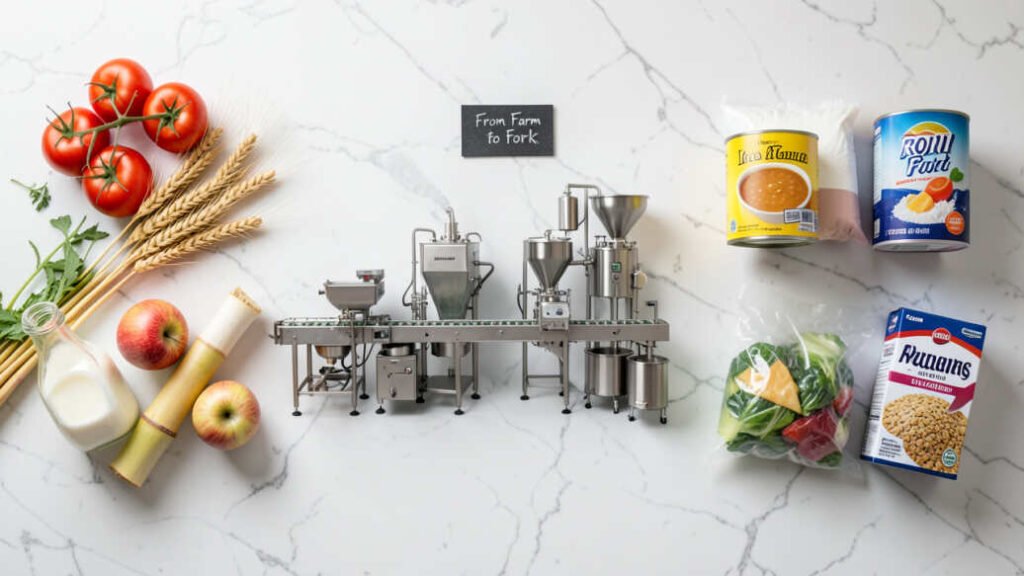
Foods are processed primarily to ensure safety through pathogen elimination, extend shelf life, reduce waste, and improve nutritional value, taste, and convenience for consumers. These techniques range from basic pasteurization and freezing to more complex reformulation with additives for stability and texture. Understanding these fundamental reasons allows consumers to navigate grocery choices effectively, distinguishing between minimally processed staples and highly formulated products that should be limited.
Food processing is a cornerstone of the modern food system, and understanding why it happens is key to making informed choices at the grocery store. You see the label “processed” and might think of additives and factories, but the reality is far more complex. This article explains the fundamental reasons foods are processed, from ensuring safety and extending shelf life to creating the convenience you rely on daily.
We will break down the different types of processing, the specific benefits they provide, and the legitimate concerns they can raise. By the end, you’ll have a clear framework for evaluating processed foods, knowing which ones to choose, and which to limit. This isn’t just about what’s in your food—it’s about why it’s there in the first place.
Simply put, foods are processed primarily for four critical reasons: to ensure safety by eliminating pathogens, to extend shelf life and reduce waste, to improve taste and texture, and to add nutritional value or create convenient products. Not all processing is equal; the degree and method determine the final product’s health impact.
Key Takeaways
- Food processing is not inherently bad; it serves essential functions for safety, preservation, and nutrition.
- The primary goals are to kill harmful bacteria, prevent spoilage, enhance flavor, and provide convenient meal solutions.
- There is a wide spectrum of processing, from simple freezing and canning to highly refined industrial methods.
- Understanding processing labels helps you distinguish between nutrient-dense options and those with excessive added sugars, fats, or sodium.
- Minimally processed foods like pre-cut vegetables or frozen fruit retain most of their nutritional value.
What Is Food Processing and Why Does It Exist?
At its core, food processing is any method used to transform raw agricultural ingredients into a food product. It can be as simple as washing, peeling, and chopping an apple or as complex as the multi-stage manufacturing of a snack bar. The fundamental purpose has always been to make food safer, last longer, and more palatable for human consumption.
Without processing, our food supply would be radically different. Seasonal limitations would be severe, food waste would skyrocket, and the risk of foodborne illness would be much higher. According to the U.S.
Department of Agriculture (USDA), approximately 30-40% of the food supply in the United States is wasted, and processing is a major tool in combating this issue.
The existence of processing is driven by practical necessity and consumer demand. We need ways to preserve harvests from summer for winter. We need food that can survive a long supply chain from farm to supermarket.
We also want food that is ready to eat or requires minimal preparation, fitting our busy lifestyles.
- Safety First: Processing methods like pasteurization and canning destroy pathogens like E. coli, Salmonella, and Clostridium botulinum that cause severe illness.
- Preservation: Techniques remove or control the factors that cause spoilage, namely microorganisms, enzymes, and oxygen.
- Convenience: Processing creates foods that are easy to store, transport, prepare, and consume on the go.
- Consistency: It ensures the cereal box you buy today tastes the same as the one you buy next month, regardless of slight variations in raw ingredients.
How Is Food Processed? The Core Techniques Explained
The methods used to process food vary widely but can be grouped into several key categories. Each technique targets a specific goal, whether it’s preservation, texture change, or flavor enhancement. Understanding these can help you decode what the processing on a label actually means for the food you’re eating.
| Processing Method | Primary Purpose | Common Examples |
|---|---|---|
| Preservation | Stop microbial growth and enzyme action | Canning, freezing, drying, fermentation, pickling |
| Modification | Alter texture, taste, or appearance | Milling, grinding, homogenizing, bleaching, enriching |
| Formulation | Combine ingredients to create a new product | Baking, mixing, emulsifying, extruding |
Thermal processing (heating) is one of the most common methods. Pasteurization, used for milk and juices, heats liquid to a specific temperature to kill pathogens without sterilizing the product. Sterilization, used for canning, applies higher heat to destroy all microorganisms, allowing food to be shelf-stable for years.
Important: Fermentation is a traditional biological processing technique. It uses bacteria or yeast to transform sugars, creating foods like yogurt, cheese, sauerkraut, and kombucha. This process not only preserves food but can also enhance its nutritional profile.
What Are the Benefits of Food Processing for Safety?
The single most important reason for processing is to make food safe to eat. Raw animal products, leafy greens, and even some fruits can harbor dangerous bacteria. Processing steps are designed to eliminate these risks, preventing outbreaks of foodborne diseases that can be life-threatening.
The Centers for Disease Control and Prevention (CDC) estimates that 48 million people get sick from foodborne illnesses each year in the U.S., with proper handling and processing being critical safeguards.
Pasteurization is a prime example. Before its widespread use, milk was a common vector for tuberculosis, brucellosis, and typhoid fever. The process heats milk to 145°F (63°C) for 30 minutes or 161°F (72°C) for 15 seconds, which destroys harmful pathogens while leaving most nutrients and flavor largely intact.
This simple processing step has saved countless lives.
Canning involves sealing food in airtight containers and heating them to a temperature that destroys all microorganisms, including spores that can cause botulism. This makes low-acid foods like vegetables and meats safe to store at room temperature indefinitely. Freezing is another powerful safety tool, as it halts microbial growth, although it does not kill bacteria.
The food remains safe as long as it stays frozen.
- Pathogen Elimination: Heat, irradiation, and high-pressure processing kill bacteria, viruses, and parasites.
- Toxin Removal: Some processes can reduce or eliminate naturally occurring toxins in certain foods.
- Allergen Management: Processing allows for clear labeling and the separation of common allergens in manufacturing facilities.
- Shelf Stability: By preventing spoilage, processing reduces the chance of food becoming dangerous as it ages.
How Does Processing Extend Shelf Life and Reduce Waste?
Food spoilage is caused by bacteria, molds, yeasts, and enzymes naturally present in food. Processing techniques disrupt these processes, allowing food to be stored for days, months, or even years beyond its natural life. This extension of shelf life is vital for a stable food supply, reducing household waste, and enabling global food distribution.
Drying, one of the oldest forms of processing, removes moisture from food, making it inhospitable for microorganisms. This is how we get jerky, dried fruit, and powdered milk. Refrigeration and freezing slow down microbial growth and enzymatic activity, preserving freshness.
Modified Atmosphere Packaging (MAP) replaces the air around a food product with a protective gas mix (often nitrogen and carbon dioxide) to delay spoilage in items like bagged salads and ground meat.
The economic and environmental impact is significant. The USDA estimates that food waste costs consumers, retailers, and farmers billions annually. Processing is a key mitigation strategy.
Flash-freezing vegetables at peak ripeness captures their nutrients and prevents spoilage that often happens during transport or in a home refrigerator.
Warning: While processing extends shelf life, some methods can degrade heat-sensitive vitamins like Vitamin C and B vitamins. However, the loss is often minimal compared to the spoilage and waste that would occur without any processing. Frozen spinach, for example, often has more available nutrients than “fresh” spinach that has been sitting in a refrigerator for a week.
What Role Does Processing Play in Improving Nutrition?
Contrary to a common perception that all processing strips nutrients, many processing methods are used specifically to add or enhance nutritional value. This is known as food fortification and enrichment. Fortification is the addition of nutrients that were not originally in the food, while enrichment is the replacement of nutrients lost during processing.
Public health has greatly benefited from this practice. Iodized salt was introduced to prevent goiter and cognitive disabilities caused by iodine deficiency. Milk is fortified with Vitamin D to aid calcium absorption and prevent rickets.
Breakfast cereals are often enriched with B vitamins and iron, and many plant-based milks are fortified with calcium and Vitamin D to match the nutritional profile of dairy milk.
Processing can also increase the bioavailability of certain nutrients. For instance, cooking tomatoes (a form of processing) breaks down cell walls and dramatically increases the amount of lycopene, a powerful antioxidant, that your body can absorb. Similarly, grinding flaxseeds allows your body to access the omega-3 fatty acids inside their tough outer shells.
- Folic Acid: Added to enriched grain products to prevent neural tube defects in developing fetuses.
- Vitamin D: Added to milk and orange juice to combat widespread deficiency.
- Omega-3 Fatty Acids: Added to eggs, breads, and yogurt from sources like algae or flaxseed.
- Calcium: Added to fruit juices and plant-based beverages.
Who Benefits Most from Processed Foods and Why?
Processed foods provide crucial benefits to different groups, addressing specific needs related to time, budget, and health requirements. For many, they are not just a convenience but a necessity that makes a balanced diet more accessible. Recognizing who benefits helps explain the enduring demand for these products.
Busy families and working professionals rely on processed foods for time-saving meal solutions. Pre-chopped vegetables, rotisserie chickens, canned beans, and frozen meal kits drastically reduce cooking time and cleanup. This makes it possible to serve a home-cooked-style meal on hectic weeknights.
People on a tight budget often find processed foods like canned tuna, frozen vegetables, and whole-grain pasta to be affordable, nutrient-dense options. The long shelf life also allows for bulk buying and reduces the risk of costly food waste. According to the USDA, the cost per serving of frozen vegetables is often lower than fresh, especially for out-of-season produce.
Individuals with specific dietary needs also benefit. People with celiac disease or gluten intolerance rely on processed gluten-free breads and pastas. Those with swallowing difficulties (dysphagia) use specially thickened liquids and pureed foods.
Athletes use highly engineered protein powders and recovery drinks to meet intense nutritional demands.
| Consumer Group | Key Benefit of Processing | Example Products |
|---|---|---|
| Time-Strapped Individuals | Convenience and speed | Canned soup, instant oats, pre-cooked grains |
| Budget-Conscious Shoppers | Affordability and waste reduction | Frozen produce, dried legumes, canned fish |
| Dietary Restrictions | Safe, accessible alternatives | Gluten-free bread, lactose-free milk, sugar-free snacks |
| Older Adults | Soft textures and ease of use | Nutritional shakes, pureed foods, easy-open packaging |
What Are the Common Concerns with Highly Processed Foods?
While processing has clear benefits, the term “processed food” is often used to refer to ultra-processed foods (UPFs). These are industrial formulations with five or more ingredients, including substances not commonly used in cooking like high-fructose corn syrup, hydrogenated oils, and emulsifiers. Their convenience and hyper-palatable tastes are linked to health concerns when consumed in excess.
The primary issue with UPFs is not processing per se, but the nutritional profile of the final product. They are often high in added sugars, unhealthy fats, and sodium while being low in fiber, vitamins, and minerals. Large-scale observational studies, like those published in The BMJ, have associated high UPF intake with increased risks of obesity, cardiovascular disease, and type 2 diabetes.
Another concern is the additives used. While regulatory agencies like the FDA and EFSA approve these substances as safe in the amounts used, some consumers prefer to limit their intake. Emulsifiers, for example, are used to improve texture and shelf life but some research suggests they may impact gut health.
- Nutrient Displacement: UPFs often replace whole foods in the diet, leading to gaps in essential nutrient intake.
- Overconsumption: Their engineered taste profiles and convenience can lead to eating more calories than needed.
- Additive Intake: While individually safe, the cumulative load of multiple additives in a UPF-heavy diet is an area of ongoing research.
- Low Satiety: They are often easy to chew and swallow, which can lead to consuming large amounts before feeling full.
Tip: Use the NOVA food classification system as a guide. NOVA categorizes foods into four groups: unprocessed/minimally processed, processed culinary ingredients, processed foods, and ultra-processed foods. Aim to build your diet mostly from the first two groups.
How Can You Make Smarter Choices About Processed Foods?
Navigating the grocery store doesn’t require avoiding all processed foods. The key is learning to distinguish between minimally processed items that preserve or enhance nutritional value and ultra-processed products designed for convenience and hyper-palatability. A simple strategy is to read the ingredient list and ask, “Could I make this at home with ingredients I recognize?”
Focus on adding “processed” foods that make your life easier without compromising your diet. Bagged spinach, canned beans (rinsed to remove excess sodium), frozen berries, and pre-cooked quinoa are excellent examples. These save prep time while still being wholesome, single-ingredient or few-ingredient foods.
When you do choose a more complex processed product, become a label detective. Look at the Nutrition Facts panel for sodium, added sugar, and saturated fat content. Check the ingredient list for the order of ingredients—what’s listed first is what the product contains the most of.
Prioritize products with short, recognizable ingredient lists.
- Choose “Processed” for Convenience: Pre-cut veggies, frozen cauliflower rice, rotisserie chicken.
- Choose “Processed” for Nutrition: Fortified plant milks, iodized salt, enriched whole-grain bread.
- Choose “Processed” for Preservation: Canned tomatoes (no salt added), frozen spinach, dried lentils.
- Limit “Ultra-Processed” for Health: Sugary cereals, packaged snacks, instant noodles, soft drinks.
Frequently Asked Questions
Is all processed food unhealthy?
No, not at all. Processing exists on a spectrum. Frozen vegetables, plain yogurt, and canned fish are processed but are considered healthy staples.
The health concerns are primarily associated with ultra-processed foods that are high in added sugars, unhealthy fats, and sodium while being low in nutrients.
What is the difference between processed and ultra-processed?
Processed foods are typically modified versions of whole foods with added oils, sugar, or salt (like cheese or bread). Ultra-processed foods are industrial formulations made mostly from substances derived from foods (like oils, fats, sugars, starches) with little or no intact whole food, often containing additives like emulsifiers, flavorings, and colorants.
Can processing increase the nutrients in food?
Yes, through fortification and enrichment. Many nutrients lost during milling or storage are added back, and other beneficial nutrients like folic acid or Vitamin D are often added for public health benefits. Some processes, like cooking tomatoes or grinding seeds, also make nutrients more available for your body to absorb.
Are canned goods as nutritious as fresh?
Often, yes. Canning preserves foods at peak ripeness, locking in nutrients. For vegetables and fruits, the nutrient profile of canned versions is comparable to fresh, especially if they are packed in water or their own juices.
Choose low-sodium options and rinse canned beans and vegetables to reduce sodium further.
How do I spot an ultra-processed food in the store?
Look for long ingredient lists with items you wouldn’t typically find in a home kitchen, such as high-fructose corn syrup, hydrogenated oils, hydrolyzed proteins, or a long list of additives like emulsifiers, thickeners, and artificial colors/flavors. These are hallmark signs of ultra-processed products.
Final Thoughts
Food processing is a fundamental part of our food system that serves vital purposes for safety, preservation, and accessibility. The goal isn’t to eliminate processed foods but to make informed choices. Prioritize minimally processed options that offer convenience without sacrificing nutrition.
Learn to identify ultra-processed products and consume them mindfully. By understanding why foods are processed, you gain the power to build a diet that is both practical and healthy.