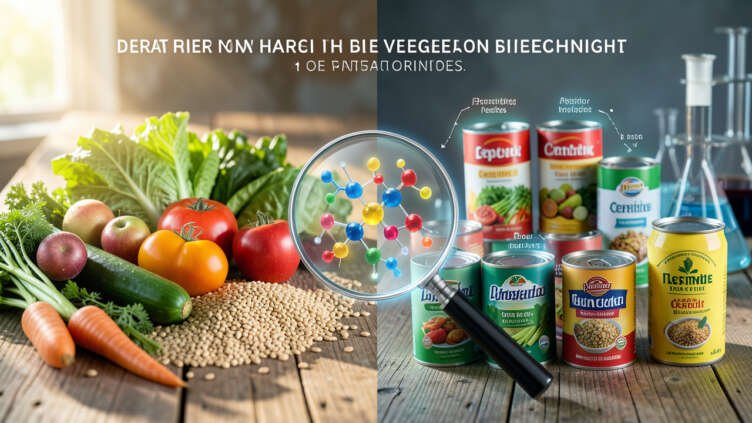
No, food processing does not always make food less nutritious, as its impact varies significantly by method and food type. Some processes like freezing or pasteurization preserve nutrients by preventing spoilage, while others such as canning or fermentation can enhance the bioavailability of vitamins and minerals. Ultimately, the nutritional outcome depends on the specific processing technique applied to the initial food product.
This post breaks down the science behind food processing. You’ll learn which methods reduce nutrients and which can actually enhance them. We’ll cover specific examples and practical tips for making better choices.
Simply put, no, food processing does not always make food less nutritious. Some processes, like freezing or pasteurization, preserve nutrients by preventing spoilage. Others, like canning or fermentation, can even increase the bioavailability of certain vitamins and minerals.
Key Takeaways
- Food processing is a broad category, from simple freezing to complex chemical modification.
- Minimal processing often retains or protects nutrients by preventing decay and oxidation.
- Certain processes can improve nutrient absorption, such as cooking tomatoes or fermenting soybeans.
- The nutritional impact depends heavily on the specific process and the initial food product.
- Ultra-processed foods are often nutritionally poor due to added sugars, fats, and sodium, not solely due to the processing itself.
What Is Food Processing Exactly?
Food processing is any deliberate change made to a food item before it reaches the consumer. It’s not a single category but a wide spectrum of techniques. The modern food supply relies on these methods for safety, convenience, and shelf life.
Processing ranges from very basic to highly industrial. Simple actions like washing, chopping, and cooking are forms of processing. More complex methods involve preserving, fortifying, or transforming ingredients into new products.
Understanding this spectrum is key to evaluating nutritional claims. A whole apple, a bag of frozen apple slices, applesauce with added sugar, and a sugary apple juice box all start from apples but have vastly different nutritional profiles.
- Minimal Processing: Washing, peeling, cutting, freezing, pasteurizing milk.
- Moderate Processing: Canning, drying, milling grains into flour, making yogurt.
- Heavy/Ultra-Processing: Hydrogenating oils, using additives, creating ready-to-eat meals with long ingredient lists.
What Are the Different Types of Food Processing?
Food scientists categorize processes by their primary goal. Each type has a distinct impact on the nutritional content of the final product. The most common categories are preservation, modification, and fortification.
| Processing Type | Common Methods | Typical Nutritional Impact |
|---|---|---|
| Preservation | Canning, freezing, drying, pasteurization | Can preserve nutrients by stopping decay; some loss of heat-sensitive vitamins (like Vitamin C) can occur. |
| Modification | Milling, fermenting, cooking, extruding | Varies widely. Milling removes fiber; fermentation can create vitamins; cooking can make some nutrients more available. |
| Fortification/Enrichment | Adding vitamins (e.g., D to milk), minerals (e.g., iodine to salt) | Directly increases nutrient content to address public health deficiencies. |
| Ultra-Processing | Creating formulations with industrial additives (flavors, colors, emulsifiers) | Often results in high-calorie, nutrient-poor foods with added sugars, unhealthy fats, and sodium. |
This breakdown shows that processing is not inherently “bad.” A frozen vegetable, flash-frozen at peak ripeness, can be more nutritious than a “fresh” one that has traveled for weeks. The method and the final ingredient list are what matter most.
How Does Food Processing Affect Vitamins and Minerals?
Vitamins and minerals respond differently to processing. Some are delicate and sensitive to heat, light, and air, while others are more stable. Water-soluble vitamins like Vitamin C and B vitamins are the most vulnerable.
When vegetables are boiled, some Vitamin C and B vitamins leach into the cooking water. If that water is discarded, the nutrients are lost. Steaming or microwaving vegetables can preserve more of these vitamins compared to boiling.
Warning: Repeated heating and cooling cycles, common in commercial food service, can degrade heat-sensitive nutrients progressively.
Fat-soluble vitamins (A, D, E, and K) and minerals like iron and calcium are generally more stable during processing. However, their availability can change. For example, milling whole grains into white flour removes the bran and germ, stripping away B vitamins, iron, and fiber.
- Most Affected: Vitamin C, Folate (B9), Thiamin (B1).
- More Stable: Vitamin A, Vitamin K, Vitamin E, Minerals.
- Enhanced by Processing: Lycopene (from tomatoes), Beta-carotene (from carrots).
It’s also important to note that some nutrients are lost simply with time and storage, even without processing. The goal of many preservation methods is to slow this natural nutrient decay.
What Processing Methods Can Actually Increase Nutrition?
This is where the common narrative falls apart. Several processing techniques are designed to improve the nutritional quality or bioavailability of food. Bioavailability refers to how well your body can absorb and use a nutrient.
Fermentation is a powerful example. This process uses bacteria or yeast to transform foods. It can create beneficial probiotics, increase B vitamins, and break down anti-nutrients like phytic acid in grains and legumes, which block mineral absorption.
Cooking is another form of processing that often enhances nutrition. Cooking breaks down tough plant cell walls, releasing nutrients and making them easier to digest. The classic example is lycopene in tomatoes, which is significantly more available to your body after cooking.
Important: Fortification and enrichment are processing steps that deliberately add back nutrients. Fortified cereals, iodized salt, and vitamin D milk are direct results of this process, improving public health on a large scale.
- Fermentation: Yogurt, kefir, kimchi, sauerkraut, tempeh, miso.
- Cooking/Heating: Steamed vegetables, tomato sauce, cooked eggs.
- Fortification: Whole-grain bread enriched with folic acid, plant milks fortified with calcium and vitamin D.
These examples prove that processing can be a tool to make food more nutritious, safer, and easier to digest. The key is the specific intent and method of the processing.
Why Are Ultra-Processed Foods Considered Unhealthy?
The concern about processing is most accurately directed at ultra-processed foods (UPFs). These are industrial formulations made mostly from substances extracted or derived from foods (oils, fats, sugars, starch) with little to no intact whole food.
The nutritional problem with UPFs isn’t just what processing removes, but what it adds. They are typically engineered for hyper-palatability, leading to overconsumption. Their primary nutritional defects are high levels of added sugar, sodium, and unhealthy fats, alongside a low content of fiber, vitamins, and minerals.
| Characteristic | Minimally Processed Food | Ultra-Processed Food |
|---|---|---|
| Ingredient List | Short, recognizable ingredients (e.g., “milk, live cultures”). | Long, with unfamiliar industrial additives (e.g., “high-fructose corn syrup, hydrogenated oil, artificial flavor”). |
| Primary Nutrients | Retains the original nutrient profile of the whole food. | Often high in calories, sugar, salt, and saturated fat; low in fiber and micronutrients. |
| Examples | Frozen peas, plain yogurt, canned beans (in water). | Soda, packaged cookies, instant noodles, frozen pizza with a complex ingredient list. |
| Health Impact | Forms the foundation of a healthy diet. | Frequent consumption is linked to obesity, heart disease, and other chronic conditions. |
Research, including studies published in the journal BMJ, consistently links high intake of ultra-processed foods with adverse health outcomes. The processing itself creates the conditions for poor nutritional quality and encourages passive overconsumption of calories.
How Can You Make Better Choices in a Processed Food World?
Avoiding all processed food is unrealistic for most people. The practical goal is to choose wisely within the spectrum. Focus on the degree of processing and the ingredient list as your primary guides.
Read the ingredients panel first. If the list is long and includes items you wouldn’t find in a home kitchen, it’s likely an ultra-processed product. Prioritize foods with short, recognizable ingredient lists.
For example, choose canned beans with just “beans, water, salt” over those with a syrupy sauce full of additives.
Tip: Shop the perimeter of the grocery store more often. This is where you’ll find fresh produce, dairy, and meats. The inner aisles house more processed goods, but even here, you can find canned tomatoes, frozen vegetables, and whole-grain oats.
- Choose Nutrient-Dense Options: Opt for canned tuna in water over in oil, plain frozen vegetables over ones with heavy sauces, and whole-grain pasta over refined white pasta.
- Understand Labels: “Fortified” or “Enriched” means nutrients have been added back. This is often beneficial. Look for minimal added sugars and sodium.
- Use Processing to Your Advantage: Embrace frozen fruits for smoothies and canned tomatoes for sauces. These are processed for preservation but are often cheaper and just as nutritious as fresh.
- Limit Ultra-Processed Foods: Treat sodas, snack cakes, and instant noodles as occasional items, not dietary staples.
- Cook at Home More: Even simple cooking gives you full control over what’s in your food, bypassing industrial processing entirely.
What Does the Latest Research Say About Processing and Health?
Nutritional science is constantly evolving. Recent large-scale studies have shifted the focus from single nutrients to the overall dietary pattern and the role of ultra-processing. The findings strongly support a qualitative, not just quantitative, approach to diet.
A major 2019 randomized controlled trial published in Cell Metabolism provided striking evidence. Participants assigned to an ultra-processed diet ate more calories and gained weight compared to those on an unprocessed diet, even when meals were matched for calories, sugar, fat, and fiber. This suggests that the physical and chemical properties of ultra-processed foods drive overconsumption.
Research from institutions like the Harvard T.H. Chan School of Public Health consistently links high consumption of UPFs with increased risks of cardiovascular disease, type 2 diabetes, and depression. The proposed mechanisms include the presence of industrial additives, the loss of nutrient synergy, and the altered eating behaviors these foods promote.
- Key Finding: The structure and matrix of food matter. Whole foods have a structure that affects satiety and nutrient absorption, a structure lost in ultra-processing.
- Public Health Guidance: Dietary guidelines worldwide are beginning to incorporate limits on ultra-processed foods, moving beyond simple nutrient targets.
- Area of Active Study: Scientists are investigating the specific effects of emulsifiers, colorants, and flavor enhancers on gut health and metabolic processes.
The conclusion is clear: not all processing is equal. The modern nutritional consensus is to base your diet around whole and minimally processed foods, while significantly limiting ultra-processed options.
Frequently Asked Questions
Is canned food as healthy as fresh food?
Often, yes. Canning is a preservation process that happens shortly after harvest, locking in nutrients at their peak. For many foods, like tomatoes, corn, and beans, the nutrient content is comparable to fresh.
Look for options with low sodium and no added sugars.
Does cooking vegetables destroy their nutrients?
Some cooking methods can reduce heat-sensitive vitamins like Vitamin C. However, cooking also increases the availability of other nutrients, such as lycopene in tomatoes and beta-carotene in carrots. Steaming, microwaving, and stir-frying generally preserve more nutrients than boiling.
What’s the difference between fortified and enriched food?
“Enriched” means nutrients lost during processing (like B vitamins in flour) have been added back. “Fortified” means nutrients that weren’t originally present (like vitamin D in milk or iodine in salt) have been added to improve public health. Both are beneficial processing steps.
Are organic processed foods healthier?
The organic label primarily concerns farming practices (no synthetic pesticides or GMOs). It does not automatically mean a product is minimally processed or nutritionally superior. An organic cookie is still a cookie.
Always check the ingredient list and nutrition facts.
How can I tell if a food is ultra-processed?
The most reliable method is reading the ingredient list. If it contains many industrial ingredients like high-fructose corn syrup, hydrogenated oils, hydrolyzed proteins, or emulsifiers, and the list is long and unfamiliar, it’s likely ultra-processed. The NOVA food classification system also provides a framework for this.
Final Thoughts
So, does food processing always make food less nutritious? Absolutely not. The truth is nuanced.
Smart processing methods can preserve, enhance, and fortify our food supply, making it safer and more nutritious. The real concern is the rise of ultra-processed products that dominate convenience aisles. By understanding the spectrum and reading labels, you can use processing to your advantage while minimizing the pitfalls.
Focus on whole foods first, embrace simple preservation methods, and limit those products with lengthy, unrecognizable ingredient lists.