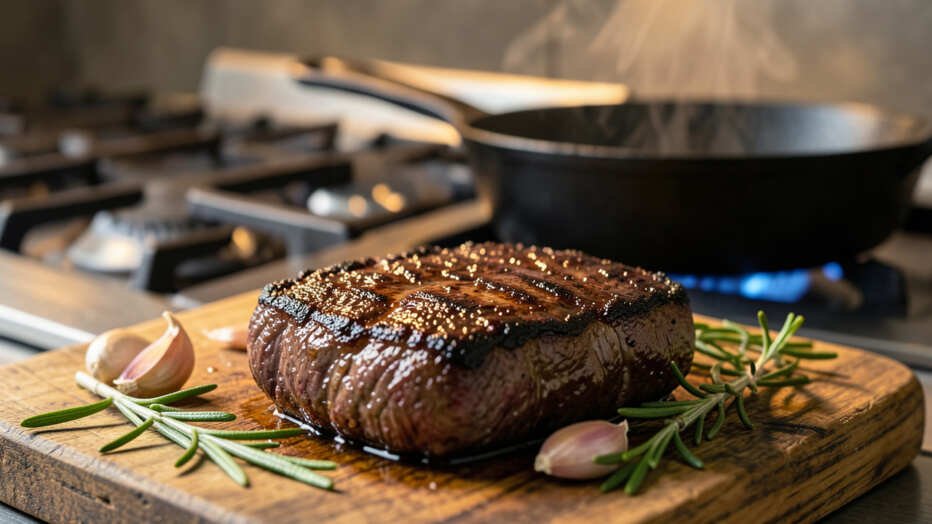
Browning makes food taste better because the Maillard reaction creates complex, savory flavor compounds when amino acids and sugars are heated together. This chemical process generates hundreds of distinct molecules responsible for the nutty, roasted, and deeply flavorful notes we enjoy in seared, toasted, and baked foods. Understanding this reaction allows cooks to harness heat intentionally, developing richer flavors and appealing crusts in everything from steak to bread.
Why does browning make food taste different? That delicious crust on a seared steak, the golden color of toast, and the rich flavor of roasted vegetables all share a common chemical transformation. This process turns simple ingredients into complex, savory dishes through a reaction that is both simple in concept and profound in its impact on flavor.
Understanding this transformation helps you control it in the kitchen. You will learn how to harness heat to build deeper flavors in your own cooking. This guide breaks down the science behind the sizzle and the aroma, explaining why browning is the key to unlocking deliciousness.
Simply put, browning creates new flavor compounds through a chemical reaction between amino acids and sugars when exposed to heat. This Maillard reaction generates hundreds of distinct molecules responsible for the savory, nutty, and roasted flavors we crave in cooked food.
Key Takeaways
- The Maillard reaction is a chemical reaction between amino acids and reducing sugars that occurs at high temperatures, creating new flavors and aromas.
- Browning does not happen when food is boiled because water cannot exceed 212°F (100°C), which is below the reaction’s typical starting point of around 285°F (140°C).
- Flavor development depends on controlling moisture, temperature, and surface area to promote browning rather than steaming.
- Different foods brown in unique ways due to their specific sugar and protein profiles, which is why a seared steak and toasted bread taste distinct yet equally appealing.
- You can maximize Maillard browning in your kitchen by using dry surfaces, high heat, and the right fats or oils.
What Is the Maillard Reaction and How Does It Work?
Named after French chemist Louis-Camille Maillard, this reaction is the cornerstone of flavor development in cooking. It is not a single process but a cascade of complex chemical changes. When you cook food to a high temperature, the heat causes amino acids (the building blocks of proteins) and reducing sugars to react with each other.
This interaction creates a vast array of new molecules. Some of these molecules are volatile, meaning they evaporate easily and reach your nose, creating the wonderful aromas of baking bread or roasting coffee. Other molecules remain on the food’s surface, contributing to its brown color and savory taste.
The specific compounds formed depend on the exact types of sugars and amino acids present, which is why different foods develop unique flavors.
The Simple Science Behind the Sizzle
At its core, the reaction requires three key elements: heat, low moisture, and the right reactants. The initial step is the condensation of a sugar’s carbonyl group with an amino acid’s amine group. This forms a new, unstable compound that quickly rearranges through a series of reactions.
These pathways branch out, creating hundreds of different flavor and aroma compounds.
- Heat: Provides the energy to kick-start the reaction, typically beginning around 285°F (140°C) and accelerating at higher temperatures.
- Low Moisture: Water interferes with the reaction and keeps the surface temperature at boiling point. A dry surface allows heat to penetrate directly.
- Sugars and Amino Acids: Found naturally in most foods. Simple sugars like glucose and fructose react most readily.
The result is a spectrum of flavors ranging from subtly sweet and nutty to deeply savory and roasted. The reaction is also responsible for the desirable crust on baked goods, the color of coffee beans, and the browning of onions when caramelized—though true caramelization is a separate sugar-only reaction that often works alongside the Maillard reaction.
How Does Temperature Affect Browning and Flavor Development?
Temperature is the primary driver of the Maillard reaction. Without sufficient heat, the reaction does not occur. This is why boiling, steaming, or poaching—which all happen at or below 212°F (100°C)—do not produce browning.
The food cooks, but its flavor profile remains relatively simple and unchanged from its raw state.
To initiate browning, you need dry heat methods that allow the food’s surface to exceed the water boiling point. This is why a pan must be preheated before adding food, or why an oven must be set to a high temperature for roasting. The goal is to drive moisture off the surface of the food quickly so the temperature can rise.
| Cooking Method | Typical Temperature Range | Moisture Environment | Maillard Reaction Activity |
|---|---|---|---|
| Boiling / Poaching | 212°F (100°C) | Fully submerged, 100% humidity | None – too cool and wet |
| Steaming | 212°F (100°C) | Humid, surrounded by vapor | Minimal – surface stays wet |
| Sautéing / Pan-Frying | 320°F – 400°F (160°C – 200°C) | Dry heat, oil assists | Active – ideal conditions |
| Broiling / Grilling | 450°F+ (230°C+) | Dry, direct radiant heat | Very High – rapid browning |
| Roasting (in an oven) | 350°F – 450°F (175°C – 230°C) | Dry, circulating hot air | Active – steady browning |
As the table shows, dry heat methods are essential for triggering the Maillard reaction. The oil in a pan also plays a role, as it can conduct heat more efficiently than air and helps create an even, hot surface for the food to contact. Using the right temperature for the right food is a key skill; too low, and you won’t get browning; too high, and you risk burning the surface before the interior is cooked.
Warning: If your pan is too crowded, the food will steam instead of sear. Steam cools the surface below the browning point. Cook in batches if necessary to maintain high heat and a dry cooking environment.
Why Does Moisture Stop the Browning Process?
Moisture is the enemy of the Maillard reaction. When food is wet, all the heat energy goes into evaporating the water first. This phase change consumes a tremendous amount of energy, which keeps the surface temperature locked at 212°F (100°C)—the boiling point of water.
As long as liquid water is present on the surface, the temperature cannot rise high enough for browning to begin.
This is why patting a steak dry with paper towels before searing is a critical step. A wet steak will sizzle violently as the water turns to steam, but it will not develop a deep, brown crust. Instead, it will often turn gray and release juices, resulting in a less flavorful exterior.
The same principle applies to vegetables before roasting and chicken skin before crisping.
Practical Implications for Home Cooks
Understanding this principle changes how you prep food. You must create a dry surface for optimal results. Consider these tips:
- Use paper towels: Thoroughly pat meats and fish dry before applying any seasoning or placing them in a hot pan.
- Air-dry: For exceptionally crispy skin on poultry, let it sit uncovered in the refrigerator overnight on a rack. This dries out the skin.
- Don’t overcrowd the pan: Give food space. Steam needs to escape, not get trapped and re-deposit on the food’s surface.
- Preheat your cookware: A hot, dry pan will evaporate surface moisture on contact, speeding up the start of browning.
- Use a wire rack for roasting: Elevating vegetables or meat allows air to circulate underneath, preventing steaming and promoting even browning.
By managing moisture, you take direct control over whether your food will brown and develop those complex flavors. It is a simple step that separates good cooking from great cooking.
How Does Food Composition Change Browning Outcomes?
Not all foods brown in the same way because their unique chemical makeup varies. The Maillard reaction’s flavor profile depends on the specific amino acids and sugars present. For instance, the proteins in beef contain different amino acids than those in wheat bread, leading to distinctly different aromatic compounds when they brown.
Foods high in simple sugars, like onions or bell peppers, will brown more quickly and develop sweeter notes. Foods with a richer protein content, like a steak, will produce more savory, umami-rich compounds. The fat content also influences flavor, as some aromatic molecules are fat-soluble and dissolve into the cooking fat, spreading flavor throughout the dish.
Comparing Browning in Different Foods
| Food Item | Primary Reactants | Resulting Flavors | Key Cooking Tip |
|---|---|---|---|
| Bread Toast | Glucose & amino acids in flour | Nutty, cereal-like, slightly bitter | Watch closely; transitions from perfect to burnt quickly. |
| Coffee Beans | Sucrose, amino acids, chlorogenic acid | Chocolate, caramel, fruity, smoky | Roast profile (light vs. dark) drastically changes flavor. |
| Sautéed Onions | Fructose & amino acids | Sweet, savory, umami, complex | Cook slowly over medium heat to draw out moisture and brown evenly. |
| Seared Steak | Glucose, amino acids, creatine, fats | Deep savory, roasted meat, buttery | Ensure surface is very dry and pan is screaming hot. |
As the table illustrates, the same fundamental reaction produces vastly different sensory experiences. The complexity of coffee’s flavor comes from hundreds of Maillard compounds. Understanding that you are managing a chemical reaction, not just “cooking,” allows you to experiment intentionally with different ingredients and heat levels.
What Is the Difference Between Maillard Browning and Caramelization?
These two processes are often confused because they both involve heat and browning. However, they are fundamentally different chemical reactions. The Maillard reaction requires both amino acids (from proteins) and sugars, while caramelization is the pyrolysis of sugars alone.
This means caramelization can happen to a pure sugar solution without any protein present.
Caramelization typically requires higher temperatures than the Maillard reaction, starting around 320°F (160°C) for sucrose. It creates different flavor compounds, primarily ones that are sweet, nutty, and buttery. When you caramelize onions, you are promoting both caramelization of their natural sugars and a mild Maillard reaction with their proteins, leading to a complex, sweet-savory flavor.
Key Differences at a Glance
- Reactants: Maillard = Sugars + Amino Acids. Caramelization = Sugars only.
- Temperature Range: Maillard starts lower (~285°F/140°C). Caramelization starts higher (~320°F/160°C).
- Flavor Profile: Maillard = Savory, meaty, roasted, complex. Caramelization = Sweet, nutty, buttery.
- Common Examples: Maillard: seared meat, toasted bread, roasted coffee. Caramelization: caramel candy, crème brûlée topping, candied nuts.
In many recipes, both reactions occur simultaneously, especially in foods containing both proteins and sugars, like onions or a steak rub with a bit of sugar. The art of cooking often lies in balancing these two reactions to achieve the desired flavor profile. For a sweet, deep brown on a crème brûlée, you focus on pure caramelization.
For the savory crust on a pork chop, you focus on the Maillard reaction.
Important: A small amount of sugar added to a meat rub can kickstart the Maillard reaction at a lower temperature and promote more rapid, even browning. This is a common technique in barbecue and grilling.
How Can You Maximize Maillard Browning in Your Kitchen?
Mastering the Maillard reaction moves your cooking from following recipes to applying science. By controlling the key variables—heat, moisture, and surface—you can consistently achieve better browning and deeper flavor. Here are actionable steps to maximize this reaction at home.
Essential Techniques for Superior Browning
- Start with a Dry Surface: Always pat proteins dry with paper towels. For vegetables, ensure they are not wet from washing; a salad spinner or towel pat works well.
- Preheat Your Pan and Oven: A hot pan is crucial. Let it heat for several minutes before adding oil or food. For roasting, preheat the oven fully.
- Use High Smoke-Point Oils: For pan-searing, use oils like avocado, canola, or grapeseed oil. They withstand high heat without burning and impart neutral flavor.
- Don’t Overcrowd: Cook in batches if needed. Overcrowding lowers the pan temperature and releases steam, which leads to gray, steamed food.
- Consider Adding a Catalyst: A pinch of baking soda (an alkali) can raise the pH and speed up the Maillard reaction. Use sparingly (1/4 tsp per pound of meat) as it can affect texture.
- Use Conductive Surfaces: Cast iron or stainless steel pans provide direct, even heat transfer, promoting better crust formation than non-stick surfaces.
Remember, the goal is not to burn your food but to cook it to the point of perfect browning. This requires attention and often, a willingness to use higher heat than you might initially be comfortable with. Practice with a single piece of chicken or a thick slice of bread to learn the visual and auditory cues—the sizzle should be loud and active, not a weak steam sound.
Why Do Some People Prefer Boiled or Steamed Food?
If the Maillard reaction creates such desirable flavors, why choose cooking methods that avoid it? The answer lies in different culinary goals. Boiling, steaming, and poaching are excellent for preserving the food’s original, clean flavor and delicate texture.
These methods are ideal for ingredients where you want to taste their pure essence, such as a sweet carrot, a tender piece of white fish, or fresh greens.
These gentle, moist-heat methods are also healthier in some respects, as they do not require added fats and can retain more water-soluble vitamins than high-heat methods. The choice between a boiled potato and a roasted one is not about one being better, but about the desired end result. A boiled potato is perfect for mashing, while a roasted potato offers a crispy exterior and fluffy interior with a completely different flavor profile.
Choosing the Right Method for the Job
- Choose Boiling/Steaming for: Delicate vegetables (asparagus, peas), fish fillets, dumplings, eggs, and when making broths or stocks.
- Choose Searing/Roasting for: Meats, sturdy vegetables (potatoes, carrots, broccoli), bread, and anywhere deep, complex flavor is the goal.
- Choose a Combination Method: Many recipes use both. Parboil potatoes before roasting for a fluffy inside and crispy outside. Sear meat first to build flavor, then finish cooking with a moist method like braising.
Understanding the purpose of each method allows you to make informed decisions. The best cooks know when to deploy the Maillard reaction for flavor and when to use gentle heat for subtlety and texture.
Frequently Asked Questions
Is browning the same as caramelizing?
No, they are different. The Maillard reaction involves both amino acids and sugars, creating savory flavors. Caramelization is the browning of sugars alone, producing sweet, nutty flavors.
Many foods undergo both processes simultaneously during cooking.
Does the Maillard reaction happen at any temperature?
No. It requires significant heat to begin, typically starting around 285°F (140°C) and becoming rapid above 330°F (165°C). Boiling water at 212°F (100°C) is too cool to trigger the reaction, which is why boiled foods do not brown.
Can I make boiled food brown after cooking?
You can initiate a Maillard reaction after boiling by using a secondary high-heat cooking step. For example, you can boil and then dry chicken wings before deep-frying or roasting them to achieve a crispy, brown skin. The key is to thoroughly dry the surface before applying high, dry heat.
Why does my food turn gray when I try to sear it?
This usually means your food was too wet, the pan wasn’t hot enough, or you overcrowded it. Gray meat indicates steaming, not searing. Ensure the food is bone-dry, the pan is preheated until shimmering, and cook in batches if necessary.
Is the brown crust on food unhealthy or burnt?
A proper golden-brown Maillard crust is not burnt and is not considered unhealthy in normal dietary amounts. However, heavily charred or blackened food, which indicates burning (pyrolysis), may contain potentially harmful compounds like acrylamide. Aim for a rich brown color, not black.
Final Thoughts
The transformation of food from pale and bland to brown and flavorful is a fundamental act of cooking, driven by the science of the Maillard reaction. This reaction is why we sear steaks, toast bread, and roast coffee beans. By mastering the interplay of heat, moisture, and ingredients, you gain precise control over the depth and complexity of flavors in your dishes.
Remember to start dry, get your pan hot, and embrace the sizzle—that sound is the beginning of deliciousness.