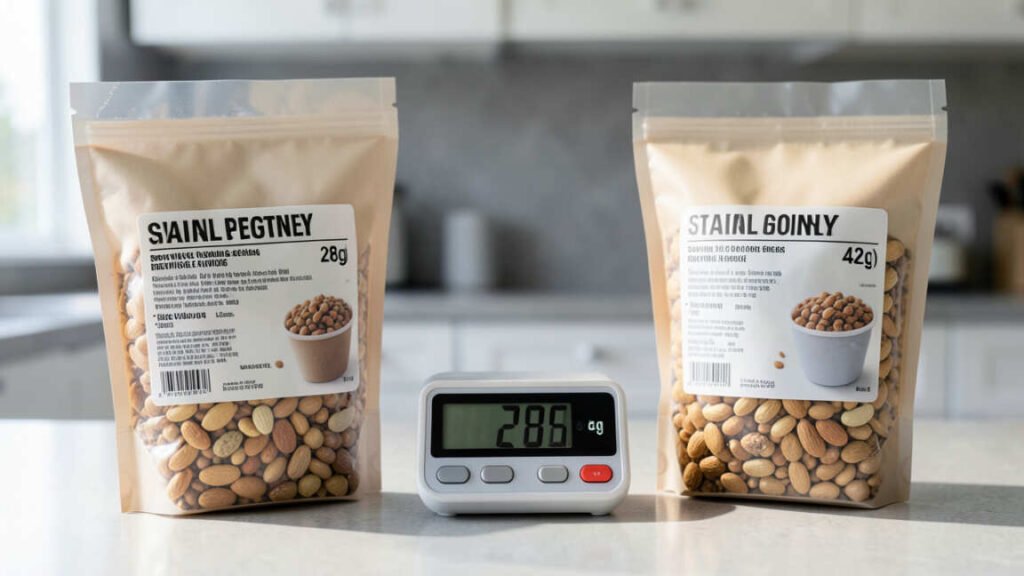
The serving sizes on identical food labels vary because FDA regulations require them to reflect typical consumption amounts rather than standardized portions. Serving sizes are determined by manufacturers based on federal guidelines for what people actually eat in one sitting, not on recommended dietary intake. This variation means consumers must compare the "per serving" values alongside the serving size weight in grams to accurately assess nutritional differences between products.
Why can the same food have different serving sizes on different labels? This common confusion leaves many shoppers puzzled in the grocery aisle. Understanding these differences is key to making informed, healthy choices and managing your nutrition accurately.
This post will break down the rules behind serving size declarations. You’ll learn how manufacturers determine serving sizes and why they change. We’ll cover the role of the FDA and how to compare products effectively.
Simply put, serving sizes on food labels must reflect the amount people typically eat at one time, not a recommended portion. The FDA updated its rules to reflect current eating habits, which can cause variations between different products or brands of the same food.
Key Takeaways
- Serving sizes are legally defined by the FDA based on what people actually consume, not what they should eat.
- Manufacturers must follow strict guidelines when determining the serving size listed on a Nutrition Facts label.
- Differences often arise because brands use different reference amounts or packaging that influences consumer behavior.
- Always check the serving size first to compare nutrition facts accurately between similar products.
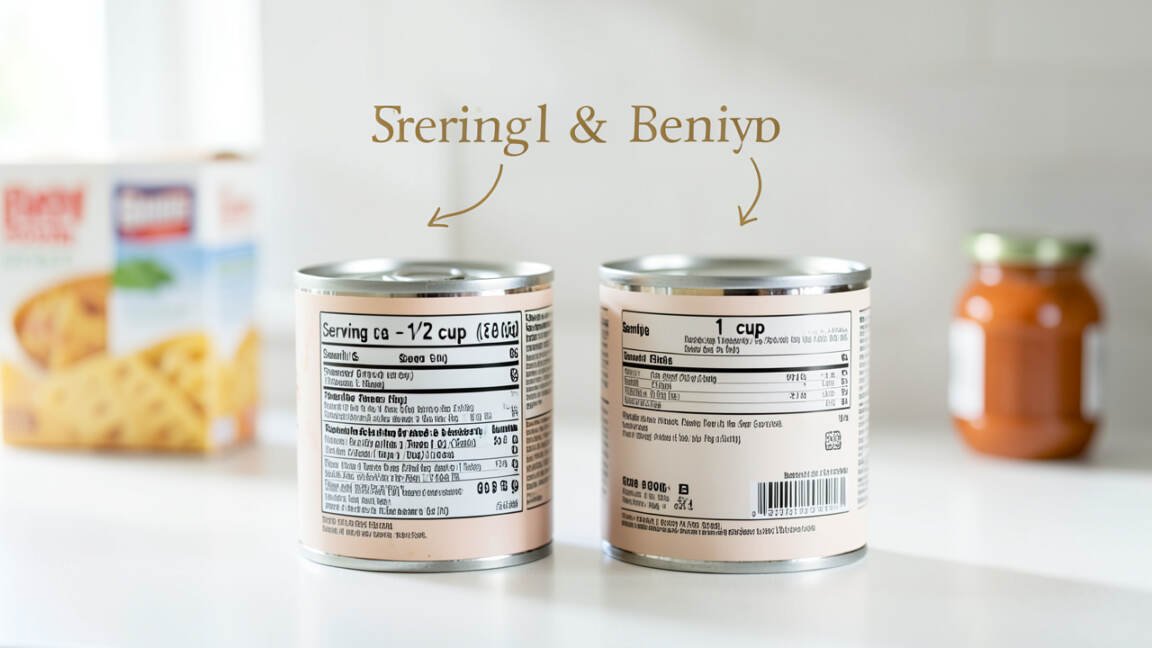
What Is a Serving Size on a Food Label?
A serving size is a standardized amount of food used to calculate the nutrition facts on a label. It’s not a prescription for how much you should eat. Instead, it’s a reference point for understanding the nutrient content per portion.
The FDA mandates this information to help consumers make dietary comparisons. The serving size must be expressed in familiar household measures, like cups, pieces, or grams. This standardization allows you to compare the nutritional value of different foods easily.
- Purpose: To provide a consistent basis for comparing nutrition facts between different products.
- Legal Standard: Defined by the FDA’s Reference Amounts Customarily Consumed (RACC).
- Expression: Listed in common household units (e.g., 1 cup, 28g) and sometimes metric units.
- Servings Per Container: Also required, telling you how many of those servings are in the entire package.
| Component | Description |
|---|---|
| Serving Size | The reference amount of food for one serving’s nutrition data. |
| Servings Per Container | How many servings are in the entire package. |
| Calories Per Serving | The energy provided by one serving. |
| % Daily Value (%DV) | How much a nutrient in one serving contributes to a daily diet. |
This table breaks down the key parts of the Nutrition Facts panel. Understanding each component helps you decode the label correctly.
How Are Serving Sizes Determined by Manufacturers?
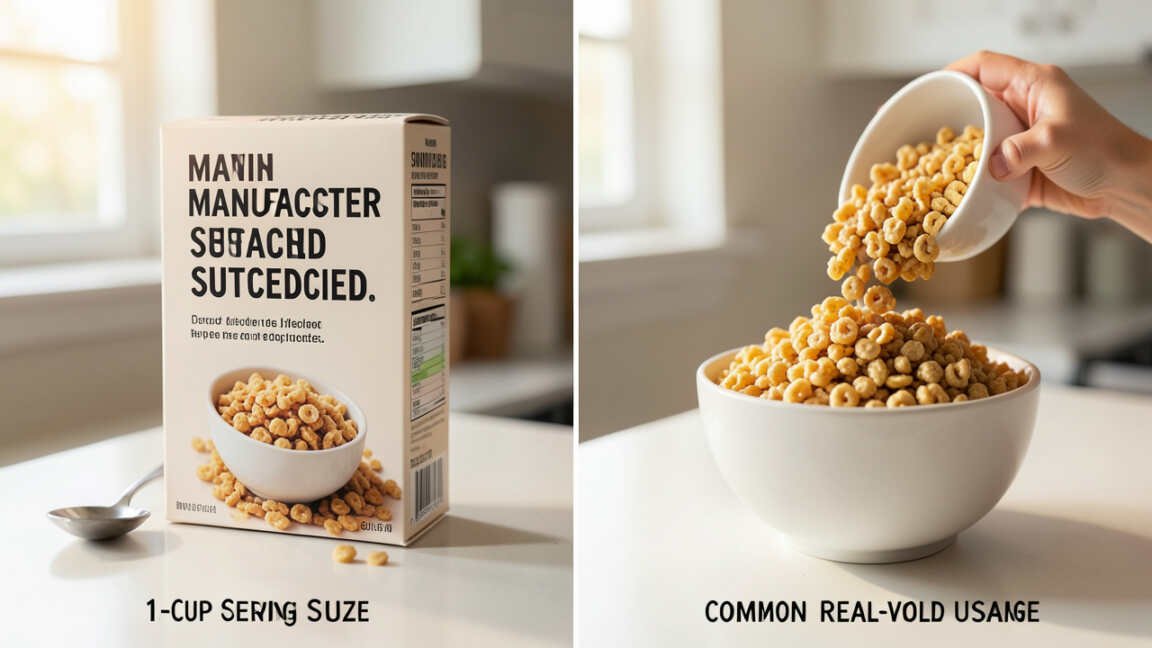
Food manufacturers don’t just pick a serving size arbitrarily. They must follow strict FDA guidelines based on the Reference Amounts Customarily Consumed (RACC). This is the average amount of a food that people typically eat at one time.
The process starts with the manufacturer identifying the appropriate RACC for their product. They then determine the number of servings per container. Finally, they round the serving size to a convenient household measure that aligns closely with the RACC.
- Identify the Product Category: The FDA has specific RACCs for over 150 food categories (e.g., “cereal, ready-to-eat” or “yogurt, plain”).
- Determine the RACC: For ready-to-eat cereal, the RACC is 40 grams.
- Calculate Servings Per Container: If a cereal box contains 320 grams, the manufacturer divides 320g by 40g to get 8 servings.
- Choose a Household Measure: The manufacturer must express the 40g serving in a common measure like cups, pieces, or slices. For cereal, it might be “1 cup (40g)”.
Warning: If a package is small and contains less than 200% of the RACC, it can be labeled as a single serving. This is why a small bag of chips or a drink might list the entire package as one serving, even if you might share it.
This regulatory process is why the same type of food from different brands can have different serving sizes. One brand might use a slightly different household measure that still aligns with the RACC.
Why Do Serving Sizes Vary Between Similar Products?
It’s frustrating to compare two yogurts or cereals and see different serving sizes. This happens for several legitimate reasons, all rooted in the FDA’s regulations and marketing practices.
- Different Reference Measures: One brand might define a serving as “1 cup” while another uses “1 container” for the same product type. Both must reflect the RACC, but the expressed household measure can vary.
- Package Size and Design: The “unit size” or “reference amount customarily consumed” can be influenced by packaging. A yogurt sold in an 8-ounce cup is considered one serving. The same yogurt sold in a large 32-ounce tub will have a smaller cup-sized serving.
- Product Formulation: Small differences in ingredients or density can affect the weight of a volume-based serving. A denser granola might have a heavier gram weight per cup than a lighter one.
- Marketing Choices: While regulated, there’s some flexibility. A company might choose a serving size that makes their nutrition facts appear more favorable, as long as it’s within legal bounds.
According to the FDA’s final rule on serving sizes, the update was meant to “better reflect what people actually eat and drink today.” This means serving sizes are based on current consumption data, which can differ slightly across similar products based on consumer surveys.
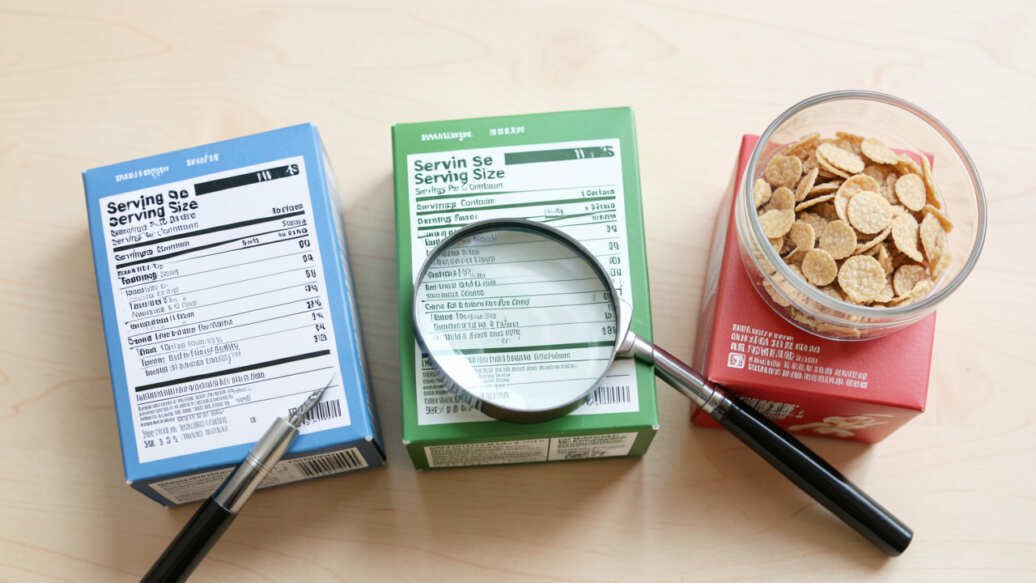
How to Compare Nutrition Facts Between Different Brands
The key to smart comparison is to never look at calories or sugar in isolation. You must always start with the serving size. Without this, you’re comparing apples to oranges, even if both are applesauce.
Follow this simple step-by-step process next time you’re in the store. It takes less than a minute and ensures an accurate comparison.
- Step 1: Check the Serving Size First. Find the “Serving Size” line on both labels. Is it listed in the same unit (e.g., grams, cups, pieces)?
- Step 2: Standardize the Comparison. If the serving sizes are different, choose a common amount (like 100g or 100 calories) to compare. Calculate the nutrient amount for that common base.
- Step 3: Compare Nutrients Side-by-Side. Look at calories, saturated fat, sodium, and added sugars for the same standard amount you chose.
- Step 4: Check Servings Per Container. A product with more servings might offer better value but could also lead to overeating if the package is consumed quickly.
| Product | Serving Size | Calories | Sugar (g) |
|---|---|---|---|
| Brand A Granola | 1/2 cup (55g) | 220 | 9 |
| Brand B Granola | 2/3 cup (60g) | 250 | 11 |
In this example, Brand B seems higher in calories and sugar. But to compare fairly, calculate for the same amount. For 55g, Brand B would have about 229 calories and 10.1g sugar.
The difference is smaller than it first appeared.
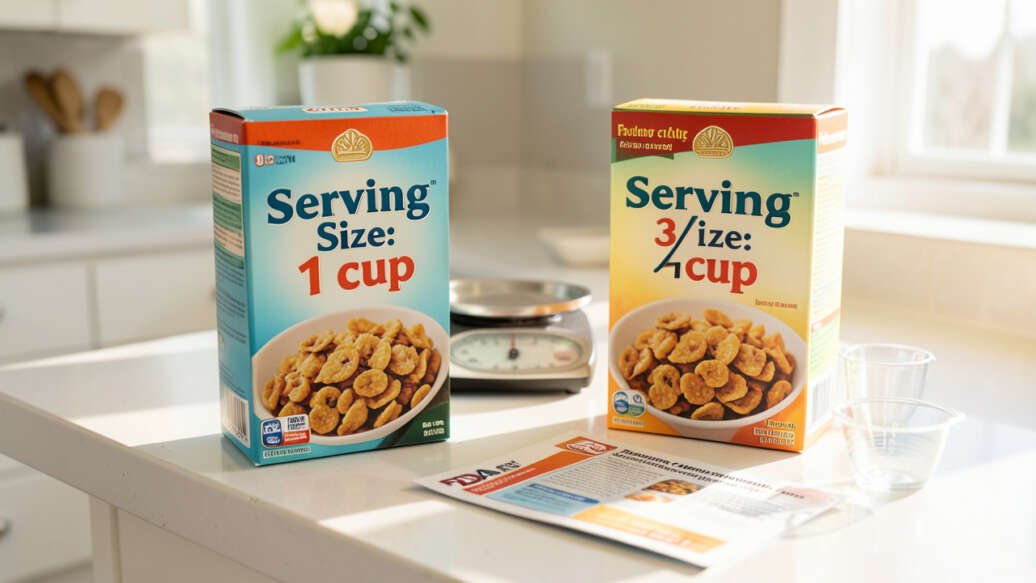
What Role Does the FDA Play in Regulating Serving Sizes?
The U.S. Food and Drug Administration (FDA) is the authority behind Nutrition Facts label rules. They set and enforce the regulations that all food manufacturers must follow.
Their primary goal is to ensure labeling is accurate and useful for consumers.
In 2016, the FDA finalized updates to the Nutrition Facts label, with a major focus on serving sizes. The change reflected a key principle: serving sizes must be based on how much people actually eat, not on outdated data from decades ago.
- Updated RACCs: The FDA re-evaluated Reference Amounts Customarily Consumed using recent national health and nutrition survey data.
- “Larger Reference Amounts”: For some foods, the RACC was increased. For example, the reference amount for a soft drink was increased from 8 ounces to 12 ounces.
- Single-Serving Packages: The rule clarified that packages containing between 100% and 200% of the RACC can be labeled as a single serving. This addresses the issue of people consuming entire small packages at once.
The FDA also provides a comprehensive document titled “Reference Amounts Customarily Consumed Per Eating Occasion” which lists the specific RACCs for all food categories. This document is the ultimate source for why your yogurt cup is 6 ounces while your yogurt tub has a 2/3 cup serving.
How Do Serving Sizes Impact Your Health and Dieting Goals?
Understanding serving sizes is crucial for effective dietary management, whether you’re tracking calories, carbs, or any other nutrient. Misinterpreting the serving size is one of the most common reasons diets fail or progress stalls.
If you assume the entire package is one serving when it actually contains three, you could be consuming three times the calories, sodium, and sugar you planned for. This “portion distortion” happens silently and can significantly derail your goals.
Important: The % Daily Value (%DV) on the label is based on the serving size listed. Eating a larger portion means you must also increase the %DV you’ve consumed for that nutrient. Two servings means 200% of the DV for calories, fat, etc.
For individuals with dietary restrictions, like those monitoring sodium for blood pressure or carbohydrates for diabetes, precise serving size knowledge is non-negotiable. It’s the foundation of an accurate food diary.
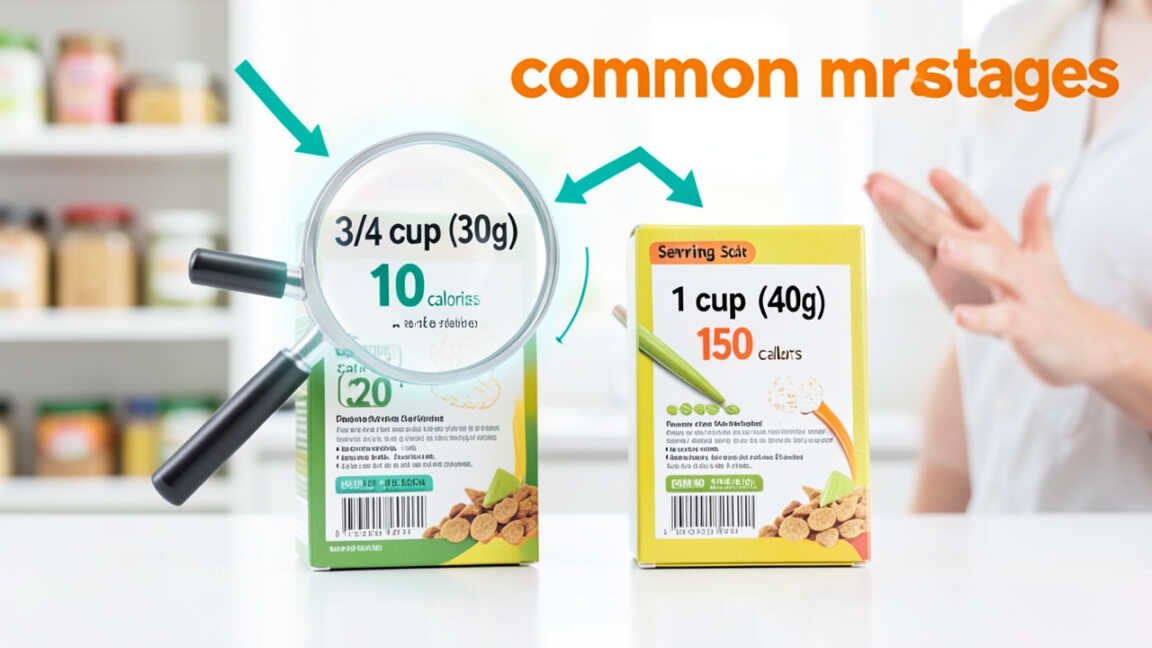
What Are Common Serving Size Mistakes to Avoid?
Even savvy consumers make serving size errors. Being aware of these pitfalls can help you avoid accidental overconsumption and make better-informed choices at the grocery store and at the table.
- Mistake 1: Ignoring “Servings Per Container.” This is critical. A bag of popcorn might say “2 servings” even if it looks small. Eating the whole bag means doubling everything.
- Mistake 2: Comparing Serving Sizes Inconsistently. You cannot compare 100 calories from Product A (per 1/2 cup) to 100 calories from Product B (per 1 cup) without considering the volume and nutrient density difference.
- Mistake 3: Assuming a Serving is a “Healthy Portion.” The serving size is not a dietary recommendation. Some recommended daily intakes are higher or lower than a single serving.
- Mistake 4: Not Measuring at Home. Our visual estimates of a “cup of cereal” or “tablespoon of peanut butter” are often wrong. Using measuring tools initially can calibrate your eye.
A study published in the Journal of the Academy of Nutrition and Dietetics found that people consistently underestimate portion sizes of snack foods by up to 50%. This highlights the importance of relying on the label, not perception.
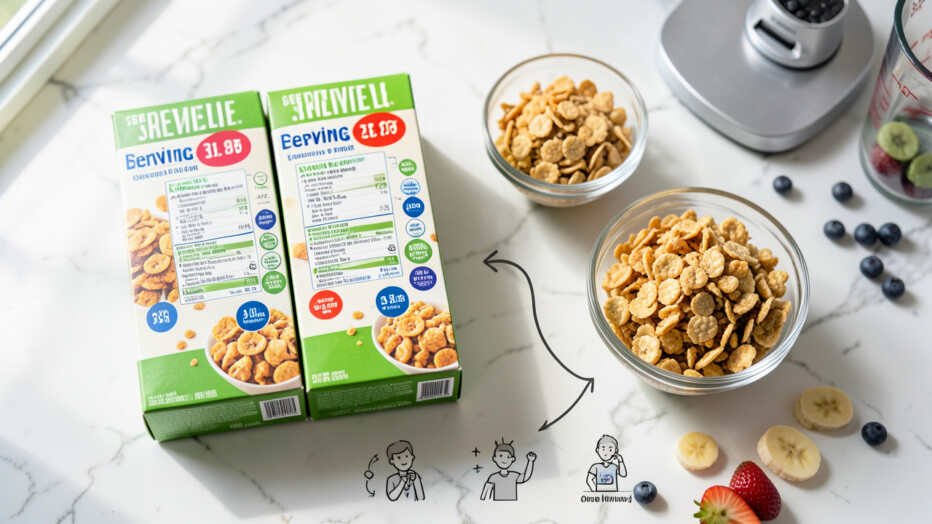
How to Use Serving Sizes to Your Advantage
Once you understand the system, you can use serving sizes as a powerful tool for health management and budgeting. It’s about shifting from a passive reader to an active user of label information.
- For Accurate Tracking: Use a food scale or measuring cups initially to see what one serving truly looks like. This builds your ability to estimate portions correctly over time.
- For Budgeting: Compare the “servings per container” and price per unit weight. A larger container might be cheaper per ounce, but only if you can use it all before it goes bad.
- For Mindful Eating: Portion out one serving onto a plate or bowl. Eating directly from the container almost always leads to consuming multiple servings without realizing it.
- For Label Comparison: Always normalize to a common base (like 100g or 100 calories) when deciding between two products. This gives you the truest picture of nutrient density.
Tip: Many nutrition apps allow you to scan a barcode and automatically calculate nutrients based on the serving size you input. This can make tracking quick and effortless once you know the correct serving size from the label.
Remember, the goal isn’t to become obsessed with every gram, but to develop an awareness that empowers your food choices. This knowledge protects you from marketing claims and helps you build a sustainable, healthy eating pattern.
Frequently Asked Questions
Why does the serving size on my yogurt cup say “1 container” while the big tub says “1 cup”?
This is because of the FDA’s single-serving package rule. The individual cup is considered one eating occasion and contains an amount close to the Reference Amount Customarily Consumed (RACC) for yogurt. The large tub is meant for multiple eating occasions, so the serving size is defined as a standard cup measurement (like 227g), and you must measure it out.
Are serving sizes the same in different countries?
No, they are not. While many countries follow similar principles, the specific Reference Amounts and labeling laws differ. For example, the European Union and Canada have their own regulations and serving size standards.
Always refer to the local labeling laws in your country.
Can a company choose a serving size to make their product look healthier?
Companies have some flexibility within the FDA’s guidelines to choose the most appropriate household measure (e.g., 1 cup or 1 container). However, they cannot arbitrarily pick a tiny serving size to make calories appear low; it must still reflect what people typically consume. The FDA audits labels to ensure compliance.
How do “dual-column” labels help with different serving sizes?
Dual-column labels, which are now common, show two columns: one for the “per serving” amount and one for the “per package” amount. This is especially helpful for packages that might be consumed in one sitting but technically contain multiple servings. It gives you a clearer picture of what you’d consume if you ate the whole thing.
Does the serving size include preparation, like adding milk to cereal?
No, the serving size on the cereal box is for the dry cereal alone. Any added ingredients, like milk, must be accounted for separately. You would need to read the nutrition label on the milk carton and add those values to your total meal calculation.
Final Thoughts
The variation in serving sizes across labels is not a marketing trick but a result of detailed FDA regulations. These rules are designed to reflect real-world eating habits, making the Nutrition Facts panel a more accurate tool. Your most powerful step is to always check the serving size first before looking at calories or nutrients.
This simple habit transforms a confusing label into a clear guide for healthier, more informed choices.