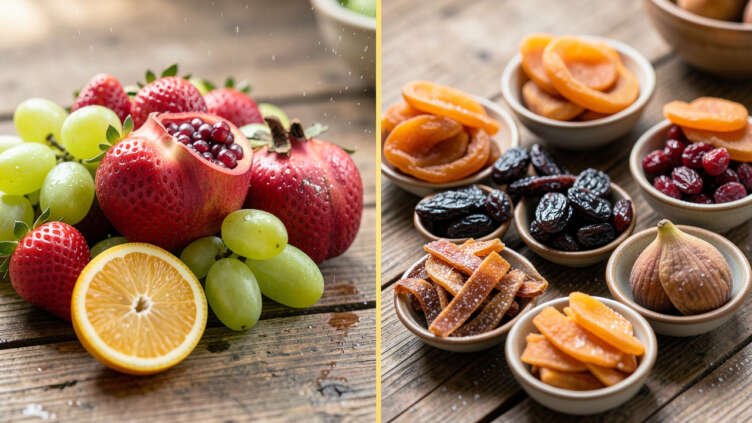
The process of drying fruit removes water, which concentrates its calories, sugars, and minerals into a smaller, more calorie-dense form, while also significantly reducing water-soluble vitamins such as Vitamin C. In contrast, fresh fruit maintains its natural water content, providing hydration and a larger portion size for fewer calories per serving, making it superior for hydration and vitamin retention. Consequently, dried fruit serves as a convenient, energy-rich snack, while fresh fruit is preferable for those seeking lower calorie density and higher vitamin intake.
Dried fruit vs fresh fruit is a common debate for health-conscious snackers. One offers concentrated sweetness, the other pure hydration. But how does the simple act of removing water fundamentally change the nutritional profile?
This guide breaks down the science and practical differences so you can make the best choice for your health goals.
Simply put, drying fruit concentrates its calories, sugars, and some minerals while significantly reducing volume and water-soluble vitamins like Vitamin C. Fresh fruit provides hydration and a larger portion for fewer calories, making it better for volume eaters. Both are healthy, but their nutritional strengths serve different purposes.
Key Takeaways
- Dried fruit is a calorie-dense, portable source of fiber, minerals, and antioxidants, ideal for quick energy.
- Fresh fruit is hydrating, lower in calories per serving, and higher in heat-sensitive vitamins like Vitamin C.
- The dehydration process shrinks fruit to about 1/4 of its original size, concentrating everything except volatile nutrients.
- Portion control is critical with dried fruit to avoid consuming excess sugar and calories.
- Choosing between them depends on your goal: fresh fruit for hydration and snacking, dried for concentrated energy and baking.
What Is the Nutritional Difference Between Dried and Fresh Fruit?
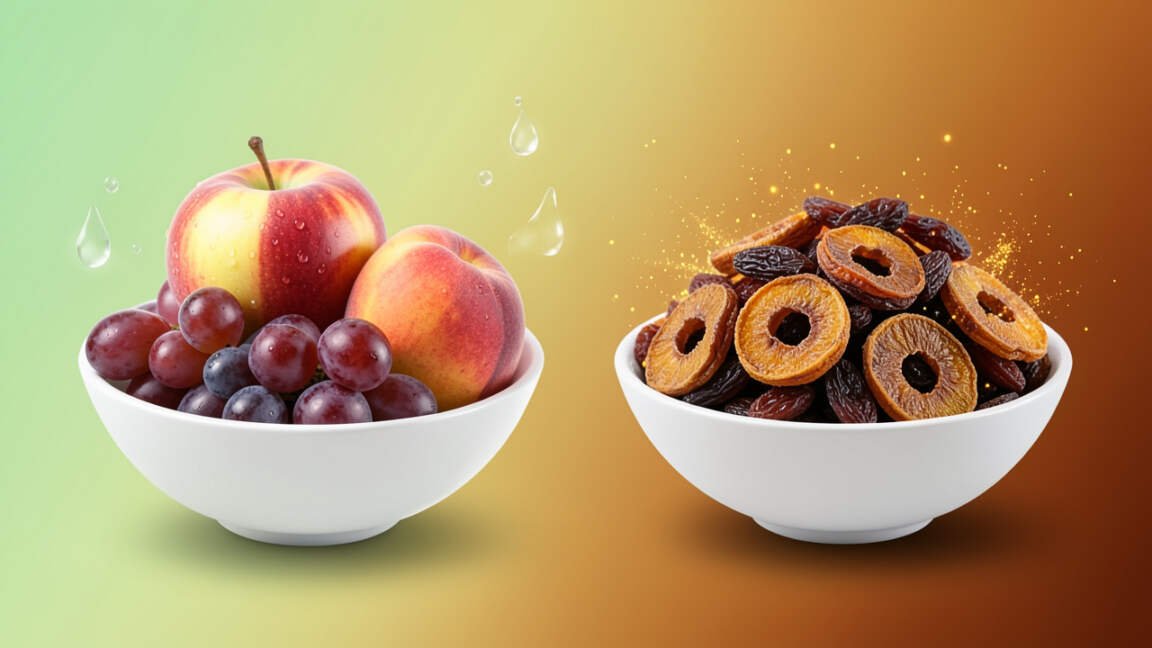
The core difference is water content. Fresh fruit is typically 80-95% water. Drying removes about 80% of that water, which means every other nutrient becomes more concentrated by weight.
A 100g serving of fresh apricots has about 48 calories and 11g of sugar. That same weight in dried apricots jumps to 241 calories and 63g of sugar.
However, “a serving” is where context matters. The USDA defines a serving of fruit as one medium piece, 1/2 cup chopped, or 3/4 cup of 100% juice. A serving of dried fruit is typically just 1/4 cup because of that concentration.
So, you might eat a smaller volume of dried fruit, but the nutrient density per bite is much higher.
| Nutrient (per 100g serving) | Fresh Apple | Dried Apple Chips (Unsweetened) |
|---|---|---|
| Calories | 52 kcal | 243 kcal |
| Carbohydrates | 14g | 65g |
| Sugars | 10g | 57g |
| Fiber | 2.4g | 8.6g |
| Vitamin C | 4.6mg (8% DV) | 0.3mg (0.5% DV) |
| Potassium | 107mg | 450mg |
This table illustrates the dramatic shift. While the dried version has more of everything, the jump in calories and sugar is substantial. The fiber and mineral content, however, also become a powerful concentrated benefit.

How Does Dehydration Affect Fruit Calories and Sugar?
Water adds volume and weight without adding calories. Remove it, and you’re left with the fruit’s natural sugars and calorie-containing compounds in a much smaller package. This creates a calorie-dense food.
The body processes this concentrated sugar similarly to added sugars, though the fiber content helps slow absorption.
For example, a single Medjool date has about 66 calories and 16g of sugar. It’s easy to eat three or four in a sitting, which equals roughly 200 calories and 48g of sugar – the equivalent of a can of soda. Fresh fruit, like an orange, provides more volume and water, making you feel full with fewer calories.
- Volume vs. Calorie Density: Fresh fruit allows you to eat a larger, more satisfying portion for the same calorie count.
- Sugar Concentration: A 1/4 cup of raisins has about 29g of sugar. The fresh grapes they came from would be over a cup to reach that sugar amount.
- Glycemic Impact: While drying doesn’t change the type of sugar, the concentration can lead to a quicker spike in blood sugar if eaten in large quantities without other foods.
- Added Sugars: Always check labels. Many commercial dried fruits, especially cranberries, raisins, and tropical mixes, have added sugars or fruit juice concentrates, further increasing the sugar load.
Warning: Flavored or “yogurt-covered” dried fruits are not comparable. They add significant amounts of added sugar, fats, and calories, negating many of the original fruit’s benefits.
Why Does Drying Reduce Vitamin C So Dramatically?
Vitamin C (ascorbic acid) is highly sensitive to heat, light, and oxygen – all three factors present during most drying processes. The longer the fruit is exposed to these elements, the more Vitamin C is degraded. Sun-drying can destroy up to 90% of the original Vitamin C content.
Even air-drying at controlled temperatures results in significant losses.
This is the one major nutritional category where fresh fruit has a clear, undeniable advantage. Vitamin C is a powerful antioxidant that supports immune function, collagen production, and iron absorption. If boosting your intake is a primary goal, fresh fruit is the superior choice.
- Sensitivity to Oxidation: Once fruit is sliced and exposed to air, Vitamin C begins to break down rapidly.
- Heat Degradation: Elevated temperatures during drying accelerate the breakdown of this water-soluble vitamin.
- Rehydration Doesn’t Restore It: Soaking dried fruit brings back water, but it cannot recreate the lost Vitamin C.
- Citrus and Berries Hit Hardest: Fruits naturally high in Vitamin C, like oranges, kiwis, and strawberries, suffer the greatest losses.
Is Dried Fruit High in Fiber Compared to Fresh Fruit?
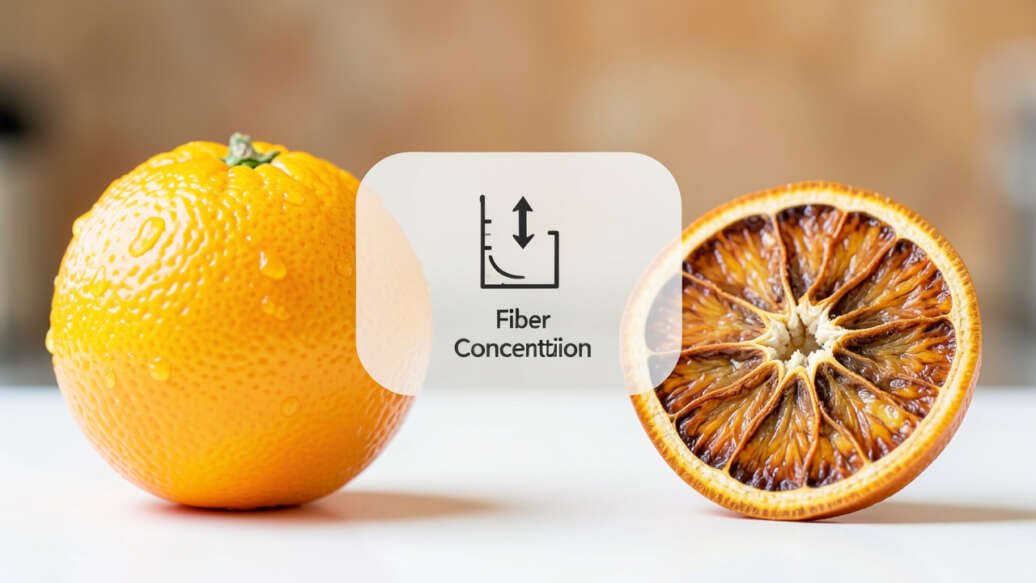
Yes, and this is one of its standout benefits. Because water is removed, the fiber content is concentrated. Dried apricots, figs, and prunes are particularly high in dietary fiber.
This concentrated fiber can support digestive health, promote feelings of fullness, and help regulate blood sugar levels when consumed in appropriate portions.
Fresh fruit is also an excellent source of fiber. An apple with its skin has about 4.4g of fiber. The benefit here is that you get this fiber along with high water content, which further aids satiety and digestion.
The fiber in both forms is primarily soluble and insoluble, beneficial for gut health.
| Fruit (1/4 cup dried / equivalent fresh) | Fiber in Dried | Fiber in Fresh Portion |
|---|---|---|
| Prunes | 3g | ~1.5g (for 5-6 fresh plums) |
| Apricots | 2g | ~0.7g (for 3-4 fresh apricots) |
| Dates | 1.6g | N/A (dates not commonly eaten fresh) |
| Raisins | 1g | ~0.4g (for 1 cup fresh grapes) |
As the table shows, a small serving of dried fruit can provide more fiber than a much larger volume of its fresh equivalent. This makes it a powerful tool for adding fiber to meals, especially for those with small appetites.
What About Antioxidants and Minerals?
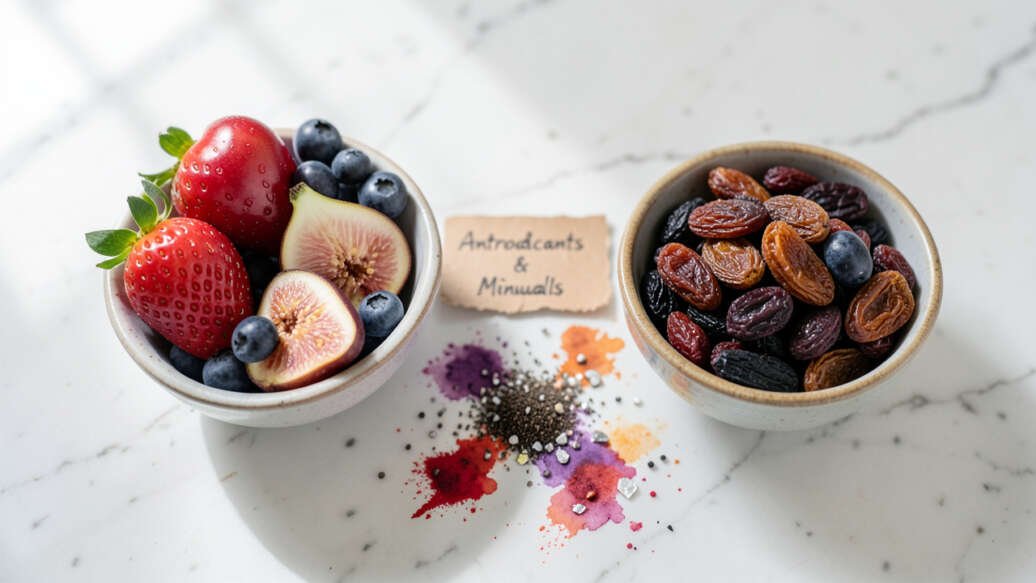
Dehydration can preserve and even concentrate many antioxidants and minerals. Compounds like polyphenols, which are responsible for the deep colors in fruits, can become more potent per gram in the dried form. Studies suggest that the antioxidant activity of certain dried fruits, like raisins and prunes, is higher gram-for-gram than in fresh grapes or plums.
Minerals such as potassium, iron, and magnesium also become concentrated. A 1/4 cup of dried apricots provides about 378mg of potassium, which is 8% of the Daily Value. This makes dried fruit an excellent choice for replenishing electrolytes after exercise or for individuals needing to increase their mineral intake.
- Polyphenol Preservation: Many heat-stable antioxidants remain intact through drying.
- Mineral Concentration: Key electrolytes become more dense, supporting hydration and nerve function.
- Iron Boost: Dried fruits like apricots and raisins are good plant-based sources of non-heme iron.
- Shelf-Stable Nutrition: These benefits are locked in, allowing for long-term storage without refrigeration.
Important: The “superfood” status of certain dried fruits like goji berries or mulberries is due to this concentrated antioxidant and mineral profile, making them potent additions to smoothies or oatmeal in small amounts.
When Is Fresh Fruit the Better Choice?
Fresh fruit excels in scenarios where hydration, volume, and vitamin intake are priorities. Its high water content makes it incredibly hydrating, perfect for hot weather or after a workout. The physical act of eating a large, crunchy apple or a juicy orange also contributes to a feeling of fullness that a small handful of dried fruit may not provide.
It is the optimal choice for weight management focused on volume eating, where you want to feel satisfied with fewer calories. Fresh fruit is also better for managing blood sugar for some individuals, as the water and fiber matrix slows the absorption of natural sugars more effectively than the concentrated dried version.
- Hydration Focus: Choose watermelon, cantaloupe, berries, and citrus for a fluid boost.
- Calorie Control: When snacking freely, fresh fruit allows for larger portions without excessive calorie intake.
- Vitamin C Priority: For immune support, fresh kiwi, strawberries, or bell peppers are unmatched.
- Sensory Satisfaction: The crunch, juiciness, and variety of textures in fresh fruit enhance the eating experience.
- For Children: It’s often easier and less messy for kids to eat fresh fruit slices or whole fruits.
When Does Dried Fruit Shine as the Superior Option?
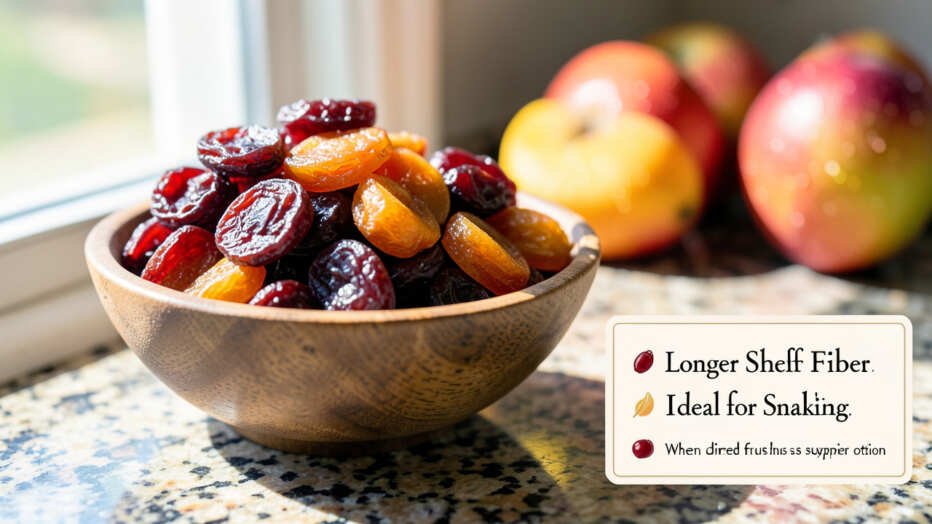
Dried fruit is a champion of convenience, longevity, and concentrated energy. Its lack of water makes it lightweight, non-perishable, and perfect for portability. Hikers, backpackers, and cyclists rely on it for quick, calorie-dense fuel that won’t spoil.
It’s also a brilliant ingredient in baking, granola, trail mixes, and stuffings, where it adds sweetness, chewiness, and moisture without excess liquid.
For those struggling to consume enough calories, such as athletes in heavy training or individuals with small appetites, dried fruit is an efficient way to boost energy and nutrient intake. Its concentrated nature also makes it a potent addition to smoothies, oatmeal, or yogurt for an extra nutritional punch.
| Use Case | Why Dried Fruit Works | Best Fruits for This |
|---|---|---|
| Trail Snacking | Lightweight, calorie-dense, no refrigeration | Raisins, apricots, mango strips |
| Baking & Cooking | Adds natural sweetness, texture, and moisture | Dates (for caramel flavor), figs, cranberries |
| Emergency Food Supply | Extremely long shelf life (1+ years) | Prunes, apples, bananas |
| Quick Energy Boost | Rapidly available carbohydrates | Dates, raisins, dried pineapple |
Tip: To make homemade trail mix balanced, pair dried fruit with nuts, seeds, and a small amount of dark chocolate. This combines quick energy from fruit with sustained energy from healthy fats and protein.

How Should You Choose Between Them?
The decision isn’t about which is universally “healthier,” but which is the right tool for the job. Your choice should align with your specific dietary goals, activity level, and the context in which you’re eating. Think of them as different ingredients in your nutritional toolkit, each with a specialized purpose.
If your primary goal is weight management through volume eating and hydration, lean toward fresh fruit. If you need a concentrated source of fiber, minerals, or portable energy for an active lifestyle, dried fruit is an excellent option. The key is awareness and portion control, especially with dried varieties.
- For Weight Loss: Prioritize fresh fruit. Its high water and fiber content helps fill you up on fewer calories.
- For Muscle Gain/Recovery: Dried fruit can quickly replenish glycogen stores post-workout. Pair it with protein.
- For Gut Health: Both are good, but the concentrated fiber in prunes and figs is particularly effective for regularity.
- For On-the-Go Nutrition: Dried fruit is the clear winner due to its portability and shelf stability.
- For General Snacking: Fresh fruit is often more satisfying and harder to overeat due to its volume.
Frequently Asked Questions
Is dried fruit considered added sugar?
No, the sugar in plain, unsweetened dried fruit is considered intrinsic sugar, not added sugar. It is naturally part of the fruit. However, because it is concentrated, it affects your blood sugar similarly to added sugars, so moderation is key.
Always check labels for products with added sugars or syrups.
Does drying fruit destroy all the nutrients?
No, it does not destroy all nutrients. While water-soluble vitamins like Vitamin C are significantly reduced, minerals (potassium, iron), dietary fiber, and many antioxidants are preserved and concentrated. Dried fruit remains a nutrient-dense food, just with a different profile than fresh.
Which dried fruit is the healthiest?
Unsweetened apricots, prunes, and figs are often considered top choices due to their high fiber and mineral content. Apricots are rich in potassium and beta-carotene, prunes are excellent for digestive health, and figs provide calcium and magnesium. Always opt for unsweetened varieties.
Can I rehydrate dried fruit to make it like fresh?
You can rehydrate dried fruit by soaking it in water, juice, or alcohol, which will restore its plump texture. However, this process does not restore the lost Vitamin C or change its concentrated calorie and sugar content per dry gram. It becomes a juicier ingredient, not a nutritional equivalent to fresh fruit.
Is dried fruit bad for your teeth?
Dried fruit can be sticky and adhere to teeth, potentially increasing cavity risk if oral hygiene is poor. Its concentrated sugar content also provides fuel for oral bacteria. To minimize risk, consume dried fruit with meals, not as a standalone snack, and brush or rinse your mouth afterward.
Final Thoughts
Neither dried nor fresh fruit is inherently superior; they are complementary. Fresh fruit offers hydration, volume, and preserved Vitamin C, making it ideal for snacking and calorie control. Dried fruit provides concentrated fiber, minerals, and portable energy, perfect for active lifestyles and cooking.
The best approach is to incorporate both into a balanced diet, paying close attention to portions with dried varieties to harness their benefits without overconsuming calories and sugars.