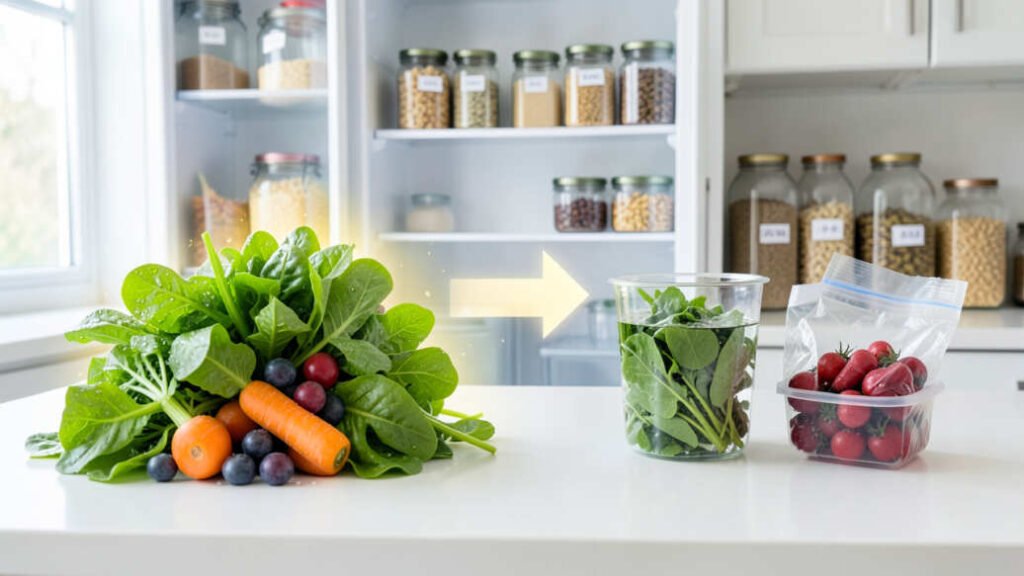
Yes, food does lose nutrients during storage, and the rate of degradation depends on the specific food, nutrient, and storage method employed. Water-soluble vitamins, particularly vitamin C and certain B vitamins, are the most vulnerable to loss over time. To maximize nutrient retention, refrigeration is generally the best balance for fresh produce, while freezing can lock in nutrients at their peak freshness.
Does food lose nutrients during storage? Yes, absolutely. This is a critical concern for anyone focused on healthy eating and reducing food waste. You buy fresh produce with the best intentions, but life gets busy.
The days pass, and that vibrant broccoli or those crisp spinach leaves start to look a little sad. More importantly, their nutritional value is quietly slipping away.
Understanding how and why this happens empowers you to make smarter choices at the grocery store, in the kitchen, and at the dinner table. This post breaks down the science behind nutrient degradation, shows you which vitamins are most vulnerable, and provides practical, actionable steps to preserve the maximum nutritional benefit from every bite you store.
Simply put, food does lose nutrients during storage, but the rate and type of loss depend on the food itself, the nutrient, and how you store it. Water-soluble vitamins like vitamin C and some B vitamins degrade the fastest, especially with exposure to air, light, and heat. Smart storage can significantly slow this process.
Key Takeaways
- Nutrient loss during storage is a natural process influenced by time, environment, and the food’s inherent properties.
- Vitamin C and B vitamins are the most sensitive and can degrade rapidly after harvest, even in your refrigerator.
- Proper storage techniques—like controlling temperature, light, and air exposure—can dramatically preserve a food’s vitamin and mineral content.
- While frozen and canned foods may have lower levels of certain heat-sensitive vitamins, they are still highly nutritious options often superior to “fresh” produce that has traveled long distances and sat on shelves.
- Minimizing nutrient loss is about smart choices from purchase to plate, not achieving perfection.
What Is Nutrient Loss and How Does It Happen?
Nutrient loss, often called nutrient degradation or nutrient breakdown, refers to the reduction in the vitamin, mineral, and phytonutrient content of food after it’s been harvested. This isn’t about spoilage, which is caused by microbes and decay. You can have perfectly fresh-looking food that has still lost a significant portion of its original nutritional value.
The process is driven by several natural factors. Once a fruit or vegetable is picked, it is cut off from its life source. Its cells begin to break down, and enzymes start to degrade certain compounds.
Exposure to oxygen (oxidation), light, and heat accelerates this breakdown. The more a food is handled, processed, or simply left sitting, the more nutrients it can lose.
The Key Culprits Behind Nutrient Degradation
- Time: The single biggest factor. Nutrients begin to degrade from the moment of harvest. The longer the time between farm and fork, the greater the potential loss.
- Temperature: Higher temperatures speed up chemical reactions, including those that break down nutrients. Room temperature storage is far more damaging than refrigeration.
- Light: Exposure to light, especially UV light, can destroy certain vitamins, particularly riboflavin (B2) and vitamins A and C. This is why milk is sold in opaque containers.
- Oxygen: Oxidation is a major destroyer of nutrients. Cutting, peeling, or bruising food exposes more surface area to oxygen, accelerating loss.
- Water: Leaching is a real concern. Water-soluble vitamins (B-complex and C) can dissolve into cooking water or even be washed away during prep. This is why steaming is often better than boiling.
Which Foods and Nutrients Are Most Vulnerable?
Not all nutrients are created equal when it comes to stability. Some, like fiber and minerals, are very hardy. Others are incredibly fragile.
The impact of storage also varies significantly by food type. Delicate leafy greens will lose nutrients much faster than a hardy root vegetable.
| Nutrient Category | Vulnerable Nutrients | Commonly Found In | Primary Degrading Factors |
|---|---|---|---|
| Water-Soluble Vitamins | Vitamin C (Ascorbic Acid), B Vitamins (Thiamine B1, Folate B9) | Citrus fruits, berries, leafy greens, bell peppers, broccoli, potatoes, milk | Light, heat, oxygen, water (leaching) |
| Some Fat-Soluble Vitamins | Vitamin A (Retinol), Vitamin K | Carrots, sweet potatoes, leafy greens, spinach | Light, oxygen |
| Phytonutrients | Antioxidants like Anthocyanins, Flavonoids | Berries, grapes, cherries, tea, dark chocolate | Light, heat, oxygen |
| Stable Nutrients | Dietary Fiber, Minerals (Iron, Calcium, Zinc), Vitamins D & E | Whole grains, legumes, nuts, seeds, meats | Very stable, minimal loss during storage |
According to a review in the Journal of Food Science and Technology, leafy vegetables like spinach can lose up to 90% of their vitamin C content within eight days of harvest if stored at room temperature. Even under refrigeration, significant losses occur. This highlights why storage time and conditions are so critical for delicate produce.
How Do Different Storage Methods Affect Nutrient Retention?
The way you store food after purchase is your most powerful tool for fighting nutrient loss. Simply moving food from the counter to the fridge can make a huge difference. Let’s compare the most common methods.
Refrigeration: The Best Balance for Most Fresh Produce
The cold, humid environment of a refrigerator slows down the metabolic processes in produce and inhibits microbial growth. This dramatically reduces the rate of nutrient degradation, especially for water-soluble vitamins. For most vegetables and fruits, the crisper drawer is designed to maintain optimal humidity, further extending freshness and nutrient content.
- Leafy Greens: Store unwashed in a perforated plastic bag or container lined with a paper towel to absorb excess moisture.
- Broccoli, Cauliflower, Carrots: Place in an open or perforated bag to allow some air circulation.
- Berries: Do not wash until ready to eat. Mold loves moisture. Store in a single layer on a paper towel-lined container.
Tip: For leafy greens like lettuce and spinach, a salad spinner is your best friend after washing. Removing excess water prevents sliminess and extends shelf life, preserving nutrients longer.
Freezing: Locking in Nutrients at Peak Freshness
Freezing is a fantastic preservation method. Most vegetables are flash-frozen within hours of harvest, locking in nutrients at their peak. In many cases, frozen produce is more nutritious than “fresh” produce that has spent days in transit and on a store shelf.
The blanching process before freezing can cause some loss of heat-sensitive vitamins, but the long-term preservation is a net positive.
Frozen fruits and vegetables are an excellent, cost-effective way to have nutrient-rich options on hand year-round. They are especially valuable for smoothies, soups, stews, and stir-fries where texture is less critical.
Room Temperature: Proceed with Caution
Storing most produce at room temperature accelerates nutrient loss. The exception is a few items that actually prefer it:
- Tomatoes: Refrigeration can make them mealy and dull their flavor. Keep on the counter out of direct sunlight.
- Onions, Garlic, and Potatoes: Store in a cool, dark, dry place with good air flow. Note: Potatoes should not be stored with onions, as the gases they emit can cause each other to spoil faster.
- Whole Melons and Avocados: Ripen on the counter, then refrigerate to slow further ripening once they reach your desired stage.
Canned and Jarred Goods: A Shelf-Stable Option
Canning involves heating food to high temperatures to kill microbes and seal it in an airtight container. This heat can destroy some heat-sensitive vitamins like vitamin C and some B vitamins. However, minerals, fiber, and many antioxidants remain stable.
Canned beans, tomatoes (with their juices), and fish are nutritious staples. Choose options with no added salt or sugar when possible.
What Are the Best Practices to Maximize Nutrient Retention at Home?
You don’t need a lab to preserve nutrients. Following some straightforward habits can make a substantial difference. Focus on handling produce gently and getting it into proper storage quickly.
- Shop Strategically: Buy produce frequently in smaller amounts that you can realistically consume. Avoid overbuying, especially for highly perishable items like berries and spinach.
- Handle with Care: Bruising damages cell walls and accelerates nutrient loss. Be gentle when transporting and storing produce.
- Wash Right Before Use: Washing produce removes dirt but also encourages spoilage if done too early. Moisture is a mold magnet. The exception is a quick rinse for berries just before you eat them.
- Minimize Cutting and Peeling: Nutrients are often concentrated near the skin or just below it. Eat skins when possible (like on apples and potatoes). If you must prep ahead, use minimal cutting and store pre-cut items in airtight containers in the fridge.
- Cook Smart: To retain water-soluble vitamins, use minimal water and shorter cooking times. Steaming, microwaving with little water, and stir-frying are superior to boiling. Use cooking water in soups or sauces to reclaim any leached nutrients.
- Store Herbs Properly: Treat soft herbs like flowers. Trim stems and place them in a jar with an inch of water in the fridge. Cover loosely with a plastic bag. Hardy herbs like rosemary can be wrapped in a damp paper towel and placed in a bag.
Important: Don’t let the fear of nutrient loss lead you to discard perfectly edible food. An apple that’s been in the fridge for a week still provides fiber, antioxidants, and vitamins. The goal is reduction, not perfection.
How Do Storage Conditions Impact Specific Food Groups?
Different foods have different needs. Tailoring your approach to each category ensures you get the best possible nutrition. Here’s a breakdown for common items.
| Food Group | Optimal Storage Method | Key Nutrients at Risk | Pro Tip |
|---|---|---|---|
| Leafy Greens | Refrigerator crisper drawer. Wash and dry only before use. | Vitamin C, Folate, Vitamin K. | Store in a container lined with a dry paper towel to absorb excess moisture. |
| Root Vegetables | Cool, dark place (potatoes, onions) or refrigerator (carrots, beets). | Generally stable; some loss of Vitamin C over long periods. | Remove leafy tops from carrots/beets before storing, as they draw out moisture. |
| Fruits (Berries, Citrus) | Refrigerator. Do not wash berries until ready to eat. | Vitamin C, Anthocyanins. | For longer storage, wash, dry, and freeze berries in a single layer on a baking sheet before transferring to a bag. |
| Whole Grains & Legumes | Airtight containers in a cool, dark, dry pantry. | Minimal loss; fats in grains can go rancid over very long periods. | For longest life, store whole grains and dried beans in the freezer. |
What Common Mistakes Lead to Faster Nutrient Loss?
Avoiding a few frequent errors can instantly improve your food’s nutritional profile. Many of these habits are simply a matter of awareness and a slight adjustment to your routine.
- Storing Tomatoes in the Fridge: This is the most common mistake. Cold temperatures destroy the volatile compounds that give tomatoes their rich flavor and aroma, making them bland and mealy.
- Keeping Produce in Plastic Bags in the Fridge: Sealed plastic bags trap moisture and ethylene gas (released by some fruits), which accelerates spoilage and nutrient degradation. Use perforated bags or containers instead.
- Pre-Washing and Storing Salads: Pre-washed greens are convenient but highly perishable. The moisture promotes slime and mold. If you buy them, consume quickly. It’s often better to buy unwashed heads of lettuce or bunches of spinach.
- Buying “Pre-Cut” Everything: While convenient, pre-cut fruits and vegetables have dramatically increased surface area exposed to air and light, leading to rapid nutrient loss. They also spoil much faster.
- Overcrowding the Fridge: Air circulation is key. A packed refrigerator has warmer spots and can’t maintain a consistent temperature, leading to uneven cooling and faster decay.
Warning: Never refreeze food that has been thawed completely. This doesn’t directly cause nutrient loss, but the thawing process involves cell damage and creates an environment where bacteria can grow rapidly, compromising food safety.
Frequently Asked Questions
Does washing vegetables remove nutrients?
Washing removes surface dirt, bacteria, and pesticides, which is essential for safety. While a quick rinse might remove a tiny amount of water-soluble vitamins from the outermost layer, this loss is negligible compared to the benefits. The greater nutrient loss comes from soaking or boiling vegetables in large amounts of water.
Are frozen vegetables as nutritious as fresh?
Yes, often they are. Frozen vegetables are typically blanched and flash-frozen shortly after harvest, locking in vitamins. “Fresh” produce in supermarkets may have been transported for days or weeks, losing nutrients along the way.
In many cases, frozen options retain more vitamins like vitamin C and folate than their long-stored “fresh” counterparts.
How quickly do leafy greens like spinach lose nutrients?
Loss is rapid. Studies show that spinach stored at room temperature can lose over 50% of its vitamin C content within just a few days. Even under optimal refrigerator conditions, significant degradation of certain vitamins occurs within a week.
This is why buying smaller amounts and consuming them promptly is key.
Does cooking destroy more nutrients than storage?
It depends on the method and the nutrient. Boiling can cause severe loss of water-soluble vitamins into the water. However, gentle cooking methods like steaming can actually make some nutrients more bioavailable.
The real comparison is: storage loss is passive and ongoing, while cooking loss happens in minutes. The best approach is to minimize both by storing properly and cooking wisely.
Is it better to buy whole fruits or pre-cut fruit for nutrient retention?
Whole fruits are always better for maximizing nutrient retention. The intact skin acts as a protective barrier against oxygen and light. Pre-cut fruit has exposed flesh that oxidizes quickly, leading to faster degradation of vitamins and antioxidants.
If you must buy pre-cut, consume it immediately.
Final Thoughts
Yes, food loses nutrients during storage, but you now hold the knowledge to manage this process effectively. By prioritizing smart storage—using the fridge for most produce, the freezer for long-term holding, and a cool pantry for specific items—you protect your investment in healthy eating. Remember that time is the biggest enemy, so buying closer to when you’ll eat it is always the best strategy.
Don’t let perfect be the enemy of good. Focus on these key practices, and you’ll enjoy the fullest nutritional benefits your food has to offer.