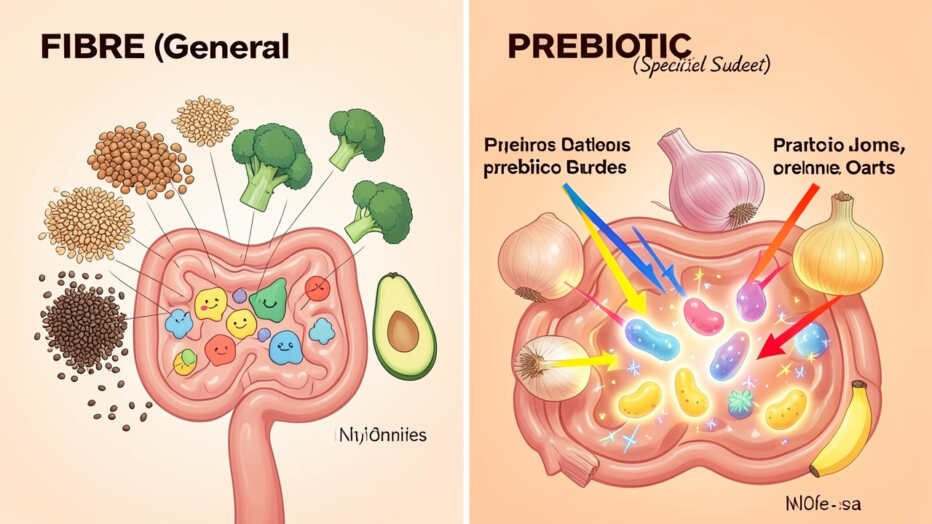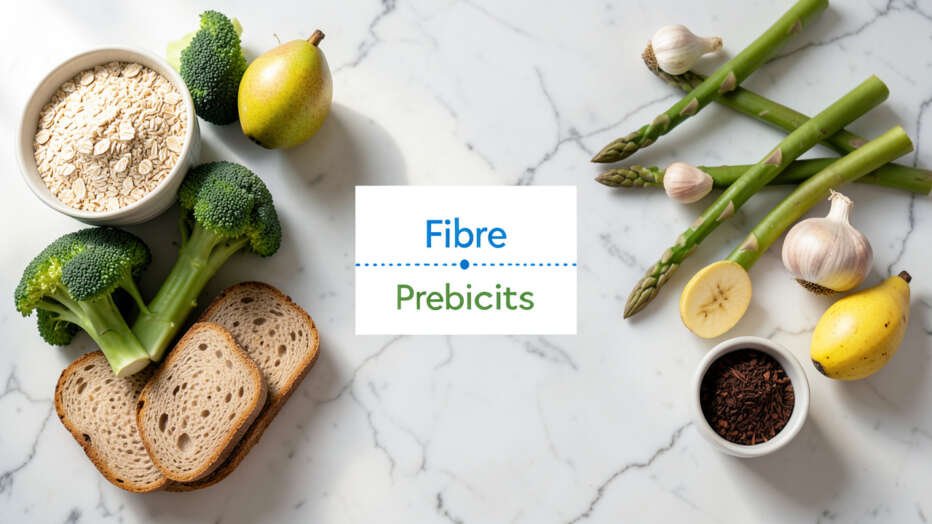
Fibre and prebiotics are not the same thing, as all prebiotics are a specific type of dietary fibre but not all fibres are prebiotic. Prebiotic fibres are uniquely fermented to feed beneficial gut bacteria, while other fibres primarily aid digestion through bulk or gel formation. For optimal gut health, consume a diverse mix of both prebiotic and non-prebiotic fibres, gradually increasing intake to support regular bowel movements and a balanced microbiome.
The fibre vs prebiotics debate comes up constantly in gut health conversations. These terms get tossed around on food labels and wellness blogs as if they mean the same thing. This post clears up the confusion once and for all and shows you how to use both for better digestion.
Simply put, all prebiotics are fibre, but not all fibre is prebiotic. Prebiotics are a specific type of fibre that feeds beneficial gut bacteria. Your gut needs both, and understanding the overlap helps you choose foods that truly support your microbiome.
Key Takeaways
- Fibre vs prebiotics is not an either-or choice: prebiotics are a subset of fibre.
- All prebiotics are fibre, but most dietary fibres only provide bulk or gel-forming benefits.
- Fibre and prebiotics both support gut health, yet prebiotics uniquely feed your beneficial bacteria.
- Aim for a mix of fibre types to keep bowel movements regular and your microbiome diverse.
- Raise your intake gradually to avoid bloating, gas, and abdominal discomfort.