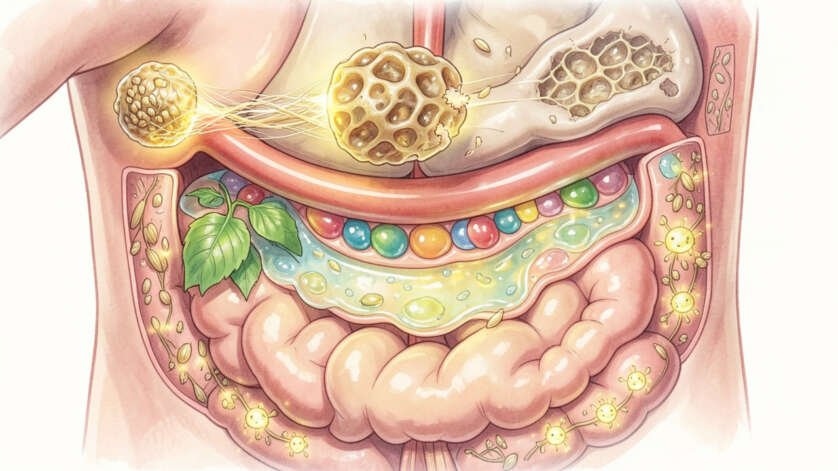
Dietary fibre changes the way food moves through the digestive system by adding bulk to chyme, absorbing water, and creating a gel-like substance that regulates transit time through the intestines. This process physically slows digestion, helps form well-structured stool, and provides fuel for beneficial gut bacteria in the colon. The direct result is more consistent bowel movements and a key foundation for long-term gut health and disease prevention.
How does fibre change the way food moves through the digestive system? It is one of the most important questions you can ask about gut health, and the answer shapes everything from your daily energy to your long-term disease risk. In this post, you’ll learn exactly how fibre alters digestion, regulates transit time, and keeps your bowel movements healthy.
You’ll also find practical tips for adding more fibre to your meals without the bloating and discomfort that often come with sudden changes.
Simply put, fibre changes digestion by adding bulk to food, soaking up water, and regulating how fast waste moves through your gut. It turns slow, sluggish transit into steady, comfortable bowel movements. It also feeds the good bacteria in your colon, which supports immunity, inflammation control, and overall digestive health.
Key Takeaways
- Fibre changes the way food moves by adding bulk, absorbing water, and regulating transit time through the digestive tract.
- Soluble fibre slows digestion for better nutrient absorption, while insoluble fibre speeds up waste movement.
- Healthy gut bacteria ferment fibre into short-chain fatty acids that reduce inflammation and support colon health.
- Most adults need 25-38 grams of fibre daily, yet most people eat less than half of that amount.
- Increase fibre gradually and drink plenty of water to avoid bloating and constipation.
What Is Dietary Fibre and Why Does It Matter for Digestion?
Dietary fibre is a type of carbohydrate that your body cannot break down into sugar. Unlike other carbs, fibre passes through the small intestine mostly intact, and it reaches the colon in nearly the same form you swallowed it. That might sound useless, but it is exactly why fibre matters so much for digestion.
Fibre works in two main ways: it adds physical bulk to your gut contents, and it changes how much water is absorbed along the way. These two actions combine to affect the speed, ease, and consistency of everything you digest.
There are two broad categories of fibre, and each one plays a different role:
- Soluble fibre dissolves in water to form a gel-like substance. It slows down digestion and helps control blood sugar and cholesterol.
- Insoluble fibre does not dissolve in water. It adds bulk and acts like a broom, sweeping waste through your intestines.
- Fermentable fibre feeds the beneficial bacteria in your colon, producing short-chain fatty acids that nourish the gut lining.
- Resistant starch is a type of fibre that behaves like a prebiotic and supports healthy gut flora.
According to the NHS, UK adults should aim for about 30 grams of fibre per day. The FDA sets the Daily Value at 28 grams for a 2,000-calorie diet. In reality, most people fall far short of these targets.
How Does Fibre Change the Way Food Moves Through the Digestive System?
Here is the core answer to your question. Fibre changes how food moves by giving the muscles of your digestive tract something to push against. Without fibre, waste can become too small and too dry, which makes it hard for your gut to move it along efficiently.
When you eat fibre, it holds onto water in the colon. This makes your stool larger, softer, and easier to pass. The extra bulk also stretches the walls of the intestine, which triggers stronger muscle contractions called peristalsis.
These contractions push food forward at a steady, healthy pace.
In short, fibre does three things to food movement:
- It adds physical bulk that stimulates the gut wall to contract.
- It retains water, which softens stool and prevents hard, painful bowel movements.
- It speeds up or slows down transit time depending on the type of fibre you consume.
Soluble fibre forms a gel that delays gastric emptying. That keeps you full for longer and slows the release of sugar into your bloodstream. Insoluble fibre works in the opposite direction, reducing transit time so waste spends less time sitting in the colon.
Tip: Healthy transit time ranges from about 24 to 72 hours. If your meals leave your body in under 24 hours, you may have diarrhoea. If they take longer than 72 hours, constipation is likely. Fibre is the main lever you can pull to correct both.
Soluble vs Insoluble Fibre: How Each Type Affects Transit Time
Not all fibre behaves the same way in your gut. Understanding the difference between soluble and insoluble fibre helps you predict exactly how your digestion will respond to different foods.
Soluble fibre dissolves in water and becomes thick and sticky. Think of oatmeal, beans, and apples. This type of fibre slows the movement of food, which is helpful if you experience rapid bowel movements or loose stool.
Insoluble fibre, found in wheat bran, nuts, and many vegetables, speeds up the movement of waste and adds roughage that prevents constipation.
| Feature | Soluble Fibre | Insoluble Fibre |
|---|---|---|
| Dissolves in water | Yes, forms a gel | No |
| Effect on transit time | Slows it down | Speeds it up |
| Effect on stool | Softens and adds gel texture | Adds bulk and roughage |
| Main benefit | Blood sugar and cholesterol control | Preventing and relieving constipation |
| Food sources | Oats, beans, apples, carrots, flaxseed | Wheat bran, nuts, celery, leafy greens |
Most plant foods contain a mix of both types, so you rarely need to obsess over choosing one over the other. Eating a wide variety of whole plant foods naturally gives you the benefits of both. If you struggle with constipation, lean slightly toward insoluble fibre.
If you deal with loose stools or rapid transit, increase your soluble fibre intake.
The Journey of Food: From Mouth to Colon With and Without Fibre
To truly understand how fibre changes food movement, it helps to trace the path food takes through your body. The difference between a high-fibre meal and a low-fibre meal becomes obvious at every stage.
- Mouth and stomach: Fibre slows gastric emptying, so food stays in your stomach longer. You feel full sooner and stay satisfied for hours after eating.
- Small intestine: Soluble fibre forms a gel that slows nutrient absorption. This prevents blood sugar spikes and gives your body more time to extract vitamins and minerals.
- Large intestine: Fibre reaches the colon mostly intact. Insoluble fibre adds bulk, while bacteria ferment soluble fibre into beneficial short-chain fatty acids.
- Rectum and elimination: The added bulk creates softer, heavier stool that is easier to push out. This reduces straining and prevents haemorrhoids.
Without fibre, the same journey looks very different. Food passes through the stomach quickly, which can leave you hungry soon after eating. In the small intestine, sugar enters the bloodstream rapidly.
In the colon, waste sits for long periods, losing water and becoming hard. Eventually, the stool becomes dry and difficult to pass.
Important: A 2019 study published in The Lancet found that people who consumed 25 to 29 grams of fibre daily had a 15 to 30 percent lower risk of heart disease and premature death compared to those who ate the least fibre. Regular bowel movements are one of the many downstream benefits.
How Does Fibre Change Stool Formation and Bowel Movements?
The most obvious effect of fibre is on your stool. Doctors and researchers use the Bristol Stool Chart to classify stool into seven types, from hard lumps to liquid. Fibre is the single biggest dietary factor that determines where your stool falls on that scale.
Fibre changes stool formation through its water-holding capacity. Insoluble fibre acts like a sponge, soaking up excess water in the colon. Soluble fibre traps water in a gel, keeping it in the stool.
Together, they ensure stool is soft but formed, which is exactly what you want for pain-free bowel movements.
Here is what adequate fibre does for your daily bathroom routine:
- Increases stool weight, which makes bowel movements easier to pass.
- Reduces straining, which protects your pelvic floor and prevents haemorrhoids.
- Increases bowel movement frequency in people with constipation.
- Improves stool consistency in people with diarrhoea by absorbing excess water.
- Reduces the time waste spends in contact with the colon lining, which lowers cancer risk.
Warning: Fibre only softens stool when you drink enough water. If you rapidly increase fibre intake without fluids, you can make constipation worse. Dry fibre can form hard, compacted plugs in the colon. Always pair extra fibre with extra water.
Research from the NIH shows that about 95 percent of Americans do not meet their daily fibre needs. That helps explain why constipation is one of the most common digestive complaints worldwide.
How Fibre Feeds Your Gut Microbiome and Changes Colon Function
Fibre is not just a passive passenger. In the colon, certain types of fibre are fermented by trillions of bacteria that call your gut home. These bacteria break down fibre into short-chain fatty acids, including acetate, propionate, and butyrate.
Butyrate is particularly important. It is the primary fuel source for the cells that line your colon. When your gut bacteria produce butyrate, they keep that lining healthy and intact.
A healthy colon lining is your first line of defence against harmful pathogens and inflammation.
The fermentation process also influences how food moves through your system in a less obvious way:
- Short-chain fatty acids stimulate colonic contractions, helping to move waste forward.
- They increase blood flow to the colon, improving nutrient absorption.
- They lower the pH of the colon, which creates an environment where harmful bacteria struggle to survive.
- They support the production of mucus, which lubricates the passage of stool.
Tip: To feed your microbiome well, rotate your fibre sources. Each type of plant food feeds different bacterial species. Eating 30 different plant foods per week is a research-backed way to maximise microbial diversity and improve digestive health.
The connection between fibre and gut bacteria is central to the answer to “how does fibre change the way food moves through the digestive system?” The bacteria themselves change the chemical environment of the colon, which in turn controls muscle activity and stool output. Fibre is the fuel that powers this entire system.
How to Increase Your Fibre Intake Without Digestive Discomfort
Adding fibre suddenly is one of the fastest ways to end up bloated, gassy, and uncomfortable. Your gut bacteria need time to adapt to fermenting more fibre. The key is to increase your intake gradually and consistently over several weeks.
Here is a simple step-by-step approach that works for most people:
- Start low and go slow. Add 3 to 5 grams of fibre per day for the first week, then increase by 3 to 5 grams every week until you reach your target.
- Drink more water. Aim for an extra glass of water for every additional serving of fibre you add.
- Choose whole foods over supplements first. Whole foods provide a mix of soluble, insoluble, and fermentable fibre that works together naturally.
- Track your progress. Use a food diary app to monitor your daily fibre intake and see how your body responds.
These high-fibre foods are easy to add to your existing meals:
- Oats and oat bran, which provide around 4 grams of fibre per half-cup.
- Chia seeds, which deliver 10 grams of fibre per two tablespoons.
- Lentils and beans, with 6 to 8 grams of fibre per half-cup cooked.
- Berries, especially raspberries and blackberries, with 4 to 8 grams per cup.
- Broccoli and Brussels sprouts, adding 3 to 4 grams per cup cooked.
- Whole grains such as quinoa, barley, and brown rice.
Warning: If you have irritable bowel syndrome (IBS), certain high-fibre foods can trigger symptoms. FODMAP-sensitive people often react to foods like onions, wheat, and some beans. Working with a registered dietitian can help you identify which fibres your gut tolerates best.
Common Mistakes People Make When Adding Fibre
Many people start a high-fibre diet and give up within a week because they make avoidable mistakes. Here are the most common errors and how to fix them.
- Adding too much too fast: Your gut needs time to adjust. Sudden large increases cause gas, cramps, and bloating. Fix this by adding only a few grams per day each week.
- Skipping the water: Fibre without water is like dry cement. It can harden in the colon and worsen constipation. Always drink extra fluids alongside your fibre.
- Eating only one type of fibre: Overloading on insoluble fibre while ignoring soluble fibre can cause loose stools or irritation. Mix both types across your meals.
- Relying on processed “high-fibre” foods: Many commercial bars and cereals contain isolated fibres that do not deliver the same benefits as whole plant foods. Read labels and favour whole foods.
- Forgetting to exercise: Physical activity stimulates peristalsis in the colon. Fibre and movement work best together for regular bowel movements.
| Mistake | Consequence | Fix |
|---|---|---|
| Sudden increase | Bloating and cramps | Add 3-5 grams weekly |
| No extra water | Worsened constipation | Drink more at each meal |
| One fibre type only | Imbalanced stool texture | Mix soluble and insoluble |
| Processed fibre bars | Fewer whole-food benefits | Choose whole plant foods |
Making these corrections early prevents frustration and keeps you on track toward better digestive health.
Frequently Asked Questions
How long does food take to move through the digestive system with fibre?
Normal transit time ranges from 24 to 72 hours. A high-fibre diet typically keeps transit time on the faster end of that range, around 24 to 48 hours, because the added bulk stimulates stronger contractions and prevents waste from lingering in the colon.
Can too much fibre slow down digestion?
Yes, especially if you increase fibre without drinking enough water. Excess fibre, particularly insoluble fibre, can form a dense mass that is hard to pass. In rare cases, very high fibre intake can cause a blockage known as bezoar formation, which requires medical attention.
Does fibre make you poop more?
It can. Fibre increases stool bulk and stimulates the stretch receptors in your colon, which triggers the urge to go. People with constipation often notice they have more frequent and comfortable bowel movements once they reach their daily fibre goal.
What happens to your digestion when you suddenly eat more fibre?
You may experience gas, bloating, cramps, and changes in bowel habits. Your gut bacteria need time to adapt to fermenting more fibre. These symptoms usually settle within one to two weeks if you increase fibre gradually and drink plenty of water.
How much fibre should I eat each day?
The NHS recommends 30 grams per day for UK adults, while the FDA sets the Daily Value at 28 grams for a 2,000-calorie diet. Research published in The Lancet suggests that 25 to 29 grams daily delivers the greatest reduction in disease risk.
Final Thoughts
Fibre changes the way food moves through your digestive system by adding bulk, absorbing water, and feeding the bacteria that control colon function. It slows digestion when you need more nutrient absorption and speeds it up when you need regular elimination. The simplest path to better gut health is to eat more whole plant foods, drink enough water, and increase your intake gradually.
Your digestive system will thank you for it every single day.