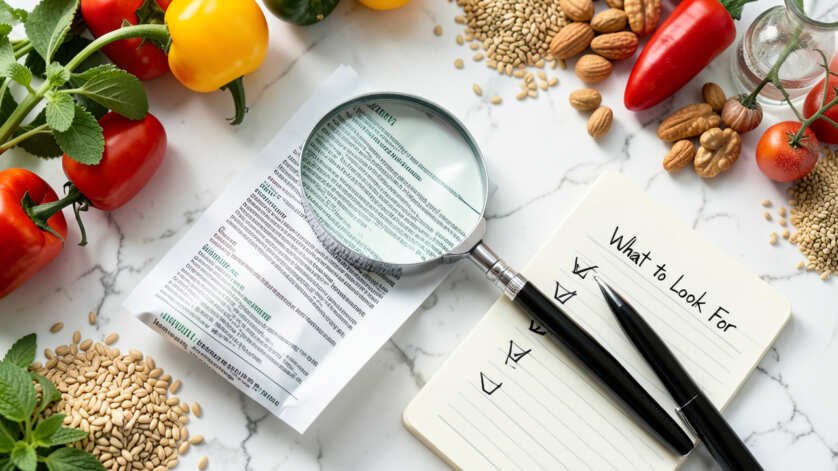
To read an ingredient list correctly, first identify it on the product and understand that ingredients are listed in descending order by weight. The most practical approach is to focus on the first three to five ingredients, as these make up the majority of the product. Always check for signs of ingredient splitting, where manufacturers list smaller amounts of multiple similar ingredients to push a less desirable component further down the list.
Learning how to read an ingredient list is one of the most powerful skills you can develop for making smarter choices about the products you buy. Whether you are scanning a food label at the grocery store or checking the back of a skincare bottle, the ingredient list holds the truth about what is really inside that package.
Most people flip right past the fine print, but manufacturers are required by law to list every ingredient in a specific order. Once you know the rules, reading an ingredient list becomes quick, easy, and incredibly revealing. This guide walks you through every step so you never have to guess again.
Simply put, ingredient lists are arranged from highest concentration to lowest, so the first few items make up the bulk of the product. By learning to decode the order, spot red-flag additives, and understand misleading marketing terms, you gain full control over what you put in or on your body. The process takes less than 60 seconds once you know what to look for.
Key Takeaways
- Reading an ingredient list starts with understanding that ingredients are listed in descending order by weight.
- The first three to five ingredients usually make up 80-90% of the entire product.
- Manufacturers sometimes split one ingredient into multiple forms to push it lower on the list.
- Look for hidden sugars, artificial additives, and allergens that may not appear on the front label.
- A short, recognizable ingredient list generally signals a cleaner, less processed product.
What Is an Ingredient List and Why Does It Matter?
An ingredient list is a legally required disclosure found on nearly every packaged product. It tells you exactly what substances the manufacturer used to make the item. In the United States, the Food and Drug Administration (FDA) mandates these lists under the Federal Food, Drug, and Cosmetic Act.
The list matters because front-of-package marketing can be misleading. A cereal box might shout “whole grain” in bold letters while the first ingredient is refined sugar. Without reading the ingredient list, you would never catch that contradiction.
According to a study published in the journal Appetite, consumers who actively read nutrition labels tend to have lower body mass indexes and make healthier food choices overall. The ingredient list is your single best tool for cutting through marketing noise.
- Legal requirement: Companies must list all ingredients by weight, from most to least.
- Transparency tool: Reveals what the front label hides.
- Safety net: Helps you avoid allergens, intolerances, and harmful additives.
- Quality indicator: Shorter lists with recognizable ingredients usually mean less processing.
How Should You Read an Ingredient List Step by Step?
Reading an ingredient list is not complicated, but it does follow a specific logic. The process below works for food, beverages, supplements, and personal care products alike. Follow these steps every time you pick up a product.
Step 1: Find the Ingredient List on the Package
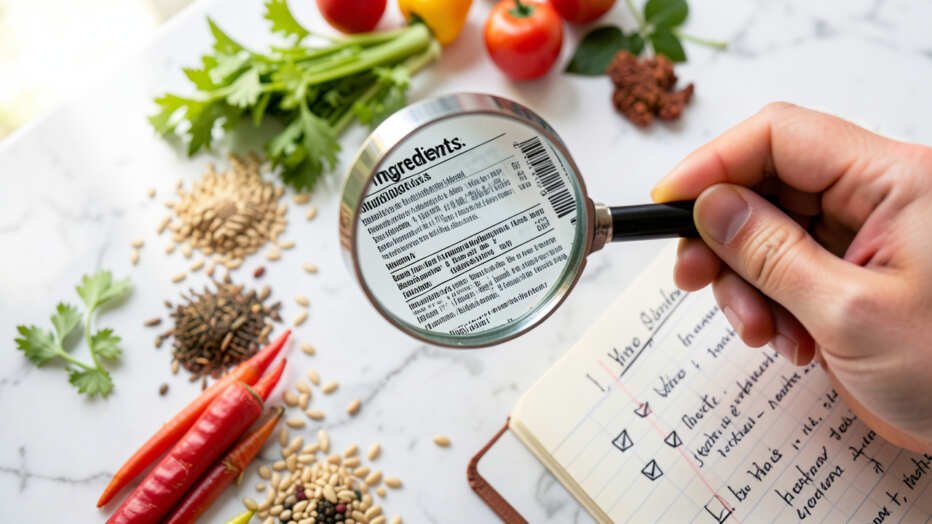
On food products, the ingredient list is almost always located on the back or side panel, directly below or near the Nutrition Facts panel. For cosmetics and personal care items, it typically appears on the outer box or directly on the container. Look for the word “Ingredients” followed by a colon.
If you cannot find it, check the bottom of the package. Some smaller items, like single-serve snack bags, print the list there. European Union regulations require the word “Ingredients” to be clearly highlighted, often in bold or italics.
Step 2: Understand the Order of Ingredients
This is the most important rule. Ingredients are listed in descending order by weight, from the highest amount to the lowest. If sugar is the first ingredient in a granola bar, that means more sugar exists in that bar than any other single component.
| Position on List | What It Tells You | Percentage of Product |
|---|---|---|
| First ingredient | Main component of the product | Largest share (often 20-40%) |
| Ingredients 2-5 | Secondary components | Together usually make up 80-90% |
| Ingredients 6-10 | Minor additives, flavors, preservatives | 1-5% combined |
| Last few ingredients | Trace amounts, color additives, “dusting” | Less than 1% each |
This table makes the hierarchy clear. The top three to five items dominate the product. Anything listed after the commas or parentheses is present in very small amounts.
Step 3: Identify the First Three to Five Ingredients
Focus your attention on the first three to five ingredients. These components define the product. If you are buying bread and the first ingredient is enriched wheat flour rather than whole wheat flour, the product is primarily made from refined flour.
This quick scan alone will help you reject most unhealthy options within seconds. According to the Centers for Disease Control and Prevention (CDC), nearly 60% of American adults consume more added sugar than recommended, and reading the first few ingredients would catch most of that excess immediately.
Step 4: Watch for Ingredient Splitting
Ingredient splitting is a common trick. A manufacturer might use four different forms of sugar-sucrose, dextrose, maltodextrin, and corn syrup solids. Each one individually ranks lower on the list, but combined, sugar would actually be the number one ingredient.
Warning: If you see multiple similar ingredients scattered throughout the list, mentally group them together. Common splitting targets include sugars, fats, and refined grains. When combined, these split ingredients often jump to the top of the list in total weight.
Here are some common ingredient-splitting pairs to watch for:
- Sugars: sucrose, dextrose, high-fructose corn syrup, maltodextrin, cane juice, brown rice syrup
- Fats: palm oil, soybean oil, hydrogenated oils, partially hydrogenated oils
- Refined grains: enriched flour, semolina, durum wheat, wheat flour, rice flour
- Dairy solids: nonfat milk powder, whey protein concentrate, skim milk powder
What Do You Need to Look for on an Ingredient List?
Beyond understanding the order, you need to know which specific ingredients raise concerns. Some additives are harmless. Others carry documented health risks.
Here is a practical breakdown of what to scan for every time.
Sugars Disguised Under Different Names
The FDA reports that the average American consumes about 17 teaspoons of added sugar daily, far exceeding the recommended limit of about 9 teaspoons for men and 6 teaspoons for women. Manufacturers hide sugar under dozens of names.
- Sucrose (table sugar)
- High-fructose corn syrup (HFCS)
- Dextrose
- Maltodextrin
- Agave nectar
- Cane juice or evaporated cane juice
- Rice syrup
- Barley malt
- Caramel color (sometimes contains sugar)
- Dextrose
If you see three or more of these in a single ingredient list, the product is heavily sweetened regardless of what the front label claims.
Artificial Preservatives and Additives
Preservatives extend shelf life, but some carry health concerns. The Center for Science in the Public Interest (CSPI) has flagged several commonly used preservatives. Here are the ones most worth watching:
- Sodium nitrite/nitrate: Found in processed meats; linked to increased cancer risk when cooked at high temperatures.
- BHA and BHT: Synthetic antioxidants used in cereals and snack foods; classified as possible human carcinogens by some research bodies.
- Propyl gallate: Often used alongside BHA and BHT; may cause skin reactions in sensitive individuals.
- Sodium benzoate: Common in acidic foods and drinks; can form trace amounts of benzene when combined with vitamin C under heat.
- Calcium propionate: Used in bread and baked goods; linked to irritability and restlessness in some children according to research published in the Journal of Pediatrics.
Important: Not all preservatives are harmful. Tocopherols (vitamin E) and ascorbic acid (vitamin C) are naturally derived preservatives that are generally considered safe. Context and dosage matter.
Allergens Hiding in Plain Sight
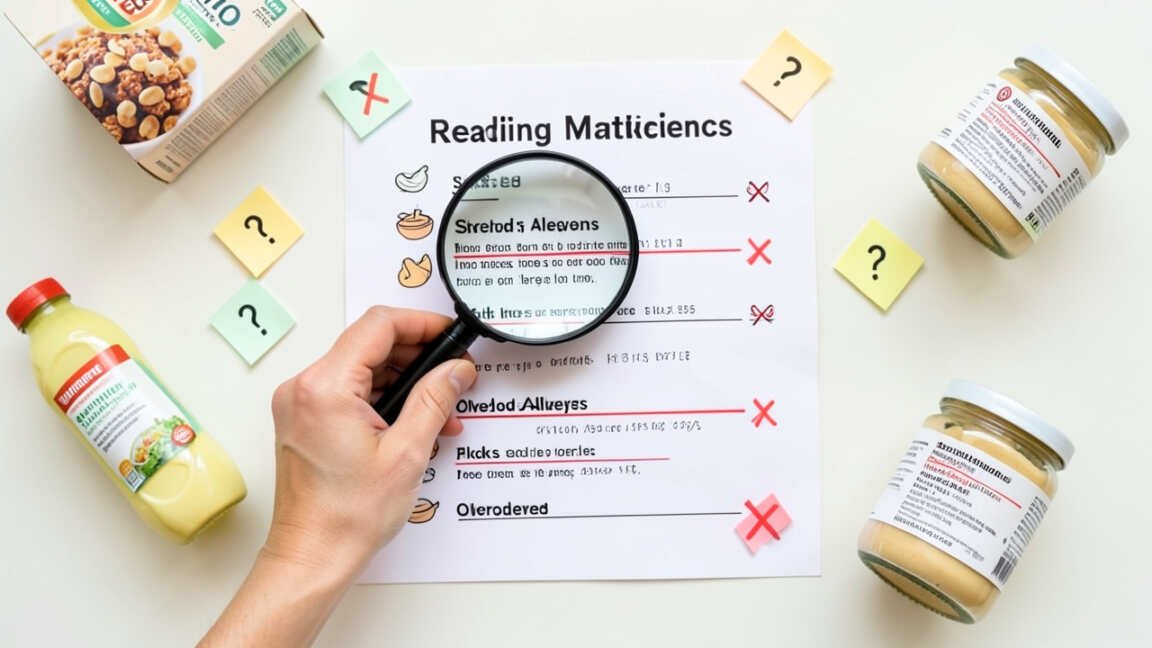
The Food Allergen Labeling and Consumer Protection Act (FALCPA) requires manufacturers to clearly identify the eight major allergens: milk, eggs, fish, shellfish, tree nuts, peanuts, wheat, and soybeans. However, “may contain” warnings are voluntary and not regulated.
Always read the full ingredient list even if the front label says “allergen-free” for one specific allergen. Cross-contamination warnings appear in different formats depending on the manufacturer.
| Allergen Name | Hidden Ingredient Names | Commonly Found In |
|---|---|---|
| Milk | Casein, whey, lactose, ghee, curds | Bread, protein bars, non-dairy creamers |
| Wheat | Durum, semolina, spelt, farro, kamut | Sauces, soups, processed snacks |
| Soy | Lecithin, hydrolyzed soy protein, tofu | Chocolate, canned foods, bread |
| Eggs | Albumin, lecithin, globulin, lysozyme | Pasta, baked goods, marshmallows |
| Peanuts | Arachis oil, monkey nuts, groundnuts | African and Asian sauces, candy |
This table shows how allergens hide behind unfamiliar terms. Memorizing a few of these aliases helps you shop faster and safer.

How Does the Order of Ingredients Affect Your Health?
The order is not just a labeling formality. It directly reflects the nutritional profile of the product. When the first ingredient is a whole food, you can generally assume the product leans toward healthier.
When the first ingredient is sugar or a refined oil, the product is fundamentally a junk food disguised with health claims.
Consider two pasta sauces. Sauce A lists crushed tomatoes as the first ingredient. Sauce B lists soybean oil first.
Even though both appear identical on the shelf, Sauce B is essentially an oil-based product with tomato flavoring. That single observation changes the calorie count, fat content, and overall health impact dramatically.
Research from the World Health Organization (WHO) consistently links high consumption of ultra-processed foods to increased risk of cardiovascular disease, type 2 diabetes, and certain cancers. The ingredient list is your primary defense against accidentally consuming ultra-processed products regularly.
- First ingredient is a whole food (vegetable, fruit, grain, lean protein) = generally positive indicator.
- First ingredient is sugar, oil, or refined flour = proceed with caution.
- Long list with unrecognizable chemical names = heavily processed product.
- Short list with five to eight recognizable ingredients = minimal processing.
Use this mental checklist every time. It takes ten seconds and reveals the true nature of the product before you put it in your cart.
What Are the Most Common Mistakes When Reading Ingredient Lists?
Even well-intentioned shoppers make predictable errors. Knowing these mistakes helps you avoid falling into the same traps.
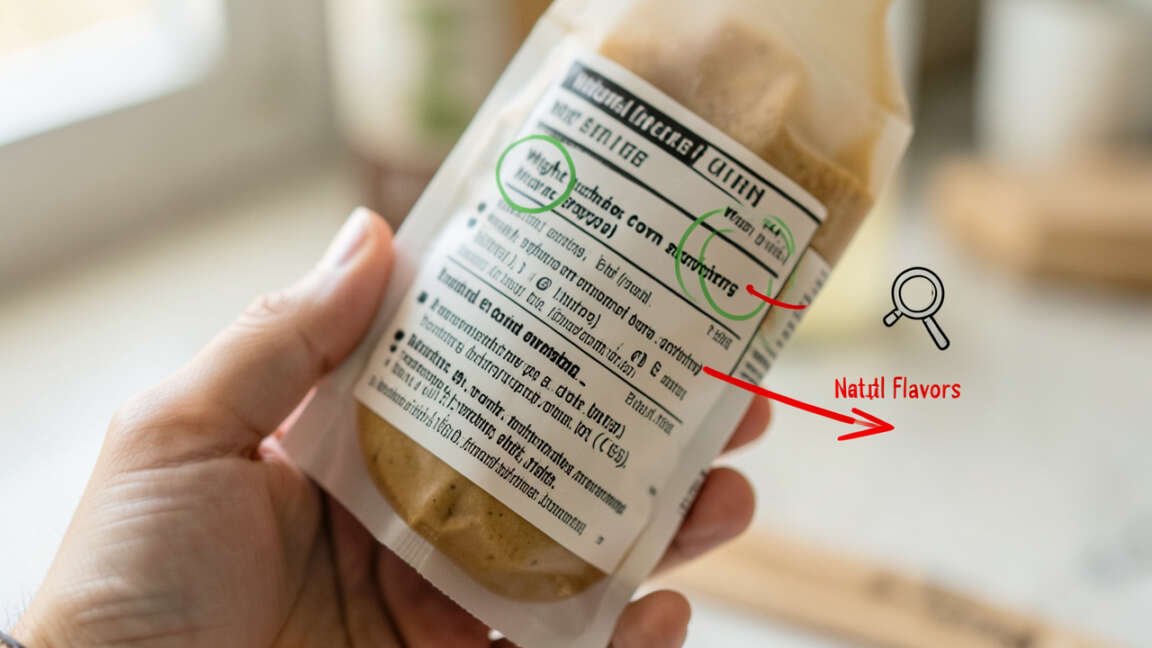
Mistake 1: Trusting the front label. Front labels exist to sell. The back label reveals the truth. A product labeled “natural” can still contain artificial flavors, preservatives, and high-fructose corn syrup.
The word “natural” has no strict legal definition from the FDA for most food products.
Mistake 2: Ignoring serving size. Some packages contain two or three servings, but people eat the entire package. The ingredient list applies to one serving, but your consumption may triple the intake of every listed substance.
Mistake 3: Thinking “no added sugar” means healthy. “No added sugar” means the manufacturer did not put granulated sugar into the product during processing. The product may still contain naturally high levels of sugar or use fruit juice concentrates, which function as added sugar in the body.
- Always check the total sugar on the Nutrition Facts panel, not just the ingredient list.
- Compare the per-serving sugar to the per-container sugar if you are likely to eat the whole thing.
- Look for products where whole fruit or whole grain is the first ingredient, not juice concentrate.
- Remember that “lightly sweetened” and “less sugar” are relative marketing terms with no fixed meaning.
- Check if fiber content is high, as fiber helps slow sugar absorption and indicates a less refined product.
Tip: If a health claim on the front sounds too good to be true, it probably is. Turn the package over and let the ingredient list tell you the real story. This simple habit saves you from marketing traps every single time.
Mistake 4: Overlooking sodium. Sodium appears under many names beyond plain “salt.” Monosodium glutamate (MSG), sodium nitrite, sodium benzoate, disodium phosphate, and sodium alginate all add significant sodium to a product. The American Heart Association recommends no more than 2,300 mg of sodium per day, and most adults consume over 3,400 mg.
How Should You Read an Ingredient List on Skincare and Cosmetics?
The same principles apply to personal care products, but with different concerns. Instead of sugar and sodium, you are watching for harsh chemicals, endocrine disruptors, and skin irritants. The ingredient list format is identical: highest concentration to lowest.
For cosmetics, the FDA requires color additives to be listed by their specific names or FD&C numbers. Fragrance is a special category that manufacturers can list as a single word “fragrance” or “parfum” to protect trade secrets. This loophole means a single “fragrance” entry could contain dozens of undisclosed chemicals.
- Parabens (methylparaben, propylparaben, butylparaben): Preservatives that mimic estrogen; linked to endocrine disruption in multiple studies.
- Phthalates: Often hidden under “fragrance”; associated with reproductive and developmental harm.
- Sodium lauryl sulfate (SLS) and sodium laureth sulfate (SLES): Foaming agents that can irritate sensitive skin and cause allergic reactions.
- Formaldehyde releasers (DMDM hydantoin, quaternium-15): Preservatives that slowly release formaldehyde, a known carcinogen.
- Oxybenzone: Common sunscreen chemical linked to hormone disruption and coral reef damage.
The Environmental Working Group (EWG) maintains a Skin Deep database that rates thousands of personal care ingredients. Cross-referencing unfamiliar ingredients with this free resource gives you an additional safety layer.
Quick Skincare Ingredient List Checklist
- Check the first five ingredients; they make up the bulk of the formula.
- Look for active ingredients clearly stated (SPF level, retinol percentage, etc.).
- Scan for known irritants like alcohol denat, fragrance, and essential oils if you have sensitive skin.
- Note the position of beneficial ingredients; if hyaluronic acid is last, there is almost none in the product.
- Cross-reference any unfamiliar chemical names with EWG or CosDNA databases.

What Are the Best Tools and Resources for Understanding Ingredients?
You do not have to memorize hundreds of chemical names. Several free tools and databases do the heavy lifting for you. Here are the most reliable resources available.
- EWG’s Food Scores and Skin Deep: Rates food and cosmetic ingredients based on health concerns. Free to use online and through their app.
- CosIng Database: The European Commission’s official database of cosmetic ingredients and their functions. Excellent for understanding what each ingredient actually does in a formula.
- FDA GRAS List: The “Generally Recognized As Safe” list maintained by the FDA. Helps you understand which food additives have been officially evaluated.
- Yuka App: Scan a product barcode and receive an instant health rating based on the ingredient list. Popular for both food and cosmetics.
- Open Food Facts: A free, open-source database of food products with ingredient lists, nutritional data, and crowd-sourced reviews.
Using these tools alongside your own knowledge creates a powerful two-layer screening system. The app gives you a quick rating, and your ingredient-reading skills confirm or challenge that rating based on the specific components.
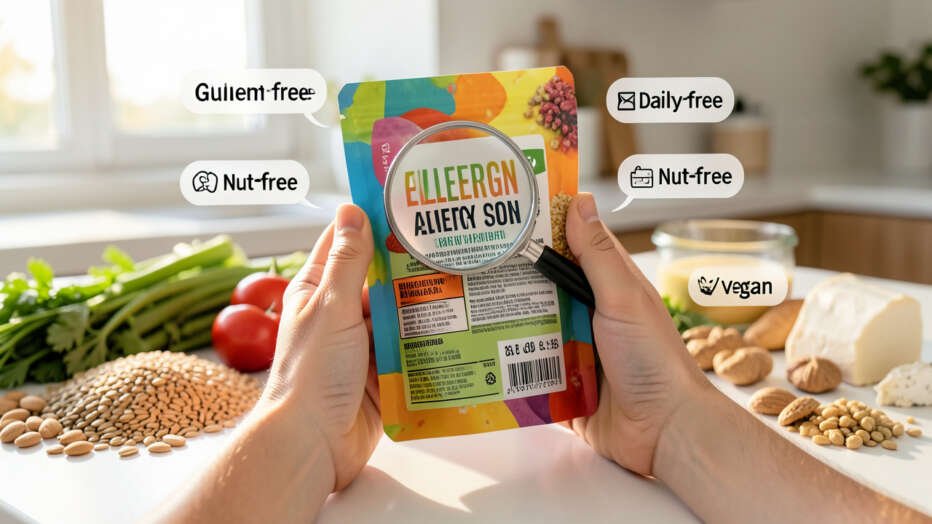
How Does Reading Ingredient Lists Help with Dietary Restrictions?
For people managing allergies, intolerances, or specific dietary needs, reading ingredient lists is not optional; it is a daily safety practice. Celiac disease, lactose intolerance, nut allergies, and vegan or vegetarian lifestyles all depend on accurate ingredient awareness.
The Celiac Disease Foundation estimates that 1 in 100 people worldwide has celiac disease, and many remain undiagnosed. For these individuals, hidden sources of gluten in soy sauce, salad dressings, and processed meats can trigger serious immune responses. Reading every ingredient list every time is the only reliable protection.
Common hidden allergens and dietary conflicts include:
| Dietary Need | Hidden Ingredients to Watch | Safe Alternatives |
|---|---|---|
| Gluten-free / Celiac | Malt, brewer’s yeast, hydrolyzed wheat protein, soy sauce | Tamari, rice-based products, certified GF labels |
| Vegan | Casein, whey, gelatin, carmine, beeswax, shellac | Plant-based proteins, agar-agar, fruit-based colorings |
| Dairy-free / Lactose intolerant | Casein, lactose, whey, milk powder, ghee | Oat milk, coconut cream, nutritional yeast |
| Kosher / Halal | Gelatin (pork-derived), certain animal enzymes, alcohol | Look for certified kosher/halal symbols and verify gelatin source |
| Low-sodium | MSG, sodium benzoate, sodium nitrite, soy sauce, baking soda | Herb-seasoned products, potassium-based salt substitutes |
Keep this table handy as a quick reference when shopping for yourself or a family member with specific needs. The few extra seconds spent reading saves hours of discomfort or a potential medical emergency.
Frequently Asked Questions
Why are ingredients listed in a specific order on product labels?
The FDA and similar regulatory agencies require ingredients to be listed in descending order by weight. This means the ingredient that weighs the most appears first, and the one with the least weight appears last. This system gives consumers an accurate picture of what constitutes the bulk of the product without needing to read the full Nutrition Facts panel.
Can a product be healthy even if the first ingredient is sugar?
In rare cases, yes. If the product is a fruit juice or jam, natural fruit sugar may legitimately be the heaviest ingredient. However, in most packaged snacks, cereals, and beverages, when sugar leads the list, the product is fundamentally a high-sugar item.
Always check the total sugar grams on the Nutrition Facts panel and consider the product’s overall ingredient quality before deciding.
What is the difference between “sugar-free” and “no added sugar”?
“Sugar-free” means the product contains less than 0.5 grams of sugar per serving. “No added sugar” means the manufacturer did not add sugar during processing, but the product may still contain naturally occurring sugars from fruit, dairy, or other ingredients. Neither claim automatically makes a product healthy, so always verify the actual sugar content.
How do I identify hidden allergens when traveling internationally?
Allergen labeling laws vary by country. The European Union, Australia, and Canada have strict allergen disclosure rules similar to the United States. However, some regions have weaker requirements.
Carry a translated allergy card, check for the specific allergen names listed above in any language you encounter, and when in doubt, contact the manufacturer directly through their website before consuming the product.
Are “natural flavors” safe to eat?
“Natural flavors” are derived from plant or animal sources, but they can still undergo significant chemical processing. The FDA defines natural flavors as substances derived from natural sources, but the specific components do not need to be disclosed. For most people, natural flavors pose no immediate health risk.
However, if you have specific sensitivities or want to avoid ultra-processed additives, choosing products with simple, recognizable flavor ingredients is a better approach.
Final Thoughts
Knowing how to read an ingredient list gives you immediate, practical power over every purchasing decision you make. The order of ingredients tells you what a product really is. The specific additives reveal how processed it truly is.
And the allergen information keeps you and your family safe.
Start small. Next time you shop, pick up three products and apply the five-step process outlined above. Within a few trips, scanning ingredient lists will become automatic.
That small habit delivers a big return in health, safety, and confidence in your choices.