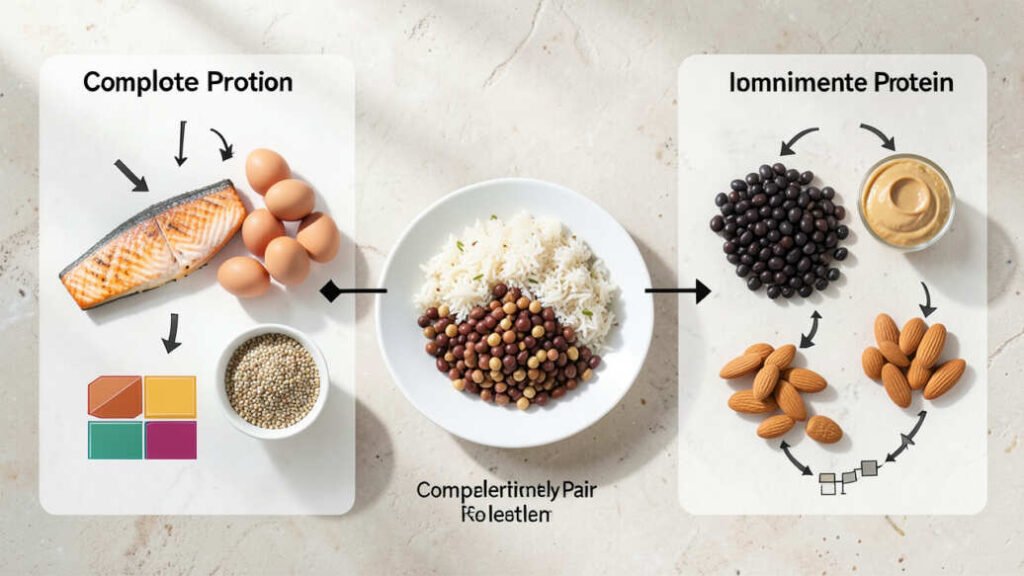
A complete protein contains all nine essential amino acids your body cannot produce, while an incomplete protein lacks one or more of these building blocks. Both protein types are essential for a healthy diet, with many common plant and animal foods serving as sources. Combining different incomplete proteins throughout the day, such as grains with legumes, provides a full amino acid profile with the same nutritional benefits as consuming a complete protein.
Complete vs incomplete protein is a distinction that matters more than most people realize, especially if you follow a plant-based diet or want to optimize your nutrition. Understanding these two categories helps you make smarter food choices and ensures your body gets every amino acid it needs to function at its best.
In this guide, you will learn exactly what separates complete proteins from incomplete ones, which foods fall into each category, and how to combine them for maximum health benefits. We will also break down essential amino acids, debunk common myths, and answer the questions people ask most often.
Simply put, a complete protein contains all nine essential amino acids your body cannot produce on its own, while an incomplete protein lacks one or more of those amino acids. Both types play valuable roles in your diet, and combining incomplete proteins throughout the day gives you the same benefits as eating complete ones.
Key Takeaways
- Complete proteins provide all nine essential amino acids in sufficient amounts, while incomplete proteins are missing at least one.
- Most animal-based foods are complete proteins, but several plant-based options like quinoa and soy qualify as well.
- You can combine incomplete proteins throughout the day to form a complete amino acid profile without eating them at the same meal.
- Essential amino acids cannot be made by the body, so you must get them from food sources.
- Protein quality matters for muscle growth, immune function, and overall health, but variety in your diet solves most deficiency concerns.
What Are Complete Proteins?
A complete protein is any food source that contains all nine essential amino acids in adequate proportions for human health. These amino acids serve as the building blocks your body uses to repair tissue, build muscle, produce enzymes, and support immune function.
Your body can make 11 of the 20 standard amino acids on its own. The other nine must come from your diet. When a single food delivers all nine, it earns the “complete” label.
According to the Harvard T.H. Chan School of Public Health, animal proteins are the most commonly recognized complete sources because their amino acid profiles closely match human needs. However, several plant foods also meet the criteria.
Here are the nine essential amino acids every complete protein must contain:
- Histidine – supports growth, tissue repair, and immune response
- Isoleucine – involved in muscle metabolism and energy regulation
- Leucine – critical for muscle protein synthesis and wound healing
- Lysine – aids calcium absorption and collagen formation
- Methionine – plays a role in metabolism and detoxification
- Phenylalanine – precursor for neurotransmitters like dopamine
- Threonine – supports the immune system and gut health
- Tryptophan – helps produce serotonin and melatonin
- Valine – stimulates muscle growth and energy production
The recommended daily intake for each amino acid varies. Leucine, for example, is needed in higher amounts because of its role in triggering muscle protein synthesis. The World Health Organization publishes specific requirements for each amino acid per kilogram of body weight, which nutritionists use to evaluate protein quality.
Tip: If you eat animal products regularly, you are likely meeting your complete protein needs without extra effort. Focus on variety to also get micronutrients like iron, B12, and zinc.
The concept of protein completeness was first popularized in the 1971 book “Diet for a Small Planet” by Frances Moore Lappé. Early research suggested that complementary proteins needed to be eaten together at the same meal. Current nutritional science has relaxed this view, showing that eating a variety of protein sources throughout the day is sufficient.
What Are Incomplete Proteins?
An incomplete protein is a food that contains some, but not all, of the nine essential amino acids. Typically, one or more amino acids are present in very low quantities or entirely absent. Nutritionists call these low-level amino acids “limiting amino acids.”
This does not mean incomplete proteins are bad or inferior. They remain valuable sources of nutrition, fiber, vitamins, and minerals. You simply need to pair them strategically to cover all your amino acid bases.
Most plant-based foods fall into the incomplete protein category. Here are common examples:
- Grains (rice, wheat, oats, corn) – typically low in lysine
- Legumes (beans, lentils, peanuts) – typically low in methionine and cysteine
- Nuts and seeds (almonds, sunflower seeds, walnuts) – low in lysine
- Vegetables (broccoli, spinach, kale) – contain small amounts of protein, often incomplete
- Whole grains (barley, bulgur, millet) – limited in certain amino acids like threonine
According to a study published in the Journal of the International Society of Sports Nutrition, roughly 60% of adults in Western countries meet their protein needs primarily through animal sources. This means the incomplete protein question is especially important for vegetarians, vegans, and people reducing their meat intake.
Warning: Relying on a single plant-based protein source for all your protein needs can lead to amino acid deficiencies over time. Always aim for a diverse mix of protein-rich plant foods throughout the day.
The good news is that incomplete proteins are highly complementary. Grains are low in lysine but rich in methionine, while legumes are high in lysine but low in methionine. Eating both together or within the same day fills the gaps naturally.
Complete vs Incomplete Protein: Key Differences
Understanding the practical differences between these two categories helps you plan meals more effectively. The table below breaks down the most important distinctions.
| Feature | Complete Protein | Incomplete Protein |
|---|---|---|
| Essential Amino Acids | All 9 present in adequate amounts | Missing or low in 1 or more |
| Common Sources | Meat, fish, eggs, dairy, quinoa, soy | Grains, legumes, nuts, most vegetables |
| Protein Quality Score | High PDCAAS/DIAAS scores | Lower scores individually, higher when combined |
| Muscle Building | Highly effective on its own | Effective when combined with complementary sources |
| Dietary Flexibility | No combining required | Requires strategic pairing for full coverage |
| Fiber Content | Generally low (animal sources) | Often high (plant sources) |
Both complete and incomplete proteins contribute to your total daily protein intake. The American Dietetic Association states that well-planned plant-based diets that combine complementary proteins can meet all nutritional requirements at every stage of life.
The key takeaway is that protein quality is not an either-or situation. You can thrive on a diet rich in incomplete proteins as long as you eat a varied selection of plant foods. Equally, a diet built entirely around complete proteins works well but may lack the fiber and phytonutrients found in plant foods.
How Essential Amino Acids Work in Your Body
To truly understand the complete vs incomplete protein distinction, you need to know how essential amino acids function once consumed. When you eat protein, your digestive system breaks it down into individual amino acids, which are then absorbed into the bloodstream and transported to cells throughout the body.
Each amino acid serves a specific role. Here is a quick reference for how your body uses them:
- Muscle repair and growth – Leucine, isoleucine, and valine (the BCAAs) directly stimulate muscle protein synthesis
- Neurotransmitter production – Tryptophan converts to serotonin, while phenylalanine becomes dopamine
- Immune support – Threonine and histidine help produce antibodies and immune cells
- Connective tissue formation – Lysine and threonine support collagen and elastin production
- Detoxification – Methionine aids liver function and the removal of heavy metals
- Nitrogen balance – All essential amino acids contribute to maintaining a positive nitrogen balance, which is critical for growth and recovery
The concept of the “limiting amino acid” is central here. If even one essential amino acid is missing or insufficient, your body cannot efficiently build the proteins it needs. This is like an assembly line where one missing part halts production entirely.
According to research from the Food and Agriculture Organization (FAO), the Digestible Indispensable Amino Acid Score (DIAAS) is now the preferred method for evaluating protein quality. This system measures how well a protein delivers each essential amino acid based on ileal digestibility rather than fecal digestibility, providing a more accurate picture.
Important: Your body does not store excess amino acids the way it stores fat. You need a consistent daily supply of all nine essential amino acids to maintain proper protein synthesis and prevent muscle breakdown.
Athletes and people recovering from illness or surgery have higher amino acid requirements. Leucine, in particular, is heavily researched for its role in activating the mTOR pathway, which signals the body to build new muscle tissue. Studies suggest consuming 2.5-3 grams of leucine per meal maximizes this response.
Best Sources of Complete Protein
If you want to simplify your protein strategy, focusing on complete protein sources is an efficient approach. These foods deliver all nine essential amino acids in a single serving, eliminating the need for combining.
Here is a table of common complete protein sources with their approximate protein content per serving:
| Food | Serving Size | Protein (g) | Source Type |
|---|---|---|---|
| Chicken breast | 3 oz (85g) | 26g | Animal |
| Salmon fillet | 3 oz (85g) | 22g | Animal |
| Eggs (whole) | 2 large | 12g | Animal |
| Greek yogurt | 1 cup | 17g | Animal |
| Quinoa (cooked) | 1 cup | 8g | Plant |
| Tofu (firm) | 1/2 cup | 20g | Plant |
| Tempeh | 1 cup | 31g | Plant |
| Edamame | 1 cup | 18g | Plant |
Soy-based foods like tofu, tempeh, and edamame are standout plant-based complete proteins. Quinoa and buckwheat are grain-like seeds that also qualify. Hemp seeds and amaranth are additional plant sources that deliver all nine essential amino acids.
A 2019 report from the National Institutes of Health found that animal-based proteins generally have higher DIAAS scores than plant-based proteins. However, soy protein isolate scored comparably to many animal proteins, making it an excellent option for those avoiding meat.
Tip: If you eat eggs, they are one of the most affordable and versatile complete protein sources available. One egg provides about 6 grams of high-quality protein with excellent bioavailability.
How to Combine Incomplete Proteins for a Complete Profile
Combining incomplete proteins is easier than most people think. You do not need to eat them in the same meal, though doing so can be convenient. The key is consuming a variety of protein-rich plant foods over the course of a day.
Here are the most effective complementary protein pairings:
- Grains + Legumes – rice and beans, peanut butter on whole wheat bread, lentil soup with bread
- Legumes + Seeds – hummus (chickpeas and tahini/sesame), trail mix with peanuts and sunflower seeds
- Grains + Dairy – cereal with milk, macaroni and cheese, yogurt with granola
- Legumes + Nuts – bean salad with walnuts, lentil curry with cashews
- Vegetables + Grains + Legumes – stir-fry with tofu, vegetables, and brown rice
The classic pairing of rice and beans is a perfect example. Rice is low in lysine but adequate in methionine, while beans are rich in lysine but low in methionine. Together, they create a protein profile that rivals meat in amino acid completeness.
According to the Academy of Nutrition and Dietetics, the outdated idea that complementary proteins must be consumed at the same meal has been debunked. Your body maintains a circulating pool of amino acids that it can draw from over several hours. Eating a diverse range of protein sources within the same day is sufficient.
Here is a practical daily meal plan showing how easy it is to get complete protein coverage from plant sources:
| Meal | Foods | Protein Pairing |
|---|---|---|
| Breakfast | Oatmeal with almond butter and hemp seeds | Grain + Nut + Seed |
| Lunch | Black bean tacos with whole wheat tortillas and avocado | Legume + Grain |
| Snack | Hummus with whole grain pita | Legume + Seed + Grain |
| Dinner | Lentil curry with brown rice and steamed broccoli | Legume + Grain + Vegetable |
This combination approach works because your body recycles amino acids and assembles complete proteins over time. You do not need to stress about hitting every amino acid at every meal.
Do You Need Complete Proteins at Every Meal?
This is one of the most common questions surrounding the complete vs incomplete protein debate. The short answer is no. Current evidence suggests that eating a balanced variety of protein sources throughout the day is sufficient for most healthy adults.
Your body pools amino acids from the foods you eat over a 24-hour period. If breakfast is low in lysine but lunch makes up for it, your body still has what it needs to function properly.
However, certain groups may benefit from paying closer attention to protein completeness at individual meals:
- Athletes and bodybuilders – higher leucine intake per meal (2.5g+) maximizes muscle protein synthesis
- Older adults (65+) – age-related anabolic resistance means they need more protein per meal to stimulate muscle growth
- Pregnant and breastfeeding women – increased protein demands make quality and completeness more important
- People recovering from surgery or illness – wound healing and tissue repair require a steady supply of all essential amino acids
- Strict vegans – without any animal products, more intentional planning is needed to ensure adequate amino acid intake
The International Society of Sports Nutrition recommends that athletes consume 1.4 to 2.0 grams of protein per kilogram of body weight daily. For these individuals, prioritizing complete protein sources or well-combined meals at each eating occasion can be advantageous.
Important: The “protein combining at every meal” myth has discouraged many people from adopting plant-based diets. You do not need to obsessively pair foods at each sitting. Daily variety is the real goal.
For the general population, simply eating a range of protein foods across meals and snacks is enough. Focus on including legumes, grains, nuts, seeds, and either animal or soy proteins regularly.
Who Should Pay Attention to Protein Quality?
While most people in developed countries get enough total protein, the quality of that protein varies significantly based on dietary patterns. Understanding complete vs incomplete protein becomes particularly important for specific populations.
Here is who benefits most from paying attention to protein quality:
- Vegetarians and vegans – plant-based diets are rich in incomplete proteins, so strategic combining ensures complete amino acid intake
- People with food allergies – eliminating major protein sources (like eggs, dairy, or soy) can create amino acid gaps
- Individuals on calorie-restricted diets – eating fewer calories means fewer opportunities to consume all essential amino acids
- Children and adolescents – growing bodies have higher amino acid requirements per pound of body weight
- People with digestive disorders – conditions like celiac disease, Crohn’s disease, or IBS can impair protein absorption
- Elderly individuals – reduced stomach acid and digestive enzyme production can lower amino acid absorption rates
The World Health Organization estimates that approximately 1 billion people worldwide suffer from protein deficiency. While this is most prevalent in developing nations, suboptimal protein quality is a concern even in wealthier countries among those following restrictive diets.
A practical step is to track your protein sources for a few days and check whether you are eating from multiple food groups. If most of your protein comes from a single category, expanding your options can significantly improve amino acid coverage.
Tip: Apps like Cronometer or MyFitnessPal track individual amino acids, not just total protein. Use them to verify you are meeting your needs for all nine essential amino acids.
Blood tests that measure amino acid levels are also available through functional medicine practitioners. These can reveal specific deficiencies that dietary changes alone might not address.
Frequently Asked Questions
Is whey protein a complete or incomplete protein?
Whey protein is a complete protein. It contains all nine essential amino acids in high concentrations and is particularly rich in leucine, making it one of the most effective protein sources for muscle building. Whey is derived from milk and has a DIAAS score well above 1.0, indicating excellent digestibility and amino acid quality.
Can you build muscle with only incomplete proteins?
Yes, you can build muscle with incomplete proteins as long as you combine complementary sources throughout the day. Many successful bodybuilders and athletes thrive on plant-based diets. The key is consuming enough total protein and ensuring all essential amino acids are represented in your overall daily intake.
Is quinoa really a complete protein?
Quinoa does contain all nine essential amino acids, which technically makes it a complete protein. However, it is relatively low in leucine compared to animal sources. While quinoa is an excellent addition to a plant-based diet, relying solely on quinoa for protein would require eating large quantities to meet amino acid needs.
How much protein do I need per day?
The Recommended Dietary Allowance (RDA) for protein is 0.8 grams per kilogram of body weight for sedentary adults. Athletes and active individuals typically need 1.2 to 2.0 grams per kilogram. Older adults may benefit from 1.0 to 1.2 grams per kilogram to counteract age-related muscle loss.
These amounts should come from a variety of complete and complementary sources.
Do vegetables count as protein sources?
Most vegetables contain small amounts of protein and are considered incomplete. However, some vegetables like broccoli, spinach, Brussels sprouts, and green peas contribute meaningful protein to your overall intake. Green peas, for example, provide about 8 grams of protein per cup and can serve as a supplementary protein source when combined with grains or legumes.
Final Thoughts
Understanding the difference between complete and incomplete protein empowers you to make better dietary choices, whether you eat animal products or follow a fully plant-based lifestyle. Complete proteins offer convenience by delivering all nine essential amino acids in one food, while incomplete proteins can be strategically combined to achieve the same nutritional outcome. The most important factor is eating a diverse range of protein-rich foods each day so your body has every building block it needs for muscle repair, immune function, and overall health.