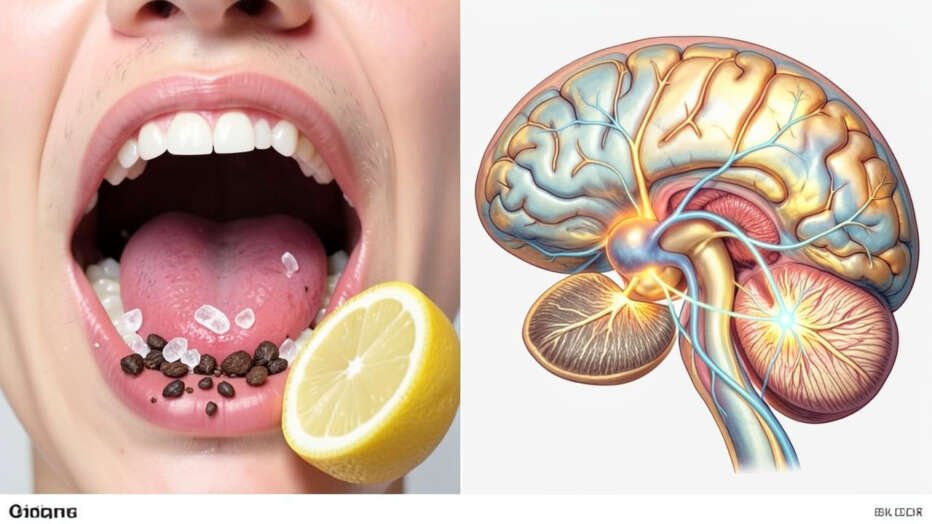
Smell and taste are closely connected because these two senses merge in the brain to create the unified perception of flavor. The tongue detects only five basic tastes, while the nose identifies thousands of aromas, with olfactory receptors capturing volatile compounds that travel via retronasal olfaction from the mouth to the nasal cavity. Consequently, a loss of smell drastically diminishes flavor perception, making most food taste flat and indistinguishable.
Smell and taste work as a team to shape how you experience food, drinks, and the world around you. This post breaks down the science behind their connection, why flavor falls apart when you’re congested, and how to protect both senses.
Simply put, smell and taste are closely connected because your tongue only detects five basic tastes, while your nose detects thousands of aromas. Your brain fuses these signals into a single perception called flavor. Without smell, most food tastes flat, dull, and nearly indistinguishable.
Key Takeaways
- Smell and taste are separate senses that merge in the brain to create flavor.
- Your nose drives roughly 80% of what you perceive as taste.
- Smell and taste connect through retronasal olfaction, where aromas travel from the mouth up to the nasal cavity.
- A sudden loss of smell, even without a stuffy nose, deserves medical attention.
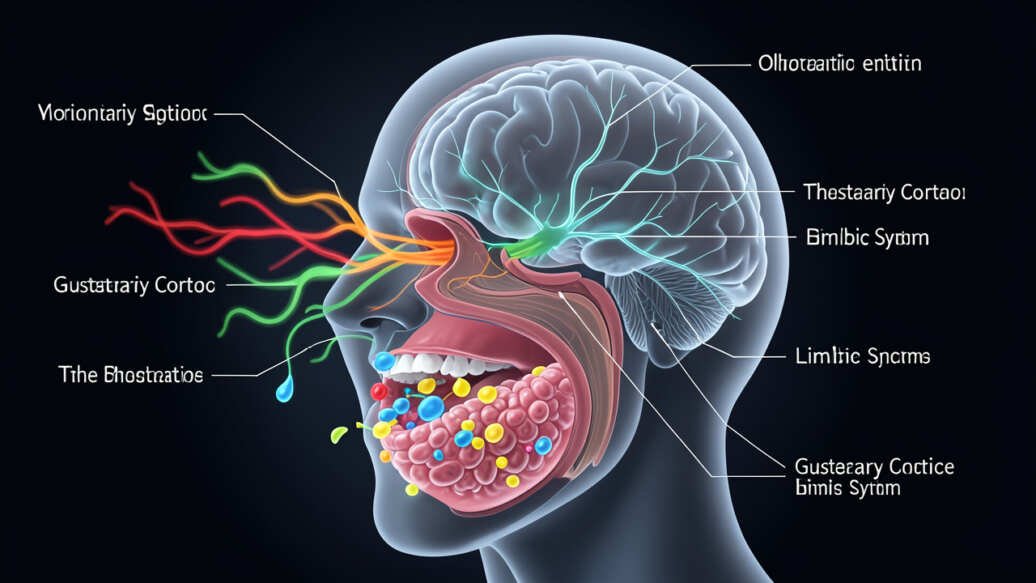
What Are Smell and Taste, and How Are They Different?
Taste is the sensory system that detects five basic qualities on your tongue: sweet, sour, salty, bitter, and umami. You have roughly 10,000 taste buds, mostly on your tongue, with a few on the roof of your mouth and the back of your throat. Each taste bud contains receptor cells that respond to specific chemical compounds in the food you eat.
Smell is far more complex. Your nose is lined with millions of olfactory receptor neurons, and a landmark study published in the journal Science found that humans can discriminate at least one trillion different odors. That makes your nose one of the most sensitive chemical detection systems in the body.
While taste deals in broad categories, smell works in fine detail.
| Feature | Taste |
|---|