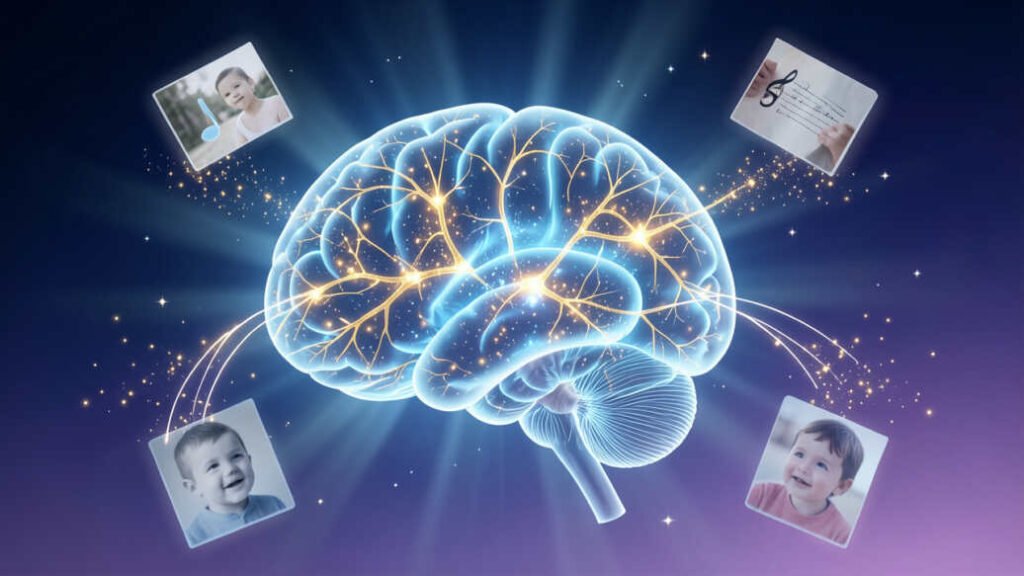
Memories are formed through a three-stage neural process of encoding, consolidation, and retrieval, managed by distributed brain networks. The hippocampus acts as a critical hub, encoding new information and coordinating its transfer to the cortex for long-term storage. Recall is an active reconstruction, not a perfect playback, meaning memories are pieced together each time and can evolve over time.
How memories are formed, stored, and recalled in the brain is one of the most fascinating questions in modern neuroscience. This post breaks down the science of memory in plain language, from the first spark of encoding to the moment you pull a memory back into awareness.
Simply put, memories form through a three-stage process: encoding, consolidation, and retrieval. The hippocampus acts as your brain’s memory hub, transferring information into long-term storage across distributed networks. No single spot holds a memory. Instead, the brain reconstructs it piece by piece every time you recall it.
Key Takeaways
- Memory formation relies on three core steps: encoding, consolidation, and retrieval.
- The hippocampus is essential for forming new memories and linking them to the cortex for long-term storage.
- Memories are recalled through reconstruction, not perfect replay, which is why they change over time.
- Sleep and active repetition strengthen the neural pathways that keep memories stable.
- Forgetting is a normal biological process, not a sign that your brain is broken.

What Is Memory? The Brain’s Personal Filing System
Memory is not a single thing. It is a collection of systems that work together to record, store, and recover information. Think of it as your brain’s personal filing system, but one that continuously reorganizes itself based on new experiences.
Neuroscientists define memory as the brain’s ability to encode, store, and retrieve information. Every experience you have changes your brain at the cellular level. This capacity for change is called neuroplasticity, and it is the foundation of all learning and memory.
Your brain does not store memories like a computer saves files. Instead, it distributes fragments of each memory across networks of neurons. Recalling something means reactivating those networks so the fragments come together.
- Memory involves multiple brain regions, including the hippocampus, amygdala, prefrontal cortex, and cerebellum.
- According to research published in PNAS, the human brain contains roughly 86 billion neurons.
- Each neuron can form thousands of connections, called synapses, with neighboring neurons.
- Memory formation physically alters the brain’s structure through a process called synaptic plasticity.
- Memories are never stored as exact copies, they are reconstructed every time you access them.
- Different types of memory rely on different brain circuits and last for different lengths of time.
Understanding this big-picture view helps you see why memory feels both reliable and fragile. It is powerful because it shapes your identity, and fragile because every recall is a fresh reconstruction.
How Are Memories Formed? The Encoding Process
Encoding is the first stage of memory formation. It happens when your senses take in new information and your brain translates it into a neural code it can store. Attention controls how well this works.
If you are distracted, encoding is weak, and the memory fades fast.
Emotion also plays a major role. The amygdala, a small structure deep in the brain, tags emotionally charged experiences as important. That is why you clearly remember a car accident or a wedding day, but not a random Tuesday commute.
- Sensory input: Your eyes, ears, and other senses capture raw information.
- Attention filter: The brain decides what deserves deeper processing.
- Working memory: Information is held briefly in the prefrontal cortex, usually for only 15 to 30 seconds.
- Consolidation: The hippocampus stabilizes the trace and moves it into long-term storage.
One of the key processes behind encoding is long-term potentiation, or LTP. When neurons fire together repeatedly, their connections grow stronger and more efficient. This is the cellular basis of learning.
| Stage | What Happens | Brain Region |
|---|---|---|
| Encoding | Sensory input becomes a neural trace | Sensory cortex, prefrontal cortex |
| Consolidation | Memory stabilizes and moves to long-term storage | Hippocampus |
| Storage | Distributed networks hold the memory long-term | Cerebral cortex |
| Retrieval | Cues reactivate the network to bring the memory back | Prefrontal cortex, hippocampus |
Encoding quality depends heavily on how you engage with information. Repeating facts, making associations, and attaching meaning all improve the chances that a memory will survive.
Tip: To encode a memory more deeply, connect new information to something you already know. This is called elaborative encoding, and it dramatically boosts retention.
Where Does the Brain Store Memories?
If you ask most people where memories live, they point to the brain as a whole. That answer is closer to the truth than any single location. Research shows that memory storage is distributed across multiple regions, with the hippocampus acting as the central coordinator.
The hippocampus does not hold memories forever. Over time, it helps transfer memories to the cortex for permanent storage. This process is called systems consolidation, and it can take weeks, months, or even years to complete.
| Brain Region | Primary Memory Role |
|---|---|
| Hippocampus | Forms new memories and links them to cortex networks |
| Prefrontal cortex | Handles working memory and guides retrieval |
| Amygdala | Adds emotional weight to memories |
| Cerebellum | Stores procedural memories like riding a bike |
| Cerebral cortex | Holds long-term semantic and episodic memories |
Because storage is distributed, damage to one area rarely erases an entire memory. A person with hippocampal damage may struggle to form new memories yet still recall old ones clearly. This pattern appears in conditions like Alzheimer’s disease.
There is no single “memory file cabinet” in the brain. Instead, think of each memory as a web of connections spread across regions that handle sights, sounds, smells, emotions, and meaning.
Important: The brain stores the gist of an experience, not every detail. This is why two people can witness the same event and remember it differently.
How Does the Brain Recall Memories?
Recall, or retrieval, is the process of bringing stored information back into conscious awareness. Many people assume recall works like pressing play on a recording. In reality, your brain rebuilds the memory from fragments each time.
The prefrontal cortex manages this reconstruction. It sends signals to the hippocampus, which then reactivates the scattered cortical networks holding the memory’s pieces. The result feels like a single coherent scene, but it is actually a fresh assembly.
- Retrieval cue: A smell, sound, image, or internal thought triggers the search.
- Pattern completion: The hippocampus fills in missing pieces to reconstruct the full memory.
- Reconsolidation: The reactivated memory is stored again, often with new details added.
Context matters a great deal. Studies show that recalling information is easier when you are in the same environment where you learned it. This is called context-dependent memory, and it is why studying in the exam room can improve test performance.
Retrieval also strengthens memories. Every time you successfully recall something, you reinforce the neural pathway, making the memory easier to access in the future. This effect is known as the testing effect, and it is one of the most reliable findings in memory research.
According to the American Psychological Association, working memory can hold only about four to seven items at once. That limited capacity is why you can remember a phone number long enough to dial it, but forget it moments later.
Tip: Practice active recall instead of passive rereading. Quizzing yourself forces your brain to rebuild memories, which makes them stronger and more durable.

Why Do We Forget? The Science of Memory Loss
Forgetting can feel frustrating, but it is a natural and necessary part of how memory works. Your brain would collapse under the weight of every detail you ever experienced, so it prunes what it does not use.
In the 1880s, psychologist Hermann Ebbinghaus mapped this process with the famous forgetting curve. He found that people lose roughly 50% of new information within one hour and up to 70% within 24 hours. Without repetition or strong emotional meaning, decay happens fast.
- Decay: Neural traces weaken over time when they are not reactivated.
- Interference: New information pushes out older memories, or old memories block new ones.
- Retrieval failure: The memory exists but the right cue is missing.
- Motivated forgetting: Your brain actively suppresses painful or traumatic experiences.
- Encoding failure: Information never made it into storage because attention was low.
Sleep plays a major role in preventing memory loss. According to the National Institutes of Health, slow-wave sleep is critical for transferring memories from the hippocampus to the cortex. Skimping on sleep disrupts this consolidation, which is why a poor night of rest leaves you foggy.
Warning: Chronic sleep deprivation does more than make you forgetful. It can impair the hippocampus’s ability to form new memories at all, and the effects may accumulate over time.
Normal forgetting is not the same as pathological memory loss. If forgetfulness interferes with daily life, appears suddenly, or worsens rapidly, it is worth discussing with a doctor. Age-related memory changes exist, but major red flags deserve professional attention.
How to Improve Memory Formation and Recall
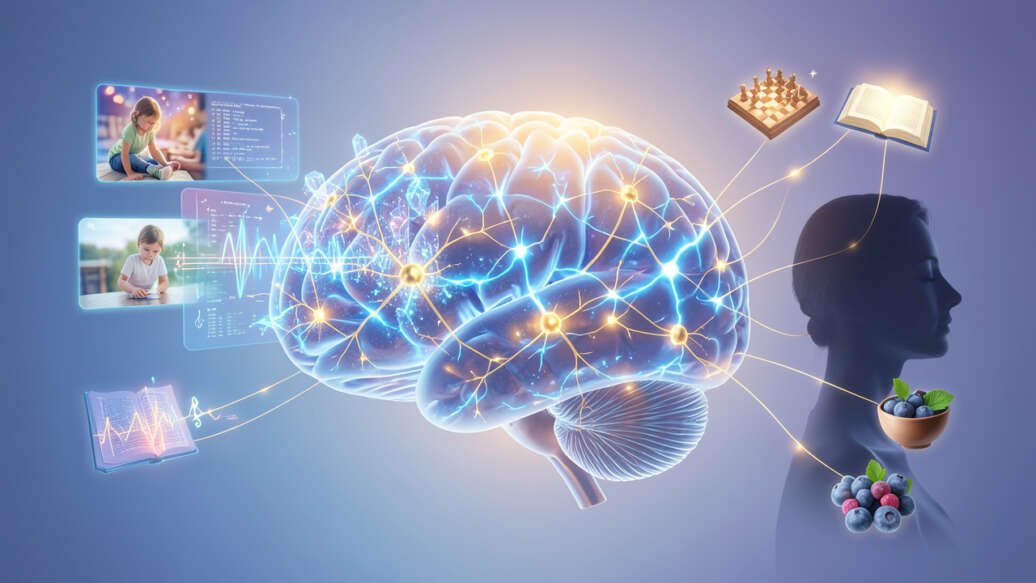
The good news is that memory is trainable. You can improve both memory formation and recall by adopting habits that support the brain’s natural processes. Consistency beats intensity, and small daily choices compound over time.
Sleep is the single most powerful memory tool. During deep sleep, the hippocampus replays the day’s experiences and sends them to the cortex for permanent storage. Studies funded by the National Institutes of Health show that people who sleep after learning perform significantly better on recall tests than those who stay awake.
- Get 7 to 9 hours of sleep: Prioritize slow-wave sleep for memory consolidation.
- Exercise regularly: Aerobic activity promotes blood flow and releases brain-derived neurotrophic factor, which supports neuron health.
- Use spaced repetition: Review material at increasing intervals to combat the forgetting curve.
- Chunk information: Group related items into meaningful units, like organizing a list into categories.
- Teach someone else: Explaining a concept forces you to organize and clarify what you know.
- Reduce multitasking: Focused attention creates stronger encoded memories.
- Manage stress: Chronic stress floods the brain with cortisol, which damages the hippocampus over time.
Diet also matters. Omega-3 fatty acids, antioxidants, and B vitamins support brain function. Hydration is just as important, even mild dehydration can impair short-term memory and concentration.
Tip: Use the 20/5 rule. Study for 20 minutes, then take a 5-minute break. Brief breaks give your brain time to consolidate what you just learned.
Mindfulness and meditation also improve memory by training attention. Since attention is the gateway to encoding, stronger focus leads directly to better recall down the road.
Common Myths About Memory You Should Stop Believing
Popular culture has shaped some inaccurate beliefs about memory. These myths can be harmless, but some are dangerous, especially when they influence legal testimony, therapy, or how you judge your own brain.
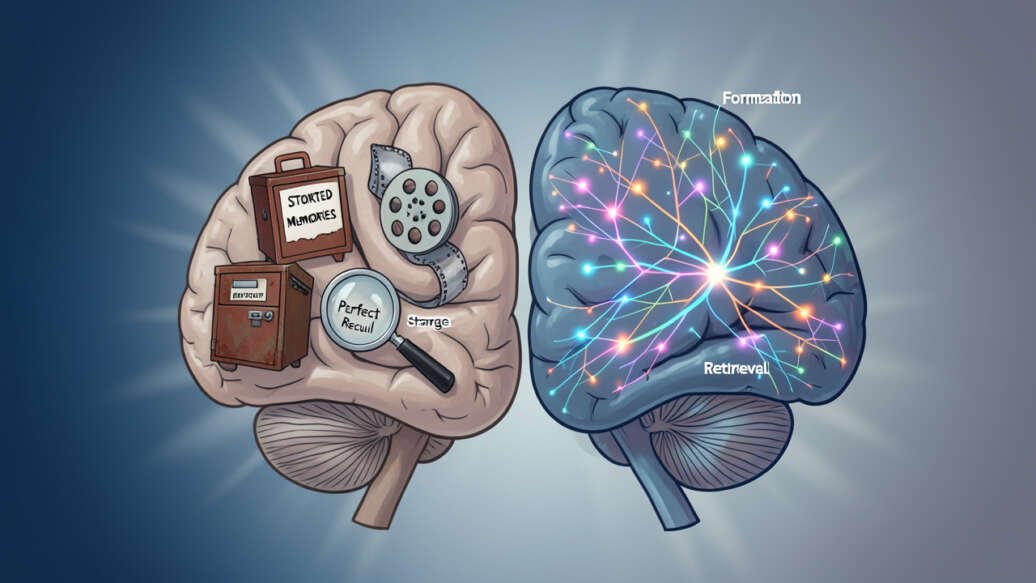
The most persistent myth is that memory works like a video recorder. It does not. Your brain is a creative storyteller that reconstructs the past with each retrieval, which means memories can be edited, embellished, or even planted.
- Myth: Older adults cannot form new memories. Aging slows processing, but the brain remains plastic throughout life.
- Myth: Hypnosis recovers perfect memories. Hypnosis increases confidence but not accuracy, and can even create false memories.
- Myth: “Photographic memory” is real. No one stores perfect copies of everything they see.
- Myth: Forgetting means the memory is gone. Often the memory exists but the retrieval cue is missing.
- Myth: A confident recollection is an accurate one. Memory confidence and memory accuracy are weakly correlated.
Warning: Eyewitness memory is notoriously unreliable. According to the Innocence Project, mistaken eyewitness identification played a role in over 60% of wrongful convictions later overturned by DNA evidence.
Understanding these myths matters because they affect real lives. Courtrooms, therapy sessions, and everyday arguments all depend on how much faith we place in memory. Better awareness leads to healthier expectations.
Memory is not a perfect archive, and it was never designed to be. Accepting its imperfections allows you to use it more wisely instead of fighting its nature.
Frequently Asked Questions
What part of the brain is responsible for forming new memories?
The hippocampus is the primary brain region for forming new memories. It takes in information from working memory and consolidates it into long-term storage. Without a functioning hippocampus, people struggle to form new memories, a condition called anterograde amnesia.
How long does it take for a memory to become permanent?
Consolidation begins within minutes but continues for weeks, months, or even years. Sleep is critical during this window, as the brain replays and strengthens the memory. A memory becomes more stable each time it is recalled and reconsolidated.
Can forgotten memories be recovered?
Some forgotten memories can resurface when the right retrieval cue appears, like a song or a smell. However, many memories are lost because they were never properly encoded or consolidated. Recovered memories are also reconstructions, so they are not guaranteed to be accurate.
Why do emotional memories feel stronger than ordinary ones?
The amygdala tags emotionally charged experiences as important and boosts the activity of memory-related brain regions. This creates a stronger, more vivid trace. Adrenaline and stress hormones during the event also enhance this effect.
Does sleep really help memory?
Yes. During sleep, especially slow-wave sleep, the brain replays recent experiences and transfers them from the hippocampus to the cortex. According to the National Institutes of Health, sleep deprivation impairs consolidation, which is why a full night of rest is essential for learning.
Final Thoughts
How memories are formed, stored, and recalled in the brain comes down to three processes: encoding, consolidation, and retrieval. The brain builds memories through distributed networks, with the hippocampus as the central coordinator. You can strengthen those networks by sleeping well, paying attention, and actively practicing recall.
Every memory you keep is a reconstruction, but that does not make it any less valuable, it makes it uniquely yours.