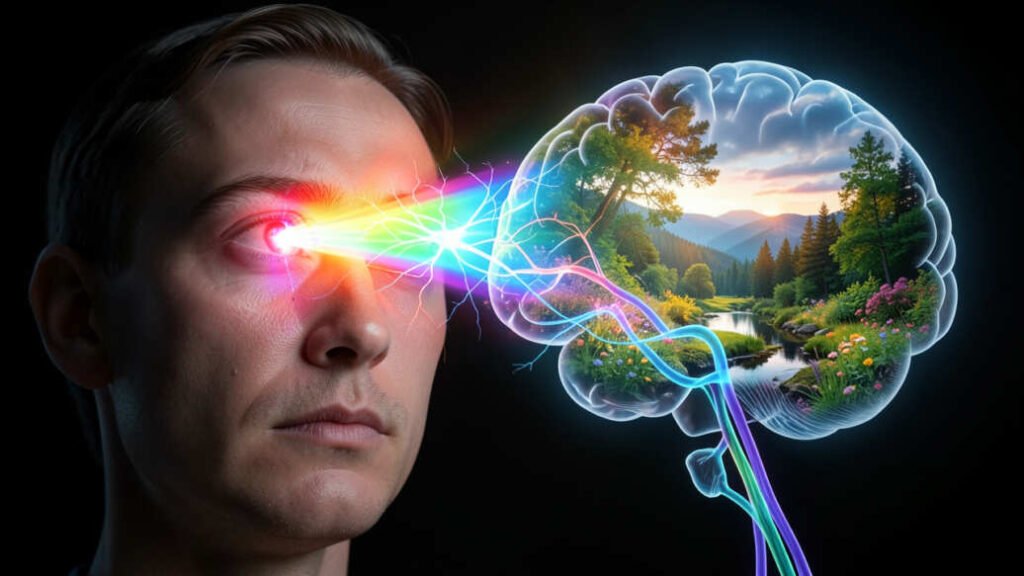
The brain turns light into what you see by converting photons into electrical signals in the retina's rods and cones, then routing these signals via the optic nerve to the brain's lateral geniculate nucleus and finally to the primary visual cortex for processing. This entire 6-step neural pathway constructs a detailed 3D image from raw light data in just milliseconds, using parallel processing for color, motion, and shape. The critical takeaway is that vision is an active construction of your brain, not a passive recording from your eyes, highlighting how much perception happens internally.
Your brain turns light into what you see in a split second, using billions of neurons working in perfect sequence. This post breaks down the entire visual process step by step, from photons entering your eye to the colorful 3D world your mind builds. Understanding this pathway reveals just how much of your vision actually happens inside your head.
Simply put, the brain turns light into what you see by converting photons into electrical signals in the retina, routing them through the optic nerve and thalamus, and finally reconstructing an image in the visual cortex. Every step happens in milliseconds, and most of the picture you perceive is actually built by your brain, not just your eyes.
Key Takeaways
- Your brain turns light into what you see, not your eyes alone. The eyes capture light, but the brain constructs the image.
- The retina contains about 120 million rods and 6 million cones that convert light into electrical signals.
- Visual information travels through the optic nerve to the lateral geniculate nucleus and then to the primary visual cortex in the occipital lobe.
- The brain turns light into what you see using parallel pathways for color, motion, shape, and depth, which is why visual illusions can fool you.
- Protecting your eyes and brain through diet, sleep, and regular checkups helps maintain sharp vision at any age.
What Is the Visual System and How Does It Work?
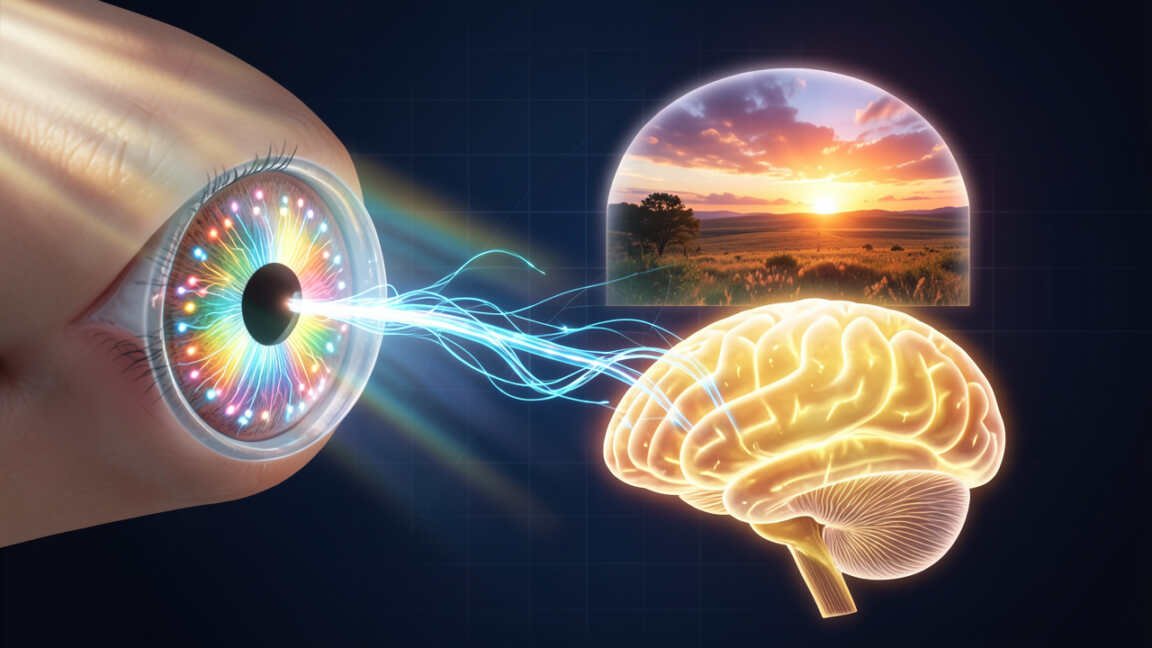
The visual system is the complete network of structures that lets you perceive the world. It starts at the front of your eye and ends in the back of your brain, specifically in the occipital lobe. Every part must work together, or your experience of sight breaks down.
Your eyes act as the capture device. They focus light, adjust brightness, and convert photons into signals. But the final picture is assembled in the brain, where most of the real work takes place.
That is why two people can look at the same scene and see it differently.
- Cornea: bends incoming light and provides most of the eye’s focusing power.
- Pupil and iris: control how much light enters, like the aperture of a camera.
- Lens: fine-tunes focus so images land sharply on the retina.
- Retina: a light-sensitive tissue lined with rods and cones at the back of the eye.
- Optic nerve: carries electrical signals from each eye to the brain.
- Lateral geniculate nucleus: a relay station in the thalamus that organizes incoming visual data.
- Primary visual cortex: the first cortical area that reconstructs the image and makes it conscious.
According to the World Health Organization, at least 2.2 billion people have a vision impairment. Many of these cases involve the eye itself, but the brain also shows measurable changes when visual input degrades. That connection is why scientists now talk about vision as a whole-brain activity rather than a simple eye function.
How Does the Brain Turn Light Into What You See? The 6-Step Pathway
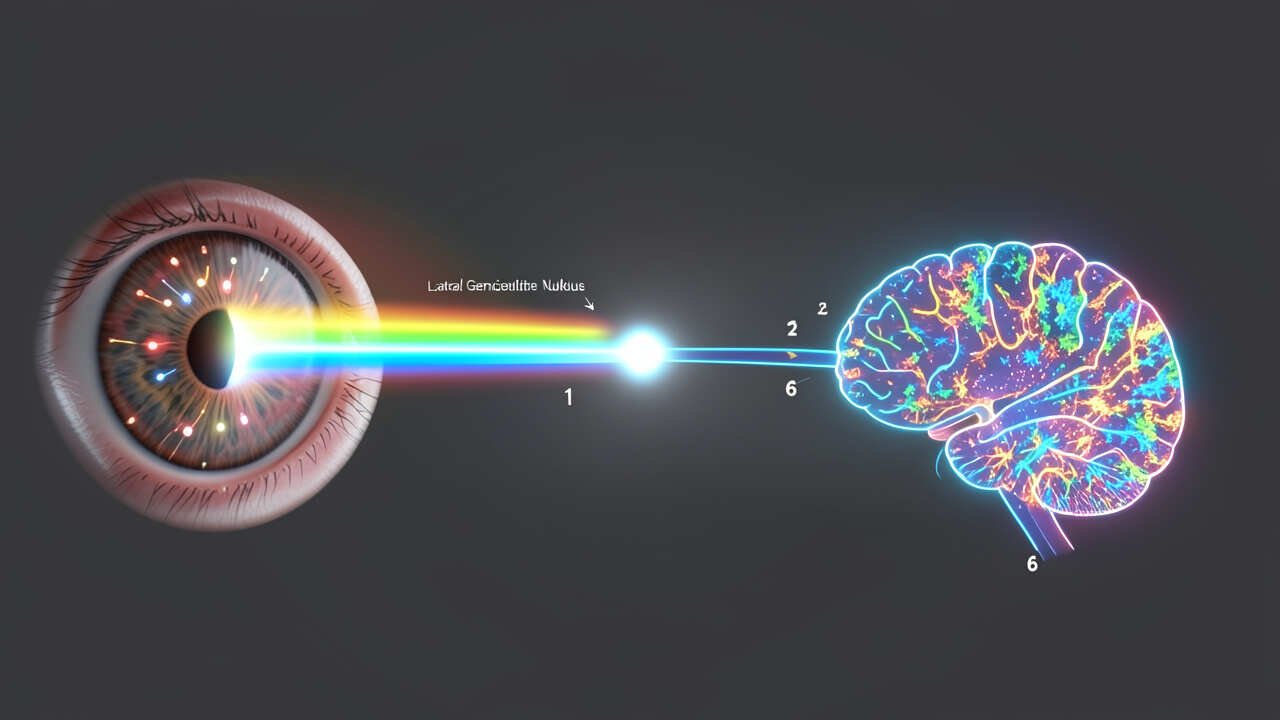
The journey from light to perception follows a fixed sequence. Every step happens automatically within about a tenth of a second, though some processing starts even faster. Here are the six stages your brain turns light into what you see through every single time you open your eyes.
- Light enters the eye. Photons pass through the cornea and pupil, and the lens focuses them into a crisp image on the retina.
- Photoreceptors react. Rods and cones absorb the photons and begin a chemical cascade that creates electrical activity.
- Retinal preprocessing. Bipolar cells and amacrine cells sharpen edges, detect motion, and compress the signal.
- Optic nerve transmission. Thousands of retinal ganglion cells bundle their axons to form the optic nerve and send signals toward the brain.
- Thalamic routing. The lateral