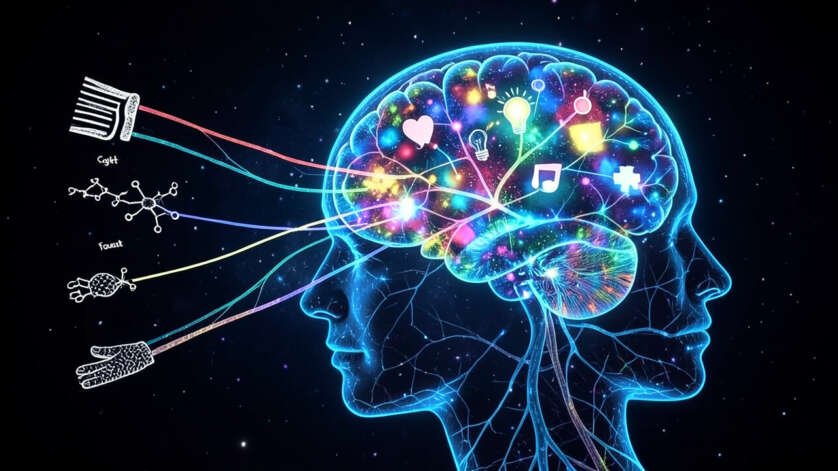
The brain converts sensory inputs into experience through a three-stage process of transduction, transmission, and interpretation. While each sense is processed in dedicated brain regions, a unified conscious experience emerges from their integrated activity. This active construction of perception using memory and context explains why experience feels immediate yet is profoundly shaped by our expectations and learning.
How does the brain turn sight, sound, smell, taste and touch into experience? This question sits at the heart of neuroscience, psychology, and philosophy.
Every moment, raw physical signals flood in from your environment. Yet you do not perceive fragments. You perceive a smooth, unified, meaningful world.
This post traces the path from sensory receptor to conscious experience, one sense at a time.
Simply put, the brain converts each sensory input through three stages: transduction, transmission, and interpretation. Specialized receptor cells turn physical energy into electrical signals. Those signals travel along dedicated neural pathways to specific brain regions. The brain then layers in memory, attention, and context to build your conscious experience.
Key Takeaways
- How does the brain turn sight, sound, smell, taste and touch into experience? It starts with transduction, where sensory receptors convert physical energy into electrical signals.
- Each sense has dedicated brain regions, but experience emerges when those regions work together.
- Perception is active, not passive. The brain constructs experience using context, memory, and expectation.
- Sensory processing happens in milliseconds, yet it feels seamless and immediate.
- Understanding this process can improve learning, focus, and help you manage sensory overload.
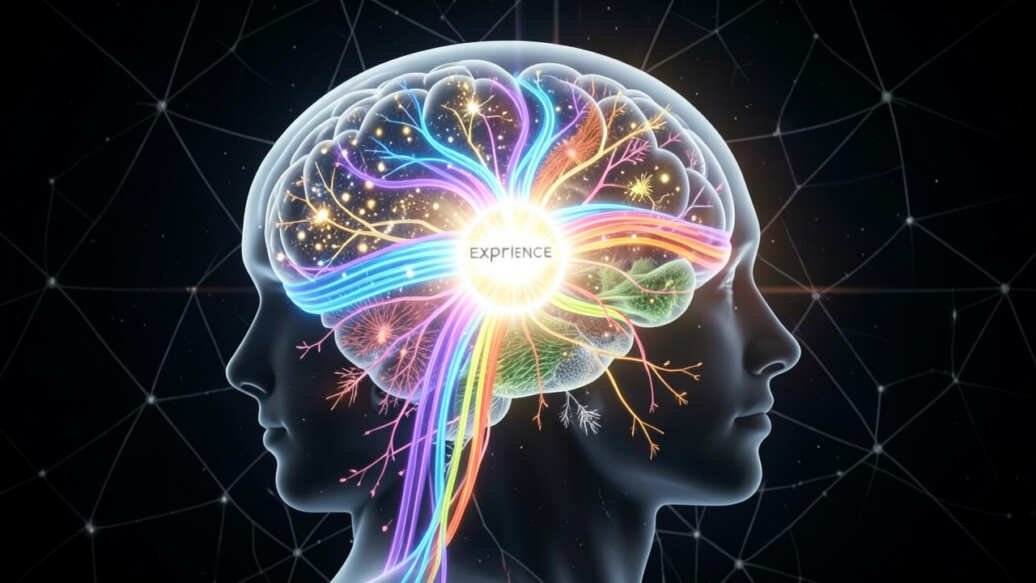
What Is Sensory Processing in the Brain?
Sensory processing is the set of steps your brain uses to detect, transmit, and interpret physical signals from the world. Every touch, sound, image, smell, and flavor starts as raw physical energy. Your brain must convert that energy into a format it can understand.
The entire process follows the same basic pattern for every sense. First, a specialized receptor cell detects a stimulus. Then, the receptor converts the stimulus into an electrical signal.
Finally, that signal travels through nerve pathways to a specific brain region for interpretation.
- Detection: receptor cells in your sense organs pick up physical energy
- Transduction: receptors convert that energy into electrical signals
- Transmission: signals travel along cranial nerves to the brain
- Interpretation: brain regions turn signals into meaningful information