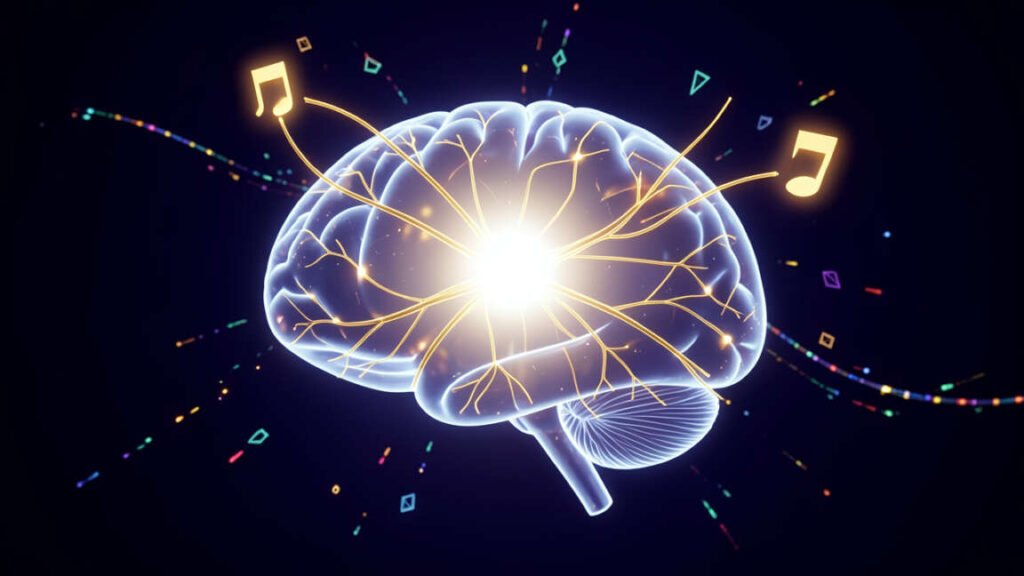
The brain decides what information is important through a process called attention selection, where specific neural circuits automatically prioritize stimuli based on relevance. This rapid filtering is driven by systems like the reticular activating system, the amygdala, and the salience network, which together tag data for emotional, survival-based, or goal-oriented value. Understanding this automatic prioritization helps you work with your brain’s natural focus, improving daily productivity and cognitive efficiency by reducing distraction and directing mental resources toward meaningful tasks.
How the brain decides what information is important sits at the heart of modern neuroscience and everyday productivity. Every second, your senses collect millions of data points, yet you consciously experience only a tiny fraction of them.
This post explains the neural circuits, chemical signals, and mental shortcuts behind attention selection. You’ll also learn practical ways to work with your brain’s natural filter instead of fighting against it.
Simply put, your brain tags incoming information with emotional and survival-based value in milliseconds. The reticular activating system, amygdala, salience network, and prefrontal cortex work together to boost high-priority signals, suppress background noise, and guide what reaches your conscious awareness.
Key Takeaways
- Your brain decides what information is important through fast, automatic filtering rather than conscious choice.
- Four core systems drive attention: the reticular activating system, amygdala, prefrontal cortex, and salience network.
- Emotion and memory tag incoming data as high-priority or irrelevant, which directly shapes what you remember later.
- Sleep, stress, and daily habits can either sharpen or weaken your brain’s attention filter.
- You can train your brain to focus better using simple, neuroplasticity-based techniques.
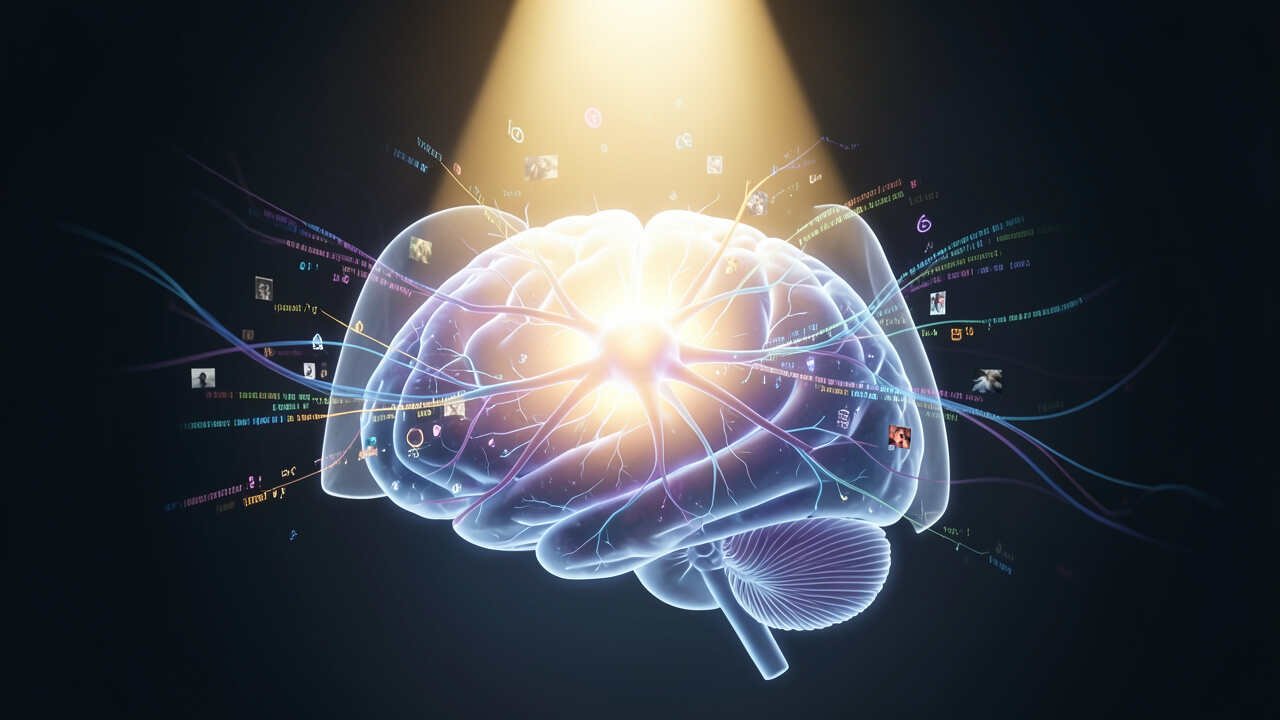
What Is Attention Selection in the Brain?
Attention selection is the process your brain uses to choose which sensory information reaches conscious awareness. It happens in milliseconds and balances bottom-up signals, like loud sounds and bright lights, with top-down signals, like your goals, expectations, and memories.
Nobel laureate Herbert Simon predicted this modern dilemma decades ago when he wrote that a wealth of information creates a poverty of attention. Your brain solves the overload problem by discarding most input before it ever reaches awareness.
Different brain regions handle different parts of the job:
- Prefrontal cortex: the control center for goal-directed attention and decision-making.
- Amygdala: the rapid threat detector that assigns emotional value to incoming signals.
- Hippocampus: the memory gateway that compares new input with past experience.
- Reticular activating system: the brainstem filter that regulates wakefulness and alertness.
- Basal ganglia: habit-based attention that runs familiar routines on autopilot.
- Thalamus: the relay station that routes sensory data to the right cortical areas.
| Type of Attention | Trigger | Example |
|---|---|---|
| Bottom-up attention | Stimulus salience | A loud alarm yanks your gaze |
| Top-down attention | Goals and expectations | You scan a crowd for a friend’s face |
Both systems run simultaneously. Your prefrontal cortex guides deliberate focus, while subcortical circuits react instantly to anything that stands out.
Cognitive scientists estimate that your sensory systems collect about 11 million bits of information per second, yet conscious processing handles only around 50 bits per second, a figure popularized by science writer Tor Norretranders in The User Illusion. That enormous gap is the filter you are reading about right now.
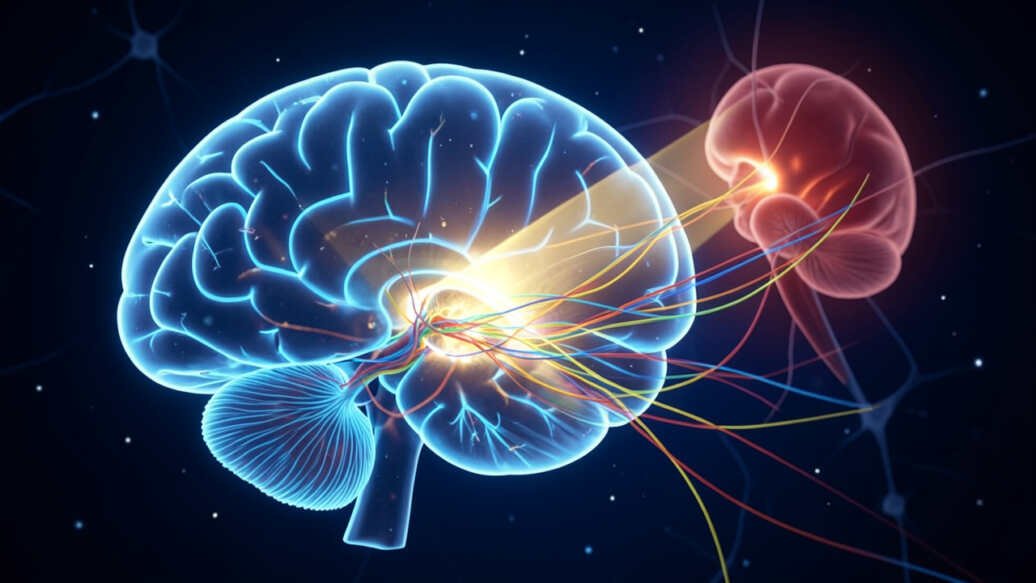
How the Brain Decides What Information Is Important: Core Mechanisms
The filtering pipeline that determines whether information gets kept or dropped runs through four major stages. Each stage operates automatically, and the entire cycle finishes before you become consciously aware of it.
- Sensory intake: Eyes, ears, skin, nose, and tongue capture raw data and send it toward the thalamus.
- Subcortical triage: The amygdala and brainstem check for threats and emotional relevance before anything reaches awareness.
- Cortical evaluation: The prefrontal cortex and parietal lobes integrate the signal with your goals, memories, and current context.
- Response selection: The brain allocates attention, updates working memory, and may trigger a physical response.
Each stage relies on specific neural machinery. According to neuroscientist Suzana Herculano-Houzel of Vanderbilt University, the human brain contains roughly 86 billion neurons, each forming thousands of connections. This massive network decides what deserves attention based on three questions: Is it dangerous?
Is it rewarding? Is it relevant to me?
Psychologist Daniel Kahneman describes the process through his dual-system model. System 1 is fast, automatic, and emotional. System 2 is slow, deliberate, and logical.
Most attention filtering happens in System 1 before System 2 ever gets involved.
Important: Attention is a bottleneck. You cannot consciously process everything at once, so the brain prioritizes survival, relevance, and reward. The information you miss is often just as informative as the information you catch.
Warning: Multitasking is a myth. When you switch between tasks, your brain performs a costly context switch that drains attention and increases error rates.
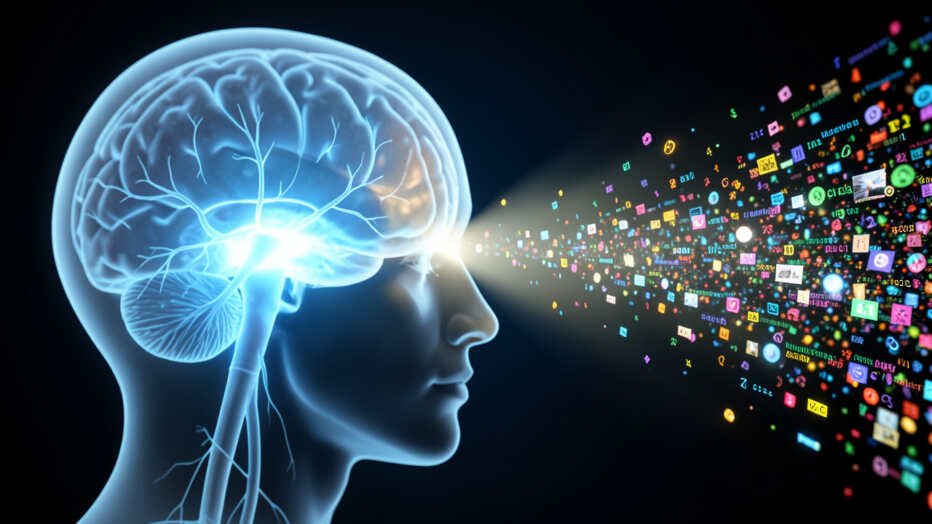
The Role of the Reticular Activating System in Attention
The reticular activating system, or RAS, is a bundle of neurons in the brainstem that acts as your brain’s gatekeeper. It controls arousal, wakefulness, and the flow of sensory information into the cortex.
The RAS is why you can sleep through a humming fan but wake up instantly when someone whispers your name. This is also the neural basis of the cocktail party effect, where you suddenly notice your name in a loud, crowded room.
The RAS filters a remarkable amount of data without conscious effort:
- Regulates sleep-wake transitions and overall alertness levels
- Filters out repetitive background sensory noise
- Sends alarm signals to the cortex when it detects novel or sudden stimuli
- Modulates norepinephrine release through the nearby locus coeruleus
- Activates the fight-or-flight response during perceived threats
- Keeps the brain responsive to conditioned cues, like your name or alarm tone
| Feature | Reticular Activating System | Prefrontal Cortex |
|---|---|---|
| Speed | Milliseconds | Hundreds of milliseconds |
| Control | Automatic and reactive | Deliberate and goal-driven |
| Location | Brainstem | Frontal lobe |
| Primary role | Alertness and sensory gating | Focus and decision-making |
The RAS works closely with the locus coeruleus, a tiny nucleus that releases norepinephrine. This chemical acts like an alarm system that sharpens attention whenever the brain detects something important enough to interrupt ongoing activity.
Why Emotion and Memory Shape Your Brain’s Priorities
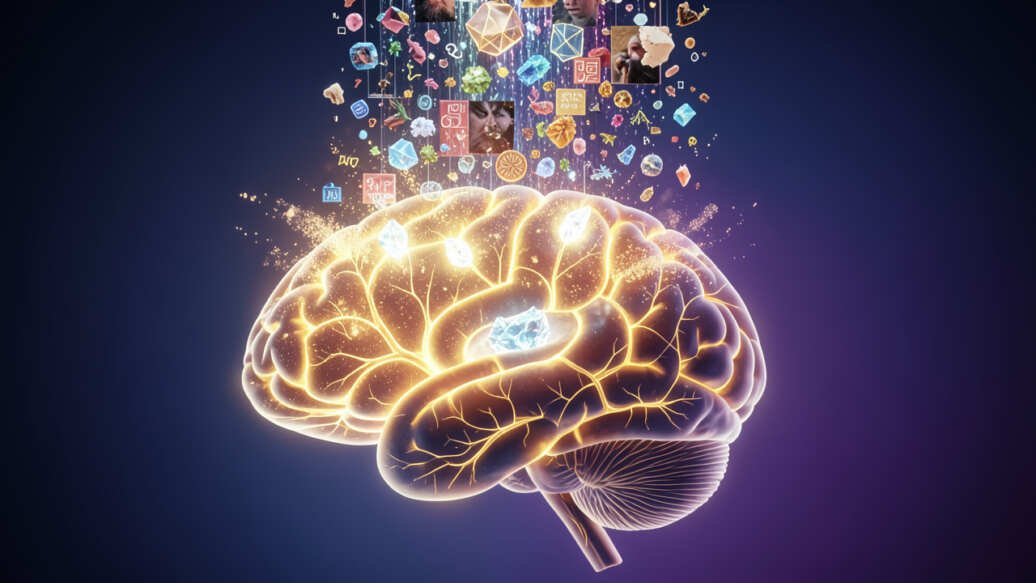
Emotion is the brain’s tagging system. The amygdala assigns emotional and survival value to incoming information, while the hippocampus stores the meaning of that information in memory. Together, they create a bias that decides which experiences get encoded and which fade away.
This is why you remember your wedding day in vivid detail but struggle to recall what you had for lunch two weeks ago. Emotional intensity signals importance, and importance triggers deeper memory encoding.
Research by cognitive neuroscientists Elizabeth Kensinger and Daniel Schacter, published in Psychological Science, shows that emotionally arousing information is typically remembered with greater detail and vividness than neutral information. Consider these patterns:
- Threat-related stimuli process in as little as 100 milliseconds, well before conscious recognition
- Negative events tend to be recalled more vividly than positive ones
- Repeated emotional exposure strengthens synapses through long-term potentiation
- Mood states bias attention: anxiety narrows focus, while boredom widens it
- Stress hormones like cortisol shape how memories are consolidated overnight
- Personal relevance overrides raw novelty in most situations
| High-Priority Stimuli | Low-Priority Stimuli |
|---|---|
| Snakes, heights, angry faces | Birds chirping, background noise |
| Your name being called | A stranger’s conversation nearby |
| Smoke or burning smells | Hum of an air conditioner |
| Rewards, like money or food | Routine or repeated messages |
Tip: Affect labeling, or simply naming your emotion out loud, activates the prefrontal cortex and calms the amygdala. This quick habit reduces emotional reactivity and frees up attention for the task in front of you.
The Salience Network: Your Brain’s Internal Spotlight
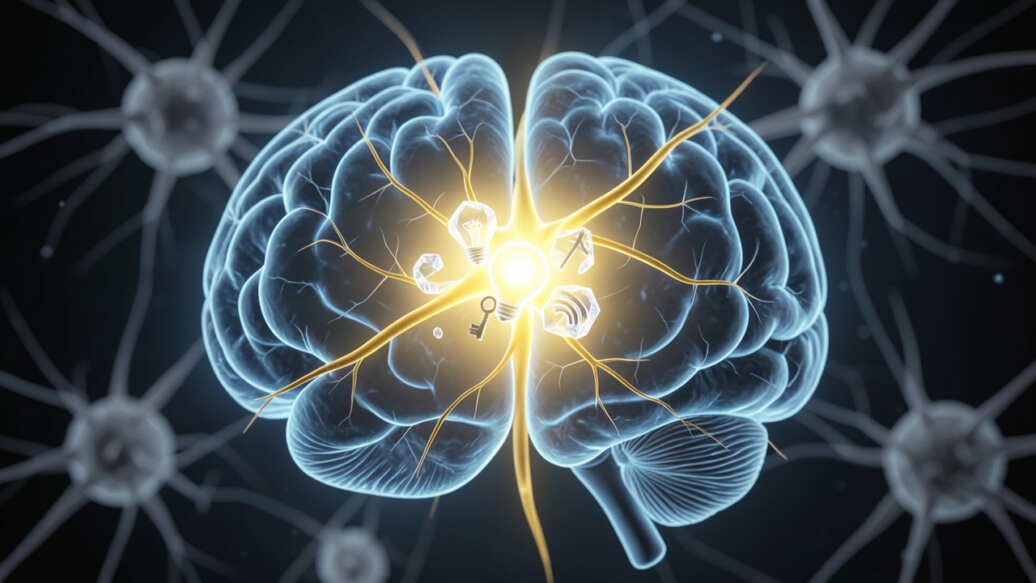
The salience network is a set of brain regions, mainly the anterior insula and anterior cingulate cortex, that identifies which internal and external events deserve attention. Vinod Menon, a neuroscientist at Stanford University, was one of the first researchers to map this network’s function.
Think of the salience network as a switchboard. It detects personally relevant stimuli and then toggles between two other major networks: the default mode network, which handles mind-wandering and self-reflection, and the central executive network, which handles focused problem-solving.
Research suggests the salience network plays several critical roles:
- Detects unexpected or personally meaningful events in the environment
- Coordinates smooth switching between brain networks
- Integrates body signals like heartbeat, hunger, and pain with external focus
- Uses dopamine signals to rank potential rewards and risks
- Drives the feeling of getting pulled out of deep focus by a notification
- Contributes to social awareness and empathy
Important: When your salience network overreacts, you feel distracted by every notification and passing thought. When it underreacts, you miss important cues in conversation and your environment. Balanced function is the goal.
Disruptions in salience network activity are linked to conditions like ADHD, anxiety, and schizophrenia. Even in healthy brains, this network determines how easily you can stay focused on a book when your phone buzzes across the room.
What Factors Influence How the Brain Decides What Information Is Important?
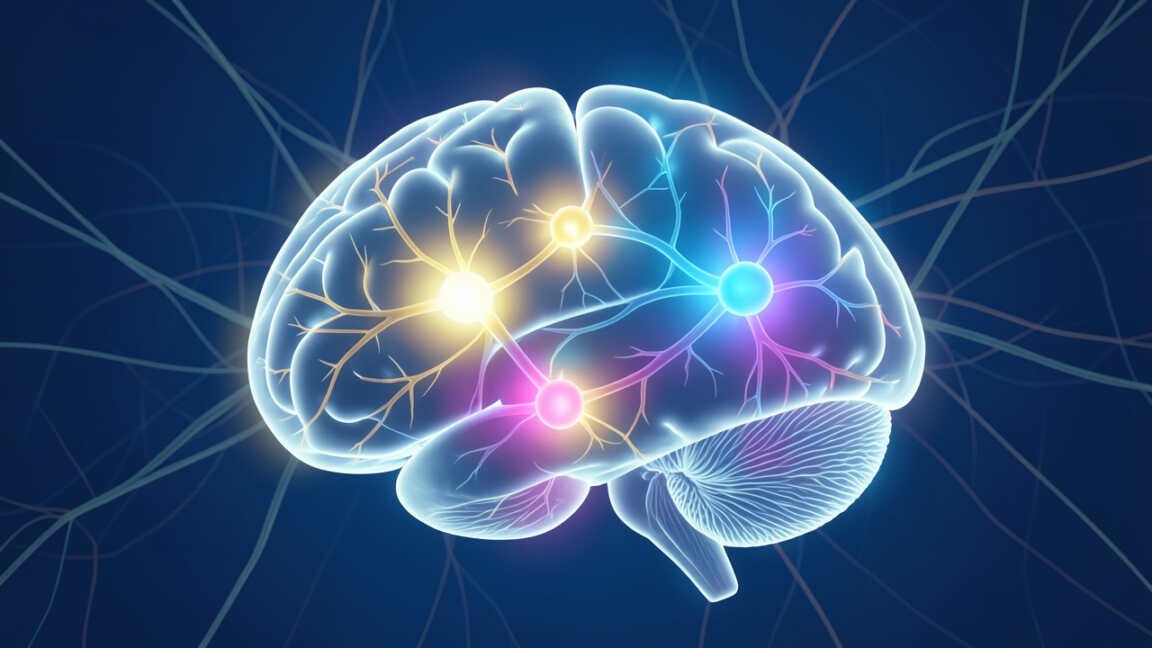
Several factors determine whether your brain labels incoming information as important. Some are hardwired from evolution, while others shift with your current state, environment, and habits.
- Novelty: New and unexpected stimuli trigger the orienting response, a reflexive shift of attention.
- Threat: Survival cues like snakes, heights, and angry faces override nearly everything else.
- Reward: The dopamine system prioritizes cues linked to potential gains, like food, money, or social approval.
- Personal relevance: Your name, your face, and your interests get privileged access to awareness.
- Emotional intensity: Stronger emotional charge means higher priority and deeper memory encoding.
- Context and expectation: Your brain predicts what should happen and flags mismatches as important.
- Physical state: Sleep, hunger, stress, and caffeine all change baseline alertness and filtering accuracy.
| Factor | Neural Driver | Real-World Example |
|---|---|---|
| Novelty | Hippocampus, dopamine | A new notification sound grabs you |
| Threat | Amygdala, RAS | A screeching tire makes you jump |
| Reward | Ventral striatum, dopamine | You notice a sale sign instantly |
| Relevance | Prefrontal cortex | You hear your name across a room |
| Physical state | Locus coeruleus, hormones | You can’t focus after a poor night’s sleep |
Physical state deserves special attention. The American Psychological Association reports that chronic stress impairs attention, working memory, and decision-making. The CDC also notes that roughly one in three adults does not get enough sleep, and sleep loss directly degrades the brain’s ability to filter information accurately.
How to Train Your Brain to Focus on What Matters
The good news is that your brain’s attention filter is trainable. Neuroplasticity means repeated habits physically reshape neural connections, strengthening the circuits that support sustained focus and weakening the ones that chase distractions.
Try these evidence-backed strategies to improve how your brain prioritizes information:
- Practice single-tasking: Give each task your full attention instead of juggling three at once.
- Manage your environment: Keep your phone in another room during deep work sessions.
- Batch notifications: Check email and messages on a fixed schedule rather than reacting all day.
- Train attention daily: Even 10 minutes of mindfulness strengthens the prefrontal cortex.
- Protect deep work: Block 60 to 90 minute focus periods without interruptions.
- Prioritize sleep and movement: Both restore attention networks and improve filtering accuracy.
- Use external memory: Checklists and notes free up working memory for the task in front of you.
Psychologist Mihaly Csikszentmihalyi found that people experience the deepest focus when challenge and skill are balanced. Cal Newport calls this state deep work and argues it is the most valuable way to use your brain in the attention economy.
| Habit | Brain Change | Result |
|---|---|---|
| Mindfulness meditation | Strengthened prefrontal control | Less mind-wandering |
| Single-tasking | Reduced context-switching costs | Faster, deeper work |
| Enough sleep | Restored frontal lobe function | Sharper attention filter |
| Exercise | Increased BDNF and neurogenesis | Better memory and focus |
Tip: Start with two minutes of mindfulness per day instead of aiming for long meditation sessions. Consistency matters more than duration when you are rewiring attention circuits.
Warning: Doomscrolling trains your brain to expect constant novelty. Over time, this weakens sustained attention and makes ordinary tasks feel unbearably boring. Deliberate boredom is a useful reset.
Frequently Asked Questions
What part of the brain decides what is important?
The reticular activating system, amygdala, prefrontal cortex, and salience network work together as a team. The RAS filters raw sensory input, the amygdala adds emotional value, the salience network spots personally relevant events, and the prefrontal cortex manages goal-directed attention.
Why does my brain remember some things and not others?
Memory formation depends on emotional intensity, personal relevance, repetition, and your physical state at the time of encoding. Emotionally charged events trigger stronger amygdala activity, which tells the hippocampus to store those experiences more deeply.
Can I train my brain to focus better?
Yes. Neuroplasticity allows your brain to rewire itself. Mindfulness meditation, single-tasking, consistent sleep, and fewer digital interruptions all strengthen attention circuits over time.
Why do I get distracted so easily?
Frequent distractions desensitize the salience network and train it