
The core difference between natural sugar and added sugar is that natural sugar in whole foods like fruit and dairy comes packaged with fiber, vitamins, and antioxidants, which slows its absorption, while added sugar is processed and absorbed quickly into the bloodstream. This rapid absorption from added sugars spikes blood glucose and insulin, increasing risks for obesity, heart disease, and metabolic issues, whereas natural sugars provide steadier energy. For optimal health, prioritize whole foods with natural sugars and limit added sugar intake to no more than 25 to 36 grams per day, using updated food labels to easily identify added sugars.
Natural sugar vs added sugar is a distinction that shapes your health more than most people realize. This post explains exactly how they differ, what happens inside your body, and how to make smarter choices without giving up sweetness entirely.
Simply put, natural sugar comes packaged with fiber, water, vitamins, and antioxidants, which slows absorption and supports your body. Added sugar is stripped of those benefits and hits your bloodstream fast, spiking insulin and driving cravings. Choose whole foods with natural sugar most of the time, and keep added sugar under 25 to 36 grams per day.
Key Takeaways
- Natural sugar vs added sugar differ in packaging: natural sugar arrives with fiber and nutrients, while added sugar is pure and empty.
- Natural sugar in fruit, vegetables, and dairy digests slowly, providing steady energy without crashes.
- Added sugar in soda, candy, and processed snacks spikes blood glucose and raises the risk of obesity and heart disease.
- The FDA now requires food labels to list added sugars separately, so checking labels is easier than ever.
- Most people should cut added sugar, not the natural sugar found in whole foods.
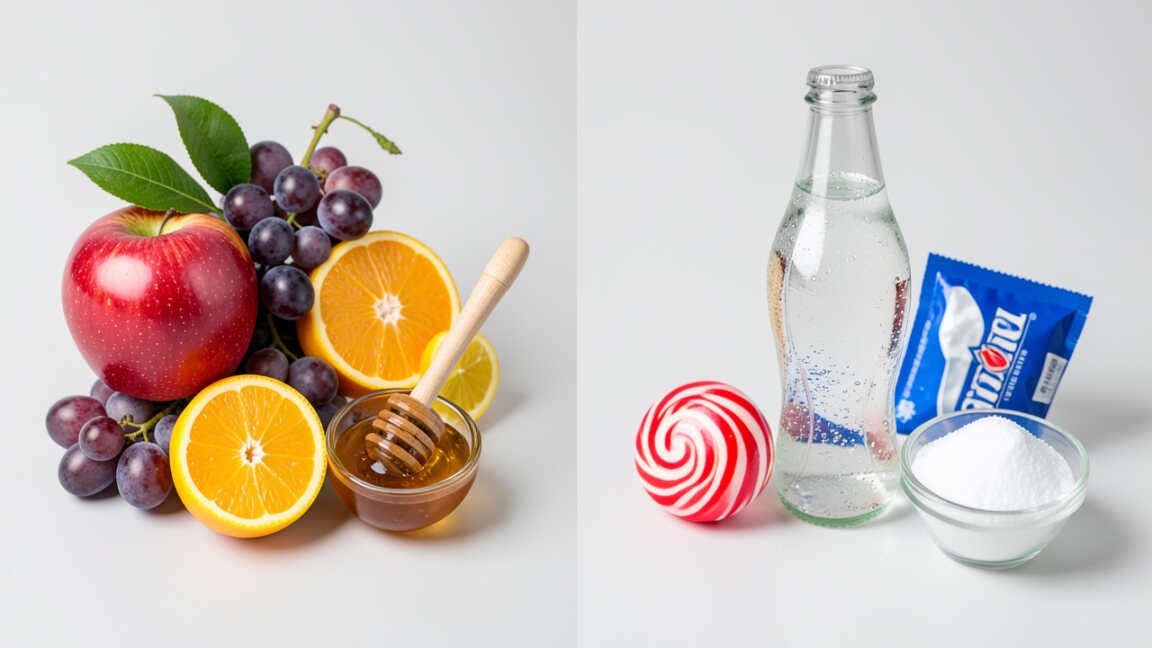
Natural Sugar vs Added Sugar: The Core Difference
At a chemical level, natural sugar and added sugar are often identical molecules. Sucrose, glucose, and fructose exist in an apple just as they do in a candy bar. The real difference is everything that surrounds them.
Natural sugar occurs inside whole foods like fruit, vegetables, and dairy. These foods bring water, fiber, protein, and a wide range of micronutrients to the table. Added sugar, by contrast, is extracted, concentrated, or manufactured, then poured into processed products with little or no nutritional value.
| Aspect | Natural Sugar | Added Sugar |
|---|---|---|
| Source | Fruit, vegetables, unsweetened dairy | Soda, candy, baked goods, sauces |
| Fiber content | High (especially whole fruit) | Zero |
| Nutrients | Vitamins, minerals, antioxidants | None |
| Absorption speed | Slow and steady | Rapid spike |
| Satiety | Fills you up | Leaves you hungry |
That table sums up why your body treats them differently. The same glucose molecule enters your system either gradually or all at once, and that timing changes everything about how your metabolism responds.
Tip: Eat the whole orange instead of drinking orange juice. Juicing removes the fiber and turns a slow-release natural sugar into something close to a sugar rush.
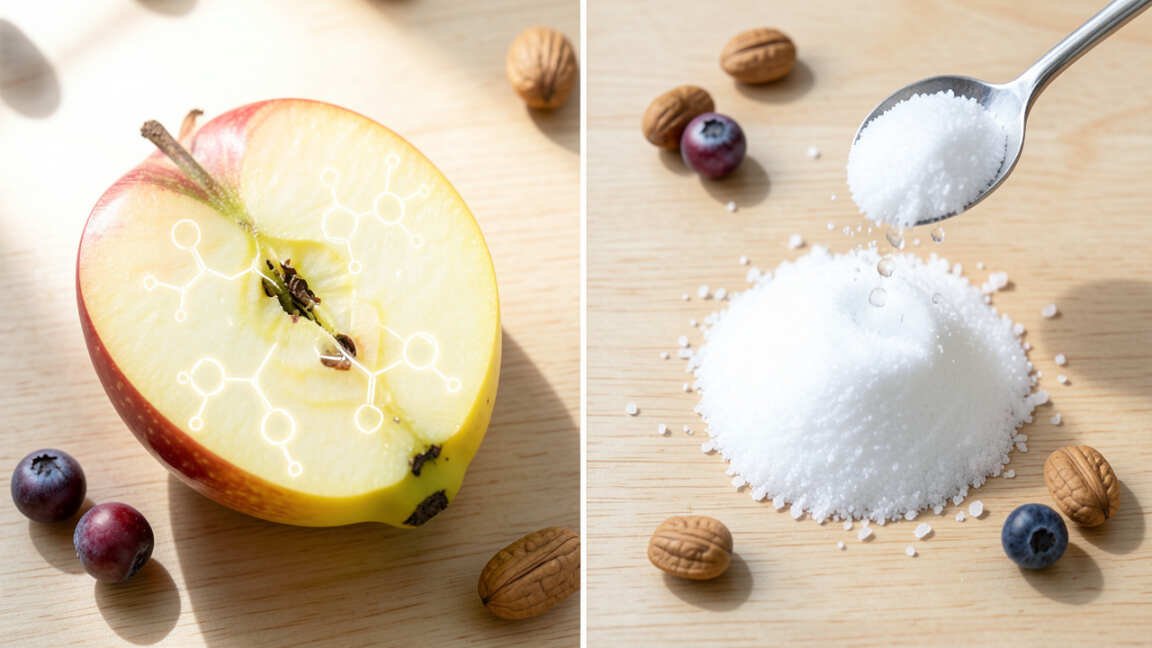
What Is Natural Sugar?
Natural sugar is sugar that occurs organically in unprocessed or minimally processed foods. You never see it listed as an ingredient because it comes built into the food itself. The most familiar form is fructose in fruit, but natural sugar also appears as lactose in milk and as smaller amounts in vegetables.
The key feature of natural sugar is its delivery system. A medium apple contains about 19 grams of sugar, but it also packs roughly 4 grams of fiber, vitamin C, potassium, and a family of antioxidants. That fiber slows digestion, so the sugar enters your bloodstream gradually over a longer period.
- Fruit: apples, bananas, berries, oranges, mangoes, grapes
- Vegetables: sweet potatoes, carrots, beets, corn, peas
- Dairy: milk, plain yogurt (contains lactose)
- Whole grains: small amounts of naturally occurring sugar
- Legumes: minimal amounts, mostly complex carbs
Dried fruit deserves special mention. When water is removed, the sugar becomes concentrated. A cup of grapes has about 23 grams of sugar.
A cup of raisins, which comes from five times more grapes, has over 100 grams. Portion control matters even with natural sources.
The Harvard T.H. Chan School of Public Health notes that the fiber and polyphenols in whole fruit may help blunt the blood sugar response. That protective effect disappears when you eat sugar in isolation.
Natural sugar in its original package is rarely a health concern for active, healthy people.
Important: For people with diabetes or insulin resistance, even natural sugar counts toward daily carbohydrate totals. Always track total carbs, not just added sugar.

What Is Added Sugar?
Added sugar includes any sugar or sweetener that food manufacturers put into products during processing or preparation. It also covers honey, agave syrup, and maple syrup, even though these sound natural. If someone adds them to food after the fact, they count as added sugar.
The Centers for Disease Control and Prevention (CDC) reports that the main sources of added sugar in the American diet are sugary drinks, desserts, sweet snacks, and coffee or tea with sweeteners. These foods offer calories without vitamins, minerals, or fiber, which is why nutrition experts often call them empty calories.
Food manufacturers use dozens of different names for added sugar. Spotting them on ingredient lists requires knowing all the disguises.
- Sucrose, glucose, dextrose, maltose, fructose
- High fructose corn syrup (HFCS)
- Corn syrup, corn sweetener, rice syrup
- Honey, agave nectar, maple syrup, molasses
- Brown rice syrup, barley malt, maltodextrin
- Fruit juice concentrate, cane juice, caramel
- Anything ending in “-ose” is a sugar
The American Heart Association (AHA) warns that Americans consume an average of 77 grams of added sugar per day, more than triple the recommended amount for women. Most of that hides in processed foods, not in the sugar bowl on your counter. Breakfast cereal, flavored yogurt, pasta sauce, and salad dressing all contain surprising amounts.
Warning: “No added sugar” does not mean “low sugar.” Many no-added-sugar products still contain natural sugars, fruit purees, or dates that keep the total sugar count high.
How Does the Body Process Natural Sugar vs Added Sugar?
Your digestive system treats natural sugar and added sugar differently, even when the molecules are identical. The difference comes down to speed, timing, and metabolic load. Here is what happens step by step.
- Digestion begins: When you eat whole fruit, the fiber slows stomach emptying. Sugar trickles into your intestines over time instead of arriving all at once.
- Absorption: With added sugar, glucose and fructose flood the bloodstream in minutes. With natural sugar, the gradual release keeps blood glucose levels steady.
- Insulin response: A rapid sugar spike forces the pancreas to produce a large insulin surge. Excess sugar gets packed into fat cells quickly.
- Energy levels: Natural sugar provides sustained energy. Added sugar causes a spike, followed by a crash that makes you feel tired and hungry.
- Cravings: The crash from added sugar triggers hunger hormones and cravings for more sugar, creating a cycle that is hard to break.
The liver processes fructose, and when it arrives in large quantities without fiber, the liver converts much of it to fat. This process, called de novo lipogenesis, is a direct link between high added sugar intake and fatty liver disease. The World Health Organization (WHO) found that overconsumption of added sugar is associated with weight gain and dental caries.
Natural sugar from fruit is rarely consumed in large enough quantities to overwhelm the liver because the food itself makes you feel full. You can eat three apples, but you cannot comfortably eat the equivalent sugar content stacked in candy bars.

How Natural Sugar vs Added Sugar Affect Your Health
Your metabolic health depends heavily on which type of sugar you feed your body most often. Decades of research separate the health outcomes of whole-food sugar from those of processed sugar.
| Health Outcome | Natural Sugar (Whole Foods) | Added Sugar |
|---|---|---|
| Heart disease risk | Associated with lower risk | Linked to higher risk |
| Weight management | Supports satiety | Promotes overeating |
| Blood sugar control | Stable glucose response | Large spikes and crashes |
| Dental health | Lower cavity risk | Higher cavity risk |
| Liver health | Minimal impact | Links to fatty liver |
The numbers back these patterns. The AHA reports that adults who consumed more added sugar had significantly higher risks of cardiovascular disease mortality. The WHO recommends keeping added sugar below 10 percent of total daily calories, with a conditional recommendation of 5 percent for extra health benefits.
This does not mean natural sugar is a free pass. Large amounts of sugar from any source can still contribute to weight gain. But the protective compounds in fruit and vegetables appear to offset many of the metabolic downsides of sugar itself.
Tip: Swap one sugary drink per day for water or unsweetened tea. Over a year, that single swap can cut over 50,000 calories of added sugar from your diet.
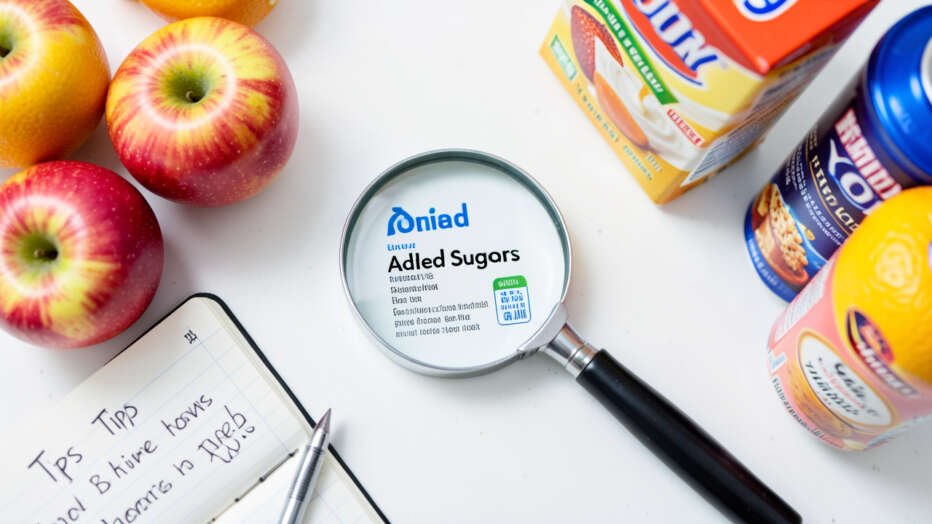
How to Spot Added Sugar on Food Labels
Since 2021, the FDA requires food manufacturers to list “Added Sugars” as a separate line on the Nutrition Facts label. This single change made it dramatically easier to tell the difference between sugars that occur naturally and sugars that were dumped in during processing.
The label shows both grams and a percent daily value. A product with 10 grams of added sugar meets 20 percent of the daily value based on a 2,000-calorie diet. It also lists the ingredients in descending order by weight, so if sugar appears in the first three ingredients, the product is mostly sugar.
- Check the “Added Sugars” line directly under “Total Sugars”
- Look for any of the 60-plus names for sugar in the ingredient list
- Watch for “no added sugar” but verify the total sugar number
- Be cautious with “healthy” sweeteners like honey, agave, and brown rice syrup
- Remember that unsweetened milk has natural sugar but zero added sugar
- Compare similar products to choose one with less added sugar
Common packaged foods that hide added sugar include bread, granola bars, instant oatmeal, flavored yogurt, ketchup, barbecue sauce, and “light” dressings. Even foods that taste savory often contain more sugar than a chocolate chip cookie.
Warning: Beware of “health halo” sweeteners like agave nectar and coconut sugar. The body metabolizes them as added sugar, and they carry no meaningful health advantage over regular table sugar.
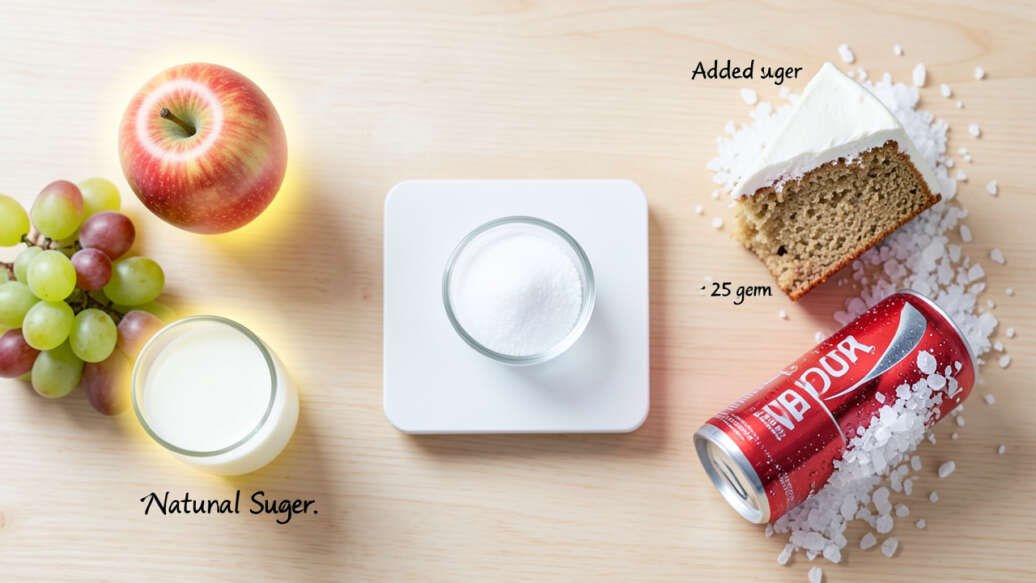
How Much Added Sugar Should You Eat Daily?
Health organizations around the world have published clear limits for added sugar intake. These limits do not apply to natural sugar in whole fruits and vegetables, which is one reason a fruit-heavy diet is safe even on a low-sugar plan.
Start with the hard numbers from the major health agencies, then build an eating pattern that works for you.
| Organization | Daily Added Sugar Limit |
|---|---|
| American Heart Association | 25 g (6 tsp) women, 36 g (9 tsp) men |
| World Health Organization | <10% of total calories, ideally 5% |
| USDA Dietary Guidelines | <10% of daily calories (200 cal on a 2,000-cal diet) |
| Cleveland Clinic | Aligns with AHA, emphasizes whole foods |
To put those numbers into perspective, a single 12-ounce can of soda contains about 39 grams of added sugar, already surpassing the daily limit for women. A flavored coffee drink can pack 50 grams or more before you add anything else that day.
Cleveland Clinic recommends a gradual reduction strategy rather than going cold turkey. Cutting added sugar in half is a massive improvement for someone who currently exceeds recommendations by three times.
- Set a daily goal using the AHA numbers as a target
- Read labels and track your current intake for three days
- Cut sugary drinks first, since they deliver the most sugar fastest
- Replace processed snacks with fruit, nuts, or plain Greek yogurt
- Limit added sweeteners in coffee, tea, and breakfast cereal
The takeaway is simple: natural sugar from whole foods poses minimal risk for most people, while added sugar deserves serious limits. Your body has built-in brakes for fruit, but no braking system for a 64-ounce soda.
Frequently Asked Questions
Is fruit sugar bad for you?
No. The natural sugar in whole fruit comes with fiber, water, and micronutrients that slow absorption and blunt blood sugar spikes. Eat fruit freely and focus your concern on added sugars in processed foods.
Is honey better than white sugar?
Honey has slightly more nutrients and a lower glycemic index than table sugar, but the differences are small. Your body treats honey as added sugar, and it still counts toward your daily limit.
Does the body treat natural sugar differently than added sugar?
Yes. When sugar arrives with fiber and other nutrients, digestion slows and glucose enters the bloodstream gradually. Added sugar lacks that packaging, causing rapid spikes in blood sugar and insulin.
Is brown sugar healthier than white sugar?
No meaningful difference. Brown sugar is just white sugar with molasses added for color and flavor. Both contain roughly the same calories and glucose-fructose composition, and both count as added sugar.
How do I know if sugar is natural or added on a label?
Check the Nutrition Facts label, where the “Added Sugars” line sits directly under “Total Sugars.” Then scan the ingredient list for sweetener names like sucrose, high fructose corn syrup, honey, or agave.
Final Thoughts
Natural sugar vs added sugar is not a debate about chemistry but about context. Natural sugar in whole foods supports health, while added sugar, especially in liquid form, drives metabolic damage. Prioritize fruit, vegetables, and unsweetened dairy, and treat added sugar as an occasional treat rather than a daily staple.
Small label-checking habits build into lasting health gains.