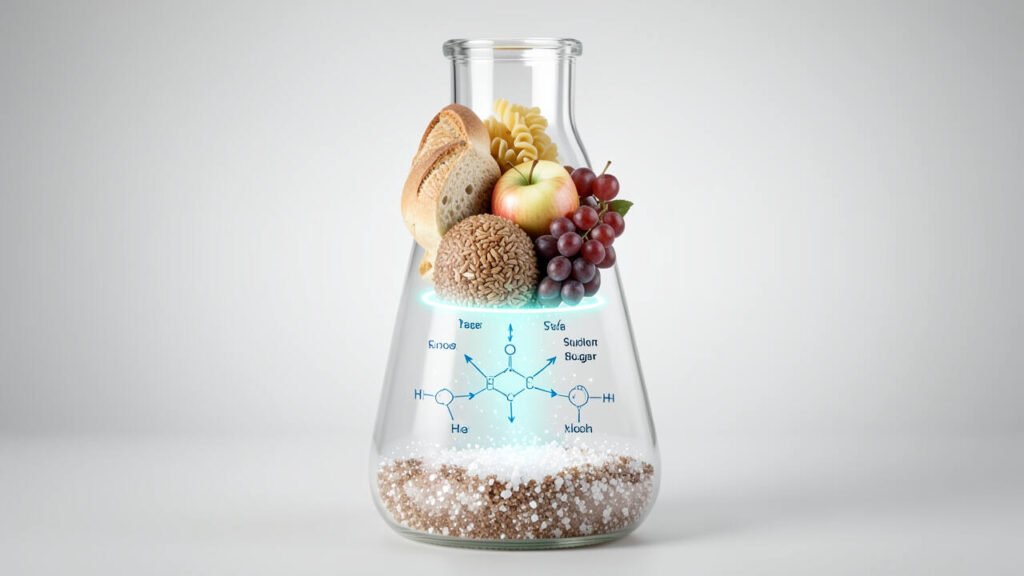
All digestible carbohydrates are eventually broken down into glucose, which enters the bloodstream as a form of sugar, though fiber resists this process and passes through the digestive tract mostly intact. The rate of conversion varies significantly, with refined carbohydrates like white bread causing rapid blood sugar spikes while whole-food sources release glucose more slowly. To maintain steady energy and metabolic health, it is crucial to prioritize high-fiber, minimally processed carbohydrates and pair them with protein and healthy fats to moderate the glycemic response.
Simply put, all digestible carbohydrates eventually turn into sugar in the blood, but fiber is the exception and passes through mostly undigested. Whole-food carbs release glucose slowly, while refined carbs spike it quickly. Choosing high-fiber, minimally processed sources keeps energy steady and reduces crash risk.
Key Takeaways
- All carbohydrates eventually turned into sugar in some form, but the rate varies by food type.
- Fiber is the main exception – it resists digestion and feeds gut bacteria instead.
- The glycemic index helps predict how fast a carbohydrate raises blood sugar.
- Pairing carbs with protein and fat slows glucose absorption and prevents spikes.
- Focus on whole-food carbs like vegetables, legumes, and whole grains for better metabolic health.
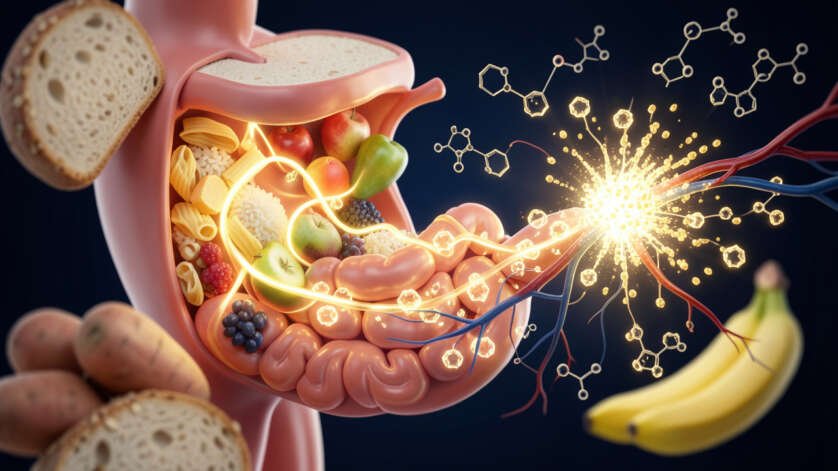
How Are All Carbohydrates Turned Into Sugar in the Body?
Your body breaks down carbohydrates through a multi-step process. It starts in your mouth with salivary amylase, an enzyme that splits starch into shorter chains. The process continues in the small intestine, where pancreatic amylase and brush-border enzymes convert those chains into single sugar molecules.
When glucose hits your bloodstream, your pancreas releases insulin. Insulin tells your muscle, liver, and fat cells to take up glucose for immediate energy or to store it as glycogen. Once glycogen stores are full, leftover glucose turns into fat.
This is why refined carb-heavy meals can drive weight gain over time.
- Key steps in carb digestion:
- Chewing and salivary amylase break down starch into maltose.
- Stomach acid stops amylase activity and mixes the food with digestive juices.
- Pancreatic amylase continues breaking starch into disaccharides.
- Intestinal enzymes convert disaccharides into glucose, fructose, and galactose.
- Monosaccharides are absorbed through the intestinal wall into the bloodstream.
- The liver converts fructose and galactose into glucose for immediate energy use.
| Type | Digestion speed | Examples |
|---|---|---|
| Simple carbs | Fast | Sugar, honey, fruit juice |
| Complex carbs | Slow | Oats, brown rice, legumes |
| Fiber | Not digested | Vegetables, nuts, seeds |
This table shows why food composition matters. Simple carbs produce a quick rise in blood sugar, while complex carbs digest gradually. Fiber barely enters the equation at all, which explains why fiber-rich foods do not cause the same glucose response.
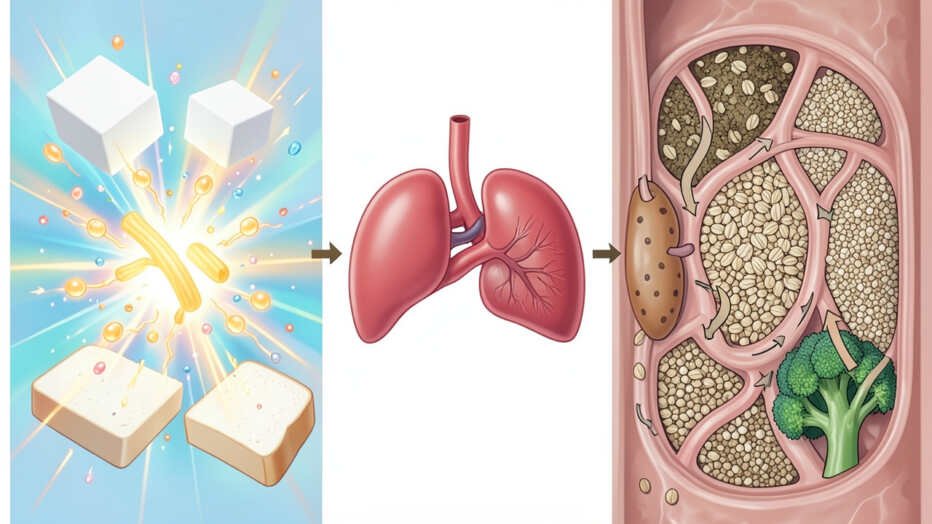
Do All Carbohydrates Eventually Turn Into Sugar at the Same Rate?
The short answer is no. Speed depends on the molecular structure of the carb, the amount of fiber and protein, and how the food is processed or cooked. A glass of apple juice hits your bloodstream much faster than a whole apple, even though both come from fruit.
Processing matters. White flour is milled to remove the bran and germ, leaving mostly starch that digests quickly. Whole grains retain those outer layers, which slow digestion.
Even cooking changes the picture – al dente pasta has a lower glycemic response than overcooked pasta.
- Glucose tablets – near-instant absorption.
- White bread – raises blood sugar within 15 to 30 minutes.
- Oatmeal – releases energy over about 30 to 45 minutes.
- Chickpeas – digest gradually over 1 to 2 hours.
- Broccoli – minimal effect because fiber dominates the carb content.
Think of slow-digesting carbs as time-release capsules. They provide steady fuel and prevent the energy crash that follows a quick sugar spike. That is why the quality of your carbs matters more than the total amount.
Tip: If your meal contains mostly refined carbs, add a source of protein or healthy fat. This slows stomach emptying and blunts the blood sugar spike significantly.
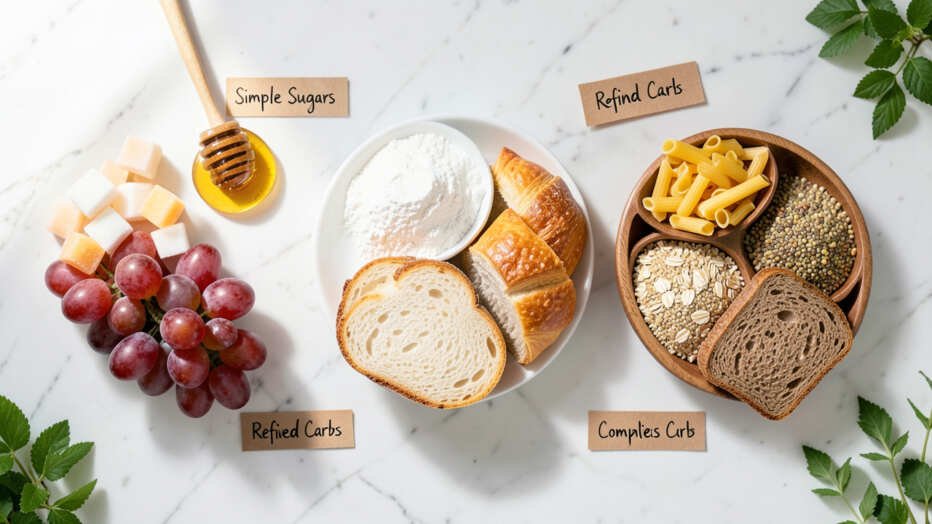
What Are the Main Types of Carbohydrates?
Carbohydrates fall into three main categories: sugars, starches, and fiber. Each affects your body differently, even though they are all technically carbs. Understanding these categories answers the question of whether all carbs become sugar in the same way.
Sugars are simple molecules. They include glucose, fructose (fruit sugar), galactose, sucrose (table sugar), and lactose (milk sugar). Starches are long chains of glucose found in plants.
Fiber is also a chain of glucose, but the bonds are beta-type bonds that human enzymes cannot break apart.
| Type | Structure | Examples | Blood sugar effect |
|---|---|---|---|
| Sugars | 1-2 molecules | Honey, fruit, table sugar | Rapid rise |
| Starches | Long chains of glucose | Bread, rice, potatoes | Moderate to fast rise |
| Fiber | Beta-linked glucose chains | Oat bran, broccoli, beans | Minimal effect |
This classification explains why sweet fruit creates a different response than white bread, even though both are carbs. The density of fiber and the speed of digestion are the real drivers of glucose response.
Here is how to calculate net carbs in three simple steps:
- Read the total carbohydrate grams on the nutrition label.
- Subtract the grams of dietary fiber.
- Subtract sugar alcohols if present, since some do not fully raise blood sugar.
- Why this distinction matters:
- Simple carbs provide fast energy but little satiety.
- Starches can be great fuel sources, especially before workouts.
- Fiber improves gut health and slows glucose absorption.
- Net carbs give a clearer picture of sugar impact than total carbs alone.
Why Fiber Is the Exception to the Sugar Rule
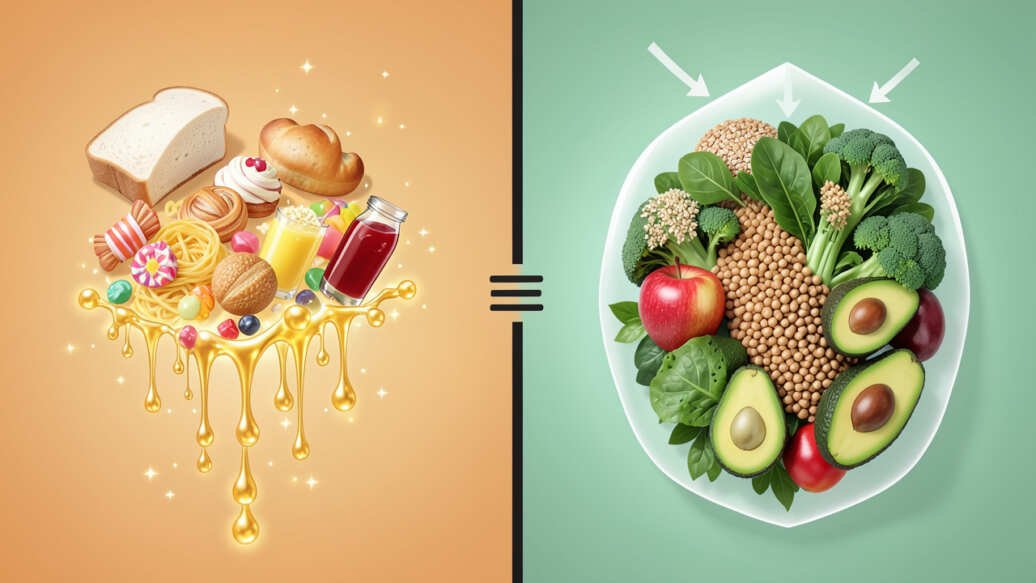
Fiber is a carbohydrate, so on a nutrition label it counts as a carb. But your body does not turn it into glucose. The bonds between fiber molecules resist human digestive enzymes, so fiber winds up in your large intestine mostly intact.
Soluble fiber dissolves in water and forms a gel in your gut. This gel traps sugars and slows their absorption. Insoluble fiber adds bulk and speeds food through your digestive tract.
Both types feed beneficial gut bacteria, which produce short-chain fatty acids linked to better blood sugar control.
Important: When someone asks “are all carbohydrates eventually turned into sugar,” fiber is the one clear exception. Whole-food carbs with fiber never create the same spike as refined carbs.
- Fiber’s blood sugar benefits:
- Slows gastric emptying.
- Reduces the speed of sugar release into the bloodstream.
- Improves insulin sensitivity in the long term.
- Increases fullness and reduces total calorie intake.
- Supports a healthy gut microbiome.
The USDA recommends about 14 grams of fiber per 1,000 calories, which equals roughly 25 to 38 grams daily for most adults. According to the National Health and Nutrition Examination Survey, most U.S. adults eat only about 16 grams of fiber per day, far below that target.
This shortfall is a big reason why carb-heavy meals often cause blood sugar swings.
What Does the Glycemic Index Say About Carbs and Blood Sugar?
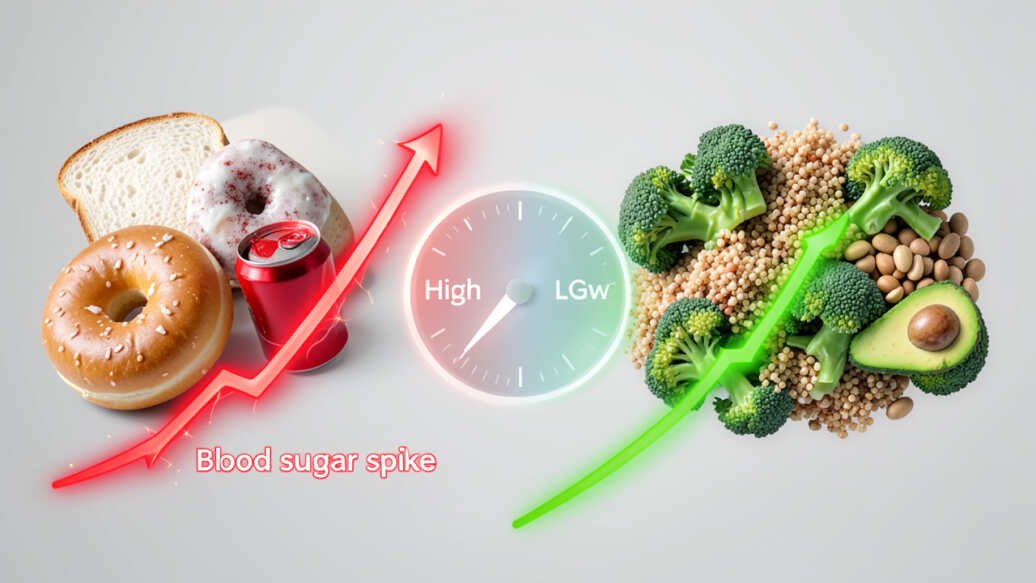
The glycemic index (GI) is a 0 to 100 scale that measures how quickly a carbohydrate raises blood sugar compared to pure glucose. Foods with a high GI release sugar fast. Low-GI foods release sugar gradually, which is better for long-term energy and appetite control.
Values below 55 are low, 56 to 69 are medium, and 70 or above are high. This scale helps explain the same point as the earlier question: all carbs turn into sugar, but the timing differs widely based on the food.
| Food | GI value | Category |
|---|---|---|
| White bread | 75 | High |
| Oatmeal | 55 | Medium |
| Lentils | 28 | Low |
| Chickpeas | 33 | Low |
Keep in mind that GI only describes the carb source. Portion size is handled by a separate measure called glycemic load, which multiplies GI by the grams of available carbohydrate per serving. Experts at the Harvard T.H.
Chan School of Public Health recommend using glycemic load instead of GI alone for better blood sugar predictions.

How to Balance Carbohydrates for Steady Energy
You do not need to cut carbs. You need to choose smarter portions and pair them with the right additions. The plate method is a simple place to start.
Fill half your plate with non-starchy vegetables, a quarter with lean protein, and a quarter with high-quality carbs like quinoa, sweet potato, or legumes. Add a healthy fat like olive oil or avocado to slow digestion even further.
- Start with protein and vegetables before you touch the carb source.
- Choose whole-food carbs with at least 3 grams of fiber per serving.
- Keep portions moderate – a fist-sized serving works for most adults.
- Add a tablespoon of nuts, seeds, or olive oil to blunt the spike.
- Move after meals – a 10-minute walk helps muscles take up glucose.
Tip: Try vinegar as a salad dressing. A dose of vinegar before a high-carb meal has been shown in studies to lower post-meal blood sugar by 20 to 30 percent. It is one easy change with real metabolic benefits.
In a study published in Diabetes Care, consuming vinegar with white bread reduced both blood sugar and insulin responses compared to eating bread alone. Simple changes like this add up over time and make the question “are all carbohydrates eventually turned into sugar” much less intimidating.
Common Mistakes People Make With Carbohydrate Intake
People often respond to the idea that carbs turn into sugar by going to extremes. Some cut out all carbs, while others swap real food for processed diet foods. Both approaches miss the bigger picture.
Zero-carb diets can cause low energy, constipation, and a poor relationship with food. On the other hand, products labeled “low-fat” or “diet” often hide refined carbs and added sugar that spike glucose just like white bread. The American Diabetes Association reports that prediabetes affects about 98 million U.S.
adults, and carb quality plays a central role in blood sugar management.
- Common mistakes to avoid:
- Cutting carbohydrates below 50 grams per day without medical supervision.
- Avoiding fruit because of natural sugar.
- Choosing sugar-free processed snacks loaded with artificial sweeteners.
- Ignoring cooking methods – fried potatoes behave differently than boiled potatoes.
- Skipping protein and fat in carb-heavy meals.
Warning: If you take medication for diabetes, dramatic changes to carb intake can cause dangerous low blood sugar. Always adjust carb amounts with your healthcare provider before making big changes.
The goal is not to avoid all carbohydrates eventually turned into sugar, but to choose carbs that digest slowly and pair them sensibly. High-fiber carbs also support long-term metabolic health and keep your energy stable throughout the day.
Frequently Asked Questions
Are all carbohydrates eventually turned into sugar?
Yes, every digestible carbohydrate becomes glucose or another simple sugar during digestion. The one exception is dietary fiber, which resists digestion and passes through the body mostly intact.
Do carbs turn into sugar immediately after eating?
No. Digestion takes time, usually 30 minutes to several hours. Simple carbs like juice or candy can enter the bloodstream within 15 to 30 minutes, while complex carbs and high-fiber foods release glucose slowly over two hours or more.