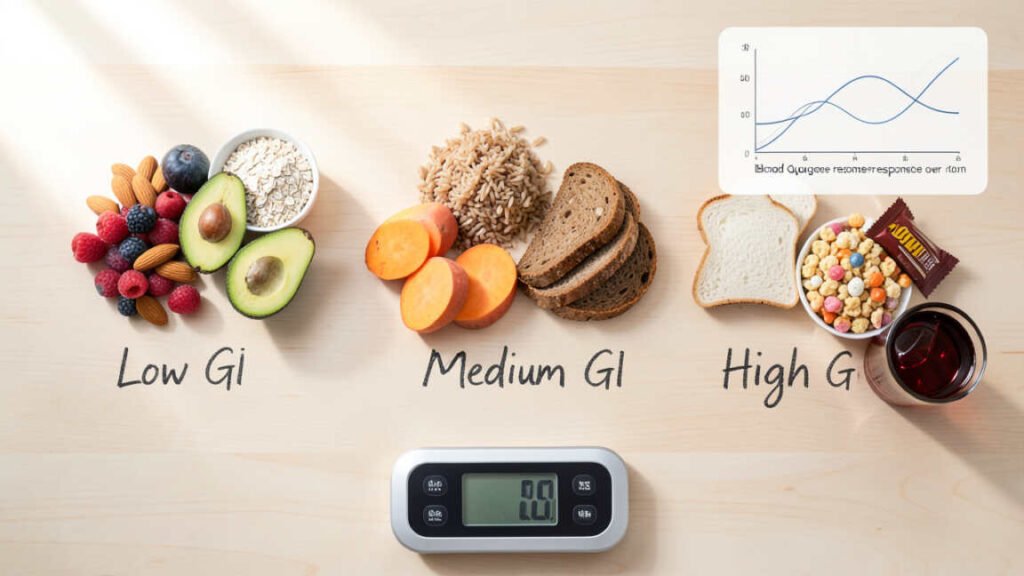
The glycaemic index measures how quickly carbohydrate-containing foods raise blood sugar levels, ranking them on a scale from 0 to 100 compared to pure glucose. Lower-GI foods cause a slower, steadier blood sugar rise, which is practically useful for managing energy levels, appetite, and conditions like diabetes. This value is influenced by factors such as food ripeness, cooking, and processing, and it is distinct from glycaemic load which also considers portion size.
The glycaemic index is a ranking system that shows how quickly carbohydrate-containing foods raise blood sugar levels. This post explains what the GI actually measures, how it works, and where it falls short. You will also get practical tips for using GI values in your daily meals.
Simply put, the glycaemic index measures how fast a carbohydrate food raises blood glucose compared with pure glucose. Foods are scored from 0 to 100, with lower scores meaning a slower, steadier rise in blood sugar. It is a useful tool for managing diabetes, energy levels, and appetite, but it has limits.
Key Takeaways
- The glycaemic index ranks carbs from 0 to 100 based on how quickly they raise blood sugar.
- Low-GI foods (55 or less) release glucose slowly and keep you fuller for longer.
- The GI value changes with ripeness, cooking method, and food processing.
- The glycaemic index is not the same as glycaemic load, which also accounts for portion size.
- Pairing GI with other nutrition factors gives a more complete picture of a healthy diet.
What Is the Glycaemic Index?
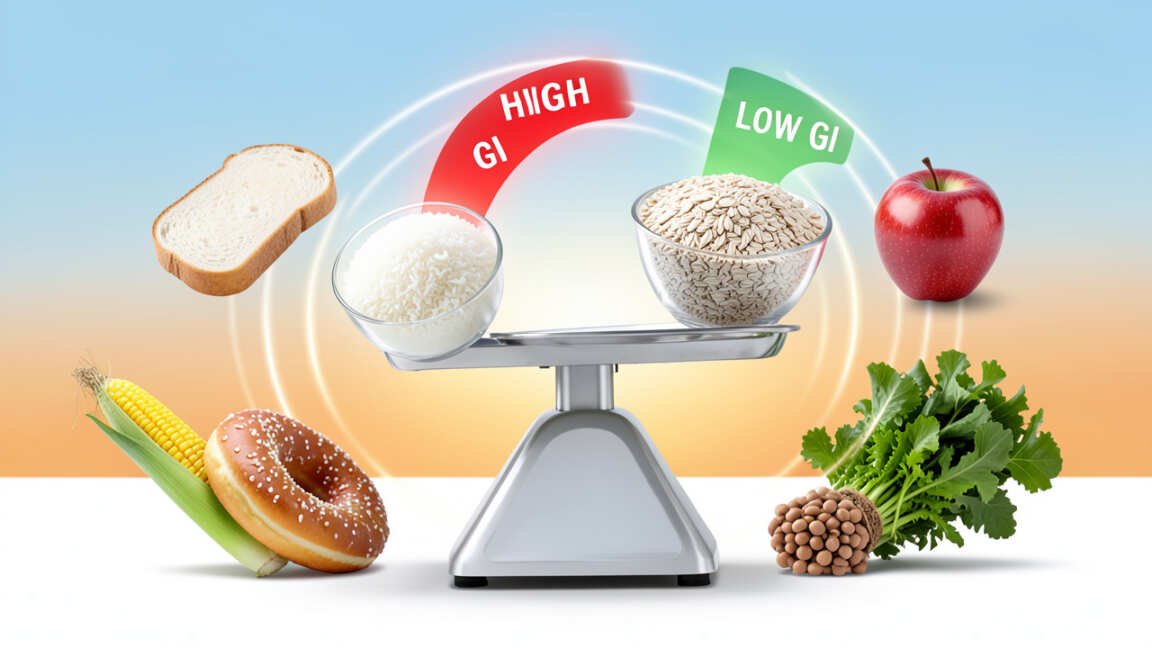
The glycaemic index (GI) is a numerical scale from 0 to 100 that ranks carbohydrate-containing foods by how quickly they raise blood glucose after a meal. Each food is compared against pure glucose, which scores 100. The higher the number, the faster your blood sugar spikes.
Nutrition scientists developed the GI in 1981. Dr. David Jenkins at the University of Toronto created it to help people with diabetes choose carbohydrates that do not cause sudden glucose spikes.
Since then, it has become a standard tool in nutrition science. The University of Sydney now maintains a public GI database with more than 4,000 tested foods, which is one of the largest collections in the world.
What the GI measures and what it ignores
- Measures the speed of glucose entry into your bloodstream
- Measures the peak blood sugar response to a fixed amount of carbohydrate
- Ignores the total carbohydrate content of a serving
- Ignores a food’s vitamin, mineral, and fiber profile
- Ignores the presence of fat, protein, and other nutrients in a meal
Because the GI focuses only on speed, it does not tell you whether a food is healthy overall. Watermelon has a high GI but is rich in vitamins. Chocolate can have a low GI but is still loaded with sugar and fat.
In other words, the GI is one piece of the puzzle, not the whole picture.
How Does the Glycaemic Index Work?
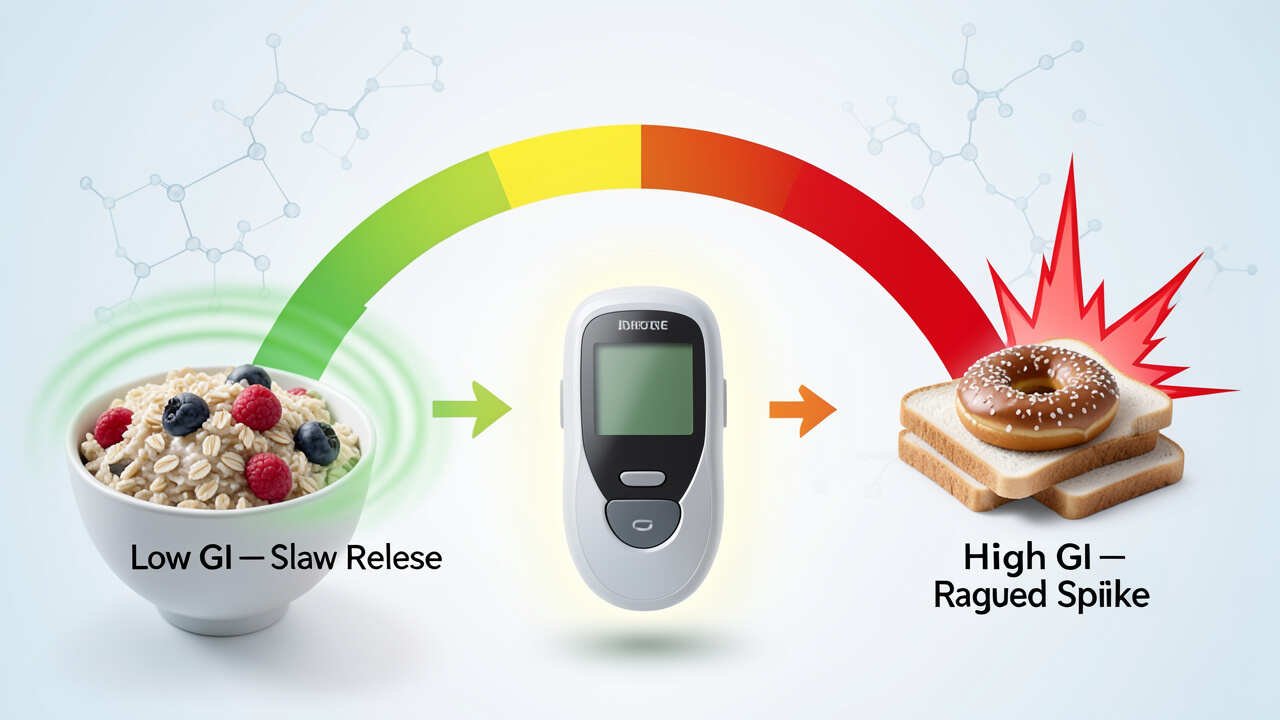
The GI works by comparing your body’s glucose response to a test food against your response to a reference food. In standard protocols, that reference is pure glucose or white bread. The final score is expressed as a percentage of the reference response, which means a food with a GI of 50 raises blood sugar half as much as glucose.
Testing follows a strict procedure so that results stay consistent across labs. Volunteers eat a portion of the test food that contains exactly 50 grams of digestible carbohydrate. Blood glucose is then measured at regular intervals for two hours.
- Measure fasting blood glucose.
- Serve the test food with 50 g of carbohydrate.
- Take blood samples every 15 to 30 minutes for two hours.
- Plot the glucose response curve.
- Divide the test food’s area under the curve by the reference food’s area.
- Multiply by 100 to get the GI value.
This protocol ensures that the results reflect the food, not the person. It also explains why GI values published in scientific studies are generally reliable. Here are some typical GI values to show how the scale works in practice:
| Food | GI Value | Category |
|---|---|---|
| Glucose | 100 | High |
| White bread | 75 | High |