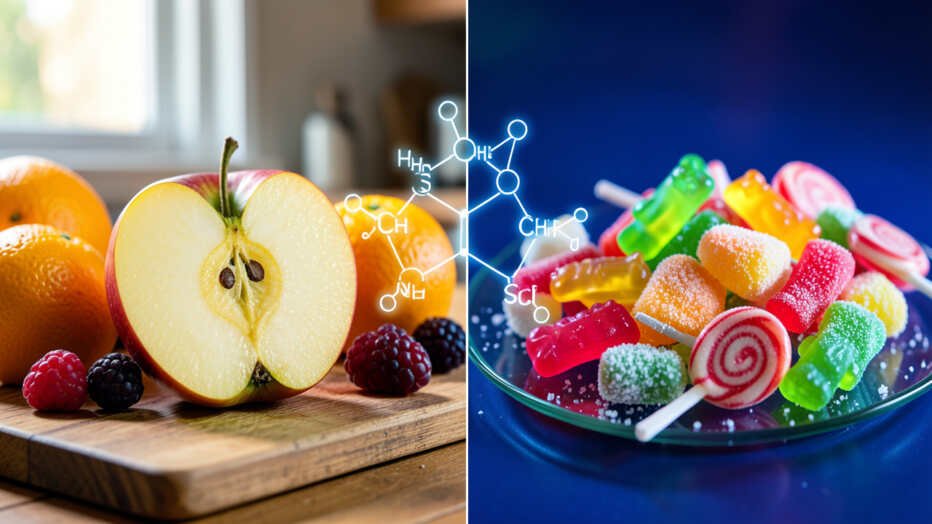
Fruit sugar behaves differently from the sugar in sweets because whole fruit contains fiber, water, and micronutrients that slow down the breakdown and absorption of sugars, preventing the sharp blood sugar spikes often associated with refined sweets. This slower processing means that the body metabolizes fruit sugar more gradually, leading to a reduced glycemic response and better satiety compared to sugary snacks. Consequently, incorporating whole fruits into your diet is a practical strategy for maintaining stable blood sugar levels and supporting overall metabolic health.
Fruit sugar behaves differently from the sugar in sweets, even though both contain almost identical molecules. Your body processes whole fruit more slowly because of fiber, water, and the natural structure of the plant. This post explains the science behind that difference and gives you practical tips for making smarter choices.
Simply put, fruit sugar behaves differently because whole fruit comes packaged with fiber, water, and nutrients that slow digestion and blunt blood sugar spikes. Added sugars in sweets are absorbed rapidly and hit your liver fast. An apple and a candy bar are not equal, even when their sugar grams look similar.
Key Takeaways
- Fruit sugar comes with fiber, water, and micronutrients that slow absorption and prevent sharp blood sugar spikes.
- Fruit sugar behaves differently from added sugar because fiber in whole fruit changes how quickly glucose enters your bloodstream.
- Fruit and sweets can have similar sugar counts, but the metabolic effect is not the same due to nutrient density and satiety.
- Eating whole fruit is linked to better metabolic health, while sugary drinks and sweets are linked to higher disease risk.
What Is Fruit Sugar and Why Does It Matter?
Fruit sugar is not a single substance. It is a mix of glucose, fructose, and sucrose that occurs naturally inside whole fruit. That simple fact matters because the balance of these sugars, plus the fiber and water around them, changes how your body responds.
According to USDA FoodData Central, a medium apple contains about 19 grams of total sugar and 4.4 grams of fiber. A medium banana has roughly 14.4 grams of sugar and 2.6 grams of fiber. When you eat these fruits whole, the sugar is released gradually as you chew and digest.
This is why nutrition experts separate fruit from sweets. The same amount of sugar from a soda hits your bloodstream fast. Fruit sugar, in its natural package, works more like a slow-release fuel.
| Fruit (per 100g) | Total Sugar | Fiber | Glycemic Index |
|---|---|---|---|
| Apple | 10.4g | 2.4g | 36 |
| Banana | 12.2g | 2.6g | 51 |
| Orange | 9.4g | 2.4g | 43 |
| Grapes | 16.3g | 0.9g | 59 |
| Strawberries | 4.9g | 2.0g | 40 |
The glycemic index measures how quickly a food raises blood sugar. Lower values mean a slower, steadier response. Most whole fruits rank low to moderate because their fiber and water buffer the sugar load.
- Whole fruit reduces post-meal blood sugar spikes
- Fruit provides potassium, vitamin C, folate, and antioxidants
- Regular fruit intake is associated with lower cardiovascular risk
- Fiber supports a healthy gut microbiome
- Fruit increases satiety, helping with weight management
Why Does Fruit Sugar Behave Differently From Refined Sweets?
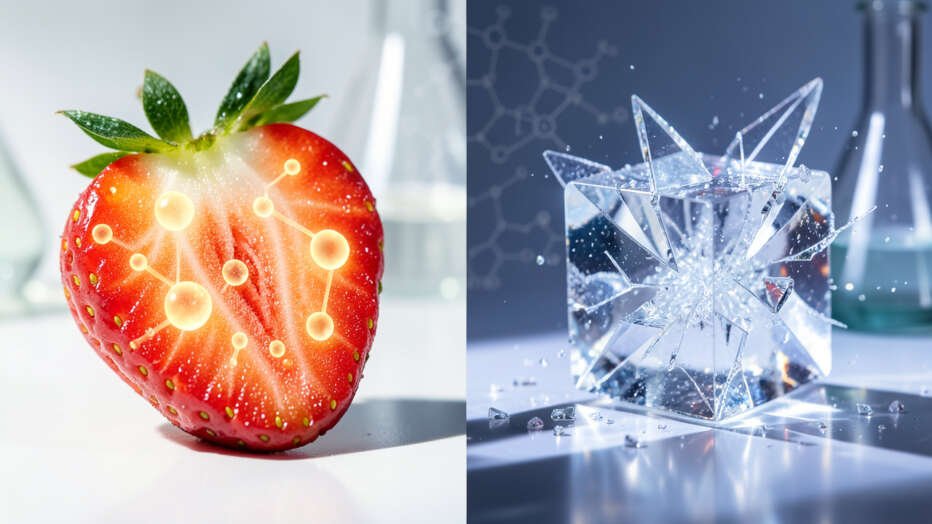
The short answer is structure. In a strawberry, the sugar is locked inside plant cells. In a gummy bear, the sugar is free and concentrated.
Your digestive system has to work harder to release sugar from whole fruit, which spreads absorption over a longer period.
Refined sweets deliver a rapid surge of glucose and fructose. Glucose triggers insulin, and fructose travels to the liver for processing. When the liver receives too much fructose at once, it can convert the excess into fat.
That process is far less active when you eat fruit, because the dose is lower and delivery is slower.
- Fiber slows everything down. Soluble fiber forms a gel in your gut, so sugar enters the blood gradually.
- Water adds volume. Fruit is 80 to 90 percent water, which dilutes sugar and increases fullness.
- Chewing triggers satiety. Whole fruit takes time to eat, giving your brain a chance to register fullness.
- Nutrients support metabolism. Potassium, vitamin C, and polyphenols help your cells process energy efficiently.
The World Health Organization recommends keeping added sugars below 10 percent of total daily energy. Whole fruit falls outside that limit, since the recommendation targets free sugars rather than the sugars built into whole foods.
Tip: Slice an apple and serve it with almond butter or Greek yogurt. The fat and protein slow digestion even more, keeping your blood sugar steady for hours.
How Does Fiber Change the Way Your Body Processes Fruit Sugar?
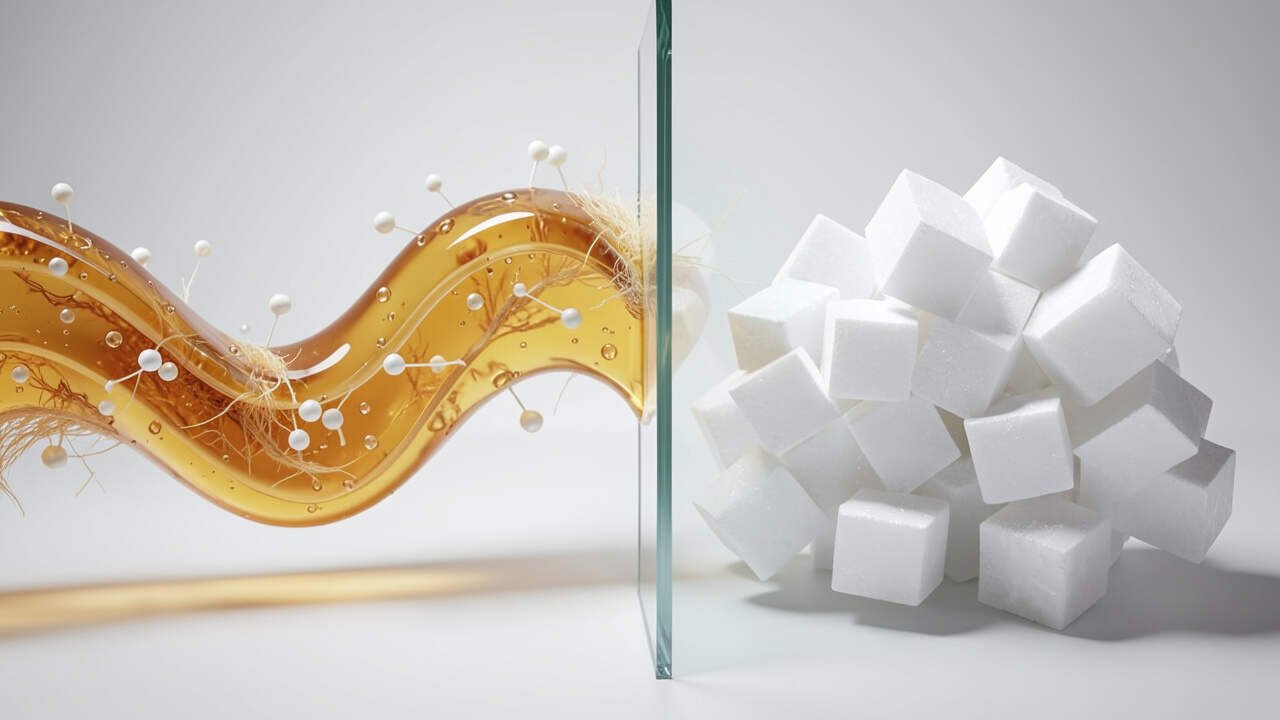
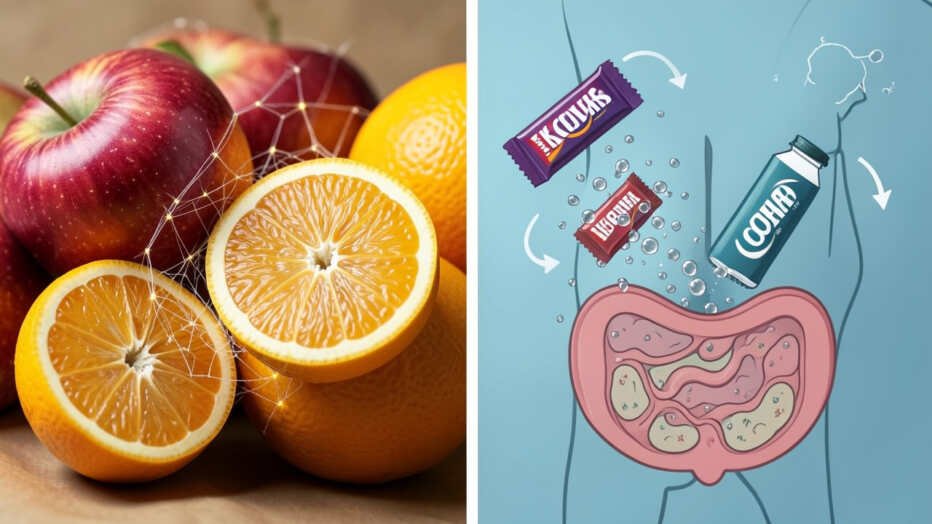
Fiber is the main reason fruit sugar behaves differently from sweets. Soluble fiber, found in apples, oranges, and carrots, dissolves in water and forms a gel-like substance in your digestive tract. That gel thickens the contents of your stomach and slows the movement of sugar into your small intestine.
Insoluble fiber, found in fruit skins and seeds, adds bulk. It helps food move along at a steady pace and keeps you regular. Together, both types create a natural time-release mechanism for the sugars inside fruit.
- Slows gastric emptying
- Reduces the peak of post-meal glucose
- Feeds beneficial gut bacteria
- Improves insulin sensitivity over time
- Increases fullness and reduces snacking
The table below shows what happens when fiber disappears. The difference is dramatic.
| Food | Total Sugar | Fiber | Blood Sugar Effect |
|---|---|---|---|
| Whole apple (medium) | 19g | 4.4g | Gradual rise |
| Apple juice (1 cup) | 24g | 0.5g | Fast rise |
| Cola (12 oz) | 39g | 0g | Rapid spike |
Fruit juice loses most of its fiber during processing. That is why juice behaves more like a sweet drink than like whole fruit, despite its healthy reputation.
Important: Blending fruit into smoothies can keep the fiber if you use the whole fruit. Straining out the pulp removes the fiber and makes the sugar absorb faster.
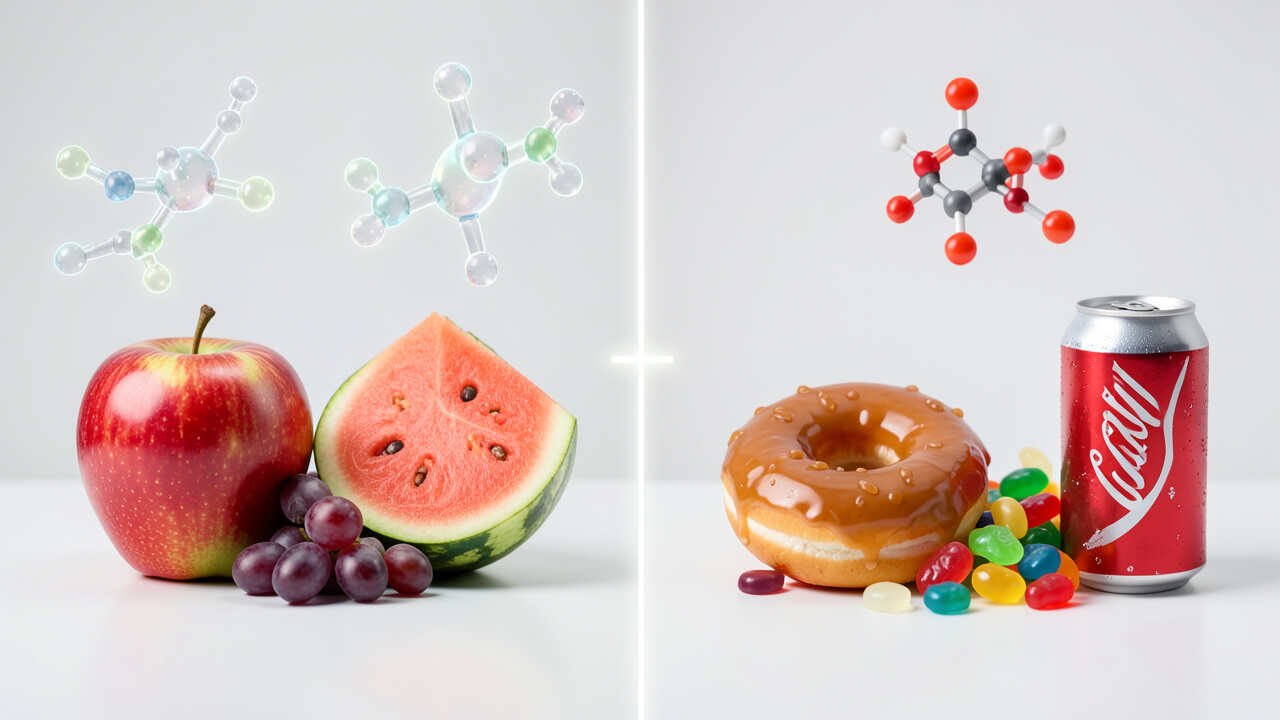
What Are the Differences Between Fructose, Glucose, and Sucrose?
To understand fruit sugar, you need to know the three main players. Each one takes a different path through your body.
- Glucose is the body’s preferred fuel. It enters the bloodstream, triggers insulin, and gets taken into cells for energy.
- Fructose is sweeter than glucose and is processed mainly by the liver. It does not raise insulin directly.
- Sucrose, or table sugar, is one glucose molecule linked to one fructose molecule. High-fructose corn syrup is a similar blend with a slightly higher fructose share.
Whole fruit contains these sugars in small, balanced amounts. An apple has roughly 60 percent fructose and 25 percent glucose, with the rest as sucrose and other sugars. Because the total dose per serving is modest, the liver can handle the fructose without stress.
Sweets and soda deliver the same sugars in much larger quantities and at high speed. Over time, that pattern of excess fructose intake has been linked to fatty liver changes, insulin resistance, and elevated triglycerides. The American Diabetes Association and the American Heart Association both point to added sugars, not fruit, as the main concern.
Warning: Foods labeled “no added sugar” can still contain fruit juice concentrate, honey, or maple syrup. These are all forms of free sugar and should count toward your daily added sugar limit.
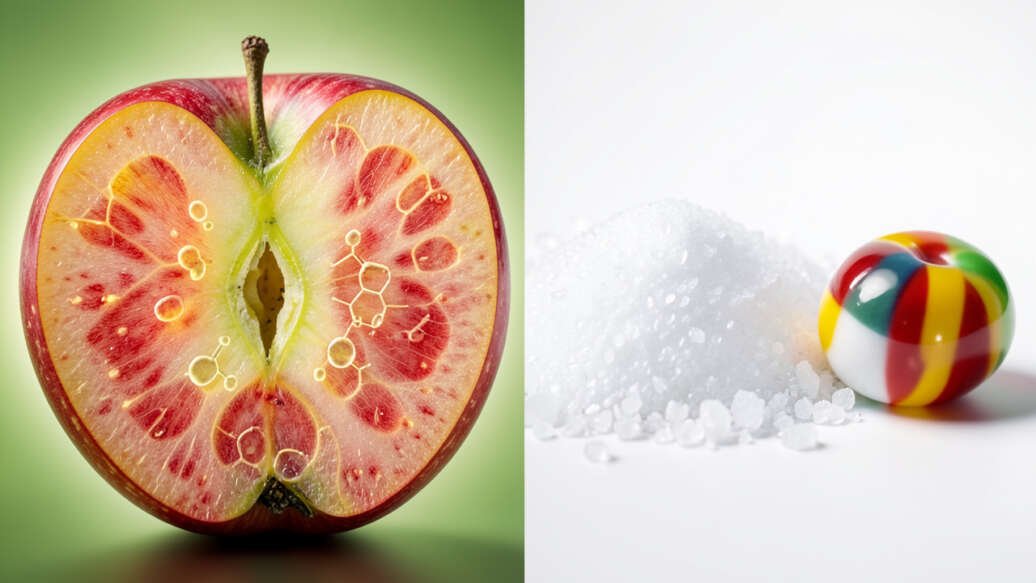
Fruit Sugar vs. Added Sugar: Key Comparisons
Putting whole fruit next to a candy bar makes the differences obvious. The table below compares three common sugar sources across the factors that matter most.
| Factor | Whole Fruit | Fruit Juice | Candy or Soda |
|---|---|---|---|
| Sugar type | Natural mix | Same sugars | Sucrose or HFCS |
| Fiber | Present | Mostly removed | None |
| Nutrients | Vitamins, minerals, antioxidants | Some remain | Very few |
| Satiety | High | Low | Low |
| Blood sugar response | Gradual | Fast | Rapid |
| Liver load | Low | Moderate | High |
Whole fruit wins on every factor. Juice sits in the middle, and candy or soda sits at the bottom. The American Heart Association recommends limiting added sugars to 36 grams per day for men and 25 grams per day for women.
One 12-ounce cola already contains about 39 grams, which exceeds both limits.
- Craving something sweet? Reach for frozen grapes or a sliced mango.
- Drizzle berries over yogurt instead of using fruit-flavored syrup.
- Drink water with lemon slices instead of fruit punch.
- Choose canned fruit packed in water, not heavy syrup.
- Use mashed banana or unsweetened applesauce in baking instead of sugar.
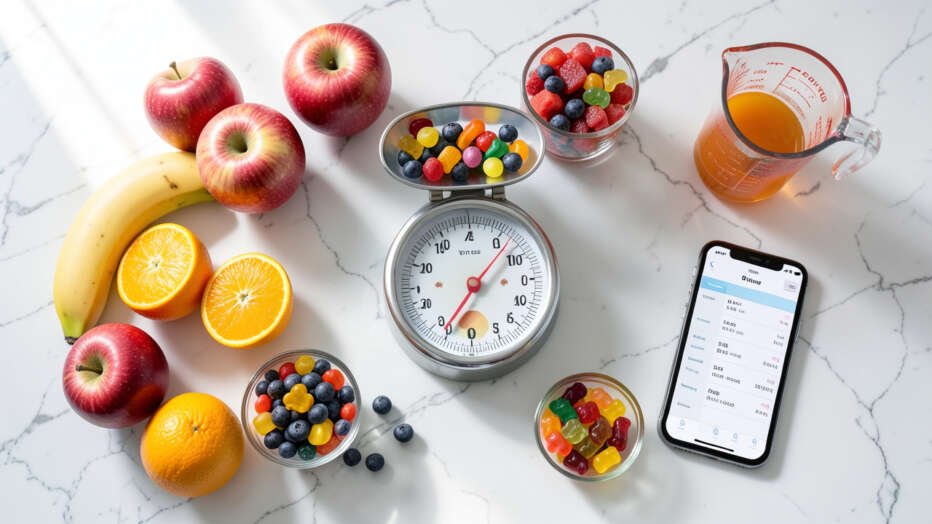
How Much Fruit Sugar Should You Eat Per Day?
Most healthy adults can eat 2 to 3 servings of whole fruit per day without any problem. One serving equals about one medium fruit, one cup of berries, or half a cup of chopped fruit. According to Mayo Clinic, a serving of fruit typically contains about 15 grams of carbohydrate.
Your activity level, muscle mass, and metabolic health all influence how much fruit works for you. Athletes need more carbohydrates and can handle larger portions. People with type 2 diabetes or insulin resistance should be more deliberate about fruit choices and portion sizes.
- Start with berries, citrus, and apples, which have a lower glycemic load.
- Pair fruit with protein or fat at snack time.
- Measure portions for high-sugar fruits like mangoes, grapes, and bananas.
- Choose whole fruit over juice and dried fruit.
- Pay attention to how your energy and cravings feel after eating fruit.
Important: If you have diabetes, your glucose response to