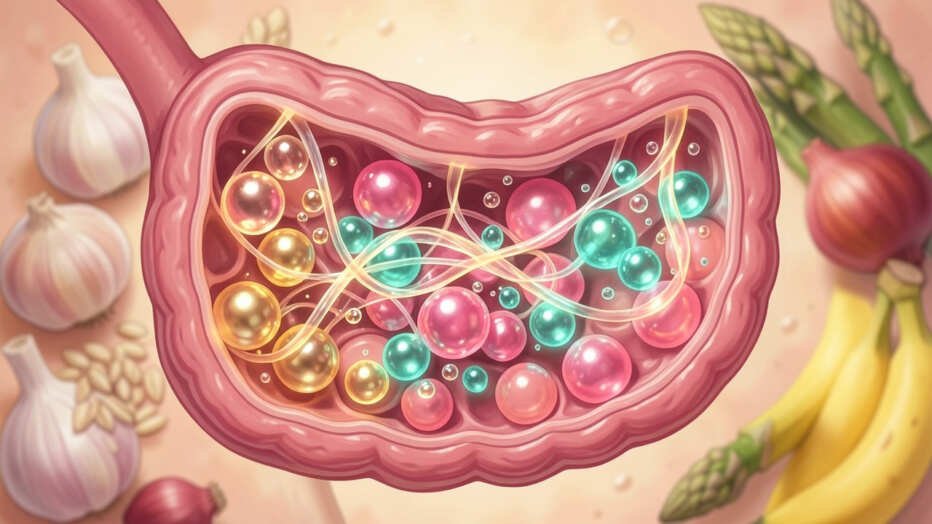
Fermentable fibre is a type of dietary carbohydrate that resists digestion in the small intestine and is broken down by beneficial bacteria in the colon. This fermentation process produces short-chain fatty acids, which provide energy to colon cells and support overall gut health, digestion, and metabolic function. Key food sources include oats, onions, garlic, bananas, and legumes, and it should be increased gradually with adequate water intake to minimize digestive discomfort.
Fermentable fibre is a type of dietary fibre that your gut bacteria break down into beneficial compounds like short-chain fatty acids. This post explains what it is, how it works in your body, which foods contain the most of it, and how to add it to your diet without digestive discomfort.
Simply put, fermentable fibre is plant carbohydrate your body cannot digest but your gut bacteria can. It feeds beneficial microbes, produces short-chain fatty acids like butyrate, and supports digestion, blood sugar control, and heart health. Most people need more of it, but increasing it gradually is the smart way to go.
Key Takeaways
- Fermentable fibre is a form of soluble fibre that gut bacteria ferment into short-chain fatty acids.
- It feeds beneficial gut microbes, supports regular digestion, and helps manage blood sugar and cholesterol.
- Top food sources include oats, barley, bananas, onions, garlic, legumes, and apples.
- Add fermentable fibre slowly over several weeks and drink plenty of water to minimize gas and bloating.
What Is Fermentable Fibre?
Fermentable fibre is a category of dietary fibre made from carbohydrates that resist digestion in the small intestine. Once it reaches the large intestine, resident gut bacteria use it as fuel. This process, called fermentation, produces short-chain fatty acids that your body can actually use for energy and repair.
Most fermentable fibres are also a type of soluble fibre, meaning they dissolve in water to form a gel. That gel slows digestion, keeps you fuller for longer, and helps regulate blood sugar and cholesterol. But the defining trait is fermentability – not all soluble fibre ferments at the same rate.
Here are the key traits of fermentable fibre:
- Passes through the stomach and small intestine mostly undigested
- Fermented by microbes in the large intestine (caecum and colon)
- Produces short-chain fatty acids, mainly acetate, propionate, and butyrate
- Draws water into the bowel, which softens stool
- Found naturally in plant foods like fruits, vegetables, whole grains, and legumes
- Acts as a prebiotic when it specifically feeds beneficial bacteria
- Slows nutrient absorption, supporting steady blood sugar levels
| Feature | Fermentable fibre | Non-fermentable fibre |
|---|---|---|
| Main job | Feeds gut bacteria | Adds bulk to stool |
| Examples | Oats, barley, bananas, onions, legumes | Wheat bran, celery, nuts |
| Water solubility | Usually soluble | Mostly insoluble |
| Effect on digestion | Slows digestion, produces gas | Speeds transit time |
| Key product | Short-chain fatty acids | Stool bulk |
This table sums it up nicely. Both types matter, but fermentable fibre does the heavy lifting for your microbiome.
How Does Fermentable Fibre Work in Your Gut?
When you eat fermentable fibre, it takes a specific journey through your digestive system. Understanding that journey helps explain why it affects everything from your mood to your waistline. The process happens in five main stages.
- Chewing and swallowing: The fibre enters your mouth and travels down to your stomach, where digestive acids and enzymes do very little to break it down.
- Small intestine passage: Most fibres resist the enzymes in your small intestine, so they move through without being absorbed into your bloodstream.
- Colon arrival: The intact fibre reaches the large intestine, where trillions of microorganisms make their home.
- Microbial fermentation: Your gut bacteria break the fibre down into short-chain fatty acids, gases like hydrogen and carbon dioxide, and other metabolites.
- Absorption and use: The short-chain fatty acids enter colon cells and the bloodstream, where they influence metabolism, immunity, and even brain function.
The three main short-chain fatty acids produced during fermentation are acetate, propionate, and butyrate. Acetate feeds muscle tissue and influences appetite. Propionate helps the liver regulate blood sugar and cholesterol.
Butyrate is the preferred energy source for the cells lining your colon – it keeps that barrier strong and reduces inflammation.
According to the National Institutes of Health (NIH), the human gut contains roughly 100 trillion bacteria. Feeding those bacteria the right fuel is one of the most direct levers you have on your health.
Tip: Eat fermentable fibre alongside other plant foods that contain antioxidants. Whole-food sources like berries, beans, and oats give you a bigger payoff than isolated supplements.
What Are the Main Types of Fermentable Fibre?
Fermentable fibre is more of an umbrella term than a single ingredient. Scientists group it by chemical structure, and each type feeds different bacteria in slightly different ways. Here are the main types you will hear about.
- Beta-glucan: Found mainly in oats and barley, beta-glucan is known for lowering LDL cholesterol. It forms a thick gel in the gut and ferments slowly.
- Inulin: A type of fructan found in chicory root, Jerusalem artichokes, garlic, and onions. Inulin is a strong prebiotic and ferments quickly, sometimes causing gas.
- Pectin: Present in apples, citrus peel, carrots, and berries. Pectin is particularly good at slowing digestion and feeding beneficial species like Faecalibacterium prausnitzii.
- Resistant starch: Forms when starchy foods like potatoes, rice, and pasta are cooked and then cooled. It acts like fibre even though it starts as normal starch.
- Fructooligosaccharides (FOS): Short chains of fructose found in bananas, onions, and garlic. FOS are commonly added to prebiotic supplements.
- Galactooligosaccharides (GOS): Found in beans, lentils, and chickpeas. GOS are prized for boosting bifidobacteria, a key beneficial genus.
- Gum and mucilage: Found in oats, psyllium, and chia seeds. Many gums are viscous and fermentable, helping with both digestion and cholesterol.
Monash University, the research institution behind the low FODMAP diet, studies these fibres closely because some people struggle to ferment large amounts quickly. That does not mean these fibres are bad – it means your gut needs time to adjust.
Almost every plant food contains a mix of fibre types, so variety is your best strategy for a healthy microbiome.
Why Is Fermentable Fibre Important for Your Health?
Fermentable fibre is not just about keeping you regular. The short-chain fatty acids produced during fermentation influence nearly every system in your body. Here is a look at the main benefits, along with the evidence behind them.
According to a landmark 2019 review published in The Lancet, people who consumed 25 to 29 grams of fibre daily had a 15 to 30 percent lower risk of cardiovascular disease, type 2 diabetes, and colorectal cancer compared with low-fibre eaters. Yet National Health and Nutrition Examination Survey (NHANES) data shows that fewer than 1 in 10 Americans meets the recommended daily fibre intake.
| Health area | How fermentable fibre helps |
|---|---|
| Gut health | Boosts beneficial bacteria and butyrate production, strengthening the gut barrier |
| Blood sugar control | Slows carbohydrate absorption, reducing post-meal glucose spikes |
| Cholesterol levels | Binds cholesterol and bile acids, helping lower LDL cholesterol |
|
|