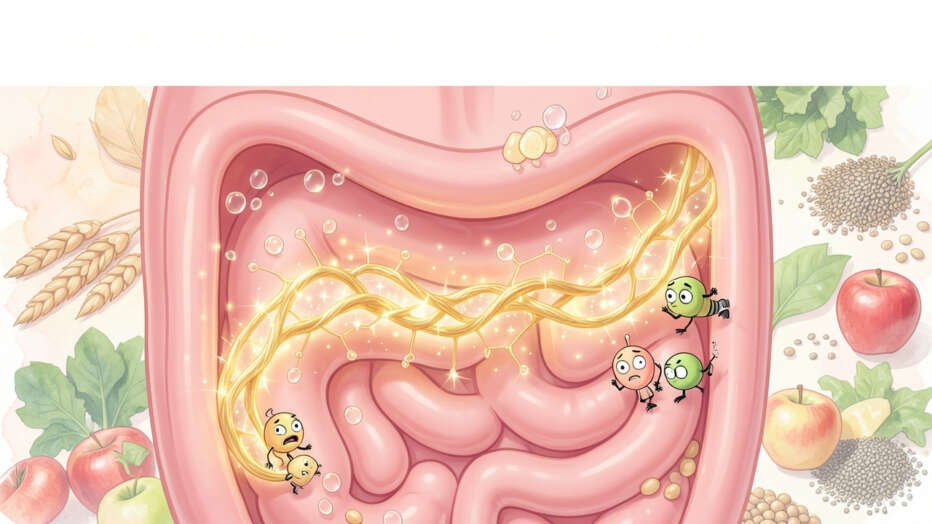
Dietary fibre cannot be fully digested because the human body lacks the necessary enzymes to break down its chemical bonds. This indigestible carbohydrate includes soluble fibre, which dissolves in water and feeds beneficial gut bacteria, and insoluble fibre, which adds bulk to stool and promotes regularity. Regular consumption of fibre supports digestive health, helps control blood sugar and cholesterol levels, and the recommended daily intake for adults is approximately 30 grams.
Dietary fibre is a carbohydrate that your body cannot break down into sugar molecules. This guide covers what fibre is, why it resists digestion, how it benefits your health, and how much you need each day.
Simply put, dietary fibre is indigestible because humans lack the enzymes needed to break the bonds between its sugar units. Instead of fueling your body directly, fibre travels to your colon, where gut bacteria ferment it. This supports digestion, blood sugar control, and heart health.
Key Takeaways
- Dietary fibre resists digestion because your body lacks the enzymes needed to break its chemical bonds.
- Soluble fibre dissolves in water and feeds gut bacteria, while insoluble fibre adds bulk to stool.
- Eating enough dietary fibre can lower cholesterol, stabilise blood sugar, and protect against bowel disorders.
- Adults need about 30 grams of fibre per day, yet most people consume less than half of that.
What Is Dietary Fibre?
Dietary fibre is the edible part of plants that your small intestine cannot fully digest. It includes cellulose, hemicellulose, pectin, gums, and lignin. These compounds form the structural framework of plant cell walls and seeds.
Unlike starch and sugar, fibre does not get broken down into glucose. Instead, it passes through your digestive tract mostly intact, eventually reaching your large intestine where bacteria can ferment part of it.
Here are the key characteristics of dietary fibre:
- It comes exclusively from plant foods like vegetables, fruits, whole grains, nuts, and legumes.
- It provides minimal energy because human digestive enzymes cannot split its beta-glycosidic bonds.
- It is classified as either soluble or insoluble, depending on how it behaves in water.
- It feeds beneficial gut microbes when it reaches the colon.
- It slows digestion, which helps control blood sugar and keeps you feeling full.
- It adds bulk to stool, preventing constipation.
- It may be fermented by gut bacteria into short-chain fatty acids.
Fibre is not a single nutrient. It is a family of compounds with different structures, and this complexity is exactly why your body treats it so differently from other carbs.
Why Can’t the Body Fully Digest Dietary Fibre?
The short answer is that humans lack the digestive enzymes required to break the links between fibre molecules. Your body produces enzymes like amylase to digest starch, but it does not produce cellulase, the enzyme needed to break down cellulose.
Fibre molecules are joined by strong beta-glycosidic bonds. Your digestive enzymes can only break alpha-glycosidic bonds, which are found in starch and glycogen. This structural difference means fibre sails through your stomach and small intestine unchanged.
Here is exactly what happens to fibre as it moves through your body:
- Mouth: Chewing reduces fibre into smaller pieces, but no chemical breakdown occurs.
- Stomach: Stomach acid and grinding churn the fibre but do not weaken its molecular bonds.
- Small intestine: Digestive enzymes break down most carbs, yet they ignore fibre entirely.
- Large intestine: Resident gut bacteria ferment some soluble fibre, producing gas and short-chain fatty acids.
- Elimination: Insoluble fibre and unfermented remnants become part of stool and are excreted.
Your gut bacteria can partially break down fibre through fermentation, but the process is slow and incomplete. That is why dietary fibre is often described as “indigestible carbohydrate” even though a small portion is eventually converted into useful compounds.
Warning: Chewing fibre more thoroughly does not make it digestible. The chemical bonds remain intact no matter how finely you grind the food.
| Digestive Enzyme | Breaks Down | Can It Break Fibre? |
|---|---|---|
| Salivary amylase | Starch | No |
| Pancreatic amylase | Glycogen and starch | No |
| Sucrase, lactase, maltase | Disaccharides | No |
| Cellulase | Cellulose in fibre | Humans do not produce it |
Cows, termites, and other herbivores can digest cellulose because they host microorganisms that produce cellulase. Humans have a less specialised gut microbiome, so we rely on fermentation for only a small fraction of fibre’s energy.
How Does Dietary Fibre Work in Your Digestive System?
Fibre changes the behaviour of your digestive tract from the moment it hits your stomach. Soluble fibre absorbs water and forms a thick gel, while insoluble fibre stays spongy and adds bulk. Together, they regulate the speed and efficiency of digestion.
In the small intestine, the gel created by soluble fibre traps nutrients like glucose and cholesterol. This slows absorption, which prevents sharp blood sugar spikes and lowers cholesterol reabsorption. Insoluble fibre acts like a brush, speeding up the movement of food through the intestines.
Here is how fibre behaves in each part of your system:
- Slows gastric emptying: Fibre delays the rate at which food leaves your stomach, extending fullness.
- Traps bile acids: Soluble fibre binds to bile, forcing your liver to use cholesterol to make more bile.
- Feeds the microbiome: Fermentable fibre encourages the growth of beneficial Bifidobacteria and Lactobacillus species.
- Produces short-chain fatty acids: Acetate, propionate, and butyrate support gut lining health and reduce inflammation.
- Normalises transit time: Insoluble fibre prevents both constipation and diarrhoea by regulating water content.
Tip: Drink plenty of water when you increase fibre intake. Soluble fibre needs water to form its gel, and without it you may end up more constipated instead of less.
| Digestive Organ | What Fibre Does |
|---|---|
| Stomach | Delays emptying, increases satiety |
| Small intestine | Slows sugar absorption, binds bile |
| Large intestine | Fermented by bacteria, produces SCFAs, adds stool bulk |
This coordinated action is why fibre is linked to lower risks of heart disease, type 2 diabetes, and colorectal cancer. Your gut microbiome benefits from the steady supply of fermentable material, which keeps the microbial community diverse and healthy.
Types of Dietary Fibre: Soluble vs Insoluble
All dietary fibre is plant-derived, but not all fibre behaves the same way. The two main categories are soluble and insoluble, and each one has a unique role in your body. You need both for optimal health.
Soluble fibre dissolves in water to form a gel. It is fermented by gut bacteria and helps manage blood sugar and cholesterol. Insoluble fibre does not dissolve, absorbs water, and adds bulk to stool, helping food move through the digestive tract faster.
Here is a quick comparison of the two types:
| Feature | Soluble Fibre | Insoluble Fibre |
|---|---|---|
| Dissolves in water | Yes | No |
| Viscosity | Forms a thick gel | Stays sponge-like |
| Main effects | Lowers cholesterol, stabilises blood sugar | Prevents constipation, hastens transit |
| Fermentation | Highly fermentable | Minimally fermented |
| Food sources | Oats, barley, beans, apples, carrots | Wheat bran, nuts, celery, cauliflower |
Many whole foods contain a mix of both types. For example, an apple offers soluble pectin in its flesh and insoluble cellulose in its skin. Eating variety is the easiest way to cover both categories.
Some experts also highlight a third category called resistant starch. This type of starch resists digestion in the small intestine and behaves like soluble fibre. You can find it in cooked and cooled potatoes, green bananas, and legumes.
Important: Resistant starch is often counted as fibre on food labels, but its fermentation produces more gas than typical soluble fibre. Increase the amount slowly to avoid bloating.
What Are the Health Benefits of Dietary Fibre?
Regularly eating enough dietary fibre is one of the most effective dietary habits for long-term health. Fibre affects your heart, blood sugar, gut, and even your weight through multiple direct and indirect pathways.
A landmark 2019 review published in The Lancet examined 185 studies and found that people who consumed 25 to 29 grams of fibre daily had a 15 to 30 percent lower risk of all-cause mortality, coronary heart disease, stroke, type 2 diabetes, and colorectal cancer compared to those who ate the least fibre.
Here are the most well-supported benefits:
- Lowers LDL cholesterol: Soluble fibre binds bile acids, forcing the liver to use up cholesterol and reducing levels in the blood.
- Controls blood sugar: Fibre slows glucose absorption and improves insulin sensitivity, making it vital for diabetes management.
- Supports bowel regularity: Insoluble fibre prevents constipation, while soluble fibre helps firm loose stools.
- Aids weight management: Fibre increases fullness for longer, which naturally reduces calorie intake.
- Feeds beneficial gut bacteria: Fermentable fibre boosts short-chain fatty acids that protect the colon lining.
- Reduces inflammation: Higher fibre intake is associated with lower levels of C-reactive protein, a marker of systemic inflammation.
- Lowers colon cancer risk: Faster transit times and butyrate production both help protect colon cells from damage.
Fibre also acts as a prebiotic. It provides the preferred fuel source for healthy bacteria like Bifidobacterium and Lactobacillus. A more diverse gut microbiome is linked to better immunity, mood, and metabolic health.
Tip: Do not rely on fibre supplements alone. Whole fibre sources contain vitamins, minerals, and phytochemicals that work synergistically with the fibre itself.
How Much Dietary Fibre Do You Actually Need?
The recommended daily intake for adults is about 30 grams for men and 25 grams for women in the UK and many other countries. At this time, most adults consume only about 18 to 20 grams per day, well below the target.
Your needs can vary based on age, gender, and energy intake. Children need less fibre, while athletes or people on high-calorie diets may need more. Here is a general reference table:
| Age Group | Recommended Fibre Intake |
|---|---|
| Children 2-5 years | 15 g per day |
| Children 5-11 years | 20 g per day |
| Teens 11-16 years | 25 g per day |
| Adult women | 25 g per day |
| Adult men | 30 g per day |
| Adults over 65 | 25-30 g per day |
Reaching 30 grams is easier than it sounds. A single serving of oats provides 4 grams, a slice of wholemeal bread adds 2 grams, and a cup of cooked lentils delivers 15 grams. Building meals around whole plant foods is the most reliable strategy.
Here are three practical ways to increase your intake:
- Swap white bread, rice, and pasta for whole-grain versions.
- Add a handful of beans or chickpeas to salads, soups, and stews.
- Keep fruit and vegetable snacks visible and prepared, like carrot sticks or an apple.
Warning: Jumping straight from 15 grams to 30 grams in one week can cause severe bloating and cramps. Increase your fibre intake gradually over several weeks.
Common Mistakes When Increasing Fibre Intake
Even when people intend to eat more dietary fibre, they often make simple errors that lead to discomfort or poor results. Knowing these mistakes helps you build a sustainable fibre routine without the usual side effects.
The most common trap is adding high-fibre foods while ignoring fluid intake. Fibre works like a sponge; without enough water, it can harden and worsen constipation. Another mistake is relying on a single fibre source, like bran, which may irritate rather than help.
Here are the top mistakes and how to fix them:
| Mistake | Why It Is a Problem | Solution |
|---|---|---|
| Adding fibre too fast | Causes gas, bloating, cramps | Increase by 3-5 grams per week |
| Not drinking enough water | Fibre may block the digestive tract | Drink 2-3 litres of fluid daily |
| Eating only insoluble fibre | Irritates the colon, lacks microbiome support | Combine soluble and insoluble sources |
| Ignoring processed “high-fibre” foods | Often contain additives and low-quality fibre | Check the ingredient list; use whole foods |
| Forgetting resistant starch | Misses a key prebiotic nutrient | Add cooled potato or green banana |
Listening to your body is essential. Some people find that certain fibre-rich foods, like raw brassicas, cause more gas than others. Cooking them often makes them easier to tolerate.
A common misconception is that you need to cut out whole grains to reduce bloating. In most cases, the issue is speed of increase, not the food itself. Slow and steady wins the race.
Important: If fibre causes persistent severe pain, bleeding, or unintentional weight loss, see a doctor. These symptoms may indicate an underlying condition like Crohn’s disease or irritable bowel syndrome.
Frequently Asked Questions
Why can’t the body fully digest dietary fibre?
Your body does not produce the enzymes necessary to break the beta-glycosidic bonds that link fibre molecules. While gut bacteria can ferment some fibre, the process is incomplete and produces gas rather than usable glucose.
Is dietary fibre a carbohydrate?
Yes, fibre is a type of carbohydrate, but unlike starches and sugars, it is not digested into glucose. It provides minimal calories and passes through the digestive tract mostly intact.
Does fibre help you poop more?
Yes, especially insoluble fibre. It adds bulk to stool and absorbs water, which softens stool and helps it move through the colon more quickly. Soluble fibre also supports regularity by feeding healthy gut bacteria.
Can you digest fibre if you chew it long enough?
No. Chewing only breaks fibre into smaller physical pieces. The chemical bonds remain unchanged, and your digestive enzymes still cannot break them down.
What happens if you eat too much fibre?
Eating excessive fibre in a short period can cause bloating, gas, cramping, and constipation. In rare cases, very high intakes over 70 grams per day may block nutrient absorption or cause an intestinal obstruction, especially without adequate fluid intake.
Final Thoughts
Dietary fibre is a unique carbohydrate that your body simply cannot fully digest, yet it remains essential for good health. It feeds your gut bacteria, steadies blood sugar, lowers cholesterol, and keeps your bowels regular. Most adults still fall short of the daily target, so small changes like switching to whole grains and adding beans can make a big difference.
Start slowly, drink plenty of water, and let your digestive system adjust at its own pace.