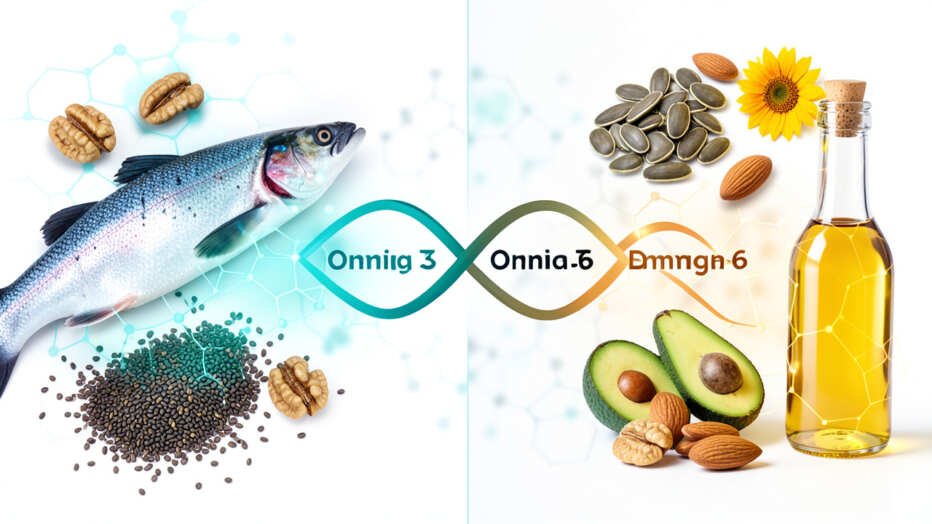
Omega-3 and omega-6 fatty acids are essential polyunsaturated fats that your body must obtain from dietary sources like fish, nuts, and seeds. While omega-3s have anti-inflammatory properties that support heart and brain health, omega-6s can promote inflammation when consumed in excess, making their dietary balance crucial. The typical Western diet contains a disproportionately high level of omega-6s, and achieving a healthier ratio closer to 4:1 is key for optimal wellness.
Omega-3 and omega-6 fatty acids are two families of polyunsaturated fats that your body needs to survive and thrive. This guide breaks down what they are, how they work, and why the balance between them matters more than most people realize.
Simply put, omega-3 and omega-6 fatty acids are essential polyunsaturated fats that your body cannot produce on its own. Omega-3s reduce inflammation and support heart and brain health, while omega-6s promote growth and immune function. Most people need more omega-3s and fewer omega-6s to reach a healthy balance.
Key Takeaways
- Omega-3 and omega-6 fatty acids are essential fats that your body cannot synthesize, so you must get them from food.
- Omega-3s are largely anti-inflammatory, while omega-6s promote inflammation when consumed in excess.
- The typical Western diet has an omega-6 to omega-3 ratio near 20:1, when experts recommend something closer to 4:1.
- Balancing omega-3 and omega-6 fatty acids supports heart health, brain function, and joint comfort.
- Whole food sources like fish, walnuts, and seeds outperform supplements for most people.
What Are Omega-3 Fatty Acids?
Omega-3 fatty acids are polyunsaturated fats with their first double bond located three carbon atoms from the methyl end of the chain. That small structural difference gives them unique anti-inflammatory properties. Your body uses them to build cell membranes, produce hormones, and regulate genetic function.
There are three main types of omega-3s, and each plays a different role in the body:
- ALA (alpha-linolenic acid): found in plants, used mainly for energy and converted into EPA and DHA at a very low rate.
- EPA (eicosapentaenoic acid): found in marine sources, supports heart health and reduces inflammation.
- DHA (docosahexaenoic acid): found in marine sources, is a major structural component of the brain and retina.
ALA conversion is inefficient. Only about 5 to 10 percent of ALA becomes EPA, and less than 5 percent becomes DHA. That is why eating direct sources of EPA and DHA, like fatty fish, is more effective than relying on plant sources alone.
The best dietary sources of omega-3s include:
- Fatty fish such as salmon, mackerel, sardines, and anchovies
- Walnuts and walnut oil
- Chia seeds and ground flaxseeds
- Hemp seeds
- Algae oil, which is a plant-based EPA and DHA source
- Pasture-raised eggs
According to the National Institutes of Health, DHA is especially critical during pregnancy and early childhood because it supports infant brain and eye development. Low omega-3 levels are also linked to dry skin, poor mood, and joint discomfort.
What Are Omega-6 Fatty Acids?
Omega-6 fatty acids have their first double bond six carbon atoms from the methyl end. Like omega-3s, they are essential, meaning your body cannot create them. The most common omega-6 in the diet is linoleic acid (LA), which your body converts into arachidonic acid (AA).
Omega-6 fats are not inherently bad. They play crucial roles in normal growth, skin health, and immune response. They help produce signaling molecules called eicosanoids, which regulate blood pressure, blood clotting, and inflammatory responses.
The problem is quantity. Modern food production has flooded the food supply with refined vegetable oils. These oils are cheap, shelf-stable, and found in nearly every processed food.
As a result, most people consume far more omega-6 than their ancestors ever did.
Common sources of omega-6 fatty acids include:
- Soybean, corn, sunflower, and safflower oils
- Mayonnaise and salad dressings made with vegetable oil
- Processed snacks like chips, crackers, and cookies
- Fried fast food
- Poultry and eggs
- Nuts and seeds, including almonds, sunflower seeds, and pumpkin seeds
Important: Do not try to eliminate omega-6 fats entirely. Your body needs them. The goal is to reduce the excess from processed foods while increasing omega-3 intake from whole foods.
How Do Omega-3 and Omega-6 Fatty Acids Work Together?
Omega-3 and omega-6 compete for the same enzymes in your body. These enzymes, called desaturases and elongases, convert the fats into their active forms. When omega-6 levels are very high, they crowd out omega-3s and limit their conversion.
Think of it like a highway. Omega-3 and omega-6 are both trying to use the same lanes. If omega-6 traffic is heavy, omega-3 vehicles struggle to get through.
This competition is why the ratio between the two matters so much.
| Feature | Omega-3 | Omega-6 |
|---|---|---|
| Main effect | Anti-inflammatory | Pro-inflammatory in excess |
| Primary types | ALA, EPA, DHA | Linoleic acid, arachidonic acid |
| Main food sources | Fish, algae, flax, chia, walnuts | Vegetable oils, nuts, poultry |
| Role in inflammation | Reduces inflammatory markers | Can increase inflammatory markers |
| Western diet intake | Too low | Too high |
Both fats are necessary, but they push the body in opposite directions. Omega-3s calm inflammation, while omega-6s stimulate it. A mild inflammatory response is essential for healing injuries and fighting infections.
The trouble begins when inflammation never switches off, which happens with a chronic omega-6 excess.
When you balance omega-3 and omega-6 fatty acids, the body produces a healthier mix of eicosanoids. This balance supports normal blood pressure, reduces joint stiffness, and keeps the immune system from overreacting to harmless triggers.
What Is the Ideal Omega-3 to Omega-6 Ratio?
Evolutionary research suggests that early humans ate roughly equal amounts of omega-6 and omega-3. Hunter-gatherer diets had a ratio between 1:1 and 4:1. Modern industrial diets have pushed that ratio to anywhere from 15:1 to 20:1.
Researchers like Dr. Artemis Simopoulos have linked high omega-6 to omega-3 ratios with increased risk of heart disease, obesity, and inflammatory conditions. A ratio near 4:1 or lower is associated with reduced inflammation and better cardiovascular outcomes.
Here is a simple process to improve your omega-6 to omega-3 ratio:
- Eat fatty fish two to three times per week, aiming for 250 to 500 mg of combined EPA and DHA daily.
- Swap soybean, corn, and sunflower oils for olive oil or avocado oil in home cooking.
- Add a tablespoon of ground flaxseed or chia seeds to oatmeal, yogurt, or smoothies.
- Snack on a small handful of walnuts instead of processed chips or crackers.
- Limit fried fast food and packaged snacks made with refined vegetable oils.
- Check ingredient labels and avoid products that list soybean oil or “vegetable oil” as the first ingredient.
Tip: You do not need to obsess over exact numbers. Simply cutting processed food and adding fish, seeds, and walnuts will shift your ratio in the right direction within a few weeks.
Best Food Sources for Omega-3 and Omega-6 Fatty Acids
Getting omega fats from whole foods beats supplements for most people. Whole foods deliver the fats alongside vitamins, minerals, and antioxidants that improve absorption and function. The table below shows common foods and their approximate omega content.
| Food | Serving | Omega Content | Type |
|---|---|---|---|
| Salmon, cooked | 3 oz | 1.8 g | EPA + DHA |
| Chia seeds | 1 oz | 4.9 g | ALA |
| Ground flaxseed | 1 oz | 6.3 g | ALA |
| Walnuts | 1 oz | 2.5 g | ALA |
| Soybean oil | 1 tbsp | 7.0 g | Linoleic acid |
| Corn oil | 1 tbsp | 7.3 g | Linoleic acid |
| Almonds | 1 oz | 3.4 g | Linoleic acid |
Notice how easy it is to get omega-6 from oils and nuts. A single tablespoon of soybean oil supplies more omega-6 than most people get from omega-3 in an entire day. That is why the focus should stay on adding omega-3-rich foods rather than counting omega-6 grams.
If you follow a plant-based diet, choose ground flaxseed, chia seeds, hemp seeds, and walnuts daily. Consider an algae-based EPA and DHA supplement to cover the gap, since plant ALA converts poorly to DHA.
Health Benefits of Omega-3 and Omega-6 Fatty Acids
Both omega families contribute to health, but omega-3s deliver the most dramatic benefits for modern diets. Clinical research links higher omega-3 intake with a lower risk of heart disease, better cognitive function, and improved joint comfort.
Key benefits of omega-3s include:
- Heart health: EPA and DHA lower triglycerides, reduce blood pressure slightly, and improve blood vessel flexibility.
- Brain function: DHA supports memory, focus, and protection against age-related cognitive decline.
- Inflammation control: Omega-3s reduce inflammatory markers like C-reactive protein and interleukin-6.
- Eye health: DHA is a major structural fat in the retina, and adequate intake supports vision.
- Mood support: Higher omega-3 status is linked to better mental health outcomes in observational studies.
- Skin health: Omega-3s help maintain skin hydration and reduce dryness.
Omega-6 fats also support health when consumed in reasonable amounts. Linoleic acid is essential for skin barrier function, and arachidonic acid supports muscle repair and immune signaling. According to the American Heart Association, eating at least two servings of fatty fish weekly is associated with a lower risk of stroke and heart failure.
Tip: Omega-3s are fat-soluble, so take fish oil supplements with a meal that contains some fat. This can double absorption compared to taking them on an empty stomach.
Who Needs Omega-3 and Omega-6 Supplements?
Whole foods should always come first, but supplements make sense for specific groups. Many people struggle to eat fish regularly, and plant-based eaters often lack direct EPA and DHA sources.
You may benefit from an omega-3 supplement if you:
- Eat fish less than once per week.
- Follow a vegetarian or vegan diet.
- Have high triglycerides or a family history of heart disease.
- Experience chronic joint pain or inflammatory conditions.
- Are pregnant or nursing, since DHA supports fetal brain development.
- Spend long hours indoors with limited sun exposure, which can pair with omega-3s to support mood.
Omega-6 supplements are rarely needed. Because vegetable oils are everywhere, deficiency is almost unheard of. The one exception is people on extremely restrictive diets who avoid all nuts, seeds, and oils, but that is uncommon.
| Supplement | Source | Main Omega | Best For |
|---|---|---|---|
| Fish oil | Anchovies, sardines, salmon | EPA + DHA | Most people needing more omega-3 |
| Krill oil | Antarctic krill | EPA + DHA with phospholipids | Higher absorption and no fish burps |
| Algae oil | Marine microalgae | EPA + DHA | Vegetarians and vegans |
| Flaxseed oil | Flaxseeds | ALA | Plant-based ALA boost, not EPA/DHA |
Warning: High-dose omega-3 supplements can thin the blood and interact with anticoagulant medications. If you take blood thinners or have a bleeding disorder, talk to your doctor before starting a supplement.
Common Mistakes to Avoid With Omega Fats
Even people who try to eat healthy make errors that ruin their omega balance. The most common mistake is frying food in delicate oils or storing them incorrectly, which oxidizes the fats and creates harmful compounds.
Avoid these mistakes to get the most from omega-3 and omega-6 fatty acids:
- Cooking with flaxseed or walnut oil: These oils are rich in ALA but break down under heat. Use them for salad dressing only.
- Ignoring the label: Foods labeled “made with olive oil” often contain mostly soybean or canola oil. Check the ingredient order.
- Buying rancid supplements: Fish oil that smells fishy or tastes bitter has oxidized. Choose brands that add antioxidants and store them in the fridge.
- Adding omega-3 without cutting omega-6: Taking a fish oil capsule while eating processed foods daily will not fix the ratio.
- Choosing “lite” dressing: Low-fat dressings often replace fat with sugar and still use low-quality vegetable oils.
- Reusing frying oil: Reheating vegetable oils creates trans fats and oxidized byproducts that promote inflammation.
Warning: Never heat high-omega oils past their smoke point. Cooking with flaxseed, walnut, or even extra-virgin olive oil at high heat destroys their beneficial fats and generates free radicals.
Store all nut and seed oils in a cool, dark cupboard. Buy them in small bottles so they stay fresh. If you eat mostly restaurant food, assume your omega-6 intake is high and prioritize morning oatmeal with chia seeds or a walnut snack.
Frequently Asked Questions
What is the difference between omega-3 and omega-6 fatty acids?
The difference is molecular structure. Omega-3s have their first double bond three carbons from the end of the chain, while omega-6s have it six carbons away. Functionally, omega-3s reduce inflammation, and omega-6s promote it when eaten in excess.
What is a good omega-6 to omega-3 ratio?
Experts recommend a ratio between 2:1 and 4:1. The typical Western diet reaches 15:1 to 20:1, which is linked to higher inflammation and chronic disease risk. Cutting processed vegetable oils and adding fish or seeds improves the ratio quickly.
Are omega-6 fatty acids bad for your health?
No. Omega-6 fats are essential and support skin health, growth, and immune function. Problems arise only when intake is excessive, especially from refined vegetable oils in processed foods.
Whole food sources like nuts and seeds are fine.
Which foods are highest in omega-3?
Fatty fish like salmon, mackerel, and sardines provide the most EPA and DHA. Chia seeds, ground flaxseed, and walnuts are the best plant-based ALA sources. Algae oil offers direct EPA and DHA for people who do not eat fish.
Should I take omega-3 supplements every day?
Daily supplementation is safe for most people at standard doses of 250 to 1000 mg of EPA and DHA. Consistency matters more than perfect timing. Take them with meals and choose a certified, third-party-tested brand to avoid oxidized oils.
Final Thoughts
Omega-3 and omega-6 fatty acids both play essential roles, but the modern diet has tipped the scales too far toward omega-6. Your best move is to eat fatty fish, seeds, and walnuts regularly while cutting back on refined vegetable oils and fried foods. Small daily choices, like swapping soybean oil for olive oil or adding chia seeds to breakfast, create a lasting impact.
Start with whole foods, and let supplements fill the gaps only when needed.