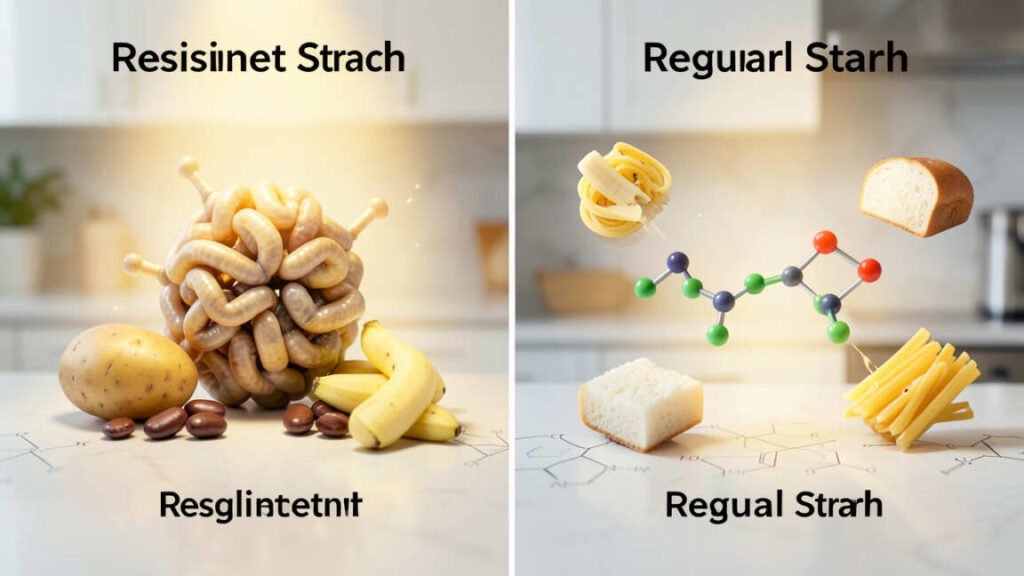
Resistant starch is a carbohydrate that resists digestion in the small intestine and ferments in the colon, unlike regular starch which is rapidly broken down into glucose. This difference allows resistant starch to function as a prebiotic fiber, feeding beneficial gut bacteria and producing health-promoting compounds like butyrate. Simple preparation methods such as cooking and cooling can naturally increase resistant starch in foods, which may help improve blood sugar control, support digestive health, and enhance satiety.
Resistant starch is a type of carbohydrate that escapes digestion in the small intestine and ferments in the colon, acting much like dietary fiber. This post breaks down what sets it apart from regular starch and why that difference matters for your gut health, blood sugar, and overall well-being.
Simply put, resistant starch is a unique form of carbohydrate that resists digestion in your small intestine and reaches your colon intact. There, your gut bacteria ferment it into beneficial compounds like butyrate. Regular starch, by contrast, breaks down quickly into glucose, causing a faster blood sugar spike.
Key Takeaways
- Resistant starch functions like a prebiotic fiber, feeding healthy bacteria in your colon.
- Regular starch digests rapidly into glucose, while resistant starch stays intact until the large intestine.
- Simple food prep methods, like cooking and cooling, can naturally boost the resistant starch content in common foods.
- Adding resistant starch gradually can improve blood sugar control, digestion, and satiety.
What Is Resistant Starch?
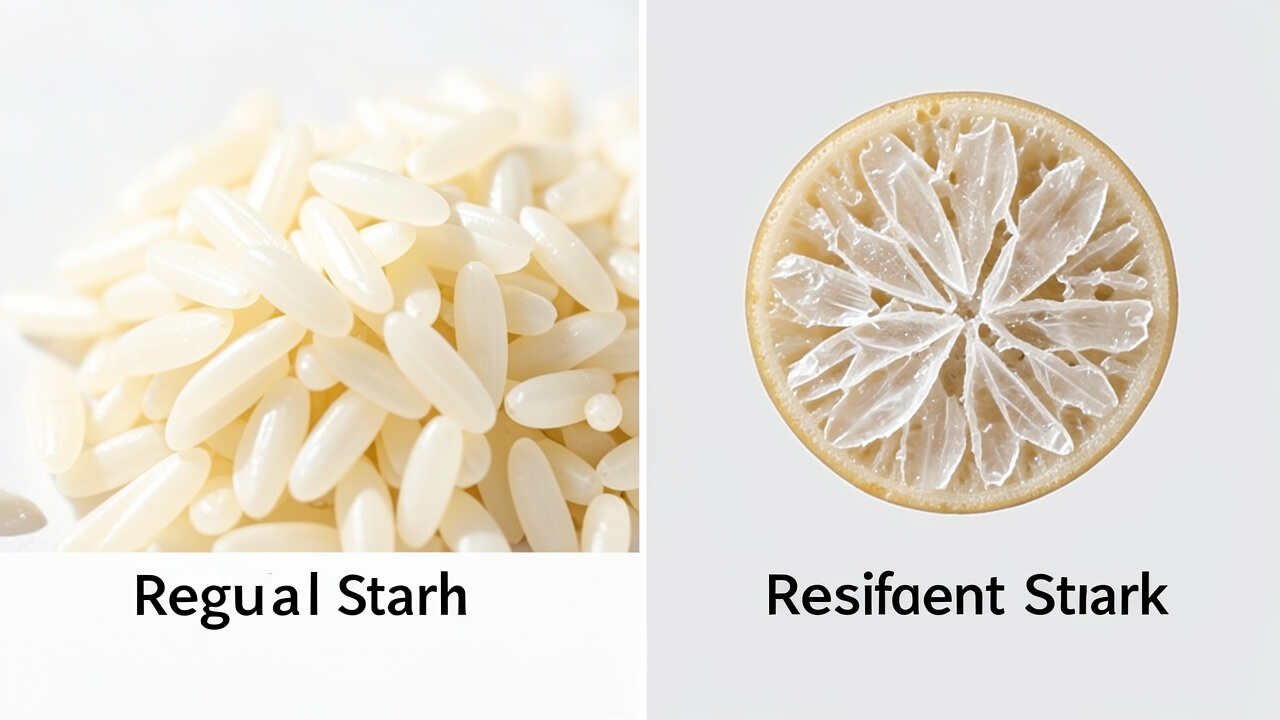
Resistant starch is a form of starch that is not broken down and absorbed in the small intestine. Because of its molecular structure, digestive enzymes cannot easily access it, so it passes into the colon mostly intact.
Once in the colon, it becomes fuel for your gut microbiota. The International Scientific Association for Probiotics and Prebiotics (ISAPP) classifies resistant starch as a prebiotic because it selectively feeds beneficial bacteria like Bifidobacterium and Lactobacillus.
Resistant starch occurs naturally in legumes, unripe bananas, raw potatoes, oats, and certain grains. The amount present depends on the food itself, how it is processed, and how it is prepared.
- Beans and lentils contain roughly 4-6 grams of resistant starch per 100g cooked portion
- Green or underripe bananas provide about 4-5 grams per medium fruit
- Cooked and cooled potatoes contain about 3-6 grams per cup
- Whole oats offer around 2-4 grams per cup cooked
- White rice that is cooled overnight can contain up to 2-3 grams per cup
- Barley and whole grain breads add smaller amounts to your daily total
Because it is technically a starch, it still counts toward your total carbohydrate intake. But it contributes fewer available calories than regular starch, roughly 2 calories per gram instead of 4.
This matters more than you might think. According to the FDA, adults need about 28 grams of fiber daily. Yet the Academy of Nutrition and Dietetics reports that fewer than 1 in 10 Americans actually meets that target.
Adding resistant starch-rich foods is one practical way to close that gap.
How Does Resistant Starch Work in the Body?
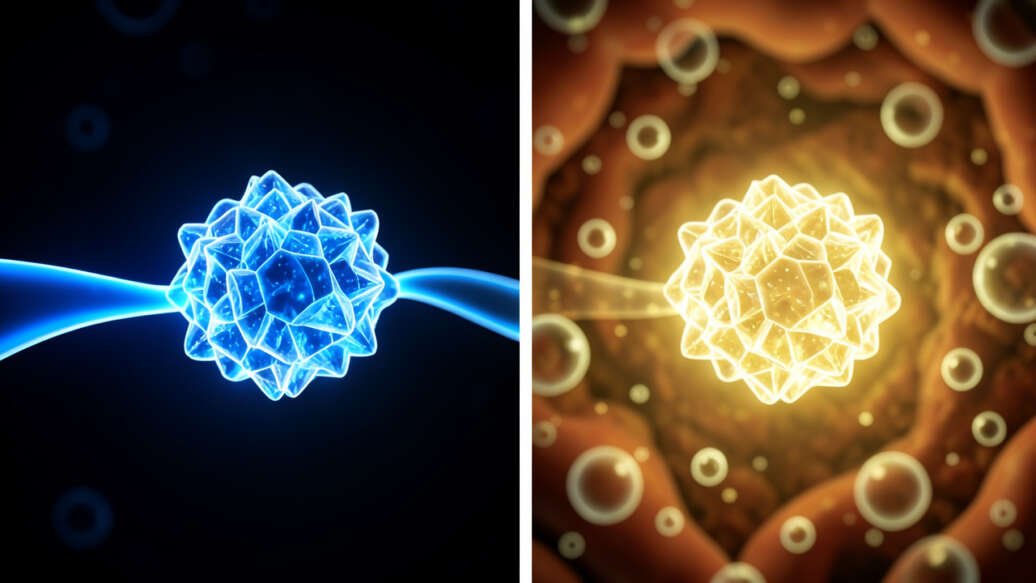
To understand the difference, you need to trace the journey of starch through your digestive tract. Regular starch starts breaking down in your mouth and finishes its digestion in the small intestine, where it converts to glucose and enters the bloodstream.
Resistant starch takes a different path. It survives the stomach and small intestine essentially intact and arrives in the colon, where bacteria ferment it slowly.
- Chewing and swallowing move the starch to your stomach, where digestive acids do not break it down.
- The small intestine releases amylase enzymes, but resistant starch resists this digestive action.
- Undigested starch travels to the large intestine, also called the colon.
- Gut bacteria ferment the starch, producing short-chain fatty acids, mainly butyrate, acetate, and propionate.
- These fatty acids lower colon pH, feed colon cells, and influence metabolism.
Butyrate is especially important. It is the primary energy source for colonocytes, the cells lining your colon. Research shows that butyrate helps reduce inflammation and maintain the gut barrier.
A meta-analysis published in the journal Nutrients concluded that resistant starch consumption significantly increased butyrate concentrations in healthy adults.
The fermentation process also produces gases like carbon dioxide, hydrogen, and methane. This explains why some people experience bloating when they suddenly increase their intake without easing in.
Important: The benefits of resistant starch depend on your individual gut microbiome. People with different bacterial profiles respond differently to the same foods.
The Main Types of Resistant Starch
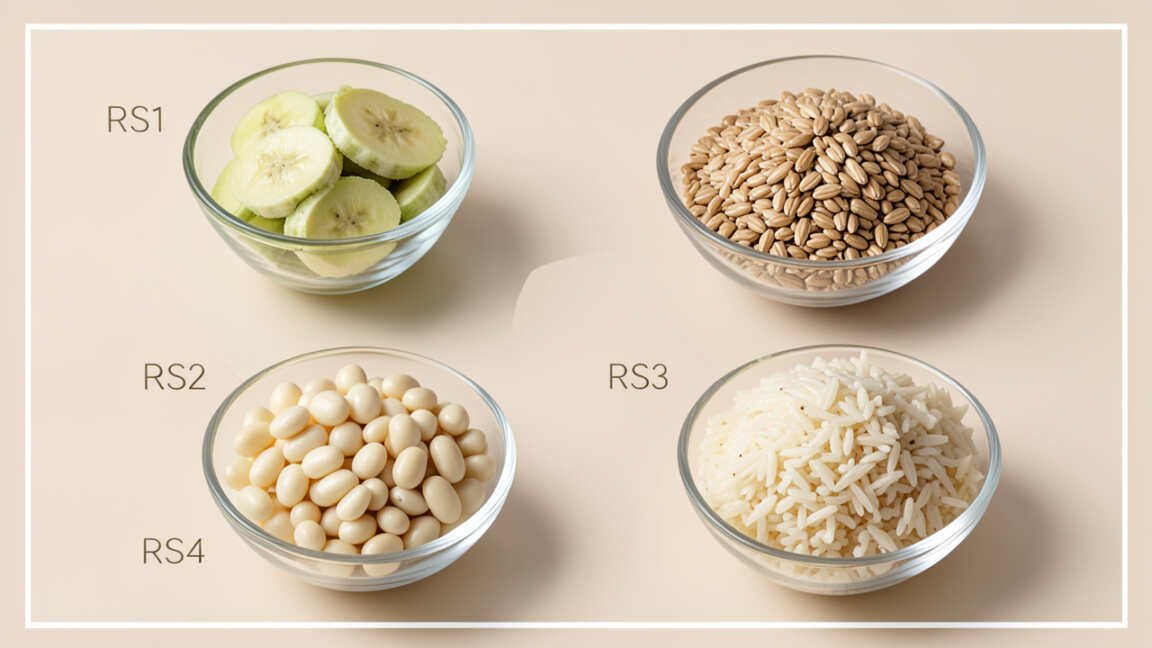
Scientists classify resistant starch into five main categories. Each type differs by food source and by how it manages to resist digestion.
| Type | Description | Common Food Example |
|---|---|---|
| RS1 | Physically inaccessible starch trapped in plant cell walls | Whole grains, seeds, legumes |
| RS2 | Raw granular starch with a compact structure | Green bananas, raw potato starch |
| RS3 | Retrograded starch formed when cooked food cools | Cooked then cooled rice, potatoes, pasta |
| RS4 | Chemically modified starch engineered for food products | Processed foods with resistant wheat starch |
| RS5 | Amylose-lipid complexes that resist enzyme action | High-amylose corn starch |
For everyday eaters, RS1, RS2, and RS3 are the most relevant. You get RS1 from whole plant foods, RS2 from raw or unripe produce, and RS3 from leftovers that have been chilled after cooking. RS4 and RS5 usually appear in commercial supplements and processed functional foods.
Here is a quick cheat sheet for picking foods by type:
- RS1: oats, barley, beans, lentils, whole wheat
- RS2: green banana flour, raw potato starch, plantain
- RS3: cold potato salad, sushi rice, leftover pasta
- RS4: commercial products like resistant wheat starch
- RS5: high-amylose corn starch in some fiber bars
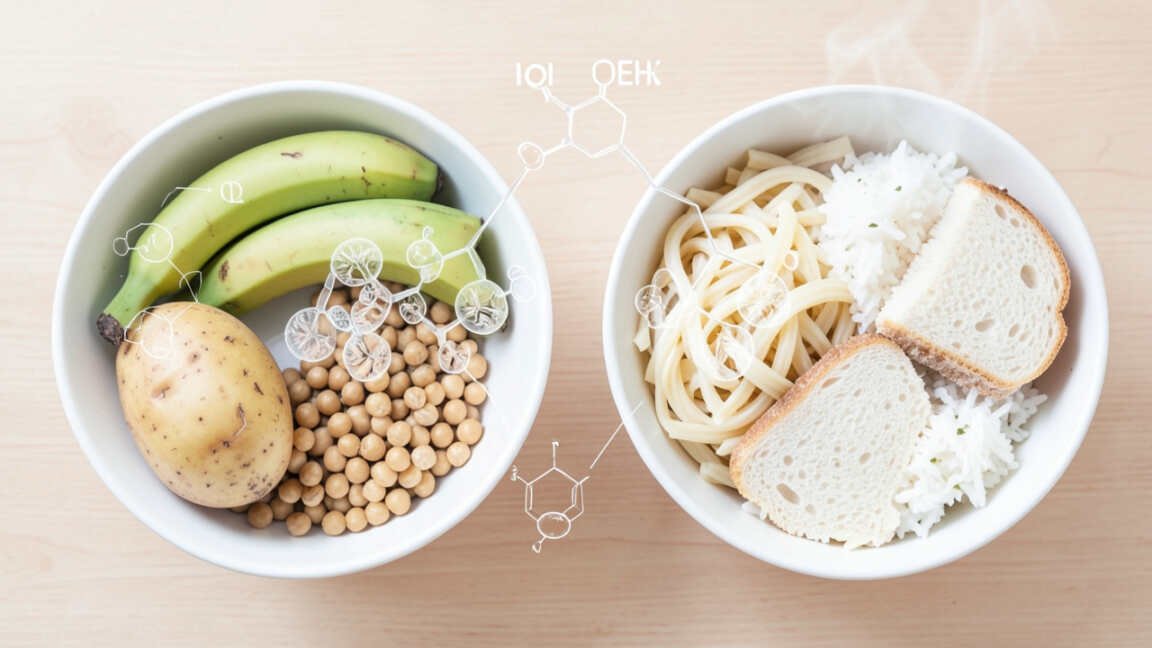
Resistant Starch vs Regular Starch: Key Differences
The word “starch” appears in both names, but these two carbohydrates behave very differently in your body. The core difference comes down to digestibility.
| Feature | Regular Starch | Resistant Starch |
|---|---|---|
| Digestion site | Small intestine | Colon through fermentation |
| Blood sugar effect | Rapid glucose release | Minimal glucose spike |
| Calories per gram | About 4 | About 2 |
| Fermentation | Does not occur | Produces short-chain fatty acids |
| Primary role | Quick energy source | Prebiotic and colon fuel |
Regular starch is the standard carbohydrate in white bread, white rice, and potatoes. It digests quickly, which makes it useful for fast energy but also prone to causing blood sugar spikes and crashes. Resistant starch sits somewhere between a starch and a fiber in how your body handles it.
Another key difference is how cooking affects them. Regular starch becomes more digestible after heating. Resistant starch, especially RS3, forms during cooking and then cooling, as starch molecules recrystallize into a structure that enzymes cannot break down easily.
Tip: Cook pasta or potatoes, refrigerate them overnight, then eat them cold or gently reheated. The cooling process can increase resistant starch content significantly.
This also changes the glycemic index of the food. A white potato eaten hot has a high glycemic index. The same potato chilled in a salad has a noticeably lower one, which means smaller blood sugar swings and longer-lasting energy.
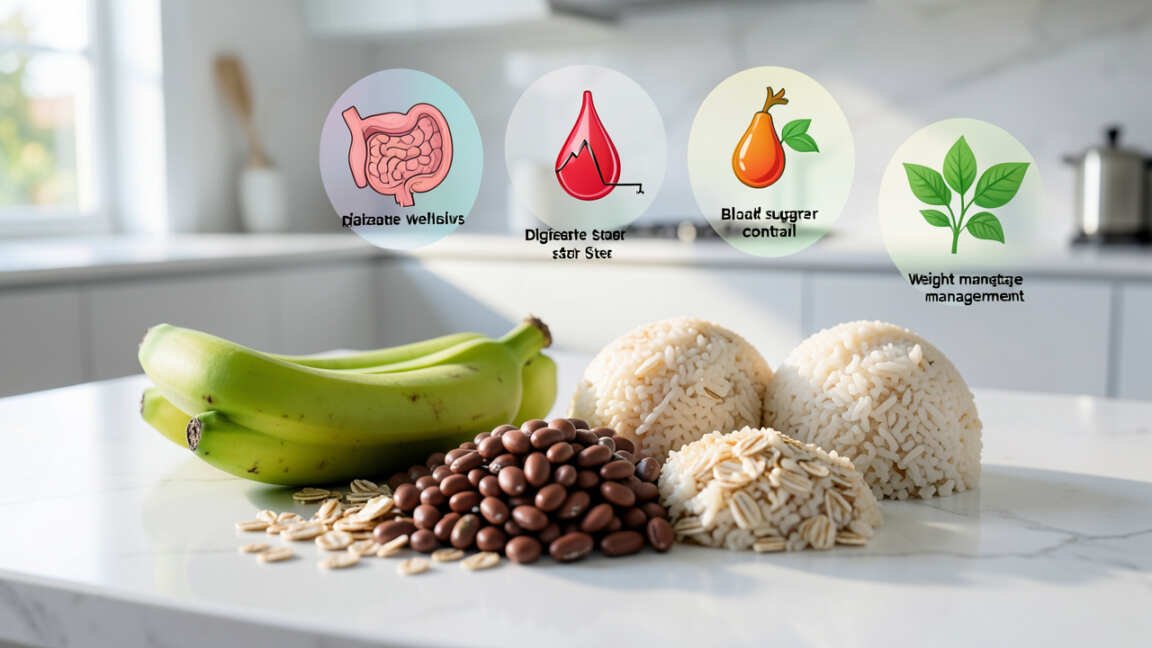
Top Health Benefits of Resistant Starch
Research links resistant starch to several measurable health outcomes. Here are the most consistent and well-supported benefits.
Improves Blood Sugar Control
Because resistant starch is not absorbed in the small intestine, it does not raise blood glucose the way regular starch does. A randomized controlled trial published in Diabetes Care found that meals containing resistant starch produced lower post-meal glucose and insulin responses compared to regular starch.
- Slower glucose release into the bloodstream
- Improved insulin sensitivity after meals