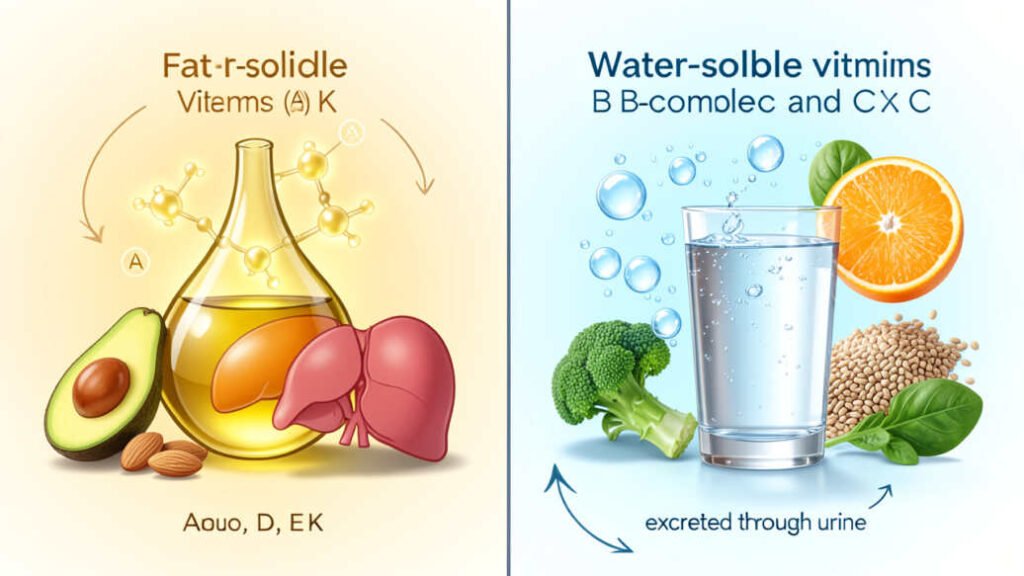
Fat-soluble vitamins (A, D, E, K) dissolve in fat and are stored in the liver and fatty tissues, while water-soluble vitamins (B-complex and C) dissolve in water and must be consumed regularly as they are not stored. This fundamental difference dictates that fat-soluble vitamins can accumulate to toxic levels if taken in excess, whereas water-soluble vitamins require consistent dietary or supplemental intake. Understanding this distinction helps prevent nutrient imbalances and ensures you choose the right foods or supplements for your health needs.
Fat-soluble vs water-soluble vitamins are two distinct categories that your body uses in completely different ways. Understanding how they absorb, store, and function can help you choose the right foods and supplements. This post breaks down the key differences, daily needs, and practical tips to avoid common mistakes.
Simply put, fat-soluble vitamins (A, D, E, K) dissolve in fat, travel through your lymphatic system, and stay stored in your liver and fatty tissues for weeks or months. Water-soluble vitamins (B-complex and C) dissolve in water, absorb directly into your bloodstream, and flush out through urine. That’s why water-soluble vitamins need frequent replenishment, while fat-soluble vitamins pose a higher risk of toxicity when taken in excess.
Key Takeaways
- Fat-soluble vs water-soluble vitamins differ mainly in how they absorb and store in the body.
- Fat-soluble vitamins (A, D, E, K) accumulate in tissues, so large doses can be toxic.
- Water-soluble vitamins (B-complex, C) need regular replenishment because your body doesn’t store them in large amounts.
- Eating healthy fats alongside vegetables improves absorption of fat-soluble vitamins.
- Check your diet before supplementing to avoid vitamin toxicity or deficiency.
What Are Fat-Soluble Vitamins?
Fat-soluble vitamins are vitamins that dissolve in fat and oils. They include vitamin A, vitamin D, vitamin E, and vitamin K. These vitamins travel through your bloodstream while attached to proteins after being absorbed with dietary fat.
These vitamins are lipophilic, so they can build up in your liver and adipose tissue. That means your body has a ready supply when food intake is low. But it also means taking very high doses can push them to dangerous levels.
The Four Fat-Soluble Vitamins
- Vitamin A supports vision, immune function, and skin health.
- Vitamin D regulates calcium absorption, bone health, and immune response.
- Vitamin E acts as an antioxidant that protects cell membranes from oxidative damage.
- Vitamin K helps blood clotting and supports bone metabolism.
Best Food Sources
You can get these vitamins from both animal and plant foods. Here are the top sources to include in your meals.
- Vitamin A: carrots, sweet potatoes, spinach, liver, and eggs
- Vitamin D: fatty fish, egg yolks, fortified milk, and sun exposure
- Vitamin E: almonds, sunflower seeds, peanuts, and spinach
- Vitamin K: kale, broccoli, spinach, and fermented foods
Tip: Add olive oil or avocado to your salads. The healthy fat helps your body absorb fat-soluble vitamins from vegetables.
According to the National Institutes of Health, over 1 billion people worldwide have insufficient vitamin D levels. The World Health Organization also notes that vitamin A deficiency affects around 250 million preschool children globally.
What Are Water-Soluble Vitamins?
Water-soluble vitamins dissolve in water and are not stored in significant amounts in your body. They include the eight B vitamins and vitamin C. Most of them act as coenzymes that help your cells produce energy and perform essential tasks.
Water-soluble vitamins circulate freely in your bloodstream. Your kidneys filter out any excess through urine. You need to consume them regularly to maintain healthy levels.
Deficiencies can appear quickly, sometimes within weeks.
The Water-Soluble Vitamin Family
- Vitamin C – antioxidant, collagen production, and immune support
- Thiamin (B1) – energy metabolism and nerve function
- Riboflavin (B2) – cellular function and growth
- Niacin (B3) – digestion and DNA repair
- Pantothenic acid (B5) – fatty acid synthesis
- Pyridoxine (B6) – amino acid metabolism and red blood cells
- Biotin (B7) – hair, skin, and nail health
- Folate (B9) – cell division and fetal development
- Cobalamin (B12) – nerve tissue and red blood cell production
Best Food Sources
- Vitamin C: citrus fruits, strawberries, bell peppers, and broccoli
- B vitamins: whole grains, legumes, meat, eggs, and leafy greens
- B12 specifically: shellfish, meat, dairy, and fortified cereals
- Folate: lentils, spinach, asparagus, and fortified grains
Warning: B12 deficiency can cause nerve damage and memory problems. Older adults and vegans are at higher risk.
Your body cannot hold large reserves of most water-soluble vitamins. As a result, consistent daily intake matters more than mega-dosing once a week.
Fat-Soluble vs Water-Soluble Vitamins: Key Differences
The difference between fat-soluble vs water-soluble vitamins comes down to how they dissolve, travel, and get stored. Fat-soluble vitamins need dietary fat for absorption and prefer storage.
Water-soluble vitamins dissolve in watery fluids and get eliminated quickly. That single distinction changes everything about recommended intake and risk.
| Feature | Fat-Soluble Vitamins | Water-Soluble Vitamins |
|---|---|---|
| Dissolve in | Fat and oils | Water |
| Absorption pathway | Lymphatic system | Directly into blood |
| Storage | Liver and fatty tissues | Minimal storage |
| Excretion | Through bile and feces | Through urine |
| Toxicity risk | High when taken in excess | Low, except with extreme doses |
| Required intake | Occasional, stored reserves | Frequent, daily intake advised |
Think of fat-soluble vitamins as a pantry you can refill. Water-soluble vitamins are more like a fridge with a small capacity. You need to keep it stocked.
How Your Body Absorbs Fat-Soluble vs Water-Soluble Vitamins
Absorption is where fat-soluble vs water-soluble vitamins really separate. Fat-soluble vitamins need bile salts, pancreatic enzymes, and dietary fat to form micelles that get taken up by the intestinal lining. Water-soluble vitamins enter the bloodstream directly through the intestinal wall via simple diffusion or active transport.
The absorption process for fat-soluble vitamins follows several steps.
- Fat in your meal gets broken down by stomach acid and lipase.
- Bile from the gallbladder emulsifies the fat into small droplets.
- Vitamins dissolve into the fat droplets and form micelles.
- Micelles travel to the small intestine and get absorbed into enterocytes.
- Your body packages the vitamins into chylomicrons that enter the lymphatic system.
Water-soluble vitamins skip the lymphatic step. They dissolve directly in the watery environment of your gut and move across the intestinal wall into your bloodstream. That is why they are easier to absorb when your digestive tract is healthy.
Conditions That Disrupt Absorption
- Low stomach acid or acid-suppressing drugs
- Inflammatory bowel disease like Crohn’s or celiac disease
- Gallbladder removal or liver disease
- Aging and reduced pancreatic enzyme output
- Bariatric surgery or intestinal damage
Important: If you have a fat-malabsorption condition, you may need higher doses of fat-soluble vitamins under medical supervision.
According to a review in the Journal of Clinical Gastroenterology, up to 50% of patients with inflammatory bowel disease show signs of fat-soluble vitamin deficiency.
Why Vitamin Toxicity Affects Fat-Soluble Vitamins More
Vitamin toxicity happens when you consume more of a vitamin than your body can process. Water-soluble vitamins are usually safe because excess amounts leave your body through urine. Fat-soluble vitamins build up in tissues and can become harmful over time.
The severity of toxicity differs from one vitamin to another. Vitamin D and vitamin A are the most concerning because their storage compartments are huge. Vitamin E and K are less risky but still deserve caution.
| Vitamin | Toxicity Risk | Common Toxic Symptoms |
|---|---|---|
| Vitamin A | High with chronic high dose | Liver damage
|