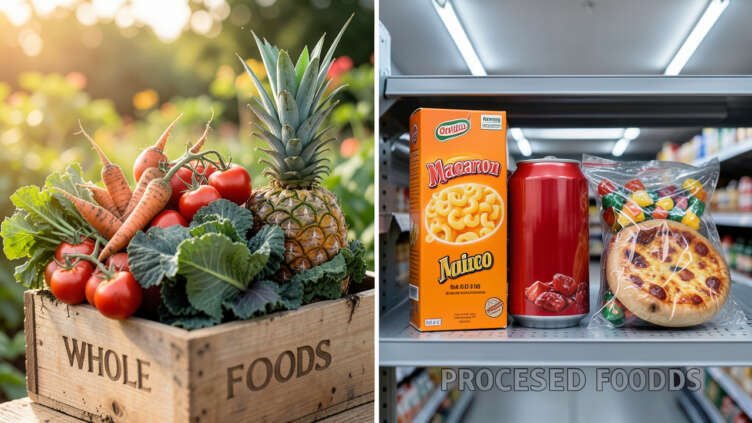
Whole foods versus processed foods refers to the degree of change from a food's native state, with processing ranging from minimal to ultra-processed on a spectrum. Ultra-processed foods often contain additives and preservatives that can harm health over time, while whole foods retain their complete nutritional profile without artificial alterations. This knowledge empowers individuals to make smarter food choices daily, recognizing that while some processing is neutral, excessive processing should be limited for optimal health outcomes.
Whole foods vs processed foods is one of the most debated topics in nutrition today. Understanding the difference between these two categories can transform the way you eat, shop, and think about what goes on your plate.
In this guide, we break down exactly what each term means, how they affect your health, and how to make smarter choices at the grocery store without feeling overwhelmed.
Simply put, whole foods are foods in their natural or minimally altered state, like fresh fruits, vegetables, and whole grains. Processed foods have been altered from their original form through methods like canning, freezing, or adding preservatives. Not all processing is bad – but ultra-processed foods often contain additives that can harm your health over time.
Key Takeaways
- Whole foods vs processed foods is not always black and white – processing exists on a spectrum from minimal to ultra-processed.
- The NOVA classification system divides all foods into four groups based on the degree and purpose of processing.
- Ultra-processed foods make up nearly 60% of the average American diet, according to research published in the BMJ.
- Whole foods retain their natural fiber, vitamins, and minerals, which support long-term health and disease prevention.
- A balanced approach that prioritizes whole foods while allowing some minimally processed options is the most sustainable path.
What Are Whole Foods? A Clear Definition
Whole foods are foods that remain close to their natural state. They have not been significantly altered, refined, or mixed with synthetic additives. Think of an apple straight from the tree, a raw chicken breast, or a handful of almonds.
The key characteristic of whole foods is that their original nutritional profile stays intact. You get the fiber, vitamins, minerals, and antioxidants exactly as nature intended.
Here are common examples of whole foods:
- Fresh fruits and vegetables – apples, spinach, carrots, berries
- Whole grains – brown rice, oats, quinoa, barley
- Unprocessed meats and fish – fresh chicken, salmon, turkey
- Nuts and seeds – almonds, walnuts, chia seeds, flaxseeds
- Legumes – lentils, chickpeas, black beans
- Eggs – whole, unprocessed eggs
- Fresh dairy – plain milk, plain yogurt (without added sugars)
It is important to note that “whole” does not always mean “raw.” Steaming broccoli or grilling a piece of salmon are forms of preparation, not processing. The food still retains most of its nutrients.
Tip: When shopping, stick to the perimeter of the grocery store. That is where you will find most fresh, whole foods like produce, meat, and dairy – while processed items tend to dominate the center aisles.
Michael Pollan, author of “In Defense of Food,” famously summarized it this way: “Eat food. Not too much. Mostly plants.” By “food,” he meant real, whole ingredients that your grandmother would recognize as food.
What Are Processed Foods? Understanding the Spectrum
Processed foods are any foods that have been altered from their natural state through mechanical or chemical processes. This includes everything from frozen vegetables to sugary breakfast cereals.
The critical thing to understand is that processing exists on a wide spectrum. Not all processed foods are unhealthy. The NOVA food classification system, developed by researchers at the University of São Paulo, divides all foods into four distinct groups.
| NOVA Group | Category | Description | Examples |
|---|---|---|---|
| Group 1 | Unprocessed or Minimally Processed | Foods altered only by basic methods like washing, peeling, or grinding | Fresh fruit, eggs, plain milk, nuts |
| Group 2 | Processed Culinary Ingredients | Substances extracted from Group 1 foods used in cooking | Olive oil, butter, sugar, salt |
| Group 3 | Processed Foods | Group 1 foods combined with Group 2 ingredients through methods like canning or baking | Canned beans, cheese, fresh bread, smoked fish |
| Group 4 | Ultra-Processed Foods | Industrial formulations with five or more ingredients, including additives not typically used in home cooking | Soft drinks, packaged snacks, instant noodles, hot dogs |
As you can see, Group 3 processed foods like canned beans or whole wheat bread are very different from Group 4 ultra-processed foods like soda or frozen pizza. The degree of processing matters enormously.
A study published in the BMJ found that ultra-processed food consumption has increased dramatically over the past two decades. In the United States, these products now account for approximately 57-60% of total energy intake among adults, and up to 67% among children.
Warning: Do not confuse “processed” with “unhealthy.” Canned tomatoes, frozen vegetables, and whole grain pasta are all processed to some degree but remain highly nutritious. The real concern is ultra-processed foods with long ingredient lists full of additives.
Whole Foods vs Processed Foods: Side-by-Side Comparison
Seeing the differences laid out in a table makes it much easier to understand why nutrition experts consistently recommend choosing whole foods over heavily processed alternatives.
| Factor | Whole Foods | Ultra-Processed Foods |
|---|---|---|
| Nutrient Density | High – packed with vitamins, minerals, fiber | Low – often stripped of natural nutrients |
| Fiber Content | Naturally high in dietary fiber | Little to no fiber |
| Additives | None or minimal | Multiple – emulsifiers, colors, flavors, preservatives |
| Sugar/Sodium | Naturally occurring, balanced levels | Often excessively added |
| Satiety | Promotes fullness due to fiber and protein | Designed to be hyper-palatable, encourages overeating |
| Shelf Life | Shorter – requires refrigeration or quick use | Extended – months or even years |
| Cost Per Nutrient | Often more cost-effective nutritionally | Cheaper upfront but lower nutritional value |
This comparison highlights a key point: the cheapest option at the store is not always the most economical choice for your body. Whole foods deliver more nutrition per calorie, which means your body gets what it actually needs.
Research from the World Health Organization emphasizes that diets high in ultra-processed foods are linked to increased risks of obesity, cardiovascular disease, type 2 diabetes, and certain cancers. Meanwhile, diets centered around whole, minimally processed foods are consistently associated with better long-term health outcomes.
How Processed Foods Affect Your Health
The health effects of ultra-processed foods go far beyond simple calorie counts. These products are engineered to be hyper-palatable, meaning they are specifically designed to trigger pleasure centers in your brain and keep you coming back for more.
A landmark study published in Cell Metabolism found that participants who ate an ultra-processed diet consumed about 500 more calories per day compared to those eating a whole food diet – even when both diets were matched for available calories, sugar, fat, fiber, and macronutrients.
Here are the primary ways ultra-processed foods can harm your health:
- Weight gain and obesity – Hyper-palatable combinations of sugar, fat, and salt override natural hunger signals
- Inflammation – Additives like emulsifiers and artificial sweeteners may disrupt gut bacteria and promote chronic inflammation
- Increased cancer risk – A BMJ study found that a 10% increase in ultra-processed food intake was associated with a 12% higher overall cancer risk
- Cardiovascular disease – High sodium content and trans fats contribute to elevated blood pressure and cholesterol
- Type 2 diabetes – Rapid blood sugar spikes from refined ingredients stress insulin response over time
- Mental health impacts – Research links high ultra-processed food intake with increased rates of depression and anxiety
- Gut microbiome disruption – Artificial additives can alter the balance of beneficial gut bacteria
The mechanism behind these effects is multifaceted. Ultra-processed foods typically have a faster rate of digestion, meaning your body absorbs calories more quickly. They also tend to be lower in protein and fiber, the two nutrients most responsible for making you feel full.
Important: According to the BMJ, the average American gets nearly 60% of their daily calories from ultra-processed foods. Reducing that percentage – even by a small amount – can lead to measurable health improvements over time.
Benefits of Choosing Whole Foods
Switching your focus toward whole foods does not require a dramatic lifestyle overhaul. Even small shifts can produce significant benefits. The nutrients found naturally in whole foods work together synergistically in ways that supplements and fortified processed foods simply cannot replicate.
Here are the top evidence-backed benefits of a whole food-focused diet:
- Better heart health – Whole grains, fruits, and vegetables reduce cardiovascular disease risk by up to 30%, according to the American Heart Association
- Improved digestion – Natural fiber supports healthy bowel function and feeds beneficial gut bacteria
- Stable energy levels – Complex carbohydrates in whole foods release glucose slowly, avoiding energy crashes
- Stronger immune function – Vitamins C, A, zinc, and antioxidants from whole foods bolster immune defenses
- Reduced inflammation – Omega-3 fatty acids from fish and nuts combat chronic inflammation naturally
- Better weight management – Higher satiety per calorie means you eat less without feeling deprived
- Lower disease risk – Whole food diets are linked to reduced rates of cancer, diabetes, and neurodegenerative diseases
Tip: You do not need to eat 100% whole foods to see benefits. The CDC reports that only about 1 in 10 adults eat enough fruits and vegetables. Simply adding one extra serving of produce per day can make a meaningful difference.
One of the most compelling aspects of whole foods is the concept of the “food matrix.” This refers to the complex physical structure of natural foods that affects how nutrients are released and absorbed during digestion. A whole almond, for example, delivers its calories differently than almond flour or almond oil because of how the fiber and fat are physically arranged.
How to Tell If a Food Is Ultra-Processed
One of the biggest challenges in the whole foods vs processed foods debate is knowing where to draw the line. Marketing labels like “natural,” “organic,” and “wholesome” can be misleading. A product labeled “natural” can still be ultra-processed.
Use this practical checklist to evaluate any packaged food:
- Count the ingredients – Ultra-processed foods typically contain five or more ingredients. Fewer ingredients usually means less processing.
- Look for unrecognizable names – Ingredients like “maltodextrin,” “high fructose corn syrup,” “sodium nitrite,” or “titanium dioxide” are red flags.
- Check for added sugars – Sugar appears under many names: dextrose, sucrose, corn syrup solids, barley malt. If sugar is in the top three ingredients, be cautious.
- Scan for industrial additives – Emulsifiers (polysorbate 80, carrageenan), artificial colors (Red 40, Yellow 5), and preservatives (BHA, BHT) signal heavy processing.
- Examine the packaging – If a food has an extremely long shelf life and needs no refrigeration, it likely contains significant preservatives.
- Consider the form – Is the food recognizable as something you could make at home? If not, it is probably ultra-processed.
The simplest rule of thumb comes from food writer Michael Pollan: “If it came from a plant, eat it. If it was made in a plant, don’t.” While this is an oversimplification, it captures the essential idea beautifully.
| Red Flag Ingredient | What It Is | Commonly Found In |
|---|---|---|
| High Fructose Corn Syrup | Cheap sweetener derived from corn starch | Sodas, candy, baked goods |
| Maltodextrin | Highly processed carbohydrate used as a thickener | Snack foods, salad dressings, instant pudding |
| Sodium Nitrite | Preservative that maintains pink color in meats | Hot dogs, bacon, deli meats |
| Artificial Colors (Red 40, Yellow 5) | Synthetic dyes linked to behavioral issues | Candy, cereals, sports drinks |
| Polysorbate 80 | Emulsifier that may affect gut lining | Ice cream, sauces, processed desserts |
Warning: “Made with real fruit” and “no artificial flavors” are marketing phrases, not health claims. Always check the actual ingredient list rather than trusting front-of-package labels.
Practical Tips for Eating More Whole Foods Every Day
Shifting toward whole foods does not mean you have to give up convenience or spend hours in the kitchen. Small, strategic changes can move your diet in the right direction without causing stress or burnout.
Start with these actionable strategies that real people use every day:
- Shop the perimeter first – Fresh produce, meats, dairy, and bakery items line the outer edges of most grocery stores. Fill your cart here before venturing into center aisles.
- Cook one extra meal at home per week – Home-cooked meals almost always contain fewer processed ingredients than restaurant or takeout food.
- Swap one processed snack daily – Replace chips with nuts, candy bars with fruit, or flavored yogurt with plain yogurt topped with berries.
- Read ingredient lists, not just nutrition facts – A food can look healthy on the nutrition panel while containing a long list of additives.
- Batch cook whole grains – Cook a large pot of brown rice or quinoa on Sunday and use it throughout the week in different meals.
- Stock your freezer with frozen vegetables – Frozen produce is flash-frozen at peak ripeness and retains most of its nutrients. It counts as a minimally processed whole food.
- Make your own sauces and dressings – Store-bought versions often contain added sugars, sodium, and preservatives. A simple olive oil and lemon dressing takes two minutes.
According to the USDA, households that cook at home more frequently spend less on food overall and consume fewer calories per meal compared to those who rely primarily on restaurant meals and packaged foods.
The goal is progress, not perfection. You do not need to eliminate every processed item from your pantry. Focus on shifting the ratio so that whole foods make up the majority of what you eat.
Can Processed Foods Be Part of a Healthy Diet?
The short answer is yes – but the type of processing matters. Group 2 and Group 3 processed foods from the NOVA classification can absolutely fit into a nutritious eating pattern. The concern centers on Group 4 ultra-processed foods.
Here is a realistic breakdown of processed foods that can support good health:
- Canned beans and legumes – Nutritionally comparable to dried versions. Rinse them to reduce sodium by up to 40%.
- Frozen fruits and vegetables – Flash-frozen at peak ripeness, often more nutritious than “fresh” produce that has traveled long distances.
- Whole grain bread and pasta – Processing wheat into flour does not eliminate its fiber and B vitamin content when the whole grain is used.
- Plain canned tomatoes – An excellent source of lycopene, and cooking actually increases lycopene bioavailability.
- Natural nut butters – Grinding nuts into butter is a form of processing that preserves most nutritional benefits.
- Fermented foods – Yogurt, kefir, sauerkraut, and kimchi undergo beneficial processing that supports gut health.
The key distinction is whether a food retains its original nutritional character after processing. Canned salmon is still salmon. Frozen broccoli is still broccoli.
But a chicken nugget shaped from reconstituted meat slurry with twenty added ingredients bears little resemblance to the original chicken.
| Processed Food | NOVA Group | Healthy Choice? | Why |
|---|---|---|---|
| Frozen mixed berries | Group 1 | Yes | Minimal processing, retains nutrients |
| Canned black beans | Group 3 | Yes | High fiber, protein, minimal additives |
| Whole wheat bread | Group 3 | Mostly yes | Check for minimal added sugars and additives |
| Instant ramen noodles | Group 4 | No | High sodium, refined flour, multiple additives |
| Breakfast cereal with marshmallows | Group 4 | No | High sugar, artificial colors, low fiber |
A practical framework is the 80/20 approach. Aim for 80% of your diet from whole or minimally processed foods, and allow 20% from processed or even ultra-processed items. This balance is sustainable, realistic, and still delivers significant health benefits.
Important: The FDA requires food manufacturers to list all ingredients in descending order by weight. The first three ingredients make up the bulk of the product. If sugar, refined flour, or an oil appears in those top spots, consider choosing an alternative.
Common Myths About Whole Foods and Processed Foods
Misinformation runs rampant in the nutrition space. Let us clear up some of the most persistent myths about whole foods vs processed foods so you can make informed decisions based on evidence rather than fear.
Here are the myths that need debunking:
- Myth: All processed foods are bad. Reality: Canned vegetables, frozen fruit, and whole grain bread are processed but remain nutritious. The degree and purpose of processing determine the health impact.
- Myth: Whole foods are always more expensive. Reality: Dried beans, rice, oats, bananas, and seasonal vegetables are among the cheapest foods available. Planning and batch cooking make whole foods highly affordable.
- Myth: “Natural” on the label means minimally processed. Reality: The FDA does not strictly regulate the term “natural.” A product can contain heavily processed ingredients and still carry a “natural” label.
- Myth: Organic means unprocessed. Reality: Organic chips, organic cookies, and organic soda are still ultra-processed foods. “Organic” refers to how ingredients are grown, not how they are processed.
- Myth: You need to eat 100% whole foods to be healthy. Reality: Research shows that even modest reductions in ultra-processed food intake lead to measurable health improvements. Perfection is not required.
- Myth: Frozen meals are always ultra-processed. Reality: Some frozen meals use whole food ingredients with minimal additives. Read labels carefully – options vary widely.
Understanding these distinctions helps you avoid falling into the trap of black-and-white thinking about food. Nutrition science is nuanced, and the whole foods vs processed foods conversation is no exception.
Tip: Focus on what you can add to your diet rather than what you need to remove. Adding more whole foods naturally crowds out ultra-processed options without creating a sense of deprivation.
Frequently Asked Questions
What is the main difference between whole foods and processed foods?
Whole foods are in their natural or minimally altered state, retaining their full nutritional profile. Processed foods have been changed through methods like canning, freezing, or adding preservatives. The key difference lies in the degree of processing – minimally processed foods like frozen vegetables remain nutritious, while ultra-processed foods with many additives often do not.
Are all processed foods unhealthy?
No, not all processed foods are unhealthy. The NOVA classification system identifies four levels of processing, and foods in Groups 1 through 3 – like canned beans, cheese, and whole grain bread – can be perfectly healthy choices. The concern focuses on Group 4 ultra-processed foods that contain industrial additives, excessive sugar, and artificial ingredients.
How much of my diet should be whole foods?
Nutrition experts generally recommend that whole and minimally processed foods make up at least 80% of your total diet. This gives you flexibility to include some processed items for convenience while still gaining the health benefits associated with whole food consumption. Even small increases in whole food intake can produce measurable improvements.
Is eating only whole foods realistic for most people?
For most people, eating exclusively whole foods is neither practical nor necessary. Modern lifestyles require some convenience, and many minimally processed foods like canned vegetables, whole grain pasta, and frozen fruit are nutritious and time-saving. The goal should be to maximize whole food intake while making smart choices about which processed items to include.
How do I read food labels to identify ultra-processed foods?
Check the ingredient list for five or more ingredients, especially ones you would not find in a home kitchen. Watch for added sugars (listed under various names), industrial additives like emulsifiers and artificial colors, and refined ingredients like maltodextrin. If the first few ingredients include sugar, refined flour, or industrial oils, the product is likely ultra-processed.
Final Thoughts
The whole foods vs processed foods debate is not about eliminating everything from a package. It is about understanding the spectrum of food processing and making informed choices that favor nutrition. Prioritizing whole foods like fresh produce, whole grains, and lean proteins gives your body the nutrients it needs to thrive long-term.
Use the 80/20 framework, read labels with a critical eye, and remember that every small shift toward less processed eating makes a real difference in your health.