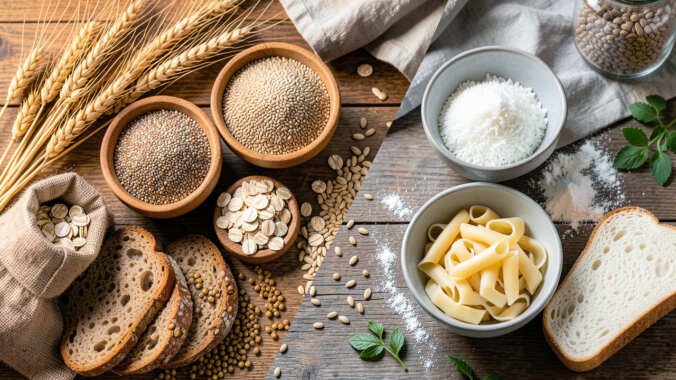
Whole grains versus refined grains differ fundamentally in processing and nutritional value, with whole grains retaining all three parts of the kernel—bran, germ, and endosperm. This intact structure means whole grains provide significantly more fiber, vitamins, and minerals, which are largely removed from refined grains during milling. Choosing whole grains over refined grains is directly linked to lower risks of chronic diseases like heart disease and type 2 diabetes due to their superior nutrient and fiber profile.
Whole grains vs refined grains is a fundamental choice that impacts your daily health more than you might think. Understanding the difference goes beyond just picking brown over white bread. This post breaks down the exact nutritional changes, processing methods, and health outcomes that separate these two grain categories.
Simply put, whole grains retain their bran, germ, and endosperm, providing fiber, vitamins, and minerals. Refined grains have the bran and germ stripped away, removing most fiber and key nutrients, which alters their texture, shelf life, and how your body processes them.
Key Takeaways
- Whole grains vs refined grains differ mainly in processing, with whole grains containing all three natural parts of the grain kernel.
- The removal of the bran and germ during refining drastically reduces the fiber, vitamin, and mineral content of refined grains.
- Consuming whole grains is linked to lower risks of heart disease, type 2 diabetes, and certain cancers due to their fiber and nutrient profile.
- Reading food labels is essential, as terms like “multigrain” or “wheat flour” can be misleading and often indicate refined grain products.
- Making a simple switch from refined to whole grain options is one of the most impactful dietary changes for long-term health.
What Are Whole Grains, Exactly?
Whole grains are cereal grains that contain all the natural, intact parts of the seed. This includes the bran (the outer layer), the germ (the embryo), and the endosperm (the starchy middle). Think of it like eating an apple with the skin on versus just the flesh inside.
Each part offers distinct nutritional benefits.
The bran is rich in fiber, B vitamins, and minerals like iron and magnesium. The germ is a powerhouse of healthy fats, B vitamins, vitamin E, and antioxidants. The endosperm provides carbohydrates and some protein.
Keeping all three components together is what defines a true whole grain.
- Common whole grains include: Oats, brown rice, quinoa, barley, bulgur, farro, millet, popcorn, and whole wheat.
- What to look for on labels: Ingredients should list a whole grain first, such as “whole wheat flour” or “whole oats.” A “100% Whole Grain” stamp or certification is a reliable indicator.
- Texture and taste: Whole grains often have a chewier texture and nuttier, earthier flavor compared to their refined counterparts.
- Cooking considerations: They generally require longer cooking times and more liquid than refined grains.
How Are Refined Grains Processed?
Refined grains start as whole grains but undergo a milling process that removes the bran and germ. This is done to create a finer texture, improve shelf life, and give the grain a milder flavor. The process strips away a significant portion of the grain’s natural nutrients.
The milling process separates the outer layers from the inner endosperm. What remains is primarily the starchy endosperm, which is then ground into flour or processed into other products. While this creates a lighter, fluffier product, it comes at a high nutritional cost.
| Processing Step | Whole Grain | Refined Grain |
|---|---|---|
| Initial Harvest | Grain kernel intact | Grain kernel intact |
| Milling / Dehulling | None or minimal processing | Bran and germ removed |
| Final Product | Entire kernel remains | Only starchy endosperm |
| Nutrient Loss | None | Significant (fiber, B vitamins, minerals) |
This table clearly shows the critical point of divergence. The removal of the bran and germ is the single action that transforms a nutrient-dense whole grain into a nutritionally depleted refined grain.
Important: Enrichment adds back some B vitamins and iron lost during processing, but it does not restore the fiber, magnesium, or other natural nutrients and phytochemicals found in the bran and germ.
What Changes Nutritionally? A Direct Comparison
The most dramatic difference between whole and refined grains lies in their nutritional composition. Processing doesn’t just change the grain physically; it alters its fundamental chemical and nutrient makeup. This has direct consequences for how your body uses the food.
Fiber is the most notable loss. The bran is the primary source of dietary fiber in grains. When it’s removed, the grain loses most of its ability to promote digestive health, regulate blood sugar, and contribute to feelings of fullness.
This shift in macronutrient composition changes the grain’s impact on your metabolism.
- Fiber Content: Whole grains provide 2-4 times more fiber than refined grains. For example, a cup of brown rice has about 3.5g of fiber, while white rice has less than 1g.
- Vitamin Density: Refined grains lose significant amounts of B vitamins like thiamin, riboflavin, and niacin during the removal of the germ and bran.
- Mineral Content: Key minerals like magnesium, selenium, and zinc are concentrated in the bran and germ. Their content drops sharply in refined grains.
- Glycemic Index: Refined grains are digested quickly, causing a rapid spike in blood sugar and insulin. Whole grains are digested more slowly, leading to a gradual, lower rise in blood glucose.
How Do Whole Grains Support Your Health?
Choosing whole grains over refined grains is consistently linked to numerous long-term health benefits. The combination of fiber, antioxidants, and other phytochemicals in the intact grain kernel works synergistically to protect your body. These benefits are supported by extensive epidemiological research.
According to the Harvard T.H. Chan School of Public Health, diets rich in whole grains can reduce the risk of cardiovascular disease by up to 30%. The soluble fiber in grains like oats helps lower LDL (“bad”) cholesterol levels.
The steady release of energy also helps prevent the blood sugar spikes associated with diabetes.
- Heart Health: Fiber helps lower cholesterol and blood pressure. Antioxidants reduce inflammation linked to heart disease.
- Blood Sugar Regulation: The fiber slows carbohydrate digestion, preventing insulin spikes and improving insulin sensitivity.
- Digestive Health: Insoluble fiber from the bran adds bulk to stool and promotes regular bowel movements, reducing constipation risk.
- Weight Management: The fiber and protein content increases satiety, helping you feel full longer and potentially reducing overall calorie intake.
- Reduced Cancer Risk: Some studies, including those from the World Cancer Research Fund, suggest a link between high whole grain intake and a lower risk of colorectal cancer.
What Are the Common Uses for Refined Grains?
Refined grains dominate the modern processed food landscape. Their mild flavor, soft texture, and extended shelf life make them a staple ingredient in countless commercial products. You’ll find them in everything from bread and pasta to pastries and snack foods.
The endosperm’s starchy composition creates a fluffy, light texture that many people associate with comfort foods. Food manufacturers also prefer refined grains because they are cheaper to produce and store. This economic and practical preference has made refined grains ubiquitous in Western diets.
| Common Refined Grain Products | Why Refined Grains Are Used |
|---|---|
| White bread, white rice, white pasta | Soft texture, neutral taste, long shelf life |
| Pastries, cookies, cakes, crackers | Creates a light, tender crumb |
| Breakfast cereals (many varieties) | Easy to puff, flake, or shape, absorbs sweeteners |
| Pizza dough, tortillas, bagels | Provides elasticity and chew without density |
While convenient, these products are often referred to as “empty calories” because they provide energy with minimal nutritional benefit, leading to overconsumption and nutrient deficiencies.
How to Read Labels and Identify the Difference
Navigating the grocery store aisle requires a sharp eye and knowledge of misleading terminology. Food packaging is designed to sell, not necessarily to inform. Terms like “multigrain,” “wheat,” or “stone-ground” do not guarantee a whole grain product.
The ingredient list is your most reliable source of truth. The first ingredient should explicitly state “whole” (e.g., “whole wheat flour”). If the first ingredient is “wheat flour” or “enriched flour,” the product is primarily made from refined grains.
The presence of the word “whole” at the start is the key indicator.
- “Whole Wheat” vs. “Wheat”: “Whole wheat” means all parts of the grain are used. “Wheat” bread is often made with refined wheat flour.
- “Multigrain”: This means the product contains multiple types of grains, but they can all be refined. It does not specify whole grains.
- “Stone-Ground”: This refers to the grinding method, not whether the bran and germ were retained. It can still be a refined product.
- “Enriched”: This is a red flag for refined grains, indicating that some vitamins were added back after processing stripped them away.
- Look for certifications: The “100% Whole Grain” stamp from the Whole Grains Council or the American Heart Association’s Heart-Check can simplify your search.
Warning: Brown color does not mean whole grain. Some products use molasses or caramel coloring to make refined grains look brown. Always check the ingredient list for the word “whole.”
What Are Easy Ways to Swap Refined for Whole Grains?
Transitioning from refined to whole grains doesn’t have to be an all-or-nothing overhaul. You can make simple, incremental swaps that your palate will adjust to over time. Start with the meals you eat most frequently for the biggest impact.
The key is to experiment. Different whole grains have distinct flavors and textures. You might prefer the nuttiness of farro in a salad over brown rice, or the creaminess of oatmeal over a refined breakfast cereal.
Finding varieties you enjoy is essential for a sustainable change.
- Breakfast: Switch from sugary refined cereals to oatmeal (rolled or steel-cut oats), quinoa porridge, or whole-grain toast with avocado.
- Lunch: Choose whole-wheat bread for sandwiches or wraps. Try adding barley or farro to salads instead of using croutons made from white bread.
- Dinner: Replace white rice with brown rice, quinoa, or bulgur. Opt for whole-wheat pasta or try alternative grain pastas like chickpea or lentil.
- Baking: Substitute whole-wheat flour for up to half of the all-purpose flour in recipes like muffins, pancakes, or cookies to boost fiber without drastically altering texture.
- Snacks: Reach for plain popcorn (a whole grain), whole-grain crackers, or rice cakes made from brown rice instead of refined grain chips.
Why Is the Taste and Texture So Different?
The sensory differences between whole and refined grains are a direct result of their composition. The bran and germ in whole grains are fibrous and contain fats and proteins that alter both texture and flavor. Refined grains, being almost pure starch, have a more neutral profile.
Many people initially find whole grains to be “heavier” or “earthier.” This is simply your taste buds becoming accustomed to a more complex food. The starches in refined grains break down into simple sugars very quickly, which can create a sense of immediate satisfaction or sweetness, making them more palatable to some in the short term.
- Texture: Whole grains are often chewier, denser, and can be slightly gritty (like quinoa). Refined grains are softer, fluffier, and smoother.
- Flavor: Whole grains have nutty, grassy, or earthy notes. Refined grains are milder and sweeter due to rapid starch-to-sugar conversion during digestion.
- Moisture Retention: Whole grains can absorb more liquid during cooking, which is why recipes often need adjustment. Refined grains tend to be drier and crumblier.
- Cooking Time: The intact bran layer in whole grains acts as a barrier, requiring longer cooking times and more liquid to soften fully.
Which One Should You Choose for Specific Goals?
The choice between whole and refined grains can be tailored to your specific health objectives and lifestyle. While whole grains are the default recommendation for general health, there are nuanced considerations for different situations.
For most people, the primary goal should be to make whole grains the foundation of their grain intake. However, understanding the context allows for more informed decisions. For instance, athletes needing quick energy pre-workout might benefit from a small amount of refined grain, while someone managing blood sugar needs to strictly prioritize whole grains.
| Your Goal | Recommended Choice | Why It Works |
|---|---|---|
| General Long-Term Health | Whole Grains | Maximizes fiber, vitamin, and mineral intake for disease prevention. |
| Blood Sugar / Diabetes Management | Whole Grains (strictly) | High fiber slows glucose absorption, preventing spikes. |
| Athletic Performance (pre-event) | Small portion of Refined Grains | Quick-digesting carbs provide rapid energy without GI distress. |
| Weight Loss / Satiety | Whole Grains | Fiber and protein increase fullness, reducing overall calorie intake. |
| Digestive Health / Regularity | Whole Grains | Insoluble fiber from bran adds bulk and promotes gut motility. |
This table underscores that while context matters, whole grains are superior for the vast majority of health goals related to chronic disease prevention and metabolic health.
Frequently Asked Questions
Are enriched refined grains as healthy as whole grains?
No, enrichment is not the same as whole grain. Enrichment adds back a few specific B vitamins and iron lost during processing, but it does not restore the fiber, magnesium, zinc, or other natural phytochemicals found in the bran and germ. Whole grains are still nutritionally superior.
Do all whole grain foods taste bad or have a weird texture?
Not at all. Taste is subjective and adapts over time. Many people enjoy the nutty, hearty flavors of grains like quinoa, farro, and toasted oats.
Start by mixing whole grains with familiar foods or trying well-liked preparations like oatmeal or popcorn to build a preference.
Is “wheat bread” the same as “whole wheat bread”?
No, this is a common point of confusion. “Wheat bread” is often made primarily with refined white wheat flour, making it nutritionally similar to white bread. “Whole wheat bread” is made with flour that includes all parts of the wheat kernel.
Always check the ingredient list for “whole wheat flour” as the first ingredient.
How do I get my family, especially kids, to eat more whole grains?
Make gradual changes and involve them in the process. Start with familiar foods in a whole-grain form, like whole-wheat pancakes or popcorn. You can also blend whole grains into recipes, such as adding finely ground oats to meatloaf or using whole-wheat breadcrumbs.
Focus on flavor by seasoning grains well with herbs, spices, or a small amount of healthy fat.
Can I eat whole grains if I have irritable bowel syndrome (IBS) or gluten intolerance?
It depends on the individual and the specific condition. People with celiac disease or gluten intolerance must avoid gluten-containing whole grains like wheat, barley, and rye. They can safely eat gluten-free whole grains like brown rice, quinoa, and oats (certified gluten-free).
For IBS, the high fiber in whole grains can be a trigger for some; introducing them slowly and choosing lower-FODMAP options like oatmeal may be best.
Final Thoughts
The distinction between whole grains and refined grains is a critical one for anyone seeking better health through diet. While refined grains offer convenience, they sacrifice the majority of the grain’s natural fiber, vitamins, and minerals. Making the conscious choice to prioritize whole grains is a powerful, evidence-based strategy to reduce your risk of chronic disease, improve digestion, and support sustained energy.
Start by reading labels more carefully and swapping one refined grain product for a whole grain alternative this week.