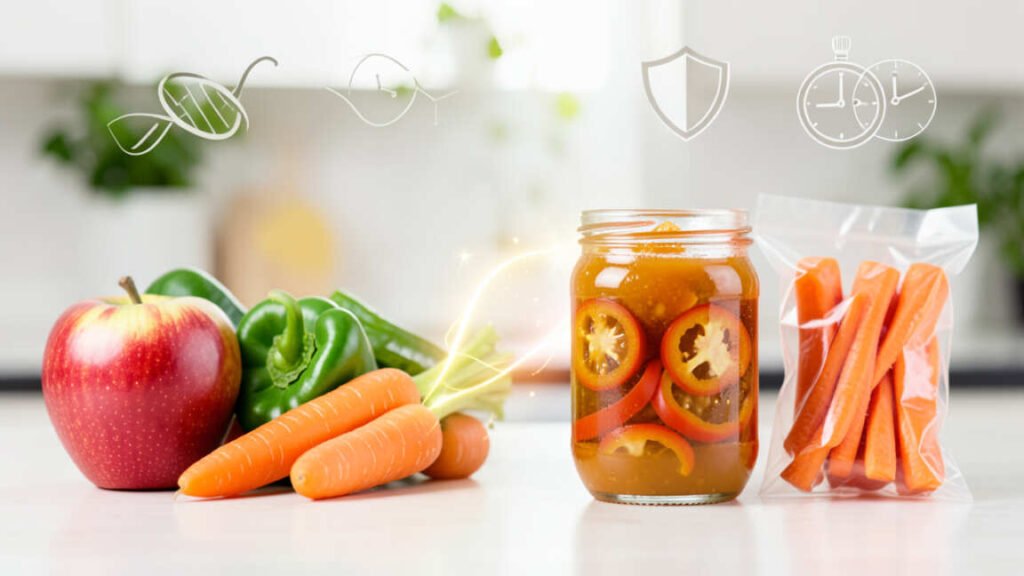
Food preservatives are natural or synthetic compounds added to food products to prevent spoilage by inhibiting the growth of harmful microorganisms and slowing oxidation. They function primarily by creating conditions hostile to bacteria, yeasts, and molds, or by neutralizing chemical reactions that degrade quality. This process significantly extends shelf life, enhances food safety, and plays a crucial role in reducing global food waste.
Food preservatives are compounds added to food to slow spoilage and prevent the growth of harmful microorganisms. They are a critical part of the modern food supply chain, ensuring safety and extending shelf life. Understanding what they are and how they work can help you make informed choices about the food you eat.
This guide breaks down the different types of preservatives, the science behind their function, and why they are used. You will learn which common foods contain them and the regulations that keep the food supply safe.
Simply put, food preservatives are substances added to foods to prevent spoilage from bacteria, yeasts, molds, and oxidation. They work by inhibiting microbial growth or chemical changes, keeping food safe and fresh for longer periods.
Key Takeaways
- Food preservatives are natural or synthetic additives that prevent spoilage and extend shelf life.
- They work primarily by killing or inhibiting the growth of bacteria, molds, and yeasts.
- Common types include antimicrobials (like salt and vinegar) and antioxidants (like vitamin C and vitamin E).
- Preservatives are rigorously tested and regulated by agencies like the FDA and EFSA to ensure safety.
- They play a vital role in reducing food waste and ensuring food is safe to eat during transport and storage.
What Are Food Preservatives and Their Purpose?
Food preservatives are substances added to foods to maintain their original quality, color, and texture while preventing spoilage. Their primary purpose is to extend the product’s shelf life, making it safe for consumption over a longer period. Without them, many foods would spoil quickly after processing.
The use of preservatives addresses several key challenges in the food system. They protect against economic loss from spoilage and are essential for transporting food over long distances. They also ensure that food remains safe from pathogens that could cause foodborne illness.
- Prevent Microbial Growth: Stop bacteria, molds, and yeasts from multiplying and causing decay or disease.
- Inhibit Oxidation: Prevent chemical reactions with oxygen that cause fats to go rancid and colors to fade.
- Maintain Freshness: Keep foods looking and tasting fresh for an extended period after packaging.
- Ensure Safety: Create an environment hostile to the growth of dangerous pathogens like Listeria or Clostridium botulinum.
- Reduce Food Waste: Allow for longer storage times at home and in retail settings, minimizing discarded food.
How Do Food Preservatives Work?
The mechanisms of food preservation are grounded in microbiology and chemistry. Preservatives disrupt the normal growth cycle of microorganisms or interfere with the chemical processes that lead to food degradation. They create conditions that are unfavorable for spoilage.
Most methods fall into a few core strategies. Some directly attack or weaken microbial cells, while others alter the food’s environment (like its pH or water activity) to make it inhospitable. Understanding these methods clarifies why different preservatives are used in different types of food.
| Mechanism | How It Works | Example Preservatives |
|---|---|---|
| pH Control | Lowers pH (increases acidity) to levels where most bacteria cannot survive. | Sorbic acid, Benzoic acid, Vinegar |
| Water Activity Reduction | Binds available water, making it inaccessible for microbial metabolism and growth. | Salt, Sugar, Glycerol |
| Membrane Disruption | Damages cell membranes of microbes, causing contents to leak and the cell to die. | Nisin, Natamycin |
| Antioxidant Action | Scavenges oxygen free radicals, preventing oxidation of fats and pigments. | Ascorbic acid (Vitamin C), Tocopherols (Vitamin E), BHA/BHT |
Tip: The preservation of jams and jellies is a perfect example of pH control and water activity reduction. The high sugar content reduces available water, while added lemon juice (citric acid) lowers the pH, creating a dual hurdle for microbes.
What Are the Main Types of Food Preservatives?
Food preservatives can be broadly classified based on their origin and primary function. The main categories include antimicrobial preservatives, antioxidants, and multifunctional preservatives. Each category addresses different spoilage factors.
Preservatives can also be natural or synthetic. Natural preservatives are derived from plants, animals, or minerals, while synthetic ones are created through chemical processes. Both types must meet stringent safety standards before they can be used in food.
Antimicrobial Preservatives
These are the most common class, designed to kill or inhibit the growth of bacteria, yeasts, and molds. They are essential in products susceptible to microbial spoilage, such as bread, cheese, sauces, and soft drinks. They work by disrupting cell functions or creating an unfavorable environment.
- Sorbates (Sorbic Acid): Very effective against molds and yeasts in cheese, wine, yogurt, and baked goods.
- Benzoates (Benzoic Acid): Effective in acidic foods (pH below 4.5) like fruit juices, pickles, and soft drinks.
- Propionates: Primarily used to inhibit mold growth in bread and baked goods.
- Nitrites/Nitrates: Critical for cured meats (like bacon and ham) to prevent Clostridium botulinum and maintain pink color.
- Sulfites: Used in wine, dried fruits, and some juices to prevent microbial growth and oxidation.
Antioxidants
Antioxidants prevent or delay the oxidation of fats and oils, which causes rancidity and off-flavors. They are crucial in foods high in fat, such as oils, margarine, chips, and nuts. They work by sacrificing themselves to react with oxygen before it can affect the food.
- BHA (Butylated Hydroxyanisole) and BHT (Butylated Hydroxytoluene): Synthetic antioxidants used in cereals, snack foods, and gum to preserve freshness.
- Ascorbic Acid (Vitamin C): A natural antioxidant that also helps maintain color in fruits and vegetables.
- Tocopherols (Vitamin E): Natural antioxidants often added to vegetable oils and products containing unsaturated fats.
- Rosemary Extract: A natural antioxidant used in meats, oils, and savory products to delay rancidity.
Important: Some natural preservatives, like salt and sugar, are used in very high concentrations. Their effectiveness comes from this high dose, which significantly reduces water activity. They are not just flavorings but functional preservation agents.
Common Foods Containing Preservatives
Preservatives are found in a vast array of packaged and processed foods. Their presence allows for the wide distribution and long shelf life that consumers expect. Below are some common categories and the preservatives frequently used in them.
It’s helpful to look at examples to see how different preservation strategies are applied to specific products. The choice of preservative depends on the food’s pH, water content, and susceptibility to specific types of spoilage.
| Food Category | Common Preservatives Used | Primary Purpose |
|---|---|---|
| Bread & Baked Goods | Calcium propionate, Sorbates | Prevent mold growth |
| Soft Drinks & Juices | Benzoates, Sorbates, Ascorbic acid | Prevent microbial growth, maintain color |
| Processed Meats | Sodium nitrite, Sodium erythorbate | Prevent botulism, maintain color |
| Cheese & Dairy | Natamycin, Sorbates | Prevent surface mold |
| Snack Foods (Chips, Nuts) | BHA, BHT, Tocopherols | Prevent fat oxidation (rancidity) |
Many people are concerned about the “chemical-sounding” names on ingredient lists. It’s important to note that many preservatives have simple, recognizable functions and are present in very small quantities. The focus should be on a balanced diet overall, rather than fear of any single ingredient.
Are Food Preservatives Safe to Eat?
This is one of the most common questions regarding food additives. In short, approved food preservatives are safe when consumed within the established guidelines. Regulatory bodies like the U.S.
Food and Drug Administration (FDA) and the European Food Safety Authority (EFSA) conduct extensive safety evaluations.
The safety assessment process involves determining the Acceptable Daily Intake (ADI) for each substance. The ADI is the amount of a food additive that can be consumed daily over a lifetime without posing an appreciable health risk. These limits are set with large safety margins.
- Preclinical Testing: The substance is tested in animal studies at very high doses to identify any potential toxic effects.
- No-Observed-Adverse-Effect Level (NOAEL): Scientists find the highest dose that causes no observable harm in test animals.
- Applying Safety Factors: The NOAEL is divided by large safety factors (typically 100) to account for differences between animals and humans, and variability within the human population.
- Establishing ADI: This calculation results in the ADI, usually expressed in milligrams per kilogram of body weight per day.
Regulations also require that preservatives be used in the minimum amount necessary to achieve their intended effect. They must be listed on the ingredient label, allowing consumers to make informed choices.
Warning: Some individuals may have sensitivities or allergies to specific preservatives, such as sulfites, which can trigger asthma attacks in sensitive people. Always read labels if you have known food sensitivities.
Natural vs. Synthetic Preservatives: What’s the Difference?
The terms “natural” and “synthetic” refer to the source and production method of a preservative, not necessarily its safety or effectiveness. Natural preservatives are derived from natural sources like plants, animals, or minerals. Synthetic preservatives are created through chemical synthesis.
Both types are subject to the same rigorous safety testing and regulation. A natural substance is not automatically safe; it must still prove its safety through the same scientific process as a synthetic one. The key difference is often in cost, availability, and functionality in specific food systems.
| Factor | Natural Preservatives | Synthetic Preservatives |
|---|---|---|
| Source | Derived from plants, animals, minerals (e.g., rosemary extract, vitamin E, vinegar). | Created in a lab through chemical reactions (e.g., BHA, BHT, sodium benzoate). |
| Effectiveness | Often less potent; may require higher doses or combination with other methods. | Typically more potent and effective in very small amounts across a range of conditions. |
| Cost & Stability | Generally more expensive and may be less stable under high heat or varied pH. | Usually less expensive to produce and more stable, offering consistent performance. |
| Consumer Perception | Often perceived more favorably by consumers seeking “clean label” products. | Sometimes viewed with suspicion by consumers, though scientifically proven safe. |
The Role of Preservatives in Reducing Food Waste
Beyond safety, preservatives have a significant environmental and economic impact. Global food waste is a major problem, with a substantial portion of food lost between farm and fork. Effective preservation directly combats this issue.
By extending shelf life, preservatives allow for more efficient supply chains. Food can be transported further, stored longer in warehouses and retail settings, and kept in home pantries without spoiling. This reduces the volume of food that must be discarded.
- Extended Supply Chain: Preservatives enable the global trade of foods like coffee, spices, and packaged goods that would otherwise perish quickly.
- Reduced Retail Loss: Longer shelf life means less unsold, spoiled food is thrown out by grocery stores and restaurants.
- Consumer Benefits: Households can buy food in advance, store it, and use it before it goes bad, saving money and reducing waste.
- Food Security: In regions with limited access to fresh food, preserved foods provide reliable, safe nutrition year-round.
The use of preservatives is a key component of a resilient and sustainable food system. Without them, the amount of food wasted due to spoilage would dramatically increase, putting greater strain on agricultural resources.
Frequently Asked Questions
Are food preservatives harmful?
Approved food preservatives are considered safe when used in accordance with regulations. They are thoroughly tested, and safe consumption limits are established for each one. While some people may have individual sensitivities, for the general population, they pose no proven health risk at approved levels.
Why are preservatives added to food?
Preservatives are added primarily to prevent spoilage from bacteria, molds, and yeasts, and to inhibit chemical reactions that cause food to go rancid. This extends shelf life, ensures food safety during storage and transport, and reduces food waste across the entire supply chain.
Can I avoid all food preservatives?
It is possible to avoid preservatives by eating a diet based entirely on fresh, whole, unprocessed foods. However, this is not practical for most people. Many foods with preservatives, like canned beans or frozen vegetables, are nutritious and convenient staples.
What is the difference between a preservative and a food additive?
Preservatives are a specific category of food additives. All preservatives are food additives, but not all food additives are preservatives. Additives can also include colors, flavors, emulsifiers, and sweeteners that serve functions other than preventing spoilage.
How can I identify foods with preservatives?
You can identify them by reading the ingredients list on the food label. Preservatives will be listed among the ingredients, often with their common or chemical name (e.g., ascorbic acid, sodium benzoate, BHT). The presence of preservatives must be disclosed by law.
Final Thoughts
Food preservatives are a well-established and regulated technology that ensures the safety and longevity of the food supply. They work through scientifically validated methods to prevent microbial growth and chemical degradation. While natural alternatives exist, both natural and synthetic preservatives undergo the same stringent safety evaluations.
Understanding their role helps demystify ingredient labels and appreciate the complexity of getting safe, fresh-tasting food to your table. They are a powerful tool in reducing waste and supporting a stable food system for everyone.