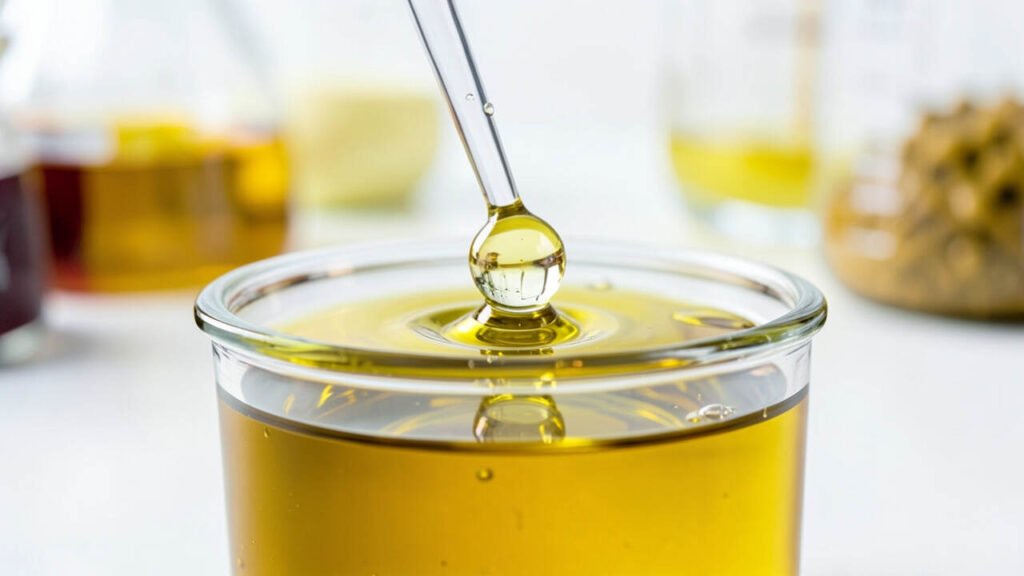
Emulsifiers are food additives that stabilize mixtures of immiscible ingredients like oil and water to create a uniform product. They function as surfactants, with molecules possessing both water-loving and oil-loving properties that bind these components together. Food manufacturers add them to improve texture, prevent separation, and extend the shelf life of processed items such as dressings, ice cream, and sauces.
What are emulsifiers? These common food additives play a crucial role in the texture and shelf life of many products you eat daily. From your morning salad dressing to your favorite ice cream, emulsifiers are the invisible ingredients that prevent separation and create smooth, appealing consistencies.
This guide explains the science behind emulsifiers, why manufacturers add them, and what it means for your food. You’ll learn how these compounds work at a molecular level and see common examples from everyday items.
Simply put, emulsifiers are molecules that have both water-loving and oil-loving parts, allowing them to bind oil and water together into a stable, uniform mixture called an emulsion. They are added to food primarily to improve texture, prevent ingredient separation, and extend shelf life.
Key Takeaways
- What are emulsifiers? They are substances with dual-loving properties that allow immiscible liquids like oil and water to mix into stable emulsions.
- Food manufacturers add emulsifiers for texture improvement, stabilization, and preservation, leading to smoother and longer-lasting products.
- Common examples include lecithin, mono- and diglycerides, and polysorbates, found in everything from baked goods to frozen desserts.
- The safety of food emulsifiers is regulated by agencies like the FDA and EFSA, though ongoing research examines potential gut health impacts.
What Is an Emulsion and Why Is It Unstable?
To understand what are emulsifiers, you first need to know what an emulsion is. An emulsion is a mixture of two or more liquids that are normally immiscible, meaning they don’t want to mix. Oil and water are the classic example.
When you try to mix them vigorously, you might get a temporary cloudy blend, but they will quickly separate again.
This separation happens because water molecules are polar (they have a slight electrical charge) and form tight bonds with each other. Oil molecules are non-polar and prefer to stick together. Without help, they naturally sort themselves into distinct layers.
The Problem of Immiscibility in Food Production
In food science, this separation is a major issue. Imagine a vinaigrette salad dressing where the oil sits on top of the vinegar. Or a mayonnaise that splits into a greasy mess and a watery liquid.
These are undesirable textures for consumers.
Manufacturers need a way to force these liquids to stay mixed. The challenge is to create a stable mixture that won’t separate on the store shelf or in your refrigerator for weeks or months. This is precisely where emulsifiers become essential.
How Instability Affects Food Quality
An unstable emulsion doesn’t just look bad; it often tastes bad and can have a poor mouthfeel. Separation can lead to uneven flavor distribution. Texture becomes gritty or oily instead of smooth and creamy.
- Visual Appeal: Separation makes food look unappaling and poorly made.
- Texture: Consistency changes from uniform to layered, affecting the eating experience.
- Taste: Flavors can become concentrated in one layer, leading to inconsistent bites.
- Preservation: Separated components may have different shelf lives, accelerating spoilage.
How Do Emulsifiers Work? The Science Explained
Understanding how emulsifiers work requires a look at their molecular structure. An emulsifier molecule is amphiphilic, which means it has two distinct parts: a hydrophilic (water-loving) head and a lipophilic (oil-loving) tail. This dual nature is the key to their function.
When added to a mixture of oil and water, the emulsifier molecules migrate to the interface between the two liquids. The lipophilic tails dissolve into the oil droplets, while the hydrophilic heads face outward into the water phase.
The Process of Creating a Stable Emulsion
This arrangement creates a protective film or barrier around each oil droplet. This barrier prevents the droplets from coalescing, or merging back together. The result is a dispersion of tiny oil droplets evenly distributed throughout the water (or vice versa).
- Agitation: Mechanical energy (like whisking) is used to break oil into tiny droplets.
- Emulsifier Adsorption: Emulsifier molecules quickly coat the surface of these new droplets.
- Stabilization: The coated droplets repel each other due to electrical charge or physical hindrance, preventing recombination.
- Result: A smooth, uniform, and stable emulsion is formed.
Types of Emulsions in Food
Emulsifiers can create different types of mixtures depending on what the primary liquid is. The two most common types in food are oil-in-water and water-in-oil emulsions.
| Emulsion Type | Description | Common Food Examples |
|---|---|---|
| Oil-in-Water (O/W) | Small oil droplets dispersed in a continuous water phase. | Milk, mayonnaise, salad dressings, ice cream mix |
| Water-in-Oil (W/O) | Small water droplets dispersed in a continuous oil phase. | Butter, margarine, chocolate |
The choice of emulsifier depends on the desired emulsion type, as some are better suited for O/W mixtures, while others excel at creating W/O emulsions.
What Are the Main Functions of Emulsifiers in Food Processing?
While stabilization is their primary role, what are emulsifiers used for extends far beyond just mixing oil and water. They are multifunctional ingredients that improve various aspects of food production and final product quality. Their functions are critical for modern food manufacturing.
Beyond the basic emulsification, they act as wetting agents, foaming agents, and crystal inhibitors. Each function helps create the exact sensory experience consumers expect from a specific product.
Primary Functional Roles
- Stabilization: Preventing the separation of ingredients like oil and water in sauces, dressings, and beverages.
- Texture Modification: Creating smooth, creamy, or soft textures in products like baked goods, dairy, and frozen desserts.
- Aeration Assistance: Helping to incorporate and stabilize air bubbles, which is vital for the light texture of cakes, whipped toppings, and mousses.
- Crystallization Control: Preventing the formation of large ice crystals in ice cream and controlling sugar or fat crystallization in confections.
- Shelf Life Extension: By preventing separation and staling, they can help products stay fresh and visually appealing longer.
Tip: In baking, emulsifiers like lecithin help tenderize cakes by interfering with gluten formation and incorporating more air during mixing, resulting in a softer crumb.
Role in Specific Food Categories
The exact function of an emulsifier is tailored to the food category. In bread, it improves loaf volume and softness. In margarine, it helps create a smooth, spreadable texture.
In chocolate, it reduces viscosity for easier molding and prevents fat bloom.
Understanding these targeted roles helps explain why different products list different emulsifiers. A manufacturer selects the specific compound that best enhances the desired characteristics of their final product.
What Are Common Types of Food Emulsifiers? Examples and Sources
When you scan an ingredients list for what are emulsifiers, you’ll find a variety of names. These compounds come from natural, synthetic, and modified sources. Each has different properties, applications, and regulatory statuses.
The choice depends on the specific technical need, cost, and the product’s marketing claims (e.g., “all-natural”). Some are derived from common foods like soybeans or eggs.
Naturally-Derived Emulsifiers
These are obtained from plant or animal sources and are often favored in “clean label” products. However, some common allergens, like soy and eggs, are frequent sources.
- Lecithin: A phospholipid complex derived most commonly from soybeans or egg yolks. It’s a versatile emulsifier found in margarine, baked goods, and chocolate.
- Gums: Plant-derived hydrocolloids like guar gum and acacia gum act as emulsifiers and thickeners in dressings and beverages.
- Casein: A milk protein that helps emulsify dairy products and coffee creamers.
- Gelatin: A protein from animal collagen used in desserts and marshmallows to create stable foams.
Synthetic and Modified Emulsifiers
These are manufactured through chemical processes. They often offer precise functionality and are cost-effective at industrial scale. They are widely used and thoroughly tested for safety.
| Emulsifier Type | Source/Function | Common Uses |
|---|---|---|
| Mono- and Diglycerides | Derived from fats and oils; most widely used food emulsifier. | Bread, cakes, ice cream, margarine |
| Polysorbates (e.g., Tween 80) | Synthetic compounds made from sorbitol and fatty acids. | Ice cream, whipped cream, frozen desserts |
| Sorbitan Esters (e.g., Span 60) | Emulsifiers that help create water-in-oil emulsions. | Margarine, shortenings, chocolate |
| Sodium Stearoyl Lactylate (SSL) | A dough conditioner that strengthens gluten networks. | Bread and flour tortillas |
How to Read an Ingredients List for Emulsifiers
Emulsifiers are listed by their specific names. They don’t usually appear under a general “emulsifier” category. Look for terms ending in “-ate” or “-ide” (like stearate or sorbitan), or words like “lecithin.” Ingredients are listed in descending order by weight, so if an emulsifier is near the beginning, it’s used in a larger quantity.
Why Are Emulsifiers Added to Processed Foods? Common Applications
The question “what are emulsifiers” often leads to the practical question of “why are they added to processed foods?” The answer is that they are fundamental to the creation, consistency, and commercial viability of many modern food products. Without them, numerous foods we take for granted wouldn’t exist in their current form.
They solve specific production challenges and meet consumer expectations for convenience, appearance, and taste. Their use is a direct response to the demands of industrial food manufacturing and long supply chains.
Application in Baked Goods and Confections
In bakeries, emulsifiers are workhorses. They improve batter stability, allowing for more uniform mixing and better incorporation of ingredients. In the final product, they contribute to softness, moisture retention, and a finer crumb structure.
- Staling Delay: They interact with starch molecules to slow down the retrogradation process that makes bread go stale.
- Volume Increase: By stabilizing air bubbles in the batter, they help cakes and breads rise higher and have a lighter texture.
- Moisture Binding: They help retain water, keeping baked goods moist for longer periods on the shelf.
Application in Dairy and Frozen Desserts
In ice cream, emulsifiers are critical for controlling texture. They promote the formation of small ice crystals during freezing, which leads to a smoother, creamier mouthfeel. They also help stabilize the air overrun, which gives ice cream its light scoopability.
Important: In low-fat or reduced-fat dairy products, emulsifiers become even more crucial. They mimic the creamy mouthfeel of fat, improving the sensory experience when fat content is reduced.
Application in Sauces, Dressings, and Spreads
For mayonnaise, ketchup, and salad dressings, emulsifiers guarantee that the product remains uniform from the moment it’s opened to the last drop. This consistency is a key quality indicator for consumers. They prevent the frustrating experience of shaking a bottle vigorously only to have it separate again minutes later.
Are Food Emulsifiers Safe? Regulation and Research
Given their widespread use, a natural concern is what are emulsifiers doing to our health. The safety of food additives, including emulsifiers, is one of the most thoroughly scrutinized areas in food science. Regulatory agencies worldwide mandate extensive testing before approval.
However, scientific understanding evolves, and research continues to explore potential long-term and subtle health effects beyond acute toxicity. This ongoing dialogue keeps the safety profile of these ingredients under review.
Regulatory Oversight and Approval
Major regulatory bodies include the U.S. Food and Drug Administration (FDA) and the European Food Safety Authority (EFSA). They assess emulsifiers based on toxicological data, proposed usage levels, and exposure estimates.
- Safety Studies: Tests include acute, subchronic, and chronic toxicity studies in animals, and sometimes genotoxicity tests.
- Acceptable Daily Intake (ADI): Agencies establish an ADI, which is the amount considered safe for daily consumption over a lifetime. This is set far below any level showing adverse effects in studies.
- Labeling Requirements: Approved emulsifiers must be declared in the ingredients list, allowing consumers with specific allergies (like soy lecithin) to avoid them.
Emerging Research on Gut Health
Recent studies have shifted focus from systemic toxicity to potential interactions with the gut microbiome. Some research in animal models suggests certain emulsifiers may affect the gut’s mucus layer and promote low-grade inflammation. It’s important to note that these findings are preliminary, and direct translation to human health at dietary doses is not yet established.
Major health organizations continue to consider approved emulsifiers safe within the ADI. The scientific community calls for more human studies to understand these potential effects fully.
Consumer Choice and Alternatives
For those who prefer to avoid synthetic additives, the market offers “clean label” products that use fewer, naturally-derived emulsifiers like lecithin or plant gums. Choosing whole, unprocessed foods is another way to minimize intake of any additives. Awareness is the first step in making informed dietary choices.
Frequently Asked Questions
What are emulsifiers in simple terms?
What are emulsifiers in simple terms? They are like a mediator for oil and water. These ingredients have a special shape that allows them to hold onto both oil and water at the same time, keeping them mixed together smoothly instead of separating into layers.
Are emulsifiers considered natural or artificial?
Emulsifiers can be either natural or artificial. Natural examples include lecithin from soybeans or egg yolks. Artificial or synthetic emulsifiers, like polysorbates, are created in a lab.
Many are considered “nature-identical” because they mimic molecules found in nature.
Can I avoid emulsifiers in my diet?
You can reduce your intake by avoiding highly processed foods like packaged snacks, margarine, commercial ice cream, and bottled sauces. Cooking from scratch using whole ingredients like eggs, mustard, or yogurt can create emulsions naturally, without added emulsifiers.
What is the difference between an emulsifier and a stabilizer?
While they often work together, their roles are different. Emulsifiers create and maintain the mixture of oil and water. Stabilizers, like xanthan gum or carrageenan, increase the viscosity of the continuous phase (like the water in a sauce) to physically prevent the dispersed droplets from moving and separating.
Why is lecithin so common in food products?
Lecithin is popular because it is a natural, versatile, and effective emulsifier derived from soy or sunflowers. It has a mild flavor, is generally recognized as safe, and meets the growing consumer demand for simpler, less synthetic-sounding ingredient lists.
Final Thoughts
What are emulsifiers are functional ingredients with a scientific purpose: to create and maintain stable mixtures of otherwise incompatible ingredients like oil and water. They are fundamental to the texture, consistency, and shelf life of countless processed foods.
While their safety is regulated and generally considered assured within established limits, ongoing research explores their broader biological impacts. Understanding their role empowers you to make informed choices about the foods you consume, whether you choose products with emulsifiers or opt for whole-food alternatives.