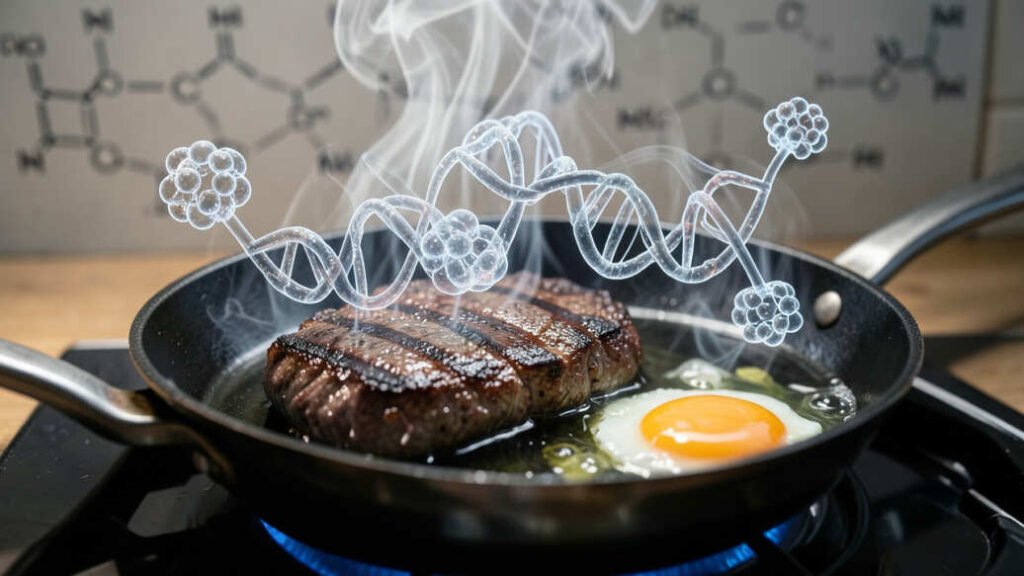
When food is cooked, proteins denature due to heat, causing them to unfold and form new structures that affect texture, flavor, and digestibility. This process generally enhances digestibility and can make food more appealing, but the effects vary by cooking method and protein source, potentially leading to nutrient loss if overdone. By understanding how cooking alters protein structure, you can select methods that preserve nutritional value and achieve desired textures in both animal and plant-based foods.
Understanding what happens to protein when food is cooked is key to both achieving perfect textures and maximizing nutritional benefits. Heat triggers complex chemical reactions that can make proteins more digestible, enhance flavors, and change textures entirely. This process, known as protein denaturation, is fundamental in culinary science and affects everything from a seared steak to a fluffy egg.
Whether you’re a home cook aiming for juicier chicken or a fitness enthusiast concerned about protein quality, these changes matter. Cooking doesn’t simply “destroy” protein; it transforms it in ways that can be either beneficial or detrimental, depending on the method used. We’ll break down the science, the practical effects on your food, and how to apply this knowledge in your kitchen.
Simply put, cooking causes proteins to unfold and bond in new ways, which can make food easier to digest, create firmer or more tender textures, and develop rich flavors through browning. While some heat-sensitive nutrients may be lost, cooking often increases the bioavailability of protein and other nutrients.
Key Takeaways
- Protein denaturation from heat unfolds protein structures, making them firmer and often more digestible.
- Cooking can reduce anti-nutrients like trypsin inhibitors, improving protein absorption in plant foods.
- High-heat methods like grilling can form advanced glycation end products (AGEs), which may be harmful in large amounts.
- Moist-heat cooking (steaming, poaching) is generally gentler on proteins and preserves water-soluble nutrients.
- Protein content itself changes little with cooking, but its availability and digestibility are significantly altered.
What Is Protein Denaturation and How Does Cooking Trigger It?
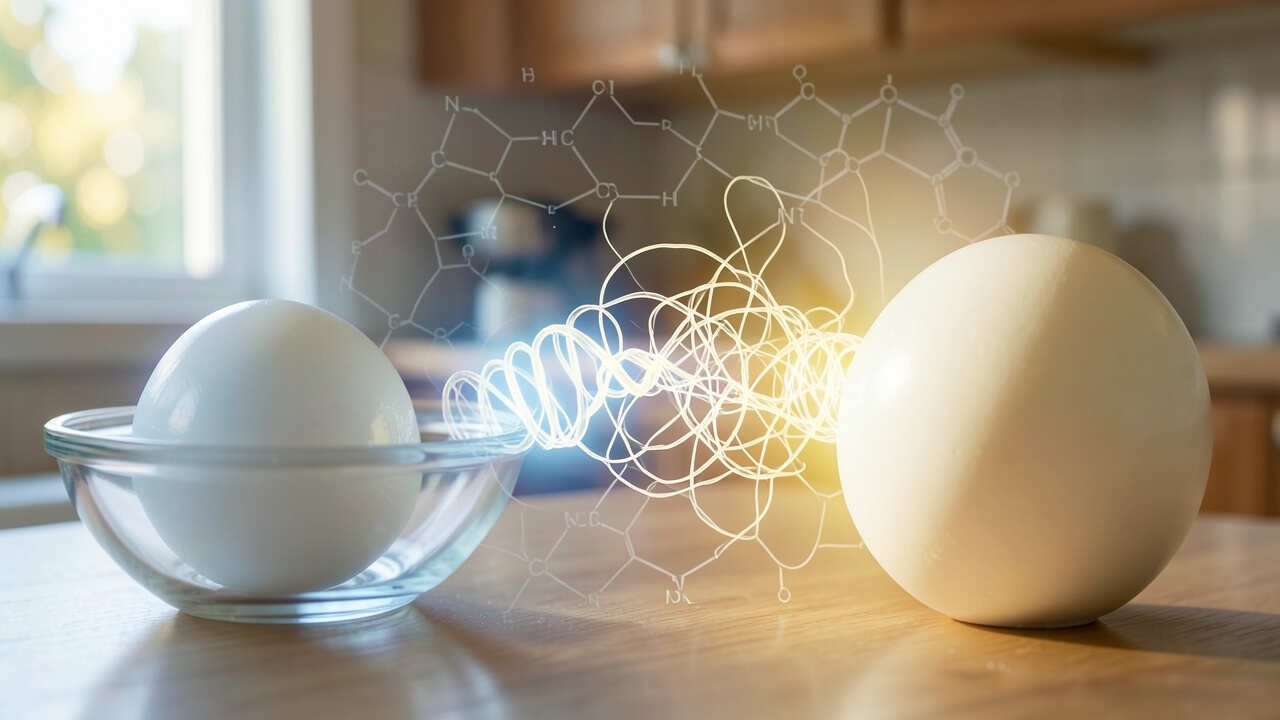
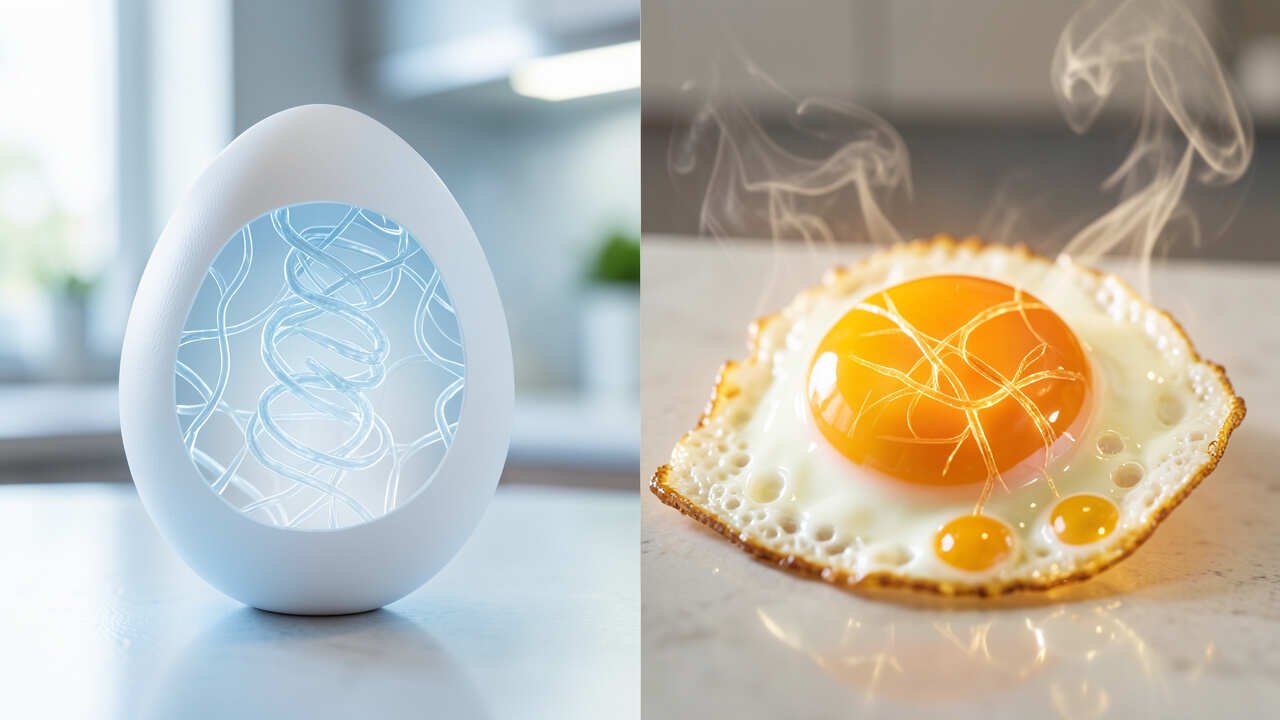
Protein denaturation is the process where a protein’s complex, folded three-dimensional structure begins to unravel. This is similar to how the clear white of an egg turns solid and white when fried. The heat provides energy that breaks the weak bonds holding the protein’s shape, causing it to uncoil.
This unraveling exposes new areas of the protein molecule. These exposed sections then form new bonds with other protein strands, creating a more rigid, interconnected network. This is why cooked meats become firmer and opaque compared to their raw, translucent state.
The process isn’t just about heat. Changes in pH (adding lemon juice to milk) or mechanical action (beating egg whites) can also cause denaturation. However, cooking is the most common and potent trigger in our kitchens.
- Primary Cause: Heat energy breaks hydrogen bonds and other weak interactions stabilizing the protein’s native fold.
- Visible Effects: Change in color (e.g., red meat turning brown), solidification (e.g., eggs setting), and moisture release.
- Key Benefit: Denatured proteins are generally more accessible to digestive enzymes, potentially increasing digestibility.
- Cooking Temperature: Most proteins begin denaturing between 40°C (104°F) and 50°C (122°F), with full changes occurring by 70°C (158°F) and above.
- Reversibility: Unlike cooking an egg, most food protein denaturation is irreversible.
How Does Cooking Affect the Digestibility of Protein?
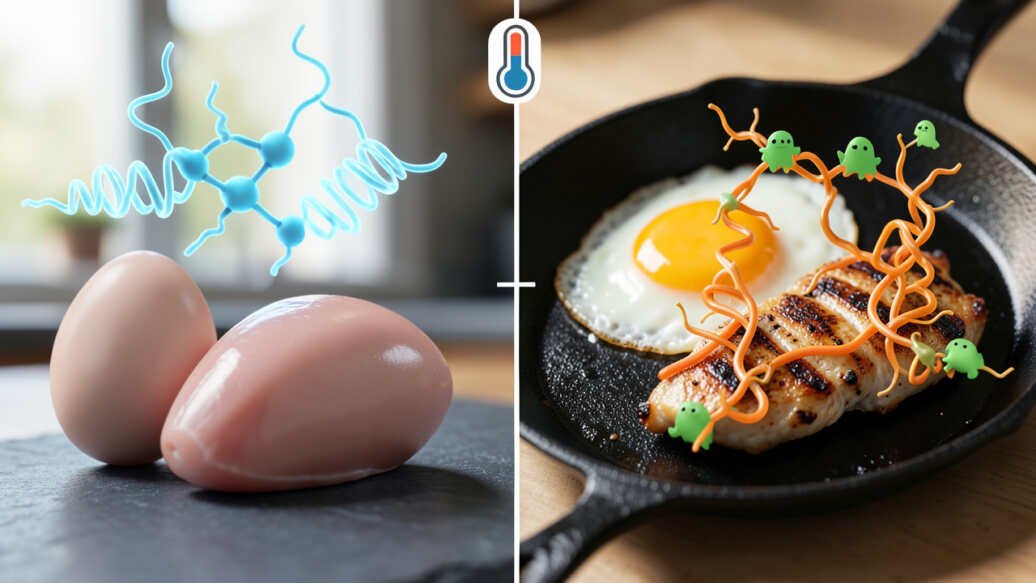
This is a central question for nutrition. In many cases, cooking significantly improves protein digestibility. Raw foods often contain protease inhibitors, which are natural compounds that block digestive enzymes in our gut, reducing our ability to break down and absorb protein.
For example, raw kidney beans contain phytohaemagglutinin, a lectin that can cause severe digestive distress and blocks protein digestion. Thorough boiling destroys this compound. Similarly, cooking denatures these inhibitors themselves, making them inactive and allowing our enzymes to work efficiently.
Scientific studies use “digestibility-corrected amino acid scores” (PDCAAS) to measure this. Cooking often raises the score for plant proteins dramatically. The heat also makes the protein structure more porous and accessible to stomach acid and enzymes like pepsin and trypsin.
| Food Source | Raw Protein Digestibility | Cooked Protein Digestibility |
|---|---|---|
| Eggs | ~51% | ~91% |
| Beef | ~68% | ~81% |
| Soybeans | ~60% | ~80% |
| Kidney Beans | ~47% | ~72% |
Tip: To maximize protein digestibility from legumes, always cook them thoroughly. Soaking followed by boiling is effective at reducing anti-nutrients. Sprouting before cooking can further enhance digestibility.
Why Does Meat Get Tougher or More Tender When Cooked?
The texture change in meat is a direct result of protein coagulation and moisture loss. As the muscle proteins (primarily myosin and actin) denature, they squeeze together and expel water. This is why a well-done steak is smaller and drier than a rare one.
The “firmness” you feel is the solid network of coagulated proteins.
However, not all cooking methods make meat tougher. Collagen, the tough connective tissue in cuts like brisket or chuck, undergoes a different transformation. When held at low temperatures for a long time, collagen dissolves into gelatin.
This is why slow-cooked pulled pork is tender and succulent despite coming from a very tough cut.
The Maillard reaction, which occurs at high heat (above 140°C/284°F), creates the brown crust and complex flavors on seared meat. This reaction involves proteins and sugars and is separate from, but works alongside, simple denaturation to create the ideal texture and taste.
- Toughening Phase (40-65°C / 104-149°F): Myosin proteins denature first, leading to initial firming.
- Significant Moisture Loss (65-75°C / 149-167°F): Collagen begins to shrink and squeeze out juices; actin denatures, causing major toughening in lean meats.
- Gelatinization Phase (Slow Cooking above 75°C / 167°F): With prolonged time, collagen breaks down into soft, moist gelatin, tenderizing tough cuts.
How Do Different Cooking Methods Change Protein Structure?
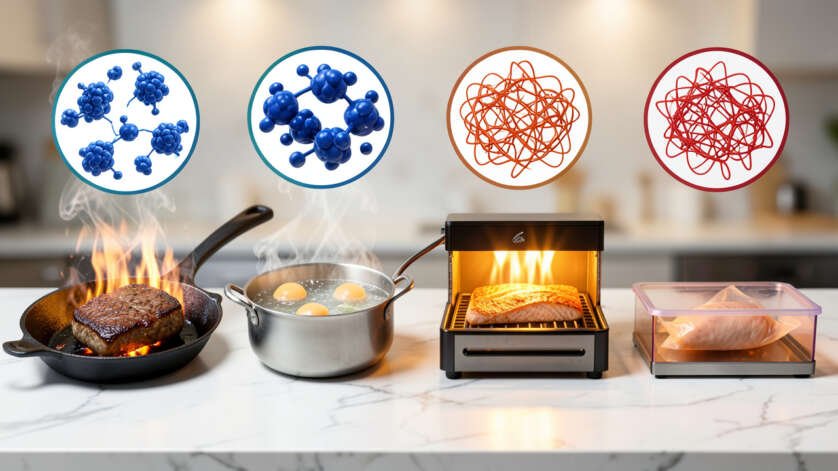
The two primary categories are dry-heat and moist-heat methods, and they impact proteins differently. Dry-heat methods like grilling, broiling, and pan-frying use temperatures well above water’s boiling point. This causes rapid, intense denaturation on the surface, creating a flavorful crust via the Maillard reaction, while the interior cooks more gently.
Moist-heat methods, such as poaching, simmering, or steaming, cook food at or below 100°C (212°F). This is a gentler process that denatures proteins more evenly and slowly. It minimizes moisture loss, which is why poached fish remains delicate and steamed chicken can be very moist.
It also prevents the formation of harmful compounds like heterocyclic amines (HCAs) that form at very high temperatures.
Sous-vide cooking is a precision hybrid. By vacuum-sealing food and cooking it in a water bath at an exact, lower temperature for a longer time, you achieve perfect, uniform denaturation without overcooking. This method gives you unparalleled control over protein texture.
- Grilling/Broiling: Intense surface heat creates a flavorful crust but can lead to a gradient of doneness (e.g., well-done outside, rare inside) and potential formation of HCAs and AGEs.
- Roasting/Baking: Moderate, even heat in an oven. Good for even cooking but can dry out lean proteins if not monitored.
- Poaching/Simmering: Gentle, moist heat below a boil. Excellent for delicate proteins like fish and eggs, preserving moisture and nutrients.
- Steaming: Uses steam’s latent heat. One of the gentlest methods, retaining the most water-soluble nutrients and protein structure.
- Sous-Vide: Precise temperature control eliminates guesswork, allowing proteins to reach exact doneness evenly throughout.
What Happens to Plant Proteins During Cooking?
The transformations in plant proteins are just as significant, often more so for nutrition. Many plant seeds and legumes store proteins in tightly packed, indigestible forms. Cooking unfolds these proteins and neutralizes anti-nutritional factors that protect the plant seed but hinder our digestion.
In grains and legumes, heat can also improve the quality of essential amino acids. For instance, the amino acid lysine, which is often limited in grains, becomes more bioavailable after cooking. The process also gelatinizes starch, making the food more palatable and its energy more accessible, working in tandem with protein changes.
A common question is whether plant proteins “complement” each other better when cooked. The theory of protein complementation (e.g., rice and beans) is about eating a variety of sources over a day to get all essential amino acids. Cooking itself doesn’t directly create complementation, but it makes each individual source’s protein more digestible and usable.
Important: While cooking improves digestibility, some water-soluble proteins and amino acids can leach into cooking water. To retain nutrients, use minimal water for boiling legumes and consider using the nutrient-rich cooking liquid in soups or sauces.
Does Cooking Reduce the Overall Protein Content in Food?
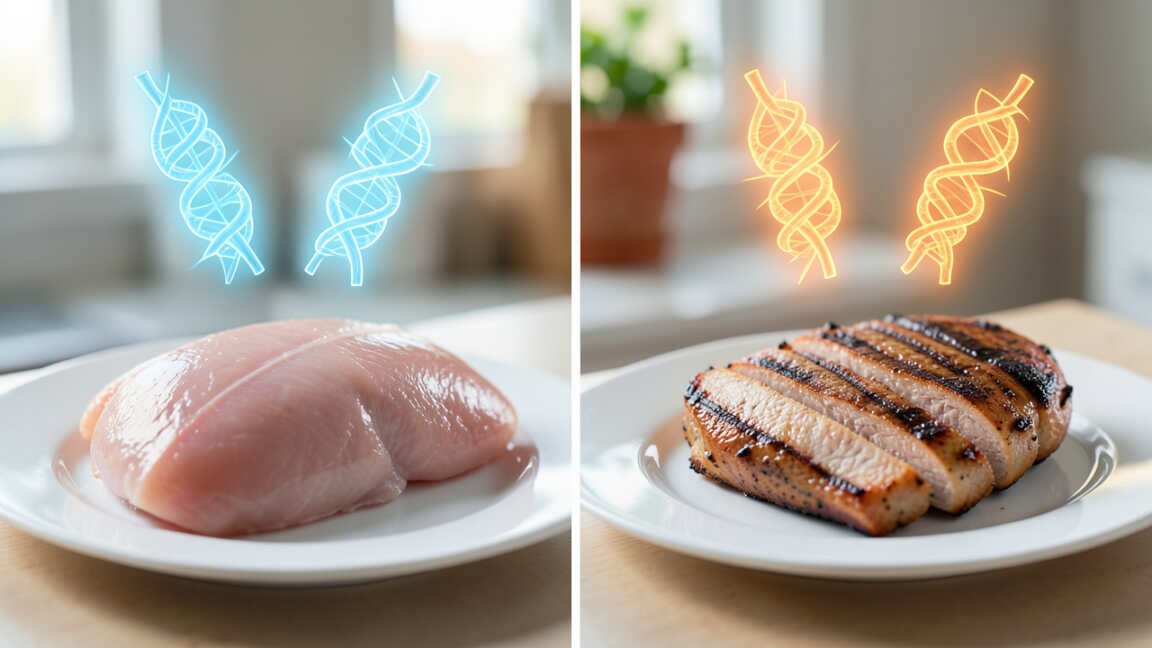
This is a widespread misconception. The total amount of protein (the nitrogen content) in food changes very little with cooking. A 100g raw chicken breast has essentially the same total protein as the same piece after cooking, though it will weigh less due to water loss.
What cooking does change is the protein’s availability and form. It denatures it, breaks down connective tissue, and can cause some surface proteins to char and become indigestible if overcooked. But the core protein material remains.
The apparent “loss” is mostly water, which concentrates the protein by weight in the cooked food.
For example, if you cook 100g of raw beef with 25% protein content (25g protein), and it loses 30% of its weight as water and fat, you are left with 70g of cooked beef. That 70g still contains nearly all of the original 25g of protein, giving you a higher protein-per-gram ratio (about 36g protein per 100g cooked).
| Measure | Raw (100g) | Cooked (Approx. 70g) |
|---|---|---|
| Weight | 100g | 70g |
| Total Protein | ~25g | ~25g (virtually unchanged) |
| Protein per 100g | 25g | ~36g (concentrated) |
Are There Any Negative Effects of Cooking Proteins?
Yes, certain cooking methods can produce compounds of concern. When proteins are exposed to very high dry heat (grilling, frying), they can react with sugars to form advanced glycation end products (AGEs). High dietary AGE intake is linked to inflammation and oxidative stress in some studies.
Similarly, when muscle meats are cooked at high temperatures, heterocyclic amines (HCAs) can form. These compounds have been studied for potential mutagenic effects. The risk is dose-dependent and associated with very high consumption of charred meats, not occasional grilled chicken.
Another consideration is the loss of heat-sensitive amino acids. Lysine is particularly vulnerable. Overcooking foods, especially in liquid at high pH, can reduce the bioavailability of this essential amino acid.
However, this is generally only a concern with extreme or inappropriate cooking techniques.
Warning: Avoid charring meat at high temperatures. Marinating meat before grilling, using lower heat, and flipping frequently can reduce the formation of harmful compounds like HCAs and AGEs.
Practical Tips for Cooking Protein to Preserve Nutrition and Flavor
You can apply this science directly to your cooking for better results. The goal is to use methods that denature proteins sufficiently for texture and digestibility without excessive nutrient loss or harmful compound formation.
Start by matching the cut or protein type to the cooking method. Delicate fish fillets need gentle poaching, while tough brisket requires low-and-slow roasting. For eggs, controlling temperature is everything—too high, and the sulfur in the proteins can turn the yolk green.
Don’t fear the Maillard reaction, but manage it. A good sear at the end of cooking can add immense flavor. Use a very hot pan and a small amount of oil to get browning without overcooking the interior.
For plant proteins, always remember that soaking and thorough cooking are your best tools to boost nutrition.
- For Tenderness: Use moist-heat methods (poaching, stewing) for lean proteins. Use slow, dry-heat methods (roasting, braising) for tough, collagen-rich cuts.
- For Maximum Nutrition: Steam vegetables and legumes. Use minimal water for boiling and consume the liquid. Avoid charring.
- For Flavor: Finish with high-heat searing after gentle cooking (e.g., reverse-sear steak). Use acidic marinades (like lemon juice) before cooking to enhance flavor and reduce harmful compound formation.
- For Safety: Always cook animal proteins to their safe minimum internal temperature (e.g., 74°C/165°F for poultry) to denature harmful bacteria and parasites.
- For Precision: Consider a food thermometer. It removes guesswork and prevents the overcooking that degrades protein quality.
How Does Cooking Protein Compare to Eating It Raw?
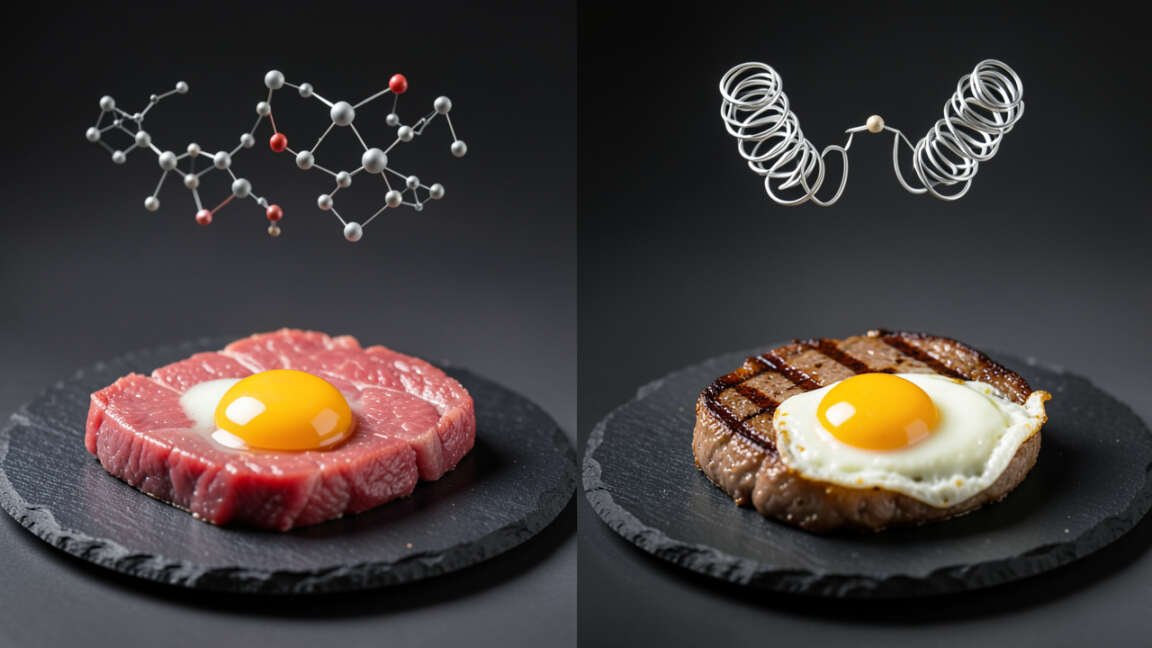
Comparing cooked versus raw protein intake involves a trade-off between digestibility and nutrient preservation. For animal proteins, the food safety risks of consuming raw meat, eggs, and fish (due to pathogens like Salmonella, E. coli, and parasites) overwhelmingly favor cooking for the vast majority of people.
From a nutritional standpoint, cooking generally wins for plant proteins by neutralizing anti-nutrients and increasing digestibility. For animal proteins, cooking improves digestibility but can reduce the levels of some heat-sensitive vitamins (like B vitamins). However, the gain in protein accessibility and safety typically outweighs this loss.
A few exceptions exist. Raw fish in sushi is prepared with specific, rigorous safety protocols (like deep-freezing) to eliminate parasites. Raw milk cheeses are aged to control bacterial growth.
These are specialized, controlled preparations, not general recommendations.
| Factor | Raw Protein | Cooked Protein |
|---|---|---|
| Digestibility | Often lower (inhibited) | Generally higher (denatured) |
| Food Safety | Higher risk (pathogens) | Safer (pathogens killed) |
| Nutrient Profile | Preserves heat-sensitive vitamins | May reduce some vitamins; increases mineral availability |
| Texture & Flavor | Often soft, gelatinous, or grassy | Wide range; develops complex savory flavors |
Frequently Asked Questions
Does boiling meat make it lose protein?
No, boiling does not cause a significant loss of protein content. The protein molecules themselves remain in the meat. Some very small amounts of soluble proteins may leach into the cooking water, but the total protein stays in the pot if you use the broth.
The meat’s weight decreases due to water loss, which concentrates the protein by weight.
Is cooked egg protein healthier than raw?
Yes, for most people. Cooking denatures avidin in raw egg whites, which otherwise binds to and prevents absorption of the vitamin biotin. Cooking also makes the egg proteins about 50% more digestible.
It also eliminates the risk of Salmonella from the egg shell or contents.
What is the best way to cook chicken to keep protein quality high?
Poaching, steaming, or baking at moderate temperatures are excellent methods. They ensure even cooking without charring, retain moisture, and preserve the protein’s nutritional quality. For flavor, you can sear the chicken briefly in a hot pan after it’s cooked through to get a browned crust without overcooking the interior.
Do plant proteins become complete when cooked?
Cooking improves the digestibility and bioavailability of amino acids in plant proteins, but it doesn’t create essential amino acids that weren’t there to begin with. Most plant foods are “incomplete,” lacking one or more essential amino acids. Eating a variety of plant protein sources throughout the day (like grains with legumes) ensures you get all essential amino acids.
Can you lose protein if you overcook food?
You don’t lose the total protein, but you can severely damage its structure and quality. Extreme overcooking can cause proteins to become overly tough and dry, and may create some indigestible compounds. It can also reduce the availability of certain heat-sensitive amino acids like lysine.
Proper cooking technique is key to maintaining protein quality.
Final Thoughts
Cooking is a powerful tool that transforms the proteins in our food, primarily by denaturing them. This process generally makes proteins easier to digest and safer to eat, especially from plant sources. While high-heat methods can produce potentially harmful compounds, using appropriate techniques like moist-heat cooking or precise temperature control can mitigate these risks.
Understanding these changes allows you to make smarter cooking choices—selecting the right method for the cut of meat or type of plant protein to maximize both flavor and nutritional benefit. The science confirms that a well-cooked meal is not only safer and more palatable but also more nourishing.