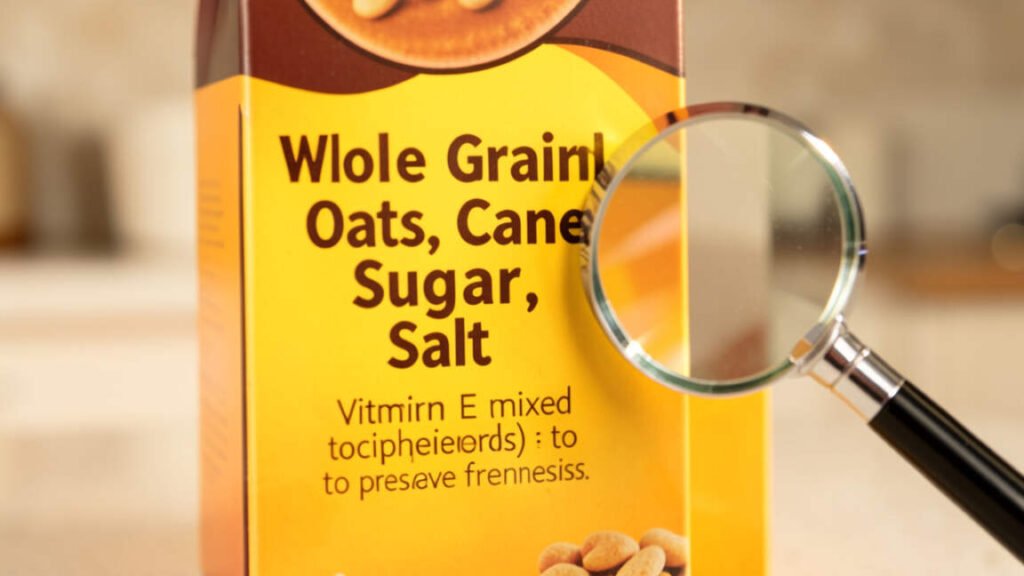
Ingredients are listed on product labels in descending order of predominance by weight, meaning the most abundant component appears first. This regulatory practice, enforced by agencies like the FDA, provides a transparent snapshot of the product's true composition. It allows consumers to quickly identify primary ingredients and make informed purchasing decisions based on what they are actually buying.
Understanding why ingredients are listed in a particular order helps you make smarter choices at the grocery store. That small text on the back of a package tells a big story about what you’re really buying. The order isn’t random; it follows strict regulations and reveals the true composition of the food or product.
This guide breaks down the rules behind ingredient lists, shows you how to read them like a pro, and uncovers what brands might be hiding. You’ll learn to identify the main components, spot misleading tactics, and use this knowledge for better health and purchasing decisions.
Simply put, ingredients must be listed in descending order of predominance by weight. This means the first ingredient is the most abundant, the second is the next most abundant, and so on. This rule, enforced by the FDA and other agencies, gives you an honest snapshot of what’s inside, from the primary component down to the spice used last.
Key Takeaways
- Ingredient list order is a legal requirement based on weight, not volume or importance.
- The first ingredient is the main building block of the product. If it’s sugar or flour, that’s what you’re mostly eating.
- Manufacters can split a single ingredient into multiple items to make it appear less prominent on the list.
- The total weight of all ingredients listed as 2% or less can be grouped and listed in any order at the end.
- Learning this order helps you quickly assess nutritional value and avoid misleading packaging claims.
What Is the Regulation Behind Ingredient List Order?
The Food and Drug Administration (FDA) sets the standard in the United States. Federal law, specifically 21 CFR 101.4, mandates that ingredients be listed “in descending order of predominance by weight.” This means manufacturers must calculate the weight of each ingredient in the final product and list them from heaviest to lightest. The rule applies to all packaged foods and similar consumer products.
This regulation exists to prevent deception. Without it, a company could list healthy-sounding ingredients first even if they only make up a tiny fraction of the product. The weight-based order provides a factual, objective measure that all companies must follow, creating a consistent system for consumers to evaluate products across brands.
| Regulatory Body | Key Regulation | Core Requirement |
|---|---|---|
| FDA (USA) | 21 CFR 101.4 | List in descending order by weight. |
| EU Commission | Regulation (EU) No 1169/2011 | Same rule; exceptions for ingredients under 2%. |
| Health Canada | Food and Drug Regulations | Mandatory descending order by weight. |
| FSANZ (Australia/NZ) | Standard 1.2.4 | Descending order by ingoing weight. |
The 2% rule is a common exception across these jurisdictions. If an ingredient (like spices, flavorings, or colors) makes up less than 2% of the product’s total weight, it can be listed after the main ingredients in any order. This explains why you often see “spices” listed together at the end of a long list without a specific order among them.
How Does the Ingredient List Order Help Consumers?
The primary benefit is transparency and the ability to make informed choices quickly. By glancing at the first two or three ingredients, you instantly know the product’s foundation. If the first ingredient in your “whole grain” cereal is sugar, you have your answer about its primary content.
This simple rule cuts through marketing claims on the front of the box.
It also helps identify fillers and cheap additives. Products that use inexpensive bulking agents like water, corn syrup, or refined flours will reveal this in their first ingredients. You can compare two similar products side-by-side and see which one prioritizes whole foods versus processed additives based solely on this order.
- Quick Nutritional Assessment: The list order is a faster proxy for reading the entire nutrition facts panel. High amounts of sugar, unhealthy fats, or refined carbs appear first.
- Comparison Shopping: You can objectively compare store-brand versus name-brand products to see if the formulation is truly identical.
- Dietary Management: For people with allergies, intolerances, or specific diets (like keto or vegan), scanning the first ingredients helps quickly rule out products containing major allergens or restricted items.
- Identifying “Healthy Washing”: Brands may advertise a “contains blueberries” on the front. The ingredient list will show if blueberries are the first ingredient (a berry product) or the fifteenth (a minor flavoring).
Tip: Make the first ingredient your rule of thumb. For products like bread, pasta sauce, or yogurt, the first ingredient should be a whole food (e.g., “whole wheat flour,” “tomatoes,” “milk”). For packaged snacks, be wary if the first ingredient is sugar, a sugar derivative, or a refined oil.
What Are Common Tactics to Manipulate Ingredient List Perception?
While the order itself is strictly regulated, savvy manufacturers use several legal loopholes to make products seem healthier than they are. The most common tactic is ingredient splitting. Instead of listing “sugar” as the first ingredient, a company might use four different types of sugar: corn syrup, high-fructose corn syrup, dextrose, and maltose.
Individually, each might be under the weight of the second ingredient (like flour), allowing flour to appear first.
Another tactic involves using heavy, less healthy ingredients sparingly but listing them after lighter, healthier-sounding ones. For example, a “multigrain” product might have refined flour as its heaviest ingredient, but the grains are listed first because they are lightweight and can be added in small quantities. The weight rule keeps this in check, but the perception game continues.
- Ingredient Splitting: Breaking a single, dominant ingredient (often sugar or oil) into multiple, differently named components.
- Use of “Dressing Up” Ingredients: Adding small amounts of “superfoods” like acai or chia seeds that are lightweight and can appear high on the list without contributing significant weight.
- Water Weight Manipulation: In products like canned fruit or vegetables, the packing syrup or brine can add weight, potentially altering the relative order of the solid food pieces.
- The 2% Loophole: Grouping less significant ingredients (often additives, preservatives, or flavors) together at the end, which can obscure the complexity of the chemical additives used.
| Tactic | How It Works | Example |
|---|---|---|
| Ingredient Splitting | Separating one main ingredient into several named forms. | Listing “cane sugar, molasses, corn syrup” instead of just “sugar.” |
| Lightweight “Health” Ingredients | Using small weights of trendy ingredients that are less dense. | “Quinoa” listed before “enriched flour” in a granola bar. |
| Water or Broth Added | Adding liquid to increase total weight, potentially shifting the order of solids. | “Water” listed first in a soup, pushing chicken lower. |
| Vague “Spice Blend” Grouping | Using the 2% rule to list a proprietary mix without detail. | “Seasoning blend (salt, autolyzed yeast extract, spices)” |
Understanding these tactics empowers you to look beyond the first ingredient. The next time you see a product claiming to be “made with real fruit,” check if fruit juice concentrate is listed near the top or buried under a dozen other ingredients like sugar and corn starch.
How Does This Order Differ for Allergens and Spices?
Specific rules apply to allergens and spices. For allergens, the major ones (milk, eggs, fish, shellfish, tree nuts, peanuts, wheat, soybeans, sesame) must be clearly declared, either in parentheses after the ingredient or in a “Contains” statement. However, their position in the ingredient list still follows the weight rule.
A product with a small amount of wheat flour as a dusting agent will still list “wheat” after heavier ingredients like sugar and oil.
Spices, natural flavors, and artificial flavors fall under the 2% rule. They can be listed collectively as “spices” or “flavorings” after all ingredients that make up 2% or more of the product. This is why you rarely see “paprika” or “garlic powder” as a standalone item on a snack food ingredient list; they are grouped together.
This grouping can sometimes hide the use of many different additives under one umbrella term.
- Allergen Declaration Priority: The allergen statement is about identification, not weight. It can appear anywhere on the label, often in bold.
- The “Spices” Umbrella: Companies can legally list “spices” instead of detailing each one, unless they are common allergens or the product is marketed as “spice-free.”
- “Natural Flavors” Complexity: This term can encompass hundreds of chemical compounds derived from natural sources, allowing proprietary formulas to remain secret.
Warning: The “spices” and “natural flavors” grouping can be a blind spot. If you have a specific spice sensitivity or are trying to avoid certain additives, look for brands that choose to fully disclose their spice blends. The ingredient list won’t help here, so you may need to contact the manufacturer.
Why Does the Order Matter for Specific Dietary Needs?
For individuals managing health conditions or following strict diets, the ingredient list order is a critical tool. For someone with diabetes, the first ingredient being a sugar (sucrose, corn syrup, dextrose) is an immediate red flag, indicating a high glycemic impact product. For those with celiac disease, seeing “wheat flour” or “barley malt” in the first few ingredients means the product is definitely not gluten-free, regardless of a “gluten-free” label elsewhere.
Keto dieters scan for sugar and refined carbs like flour high on the list, while those watching sodium intake look for “salt” appearing early. The order provides a fast first-pass filter before even looking at the nutrition facts panel. It tells you the macronutrient profile: is this a protein bar (first ingredient whey protein), a fat bomb (first ingredient coconut oil), or a candy bar in disguise (first ingredient sugar)?
- Diabetic-Friendly Choices: Look for first ingredients that are whole grains, proteins, or non-starchy vegetables. Avoid products where the first 1-3 ingredients are various sugars.
- Heart-Healthy Selections: The first ingredient should be a whole food, not a refined oil. For example, “olive oil” is better than “vegetable oil,” but ideally, the first ingredient is a vegetable or grain.
- Low-FODMAP Diet: Scan for high-FODMAP ingredients like onion, garlic, wheat, or honey listed prominently. Their order helps gauge concentration.
- Clean Eating Principles: A shorter ingredient list with recognizable whole foods near the top aligns with minimal processing ideals.
| Dietary Goal | What to Look for First | What to Avoid at the Top |
|---|---|---|
| Weight Management | Vegetables, lean proteins, whole grains. | Sugars, refined flours, added oils. |
| Allergy Avoidance | Check “Contains” statement first, then scan list. | Any listed allergen, even if low on the list. |
| Minimally Processed | Single-ingredient foods or short lists of whole foods. | Long lists of chemical-sounding names. |
| Reducing Additives | Short list without preservatives, colors, or “flavors.” | BHT, BHA, sodium nitrite, artificial colors. |
How to Use Ingredient Order for Smarter Grocery Shopping
Develop a quick scanning routine. First, look at the front of the package for the product’s main claim (e.g., “Whole Grain,” “High Protein,” “Low Sugar”). Then, flip it over and verify this claim against the ingredient list order.
If “Whole Grain” is the claim but “Enriched Wheat Flour” is the first ingredient, the claim is misleading.
Apply the “First Three Rule.” Look at the first three ingredients. They typically make up the vast majority of the product. If those three are acceptable to you based on your health goals, the product is likely a decent choice.
If they are primarily sugar, refined carbs, or unhealthy fats, consider putting it back. This simple habit saves time and improves your cart’s overall quality.
- For Bread: The first ingredient should be “100% whole wheat” or “whole grain wheat flour,” not “enriched bleached flour.”
- For Yogurt: The first ingredient should be “milk” or “cultured milk,” not “corn syrup” or “high fructose corn syrup.”
- For Pasta Sauce: The first ingredient should be “tomatoes” or “crushed tomatoes,” not “tomato puree” or “water.”
- For Snack Bars: Look for whole food ingredients like “oats,” “nuts,” or “dates” at the top, not “corn syrup,” “sugar,” or “soy protein isolate.”
Important: “Enriched” flour is a red flag. It means the whole grain was stripped of its nutrients and then synthetic vitamins were added back. This is a refined carbohydrate, not a whole food. Always choose “whole grain” or “100% whole wheat” as the first ingredient for better fiber and nutrition.
What Does the End of the Ingredient List Tell You?
The tail end of the list, often after the 2% threshold, contains the ingredients used in the smallest amounts. This is where you’ll find preservatives, artificial colors, emulsifiers, stabilizers, and potent flavorings. While they are present in small quantities, their presence indicates a highly processed product.
A list ending with “BHT (preservative)” or “Red 40” tells a different story than one ending with “sea salt.”
The order of these minor ingredients doesn’t matter as much as their very existence. A long list with many chemical additives, even if they are all at the end, suggests a product far removed from its whole food origins. Conversely, a short list where even the last items are recognizable ingredients (like “sea salt,” “rosemary extract”) is generally a cleaner choice.
- Preservatives (BHA, BHT, Sodium Benzoate): Used to extend shelf life. Their presence at the end confirms the product is designed for long-term storage, not freshness.
- Artificial Colors (Red 40, Yellow 5, Blue 1):
- Emulsifiers (Soy Lecithin, Mono- and Diglycerides): Prevent separation. Common in processed foods like salad dressings and baked goods.
- “Natural” Flavors and Spices: As mentioned, this vague term can cover a wide range of undisclosed chemical compounds.
Frequently Asked Questions
Why is “water” sometimes the first ingredient?
Water is heavy. If a product contains a significant amount of water (like in soups, canned vegetables, or some sauces), it will be listed first because it has the greatest weight. This doesn’t necessarily make it unhealthy, but it can indicate a product with less solid food content than you might expect.
Can a company lie about the ingredient order?
No. Intentionally misrepresenting the ingredient order is a violation of FDA regulations and can lead to warning letters, fines, or product recalls. The system is based on measurable weight, making it difficult to falsify without sophisticated testing that regulators conduct.
Why are some ingredients listed in parentheses?
Parentheses are used for sub-ingredients. For example, “Whole Grain Cereal (Whole Grain Wheat, Sugar, Salt)” means the cereal itself is made of those three things. The weight of the cereal mix is considered as a whole, so the order between the sub-ingredients reflects their proportion within that mix, not necessarily the entire product.
Does the order change if a product is organic?
No. The order is still determined by weight. However, organic regulations may restrict which ingredients can be used, so the list might be shorter or contain different types of sweeteners and preservatives.
The core rule of descending weight remains unchanged regardless of organic certification.
How do “added sugars” relate to the ingredient list?
All sugars, whether “added” or naturally occurring (like lactose in milk), are counted by their weight in the ingredient list. The “Added Sugars” line on the Nutrition Facts panel is a separate, required disclosure that sums up all sugars added during processing, but their position in the ingredient list is solely based on total weight.
Final Thoughts
The ingredient list order is your most powerful tool for decoding a product’s true nature. It cuts through marketing fluff to show you what you’re actually paying for, starting with the most abundant ingredient. By mastering the weight-based rule and spotting common manipulation tactics, you transform from a passive consumer into an informed decision-maker.
Make it a habit to check the first three ingredients on every packaged item you consider. This quick scan will guide you toward whole, nutritious foods and help you avoid products that are primarily sugar, refined flour, and additives. Your health and your wallet will thank you for this simple, consistent practice.