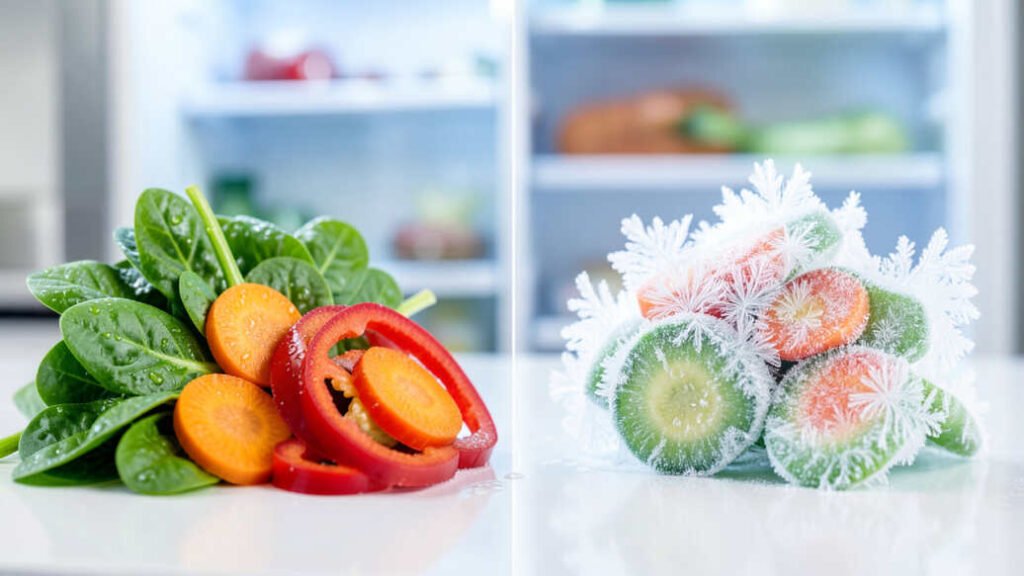
Freezing food does not destroy most nutrients and is an effective method for preserving the nutritional value of foods like fruits and vegetables. While minor losses of water-soluble vitamins such as vitamin C can occur, largely due to blanching, the overall impact on nutritional quality is small. Frozen produce often retains vitamins and minerals as well as or better than fresh items stored for several days.
Does freezing food destroy nutrients is one of the most common questions people ask about food storage and healthy eating. With frozen foods making up a growing portion of grocery store aisles, understanding what happens to vitamins, minerals, and antioxidants during the freezing process matters for making smart dietary choices.
This post breaks down the science behind freezing and nutrition, compares fresh versus frozen options, and shares practical tips to keep your food as nutrient-rich as possible. You will walk away knowing exactly what to expect from your frozen fruits, vegetables, and proteins.
Simply put, freezing food does not destroy most nutrients. In many cases, frozen foods retain vitamins and minerals just as well as, or even better than, fresh produce that sits on store shelves for days. Some water-soluble vitamins like vitamin C may experience minor losses during blanching and freezing, but the overall nutritional impact is small compared to the benefits of having nutrient-dense food available year-round.
Key Takeaways
- Freezing food preserves the vast majority of vitamins, minerals, and antioxidants found in fresh food.
- Water-soluble vitamins like vitamin C and some B vitamins experience the most loss during freezing, but the decline is modest.
- Frozen produce is often picked at peak ripeness and flash-frozen, which can lock in more nutrients than “fresh” produce shipped long distances.
- Blanching before freezing causes some nutrient loss but helps preserve color, texture, and overall nutritional quality long-term.
- How you thaw and cook frozen food matters more for nutrient retention than the freezing process itself.
What Happens to Nutrients When You Freeze Food?
Freezing works by slowing molecular motion. When food temperatures drop below 32 degrees Fahrenheit (0 degrees Celsius), the water inside cells forms ice crystals. These crystals slow down the chemical reactions that cause spoilage, decay, and nutrient breakdown.
The key insight is that freezing pauses degradation rather than causing it. Most vitamins and minerals remain intact inside the frozen cell structure. According to a study published in the Journal of Food Composition and Analysis, frozen fruits and vegetables retained between 70 and 90 percent of their original vitamin content after six months of proper freezer storage.
Some nutrient loss does occur during the initial freezing phase. The rate depends on the food type, the freezing method, and whether the food was blanched first. However, this loss is typically much smaller than what happens when fresh food sits in your refrigerator for a week or longer.
Key Factors That Influence Nutrient Retention
- Freezing speed – Flash freezing creates smaller ice crystals, which cause less cell damage and preserve more nutrients.
- Blanching – Brief heat treatment before freezing inactivates enzymes but can reduce some water-soluble vitamins.
- Storage temperature – Consistent temperatures at 0 degrees Fahrenheit or below maintain nutrient quality for months.
- Time in storage – Nutrient levels remain stable for 8 to 12 months for most frozen foods.
- Food type – Leafy greens lose more vitamin C than dense root vegetables when frozen.
- Package integrity – Air exposure causes freezer burn and accelerates nutrient oxidation over time.
Important: The USDA confirms that frozen fruits and vegetables are nutritionally comparable to their fresh counterparts when fresh produce has traveled long distances and been stored for extended periods before purchase.
How Freezing Preserves (and Sometimes Loses) Nutrients
The freezing process involves several stages, and nutrient retention varies at each one. Understanding these stages helps you make better choices at the grocery store and in your own kitchen.
The harvesting stage matters significantly. Frozen produce is typically harvested at peak ripeness when nutrient content is highest. Fresh produce destined for distant markets gets picked early, often before peak nutritional value develops, and then ripens during transit using ethylene gas or other methods.
Processing is the second critical stage. After harvest, frozen vegetables usually undergo blanching – a quick dip in boiling water or steam – before freezing. This step deactivates enzymes that would otherwise continue breaking down vitamins, color, and flavor during storage.
The Blanching Trade-Off
Blanching causes measurable but acceptable nutrient losses. Research from the University of Maine Cooperative Extension shows that blanching typically reduces vitamin C content by 10 to 35 percent, depending on the vegetable and blanching duration. However, without blanching, those same vitamins would degrade much faster during frozen storage.
| Nutrient | Blanching Loss | After 12 Months Frozen | |
|---|---|---|---|
| Vitamin C | 10 – 35% | 50 – 70% retained | |
| B Vitamins | 5 – 20% | 70 – 85% retained | |
| Vitamin A (Beta-Carotene) | Minimal | 85 – 95% retained | |
| Minerals (Iron, Calcium) | Negligible | 90 – 100% retained | |
| Fiber | None | 100% retained | |
| Antioxidants (Polyphenols) | 5 – 15% | 75 – 90% retained |
As the table shows, minerals and fiber remain virtually untouched by freezing. Fat-soluble vitamins like vitamin A also hold up remarkably well. The primary concern is water-soluble vitamins, particularly vitamin C, which is sensitive to heat, light, and water exposure.
Which Nutrients Are Most Affected by Freezing?
Not all nutrients respond to freezing the same way. Understanding which ones are most vulnerable helps you plan meals that fill any nutritional gaps.
Vitamin C is the most sensitive nutrient during freezing. It dissolves in water and breaks down when exposed to oxygen. Since blanching involves water and heat, and freezing requires packaging that may contain air pockets, vitamin C faces multiple threats during the process.
Even so, frozen berries typically retain 75 to 85 percent of their original vitamin C content.
B vitamins – especially thiamine (B1), riboflavin (B2), and folate (B9) – are moderately affected. A 2017 study in the International Journal of Food Sciences and Nutrition found that frozen peas retained approximately 80 percent of their folate content after three months of storage at minus 18 degrees Celsius.
Nutrients That Survive Freezing Very Well
Many nutrients are remarkably stable through the freezing process. Here is what the research shows:
- Minerals – Iron, potassium, magnesium, and calcium remain almost entirely intact. These inorganic compounds do not break down at freezing temperatures.
- Dietary fiber – Completely unaffected by freezing. The structural carbohydrates in plants hold up perfectly.
- Fat-soluble vitamins – Vitamins A, D, E, and K show minimal degradation, typically less than 5 to 10 percent loss over a year of frozen storage.
- Carotenoids – Lycopene in tomatoes and beta-carotene in carrots actually become slightly more bioavailable after freezing and cooking.
- Proteins – Freezing has virtually no impact on protein content or quality in meat, fish, legumes, or dairy.
Tip: Pair frozen vegetables with a squeeze of fresh lemon juice to compensate for minor vitamin C losses. This simple addition can restore most of the lost ascorbic acid in your meal.
Fresh vs Frozen Foods: Which Has More Nutrients?
This is where most of the confusion starts. People assume fresh automatically means more nutritious. The reality depends heavily on context.
A landmark 2013 study by researchers at the University of Chester, published in the Journal of Food Composition and Analysis, compared the nutrient content of fresh and frozen fruits and vegetables across eight common produce items. The results surprised many people.
In seven out of eight cases, frozen produce matched or exceeded the nutritional value of fresh-stored equivalents. Frozen broccoli, for example, had higher levels of beta-carotene and vitamin C than fresh broccoli that had been refrigerated for five days – a typical timeframe between grocery store visits.
Why Frozen Often Wins Over Store-Bought Fresh
- Harvest timing – Frozen produce is picked at peak ripeness when nutrient density is highest.
- Rapid processing – Flash freezing happens within hours of harvest, locking in nutrients before degradation begins.
- No transit degradation – Fresh produce may travel 1,500 miles or more, spending days or weeks in transit and storage.
- Shelf life losses – Fresh vegetables lose 15 to 50 percent of their vitamin C within one week of refrigeration, according to the University of California, Davis.
- Seasonal availability – Fresh produce bought out of season is often harvested prematurely and stored for extended periods.
When Fresh Does Have an Edge
Fresh food still wins in certain situations. Locally grown produce bought from a farmers market and eaten within a day or two will generally have higher nutrient content than the same item frozen months earlier. Raw salads and fresh fruits also preserve heat-sensitive nutrients that cooking or blanching may reduce.
| Factor | Fresh Produce | Frozen Produce | |
|---|---|---|---|
| Vitamin C (after 1 week) | Loses 15 – 50% | Retains 75 – 85% | |
| Convenience | Use quickly | Store for months | |
| Cost Per Serving | Higher (out of season) | Often lower | |
| Texture | Crisp, raw quality | Softer after thawing | |
| Peak Ripeness | Varies by season | Harvested at peak | |
| Waste | Higher (spoilage) | Minimal |
The bottom line is that the best choice depends on your access to local produce, how quickly you consume food after purchase, and what is available seasonally in your area.
How Blanching Affects Nutrient Content Before Freezing
Blanching deserves a closer look because it represents the single largest source of nutrient loss in the freezing process. Most commercial and home-frozen vegetables go through this step, and understanding what it does helps you make informed decisions.
The process involves immersing vegetables in boiling water for one to five minutes (depending on the vegetable type), then immediately plunging them into ice water to stop the cooking. This rapid heat treatment destroys enzymes like peroxidase and lipoxidase that cause off-flavors, color changes, and continued vitamin degradation during storage.
Without blanching, frozen vegetables would develop unpleasant tastes and lose nutrients much faster than they do with blanching. According to the National Center for Home Food Preservation, unblanched frozen green beans lose 60 percent of their vitamin C within three months, compared to roughly 20 percent loss in properly blanched beans stored under the same conditions.
Best Blanching Times for Common Vegetables
- Green beans – 3 minutes in boiling water
- Broccoli florets – 3 minutes in boiling water
- Carrots (sliced) – 2 minutes in boiling water
- Corn on the cob – 7 to 11 minutes in boiling water
- Peas – 1.5 minutes in boiling water
- Snap peas – 2 to 3 minutes in boiling water
- Leafy greens (spinach, kale) – 2 minutes in boiling water
- Cauliflower florets – 3 minutes in boiling water
Warning: Over-blanching causes significantly more nutrient loss than under-blanching. Stick to recommended times and always use a timer. Extra minutes in boiling water leach out water-soluble vitamins unnecessarily.
Steam blanching is a gentler alternative that causes less nutrient loss than water blanching. It uses steam rather than immersion in boiling water, reducing the contact between water-soluble vitamins and the surrounding liquid. Research from the University of Georgia found that steam blanching retained 15 to 20 percent more vitamin C than water blanching for most vegetables.
Best Practices to Minimize Nutrient Loss When Freezing
You have more control over nutrient retention than you might think. A few simple practices make a meaningful difference in how much nutritional value your frozen food keeps.
The most important step happens before food even enters the freezer. The shorter the time between harvesting or purchasing and freezing, the more nutrients your food retains. Buy fresh produce and freeze it the same day whenever possible.
Practical Tips for Maximum Nutrient Retention
- Freeze quickly – Use flash freezing methods for berries and small items. Spread them on a baking sheet in a single layer, freeze for two hours, then transfer to airtight bags.
- Remove excess air – Oxygen causes oxidation and nutrient loss. Use vacuum-sealed bags or press air out of freezer bags before sealing.
- Fill containers properly – Leave minimal headspace in containers to reduce air exposure. For liquids like soups, leave about one inch of expansion space.
- Label everything – Mark dates on every package. Use older items first to stay within optimal nutrient retention windows.
- Maintain consistent temperature – Keep your freezer at 0 degrees Fahrenheit or below. Temperature fluctuations accelerate nutrient degradation.
- Don’t overload the freezer – A full freezer maintains temperature better, but overcrowding prevents proper air circulation and even freezing.
- Thaw properly – Refrigerator thawing preserves more nutrients than microwave or hot water thawing. Plan ahead and thaw overnight.
For fruits, consider freezing them in their own juice rather than in syrup. Added sugars in syrup-based preparations dilute the nutritional density per serving. Plain frozen berries with no additives deliver the same nutrition as fresh ones picked at peak ripeness.
Common Myths About Frozen Food Nutrition
Several persistent myths keep people from choosing frozen foods despite strong scientific evidence supporting their nutritional value. Let’s address the most common ones directly.
Myth 1: Frozen food has no nutritional value. This is flatly false. Multiple peer-reviewed studies confirm that frozen fruits and vegetables contain comparable nutrient levels to their fresh counterparts. The FDA and USDA both recognize frozen produce as nutritionally equivalent.
Myth 2: Freezing destroys all vitamins. Freezing does not destroy all vitamins. While some water-soluble vitamins experience modest losses, fat-soluble vitamins, minerals, fiber, and proteins remain almost entirely intact throughout the freezing process.
Myth 3: Fresh is always better than frozen. “Fresh” produce from a grocery store may have been harvested weeks ago and traveled thousands of miles. That timeline often means more nutrient degradation than what occurs during freezing.
Myth 4: Frozen food contains preservatives and additives. Most frozen fruits and vegetables contain no additives whatsoever. The freezing process itself preserves the food. Check ingredient labels to confirm, but plain frozen produce is typically just the food itself.
Myth 5: Refreezing thawed food makes it unsafe and nutritionally worthless. While refreezing thawed food may affect texture, it does not render food nutritionally worthless or automatically unsafe. Food thawed in the refrigerator can be safely refrozen, though some vitamin C loss occurs with each freeze-thaw cycle.
What the Organizations Say
- USDA – Frozen fruits and vegetables are nutritionally comparable to fresh equivalents and are a valuable part of a healthy diet.
- Academy of Nutrition and Dietetics – Frozen produce is a practical and nutritious option that helps people meet daily fruit and vegetable recommendations.
- World Health Organization (WHO) – Both fresh and frozen fruits and vegetables are encouraged as part of a balanced diet rich in micronutrients.
- International Frozen Food Association – Frozen foods retain the vast majority of their original nutrient content when properly stored.
How Thawing and Cooking Methods Impact Nutrient Retention
Freezing is only part of the equation. How you handle frozen food after taking it out of the freezer can either preserve or further reduce its nutritional value. This step is often overlooked in nutrition discussions.
Thawing method matters significantly. Cold water thawing and refrigerator thawing retain more nutrients than microwave defrosting, which can cause uneven heating and localized nutrient breakdown. However, microwave thawing is still better than leaving food at room temperature, where bacterial growth becomes a safety concern before nutrient preservation becomes relevant.
Cooking method has an even larger impact than thawing. Boiling frozen vegetables causes water-soluble vitamins to leach into the cooking water. Steaming, microwaving with minimal water, or stir-frying preserves far more of the vitamin content.
Cooking Methods Ranked by Nutrient Retention
- Steaming – Retains the most nutrients, especially vitamin C and B vitamins. Minimal water contact keeps water-soluble vitamins inside the food.
- Microwaving with little water – Fast cooking time and minimal water exposure make this one of the best methods for nutrient preservation.
- Stir-frying – Quick cooking at high heat with a small amount of oil preserves most nutrients while improving the bioavailability of fat-soluble vitamins.
- Roasting – Moderate nutrient loss due to longer cooking times, but the dry heat method avoids leaching water-soluble vitamins.
- Boiling – Causes the most nutrient loss, particularly for vitamin C and folate. If you boil, use the cooking water in soups or sauces to recover lost nutrients.
- Microwaving in large amounts of water – Combines the disadvantages of both methods with uneven heating.
Tip: Save the water you boil vegetables in and use it as a base for soups or sauces. This practice recovers up to 50 percent of the water-soluble vitamins that leached out during cooking.
Cooking frozen food directly from frozen – without thawing first – can actually improve nutrient retention for some vegetables. Because the cooking time is slightly shorter when food starts at a frozen state, there is less time for heat-sensitive vitamins to break down. Steaming frozen broccoli directly from the bag, for instance, retains more vitamin C than thawing it first and then steaming.
What Does the Research Say About Frozen Food Nutrition?
The scientific literature on freezing and nutrition is extensive and largely supports the value of frozen foods. Several key studies provide the evidence base for understanding how freezing affects nutrient content.
A comprehensive review published in the Journal of Food Science and Technology analyzed data from over 40 studies comparing fresh and frozen produce nutrient levels. The researchers concluded that frozen fruits and vegetables are “nutritionally sound alternatives” to fresh produce, particularly when fresh options have been stored for more than a few days.
The Bumble Bee Foods Institute commissioned a study through a team at the University of California, Berkeley that examined the nutritional profiles of frozen versus fresh seafood. The findings showed that frozen fish retained omega-3 fatty acids and protein content at levels statistically equivalent to fresh fish tested on the day of purchase.
Key Statistics Worth Knowing
- According to the USDA, frozen green beans retained 90 percent of their vitamin C content after six months at 0 degrees Fahrenheit.
- Research from the University of Chester found that frozen peas had higher vitamin C content than fresh peas stored for three days.
- A study in the British Journal of Nutrition reported that children and adults who used frozen fruits and vegetables had higher overall fruit and vegetable intake and better diet quality scores.
- According to the Food and Agriculture Organization (FAO), approximately one-third of all food produced globally is lost or wasted, and freezing is one of the most effective methods to reduce this waste while preserving nutrition.
- The National Frozen and Refrigerated Foods Association reports that the average American household wastes 30 to 40 percent less food when incorporating frozen produce into regular meal planning.
The overall body of evidence points in one clear direction: freezing is an effective and reliable method of preserving the nutritional quality of food. The minor nutrient losses that occur during processing are far outweighed by the benefits of having access to nutrient-dense food regardless of season or geographic location.
Frequently Asked Questions
Does freezing meat destroy nutrients?
No. Freezing meat preserves its protein, iron, zinc, and B vitamin content effectively. The structure of muscle tissue is well-suited to freezing, and nutrient losses in properly frozen meat are negligible.
According to the USDA, properly stored frozen meat retains its nutritional quality for 6 to 12 months depending on the cut.
How long do frozen foods retain their nutrients?
Most frozen fruits and vegetables maintain optimal nutrient quality for 8 to 12 months when stored at 0 degrees Fahrenheit or below. After that period, nutrient levels begin to decline more noticeably, though the food remains safe to eat. Meats and seafood generally retain quality for 4 to 6 months for best texture and nutrition.
Are frozen berries as healthy as fresh berries?
Yes, frozen berries are often just as healthy and sometimes healthier than fresh berries bought at the store. Frozen berries are typically flash-frozen at peak ripeness when antioxidant and vitamin levels are highest. Fresh berries purchased at the grocery store may have been picked days or weeks earlier and lost a portion of their nutritional value during transport and storage.
Does freezing destroy probiotics in fermented foods?
Freezing can reduce the number of live probiotic cultures in fermented foods like yogurt and kefir, but it does not eliminate them entirely. Research published in the Journal of Applied Microbiology found that many probiotic strains survive freezing with 50 to 90 percent viability intact. The specific strain, freezing rate, and storage conditions all influence survival rates.
Is it safe to eat frozen food that has been frozen for over a year?
Yes, food that has been continuously frozen at 0 degrees Fahrenheit or below is safe to eat indefinitely from a food safety perspective. However, quality and nutritional value decline over time. After 12 months, you may notice changes in texture, flavor, and vitamin content.
The food is still safe and nutritious, just not at its peak quality.
Final Thoughts
Freezing food does not destroy nutrients in any meaningful way. The science consistently shows that frozen produce retains the vast majority of its vitamins, minerals, and beneficial compounds. In many cases, frozen food holds onto more nutrition than fresh alternatives that have spent days in transit and on store shelves.
Your best strategy combines both fresh and frozen options based on availability, season, and convenience. When fresh local produce is at its peak and you can eat it quickly, choose fresh. For everything else, especially out-of-season items, frozen is a smart, nutritious, and budget-friendly choice.
The key is proper storage, smart cooking methods, and understanding that freezing is one of the most effective preservation tools available for maintaining the nutritional quality of your food.